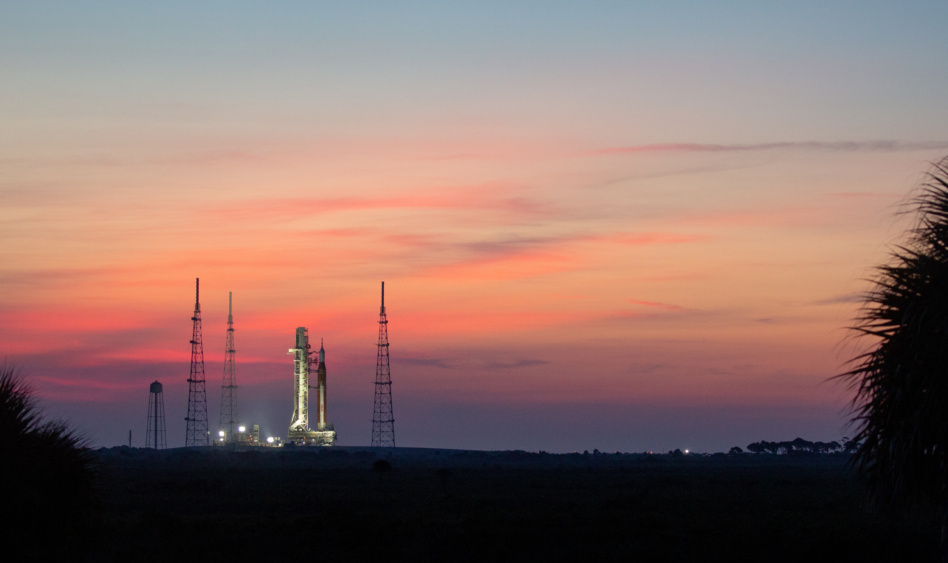
We’ll be waiting a few more days for NASA’s return to the moon. This morning, SLS’ debut flight was scrubbed at T-40 minutes after a handful of weather- and engine-related delays.
Artemis I: The first mission in NASA’s Moon-to-Mars program will be an uncrewed test flight, sending the Orion crew capsule on a 42-day trip around the moon, further than any crew-rated spacecraft has traveled before.
- The crewless crew capsule is equipped with a host of test dummies and sensors that will measure the onboard conditions.
- This equipment will ensure that the flight will be safe for humans later on.
- At the end of the mission, Orion will splash down in the Pacific Ocean.
VP Harris was on site for the attempt, along with a number of celebrities who were scheduled to perform if the rocket were to launch.
Facing delays
The morning kicked off with a 45-minute delay due to thunderstorms down on the Space Coast. Tanking operations began at 1:14am ET, and both tanks on the rocket were successfully filled to 100%.
NASA identified a hydrogen leak shortly after beginning liquid hydrogen loading. After turning the hydrogen line off and on again (and manually chilling the line), loading restarted…
…until the team found that the third of four engines on the core stage was not within the temperature range required for launch. Launch controllers began funneling cryogenic fuel to engine 3 to cool it down enough, and after some troubleshooting, held the launch at T-40 minutes to discuss their options.
The hold at T-40 minutes lasted through the beginning of the launch window, at which point NASA decided to scrub the launch.
Wait for it…The next launch window opens Sept. 2 at 12:48pm ET for two hours. After that, there are daily opportunities to launch until Sept. 5. If the rocket can’t launch by then, it’ll have to roll back to the Vehicle Assembly Building to be refurbished, and we’re looking at a longer delay.
Related Stories
NASA Priorities Get a Major Makeover
NASA Administrator Jared Isaacman had a vision for a robust, commercially driven lunar economy, supported by surface infrastructure. Now, he also has a plan.
Isaacman Plans Monthly Uncrewed Lunar Landings In 2027
“We are going to plus up for Moon base construction in a huge way,” said during an interview with Spaceflight Now that was released late Friday night.
NASA Pushes Crewed Moon Landing to Artemis IV
The US path to the Moon shifted significantly on Friday, in what NASA Administrator Jared Isaacman called the “only way forward” for the American lunar program. Hit the gas: Isaacman announced multiple changes to the program, including: Timeline: In light of these structural changes, Isaacman announced a new timeline for the American return to the…
NASA: Agency ‘Failed’ Starliner Astronauts
“The most troubling failure…is not hardware. It is decision-making and leadership that, if left unchecked, could create a culture incompatible with human spaceflight,” NASA Administrator Jared Isaacman said during a livestreamed press conference.
More Stories
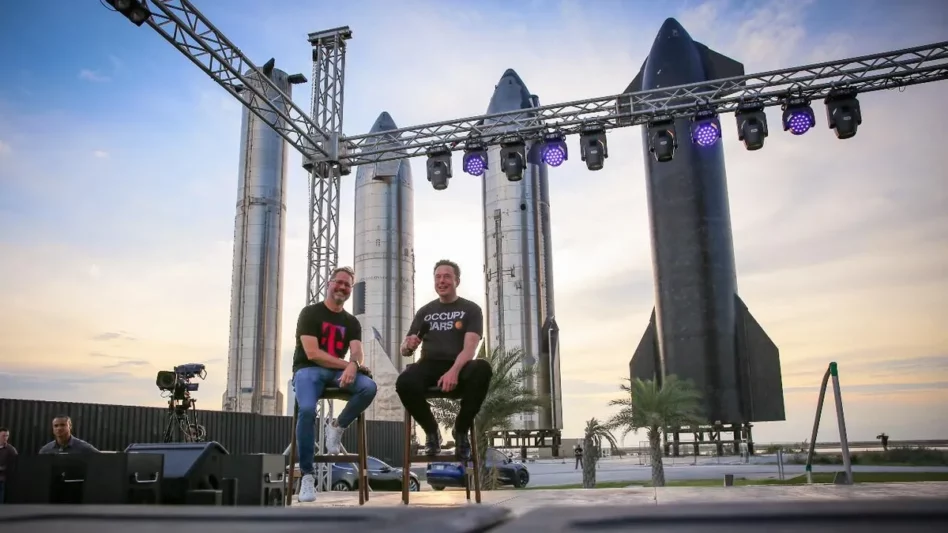
ICYMI, and you probably didn’t, SpaceX and T-Mobile have teamed up to bring satellite-to-smartphone connectivity to mobile networks. SpaceX is working on connecting existing, unmodified phones to a new type of mobile network.
This technology could blanket the globe with a new layer of cellular connectivity. And the tie-up has the potential to eliminate cell “dead zones” in and around the US, SpaceX chief engineer/executive Elon Musk said Thursday.
Musk spoke on stage at Starbase alongside T-Mobile CEO Mike Sievert, who commented that the US has over 500,000 square miles of cell dead zones.