
I was supposed to write more about corporate startups this week, but another bit of news was the proverbial last straw to break my back. Techcrunch reports:
“Humans&, a startup with a philosophy that AI should empower people rather than replace them, has raised $480 million in seed funding at a $4.48 billion valuation.”
You may consider it just yet another random piece of news from the startup ecosystem. But it’s way more than that. It’s like another breadcrumb that allows us to uncover the secret playbook for securing unprecedented levels of funding.
Bear with me, we’re going to explore The Secret AI Startup Funding Playbook™.
To better understand the context, let’s look at the story behind Humans&. Let’s start with data.
The company was founded in October 2025.
Founders recruit from researchers and engineers of the biggest AI firms, Anthropic, Google DeepMind, and xAI.
Three months later, they secure half a billion dollars.
It’s not like they have a product or something, let alone any traction. Sure, they have a vision.

There is no product catching up like wildfire. There isn’t even an announcement of one. There’s just an aspirational promise that “AI can be reimagined, centering around people and their relationships with each other.”
Well, that’s it. The end of the story.
See? All those things that they kept telling you about traction, hockey stick growth, and stuff? Doesn’t matter. You don’t discuss the shape of the growth curve if there’s no growth.
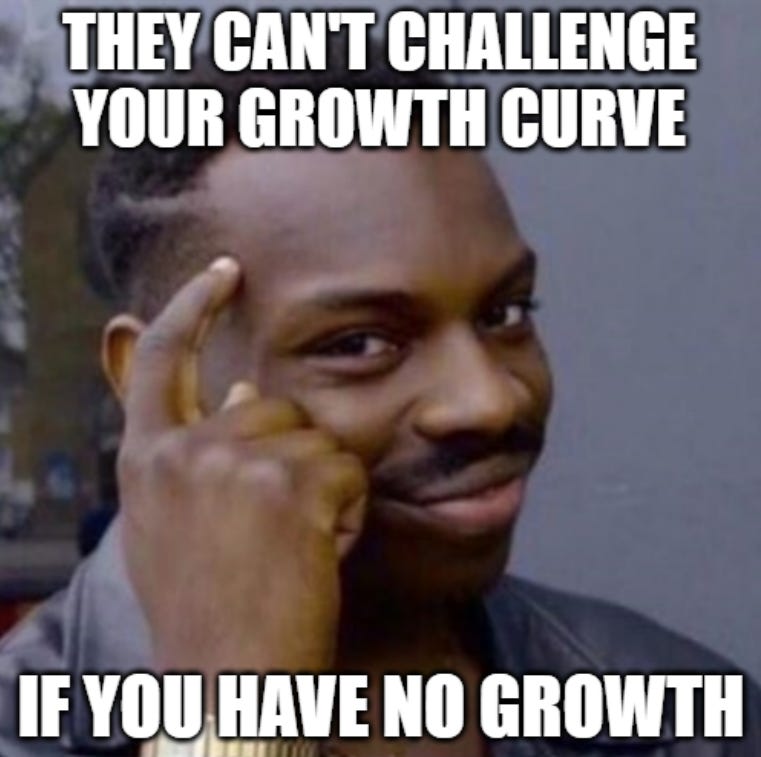
Heck, the whole product you need is a landing page.
OK, a reality check. Is Humans& an outlier? Maybe they just got lucky, right?
No. There are more of them breadcrumbs. That’s the whole thing. The VCs don’t want you to know that there is a pattern. Take Unconventional AI.
Do they have a product? Nope.
What’s their foundation-to-absurd-seed-round time? 3 months.
Did they secure at least a few hundred million in the seed round? $450M to be precise.
Was the founder any famous? Duh!
Is there a bold, aspirational mission? How does “optimizing energy efficiency for AI” sound?
Does their site look like a vibe-coded landing page? Sure enough.
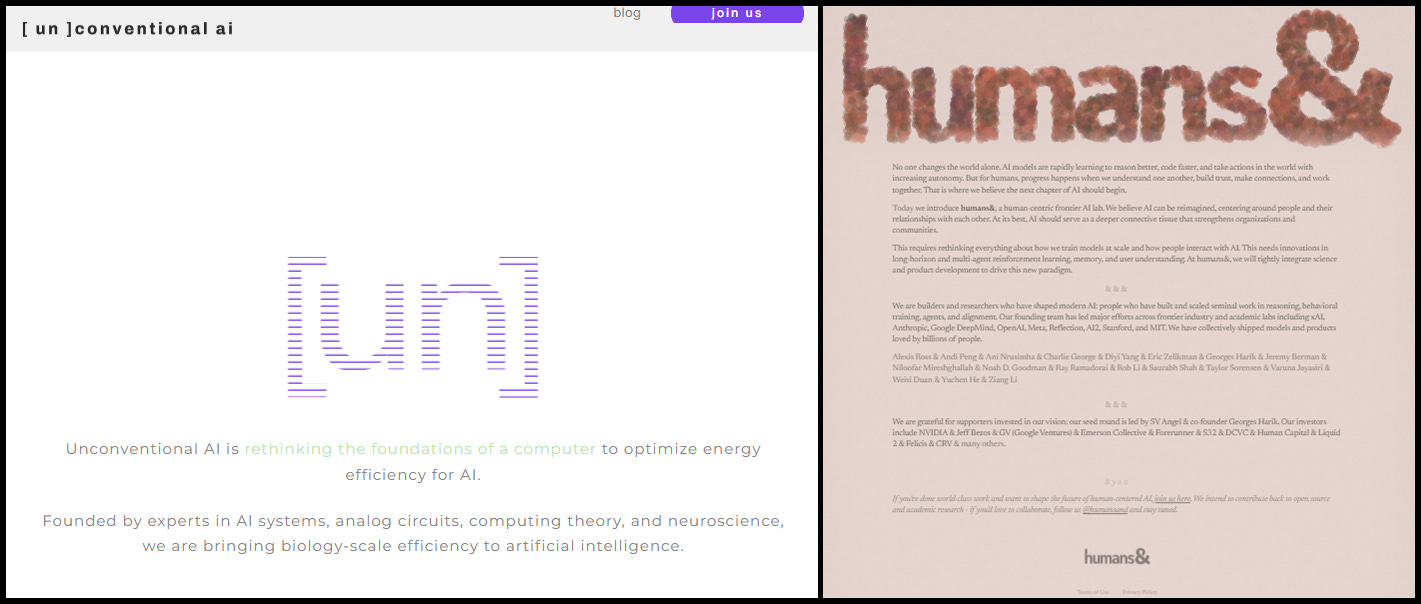
Well, at least they have a blog. With a single welcome post, let me add. Oh, and a broken email subscription.
One story to rule them all is that of Thinking Machines Labs. It’s like the gold standard for securing seed rounds in the AI era.
Established in February 2025 by none other than a former OpenAI CTO, Mira Murati. You can hardly score any more clout points than that.
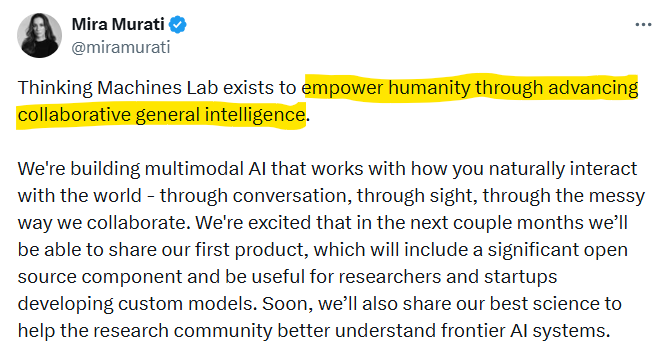
How about an aspirational vision? Well, don’t tell me that “empowering humanity” is not enough. To top that, we get nods to collaboration and AGI, too.
Some 5 months later, they secured a $2B seed round, at a $12B valuation, which easily dwarfs the tens of billions thrown at OpenAI earlier that year, on my personal scale of VC recklessness.
Yes, that was before Thinking Machines Labs announced what product they were working on, let alone released anything, or shown any traction whatsoever.
While Thinking Machines Labs’ record remains unbeaten, there’s no shortage of contenders. Yann LeCun, a proper AI celeb, eventually got fed up with Facebook and decided to go off and start his own thing.
Do you want to guess what kind of valuation he expects? If you’re guessing billions, then you’re correct. He aims for $3.5B from the outset. I bet he’s getting the money. After all, he’s no short of charisma and has a good story to tell.
If you reverse engineer all these stories, they are curiously similar. They revolve around a (relatively) famous founding team and a vision that is bold enough to play VC FOMO. They also have nothing to show for it. No product, no public announcement, no traction. It’s all belief money.
It’s the literal equivalent of friends & family round. The pre-pre-seed. Except it’s not tens of thousands but hundreds of millions. 4 orders of magnitude bigger.
And yes, it goes against every single bit of advice you could possibly get from VCs. No one is going to admit that there’s no defensible process behind these decisions. You could say it’s pure gambling, but gambling is the VC’s regular day at the office. Those AI investments are pure recklessness even by those already low standards.
The most basic advice you get when gauging organizational culture is to observe behaviors rather than trust official messaging. It’s “do what they do, not what they say.”
That way, you can reverse engineer the actual playbook to follow if you want to fund your startup beyond your wildest dreams.
Get some well-known names from major AI companies to co-found with you. Bonus points for C-level execs, AI researchers, and professors.
Define a super-aspirational moonshot AI goal as a mission. Bonus points for helping the entire humanity or reinventing entire domains.
Work on something (doesn’t really matter what exactly) for a quarter or so to create an impression of progress. Bonus points if you can lure some more engineers and researchers from major AI firms.
Get your hundreds of millions in the seed round. Voila!
Yup, that’s it. No scrutinous validation. No rigorous product experimentation. No meticulous growth management. Not even creative number crunching. No nothing. It’s literally a sure-shot way to build a unicorn.
To make things even better, not only does The Secret AI Startup Funding Playbook™ sidestep the toil of careful product development, but it also isolates a startup from the consequences of future problems.
Consider Thinking Machines Labs again. In September 2025, they actually released their first product. To a rather lackluster reception. No market enthusiasm? No problem. They still have their $2B on the bank account.
Soon after, they started losing key personnel, including (most recently) co-founders. Any worries over that? Nah, not really. The VC commitment was not about mere millions, so the runway is incredibly long. There’s no need to get back for more money anytime soon.
If it were your average Joe’s startup, by now, someone would be borderline panicking. The end of the runway approaching at high velocity, not nearly enough traction, and key people jumping ship could sink an established company, let alone a fledgling startup. Thinking Machines Lab, however, can easily ignore all these and more. They’re like a juggernaut of the startup world.
Raising an absurd seed round removes accountability for so many areas that it basically breaks the game. The product? We’ll figure something out. Eventually. The founding team? With all the money, we can always lure someone to take over. Fundraising? We won’t need that anytime soon.
The only challenge is really raising that insane money in the first place. Luckily, even for that, you only need to sustain the act for a few months. Then, you enjoy burning through a pile of gold doing, well, whatever the hell you want, really.
Even better, once the money runs out, there will be no shortage of opportunities for a soft landing, as former Thinking Machines Labs co-founders clearly show by rejoining OpenAI.
No one’s going to tell you the playbook works. But remember, do as they do, not as they say. The decades of insisting on growth, revenues, traction, etc., are child’s play now. Truly successful AI entrepreneurs don’t need to care about any of those.
Meanwhile, along with our client, we’ve delivered a working product pilot in a few weeks for around $30k. We’re not going to reinvent education or change humanity. But the early results suggest it delivers value, and we’re confident it has the potential to become a full-blown product.
If you want to discuss these kinds of “playbooks,” I’m always happy to help.
Note, though, they do involve some actual product-development-fu. They may not get you a Techcrunch story, but if you want to build something that’s actually sustainable, I’d suggest it’s a much better path.
This essay has been written by a human (yup, that’s me, tapping into the keyboard).
웃https://okhuman.com/9xOtGg