“These wind-swept seas of grass and wildflowers—four million acres in all—have witnessed the pageant of the frontier, the Dust Bowl, and the dramatic recovery into a great national treasure” - U.S. Forest Service
“God speed the plow… By this wonderful provision, which is only man’s mastery over nature, the clouds are dispensing copious rains,” writer and land speculator Charles Dana Wilber wrote in his 1881 book The Great Valleys and Prairies of Nebraska and the Northwest. “[The plow] is the instrument which separates civilization from savagery; and converts a desert into a farm or garden… To be more concise, Rain follows the plow.”
That particular, now-infamous phrase, “rain follows the plow,” became the most popular slogan that drew settlers out to the West in the late 19th century. It helped convince people who were initially worried about potential drought in America’s western states and territories to take the leap.
The slogan was also adopted enthusiastically by those who promoted “Manifest Destiny,” providing the argument that the Plains Indians, most of whom were nomadic, did not use the land properly and must, therefore, be removed.
By 1890, supported by the Homestead Act of 1862 that distributed public lands to willing settlers, almost 6 million people were living on the prairie of the Great Plains, working industriously to replace the native long-rooted prairie grasses with agricultural crops. They were, indeed, plowing hard.
The rain, however, didn’t follow.
Rather the opposite, in fact. As early as the mid-1890s, spells of severe drought started plaguing the wind-battered Plains.
Still hopeful yet increasingly anxious, as well as stuck were they now lived, the settlers kept working the land, turning the soil over, and over, and over again. Increased demand for food both during and after World War I, particularly for wheat and beef, depleted the land even more. Over-plowing and over-grazing dried out the topsoil completely. It began blowing away.
“We live with the dust, eat it, sleep with it, watch it strip us of possessions and the hope of possessions,” Avis D. Carlson wrote in New Republic, referenced in a PBS article. “It is becoming Real. The poetic uplift of spring fades into a phantom of the storied past. The nightmare is becoming life.”
This ultimately culminated into the events of what’s now called “Black Sunday.” On April 14, 1935, a monster storm raged across the southern Great Plains—through Texas and Oklahoma—enveloping everything in its path in a thick blanket of dust.
The Weather Service describes the storm as “a mountain of blackness [that] swept across the High Plains and instantly turned a warm, sunny afternoon into a horrible blackness that was darker than the darkest night.” People called it a “wall of blowing sand and dust” and a “land-based tsunami.”
“Famous songs were written about it, and on the following day, the world would hear the region referred to for the first time as “The Dust Bowl.”
Although more storms had come before and several others were to follow until the rains finally arrived in 1939, the “Black Friday” dust storm was arguably the worst of them all.
To make matters worse—much, much worse—this gigantic environmental disaster in the 1930s took place in the middle of the Great Depression.
The one-two punch delivered by the Dust Bowl and Great Depression displaced hundreds of thousands of people, drove families off farms, and forced the federal government to rethink what responsible land use and land management actually meant.
The government responded to the devastation on the Plains through a large-scale “land utilization program” (LUP) as part of FDR’s New Deal.
A number of new laws were passed, first and foremost the National Industrial Recovery Act of 1933, the Taylor Grazing Act of 1934, the Emergency Relief Appropriations Act of 1935, and the Bankhead-Jones Farm Tenant Act (BJFTA) of 1937.
Under the authorization of these acts, the U.S. government suddenly began doing something it had almost never done before—it did the complete opposite of what it had always done since the Louisiana Purchase.
In the 1930s, during the Dust Bowl, the government started buying up depleted and deserted private lands and turning them into federally managed public lands.
“The total cost of the 11.3 million acres of land acquired for the LUP under the BJFTA and other authorities amounted to $47,500,000, or roughly $4.40 per acre,” the National Museum of Forest Service History explains.
Of those newly acquired 11.3 million acres of new public land, approximately 5.8 million were eventually transferred to the Department of the Interior, where they were incorporated into units managed by the Bureau of Land Management, Fish and Wildlife Service, Bureau of Indian Affairs, and National Park Service.
The remaining 5.5 million acres stayed within the SCS under the Department of Agriculture. The Secretary of Agriculture transferred the authority over these LUP lands to the U.S. Forest Service (USFS) in 1954. About 1.8 million acres in the East and South were added to already existing national forests.
And finally, on June 23, 1960, those last 3.8 million acres, located mainly in the Great Plains—Dust Bowl country—were officially designated as national grasslands, an entirely new type of public land, managed by the Forest Service.
That buyback history during and after the Dust Bowl is the foundation of today’s national grasslands.
This was, in effect, an extraordinary public admission that private expansion had gone too far. The government didn’t just offer advice on better farming practices. It intervened directly, acquired damaged land, and set about restoring it.
That origin story matters greatly because it shows what national grasslands really are. They weren’t protected for their scenic or ecological value. In the most literal sense possible, they were private landscapes devastated by agricultural malpractice, then bought back by the federal government. They’re the very definition of restored lands—reclaimed public lands.
Today, the Forest Service manages 20 national grasslands spread across the country, mostly in the Great Plains and western states.
They don’t usually receive the cultural reverence given to national parks. They lack the spectacle of Yosemite cliffs or Yellowstone geysers. But that has always been part of the problem. Americans are often better at protecting picturesque grandeur than actually functioning ecosystems.
We rally around the dramatic mountain, the canyon overlook, the famous wildlife scene. Grasslands, by contrast, are easy to underestimate. They’re unassuming, quiet, ordinary—the opposite characteristics of what American culture truly values.
Yet they’re among the most ecologically important landscapes in North America.
Healthy grasslands hold soil in place. When they’re manipulated improperly, as the Dust Bowl so clearly proved, that soil literally blows away.
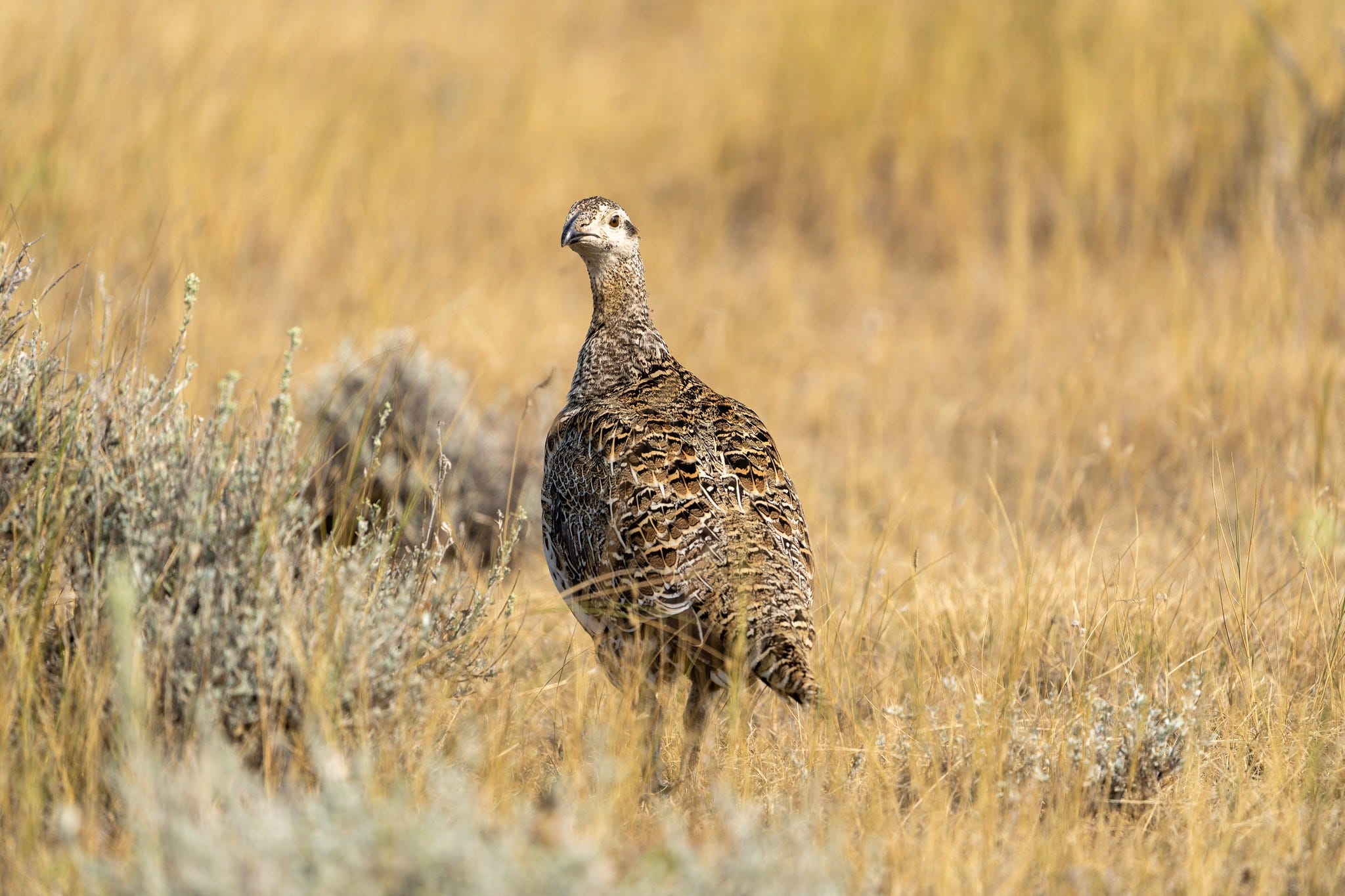
Grasslands provide habitat for pollinators, pronghorn, prairie dogs, bison, elk, mule deer, black-footed ferrets, greater prairie chickens, sage grouse, and countless other species tied to open-country ecosystems. They offer recreation, hunting, fishing, solitude, and a panoramic openness—that unique big-sky feeling—that is increasingly rare in the United States.
However, because they’re subject to the multiple-use mandate of the Forest Service—which, unlike popular opinion, is not a preservation agency but a resource management agency—I must mention that national grasslands also host a variety of resource extraction activities, just like all other lands managed by the USFS.
For example, the Little Missouri National Grasslands in North Dakota is dotted with oil wells—some of which are visible from within Theodore Roosevelt National Park—while Wyoming’s Thunder Basin National Grassland is the location of the world’s largest coal mine.
But despite of that and perhaps most importantly, they’re also one of the clearest buffers we have against repeating the practices that helped create the Dust Bowl in the first place.
Diverse, functioning, healthy grasslands are one of the best carbon sequestration systems in the world. “These ecosystems provide a critical regulating function, offsetting about 12 to 19 percent of the Nation’s annual greenhouse gas emissions,” a 2017 Forest Service study says.
That’s why national grasslands are one of the most practical expressions of conservation—of restoration—in the American public lands system.
There is, of course, an obvious parallel to the present here. We’re once again living in a time of climatic stress, intensifying drought and heat waves in the West, and relentless pressure to squeeze more production from landscapes that are often already strained beyond their limits. We’re still tempted to treat grasslands as vacant space available for conversion, drilling, fragmentation, or overuse.
A select few of us—including most current federal government officials—are still prone to dismiss environmental safeguards as “red tape,” until the damage slaps them in the face like a 1930s dust storm.
Read my recent Deepwater Horizon oil spill story to see where we’re headed again.
In an era when so much of public land debate is dominated by extraction, privatization, and the false mindset that every acre must justify itself through immediate economic output, the national grasslands offer a different vision.
Our national grasslands are living proof of what can happen when land use becomes land abuse. They’re also powerful evidence of how the federal government, through laws and programs, can step in and actually improve our environment, restore landscapes, and bring back wildlife—for the benefit of us all.
So, next time you’re driving from one (public land) road trip destination to the next and you see a “national grassland” sign, go and explore it. These places are more meaningful and more magnificent than you might expect.
“These wind-swept seas of grass and wildflowers—four million acres in all—have witnessed the pageant of the frontier, the Dust Bowl, and the dramatic recovery into a great national treasure,” the Forest Service says on its national grasslands webpage.
As a closing note of this fascinating story, here’s the result of this historical journey across the Great Plains, our 20 national grasslands:
Black Kettle National Grasslands, Oklahoma
Buffalo Gap National Grassland, South Dakota
Butte Valley National Grassland, California
Caddo National Grassland, Texas
Cedar River National Grassland, North Dakota
Cimarron National Grassland, Kansas
Comanche National Grassland, Colorado
Crooked River National Grassland, Oregon
Curlew National Grassland, Idaho
Fort Pierre National Grassland, South Dakota
Grand River National Grassland, North Dakota
Kiowa National Grassland, New Mexico
McClellan Creek National Grassland, Oklahoma
Little Missouri National Grassland, North Dakota
Lyndon B. Johnson National Grassland, Texas
Oglala National Grassland, Nebraska
Pawnee National Grassland, Colorado
Rita Blanca National Grassland, New Mexico
Sheyenne National Grassland, North Dakota
Thunder Basin National Grassland, Wyoming
Thanks for reading!
See you on our public lands and waters,
Bram
Top image: Sage grouse in Thunder Basin National Grassland - Credit: Jordan Sampson / USFS