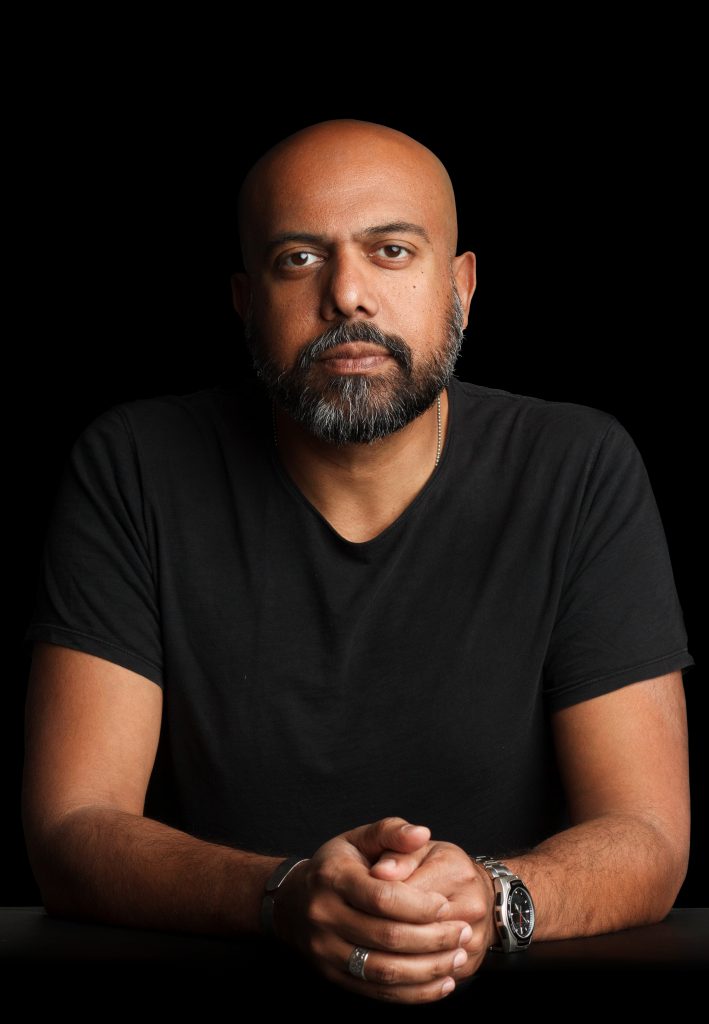
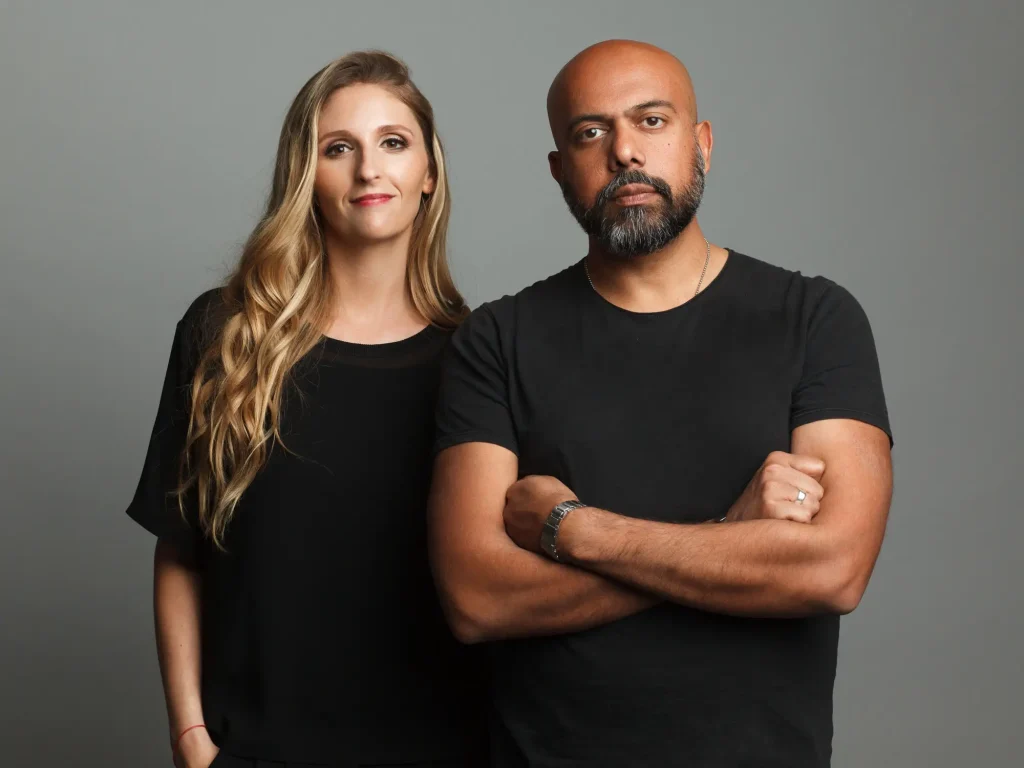
Imran Chaudhri spent two decades at Apple, working alongside Steve Jobs. It was at Apple where he met Bethany Bongiorno, and eventually, they would become partners, both in life and in their company, Humane. At Apple, Imran worked on many now ubiquitous products, including the Macintosh, iPod, iPad, Apple Watch, and the game-changing iPhone. However, he is well known for his work on the user interface and interactions on the iPhone. Bethany was Apple’s Director of Software Engineering and worked on iOS and macOS, in addition to helping launch the original iPad.
The company recently emerged from stealth mode and announced its debut product, AI Pin, which is most likely the first AI-powered personal computing device. I have been privy to the development of the AI Pin from its very beginning. I have seen it go through many iterations — at least ten major ones — to arrive at where it is today. And as close as I might have been to the product, I have only experienced it in bits and pieces. (My thoughts on Why Humane’s AI Pin Matters.)
From my perspective, this is one of the most significant products to come to the market — and its impact is going to be felt in how we think about devices in the future. I recently sat down with Imran — Bethany was busy — to explore everything from privacy and partnerships with “frenemies,” to the end of what we know as App Stores. Here are Imran’s thoughts on this game-changing device and his vision for the next evolution of personal computing.
Om: How much has your past influenced your present and your future?
Imran: Like everyone, I’ve learned from my previous actions. These experiences have made me feel more capable, and I believe that experience, in general, just goes a long way in general.
Om: I get the feeling that you and others were, in a way, looking beyond the iPhone era.
Imran: I certainly am passionate about moving computing forward. If by virtue of moving things forward, you improve things, then that means you’re moving in the right direction. I’ve been lucky to have been able to work with a bunch of folks in my past life who believed in that kind of thing.
And every time we made an advancement, it always rendered the previous way of doing things either obsolete or just improved them in some ways. I can’t speak for what everybody else is feeling right now. There are a lot of people who are excited about what it means to be able to rethink personal mobile computing. One of the things that is different about what we’re doing is that it is far more personal in many regards.
Om: You and Bethany have embraced the concept of self-obsolescence, a core philosophy of Steve Jobs. While watching your presentation the other day, I felt that this is the product Apple should have created. However, they won’t, because they are too committed to preserving the iPhone’s profitability.
Imran: It’s a really good question, and one that’s tough for me to answer because the era I spent time in is different—that is past. I think what I’m excited about now is that when you start a new company, you have a lot of liberties. You have liberty in your voice, in your communication, and the way you build is different.
Who you build with is different. And all of this is significant because so much is being rethought with AI. There are so many people excited about AI. It’s all really about liberation and enablement. And I think that mirrors where technology is going as well.
I want to work on moving things forward. It is driven by the need that I see technology based on what people are asking for. People want more from their devices these days. Those who are willing to listen have a lot of opportunities to make things better.
Om: You’re launching your company during a time when people are skeptical of new technologies like AI. How do you thrive in this environment?
Imran: You can’t control the environment in which your ideas are born, nor can you control the environment in which they’re ready to be deployed. Bethany and I are very driven by having mission-driven, value-rooted explorations and directives. There’s always room in the world for that, no matter where you are.
If I think of some of the things that I was involved in, one of them was launched just not too long after 9/11. One of them was launched around the same time as the subprime crisis in the US. There’s always something that allows for people to understand that progress.
Om: I remember the launch of the iPod, the iPhone, and the iPad—three very distinct platforms. At the time of each launch, there wasn’t much resistance to technology. Despite the tough times, we viewed technology and science as a way to improve. Now, the situation is different. Every single person approaches new technology with skepticism. You actually have to remind people why it’s important to remain optimistic.
Now that you’re leading your own company and crafting your own reality, how do you handle elements beyond your control, such as the narrative? And in a broader sense, for those of us who believe in tech, how do you maintain a positive outlook?
Imran: I meditate a lot, and I think deeply about technology, its role in society and civilization, how people have perceived it, and what it has offered.
The debate that is happening in AI, though on a very small scale, is a profoundly important one. It mirrors the uncertainty people felt about the internet in its early stages.
We are dealing with a large systemic capability that is nascent in terms of its prioritization and quite unrefined in terms of its capabilities and impact.
Reflecting on the early days of the internet in the mid-80s and into the 90s, when some of us began to experiment with it, there was much fear surrounding it too.
Some of that fear was justified, but the internet also opened up new worlds of opportunity. I often think back to my father in India and Pakistan, who played a key role in electrifying villages. His efforts greatly inspired me. The abilities he introduced to these villages, which initially feared electricity, and the conversations he shared with me about engaging people with new technologies have always stayed with me.
These technologies have affected all of us in myriad ways. For me, it boils down to how we can productize these large, almost impossible to understand technologies in a way that allows for a harmonious coexistence. This is the essence of what we’re doing here.
When I reflect on this, I feel optimistic because we’ve given people a way to harness a new kind of capability they wouldn’t have otherwise. For better or for worse, I believe the world could benefit from more of this.

Om: Privacy is a major concern in today’s digital world. Your company, despite its personal nature, relies on third-party services like OpenAI, Google, and Amazon, over which you have no control. How do you ensure user privacy when these platforms are known for building personal data profiles?
Imran: Being able to think differently, including about privacy, affords new ways of looking at it. We have the chance to get things right where the industry has, perhaps, made a few missteps. It’s not to say that we’ll never get things wrong, but we have the learnings of decades behind us to guide us. If you’re introducing a new personal compute platform, what safeguards should be in place? What should the attitudes around data be?
We believe true privacy requires a multi-pronged solution that starts with the principle that you should own as much of your data as possible. You’ll see it in some of the things we do. We have AIs that don’t implicate any of your data in their training. We’re quite deliberate about that. We also understand that you interact with people, so we allow you to share that data on your terms.
We take unique steps to protect your data when interfacing with services that don’t know you or with which you don’t have a relationship. We anonymize your data so you can feel free to have these exchanges without worry about reconstruction or profiling of you and your device. You should be fully aware that data on our device won’t go anywhere else.
“You can’t control the environment in which your ideas are born, nor can you control the environment in which they’re ready to be deployed. “
Om: To be clear, what does privacy mean from an AI Pin standpoint?
Imran: What it means, and what you’re getting at, is that because so many of these interactions are invisible, you have to be able to trust the people who have built your devices and the services, as well as the links between those things, to ensure that your data is kept safe. We are taking every effort to do that on your behalf.
Even though you feel as if you have certain levels of control here, (points to the phone), because you’ve downloaded an application, the reality is that even to start using it, you accept a whole bunch of terms that you may not realize the implications of. We take all the guesswork out for you so that you don’t have to worry about it.
This is important because AI interactions become a lot more integrated and a lot more invisible than with any other computer. You need, at the most basic level — which is where the definition of privacy begins — to be able to trust that your data is going to be kept safe, contained within your own partition, unless you decide to share it.
With AI Pin, for example, when you take a photo, it stays on your device and moves only into your partition in our cloud. It doesn’t go anywhere else. No one’s going to use that to learn anything about you. Things like your location are used to enhance your experience. We don’t share that location unless you’re actively trying to interact with someone directly, such as hailing a car in the future; and in those cases, you’re always aware of what’s happening.
The issue has always been with those dormant computing moments when you’ve installed applications on your phone or taken various actions. Those applications, even upon updates, can execute controls that you may never be aware of.
What we’ve done with our AI architecture is create experiences that live in the cloud. Because we operate on a subscription basis, we can ensure that those interactions are safe from a privacy perspective, and if there’s anything that isn’t safe, it can be removed. That’s a significant improvement over what we have today.
Om: When you refer to my instance on your cloud, do you mean that each instance is separated from others and is essentially cordoned off?
Imran: Yeah. We don’t even know about it, in fact. From the beginning, we’ve got fairly secure practices and procedures that keep it secure. And we’re just going to keep getting better and better.
Om: You and I have both been through many platform transitions. Take digital music, for instance. We had companies like Creative Technology and iRiver, and then the iPod came along, and the world changed. We had Palm, Blackberry, Nokia smartphones, and LG phones. And then the iPhone came around. We went from Blackberry, Palm, and Symbian to iOS. Where were we in that spectrum of time during an AI-enabled transition?
Imran: As a global industry, we’re much more mature in terms of what people expect. We live in a services world. You listen to your music from a Digital Service Provider, maybe multiple DSPs. That’s not going to change anytime soon.
What we’ve done is not only build the first AI computer but also essentially create the first services computer that truly acknowledges we live in a services world.
It really doesn’t matter whether you’re an Android customer, a Windows customer, or an iOS customer. You’re all using the same services. And it’s your interface with those services that changes.
Om: Let me clarify. Before iOS came along, or the Apple iPod, a lot of things had already happened. So, are you the Palm or the iOS in this scenario? Have you thought about that? And do you think, by doing this, that others might just copy you, now that you’ve provided them with a template?
Imran: I think what you’re getting at is that these devices were pioneers, venturing into uncharted territories. I don’t see us having to replicate the groundwork they laid.
We didn’t have to convince people to carry a device around for accessing certain services. Nowadays, that’s a given. People get the benefits of carrying a network-connected computer with them.
What they might not see yet is how much simpler, faster, and easier their experience could be with AI and contextual awareness.
We’re not saddled with the same challenge that, say, BlackBerry faced in selling the idea of a QWERTY keyboard for messaging. Our challenges are different. Our mission is crafting the best interface possible, one that leverages AI to vastly improve your computing experience.
We’ve made choices that may differ from the norm. Take our product: it lacks a physical keyboard. Instead, we use natural language processing to fill that gap. The way you interact, how you send messages, is designed to be as seamless and intuitive as the chat we’re having now.
We went this route because there are plenty of alternatives for those times when a traditional keyboard is necessary. You wouldn’t draft an article on an AI Pin unless you were narrating it, just like how we’re talking now.
Om: Not all of us are created equal when it comes to accents. That problem still hasn’t been solved. Do you think that’s going to be an issue for the interface for something like your product?
Imran: I think we definitely have the best shot at it that I’ve ever seen, compared to other products that exist. Looking at my experiences with assistants, speakers, and even voice experiences in the car, they’ve been quite limited in how they’ve been trained. What we’ve got is something much richer, capable of leveraging the latest and greatest of what’s available. Personally, I’ve had a great experience using it.
It’s not just accents that pose a problem. Children also struggle to communicate with it because they speak in incomplete ways and sometimes form sentences in surprising ways. But what we’re able to do is actually make sense of it—we can reasonably reconstruct what someone is trying to say by looking at the whole phrase rather than just the individual words.
This allows us to develop an understanding that’s closer to the core of what you’re asking for or trying to express, making it far more effective than anything else I’ve seen. For me, it’s fantastic—it’s the best input method I’ve ever used, and I’ve worked on quite a few in my career.

Om: One of the things that was really obvious, when I think about Humane, is that you have partners like Amazon, Microsoft, and OpenAI. Each of them has their own agenda for building something similar in the future. You and your cofounders have pooled your entire corpus of work to take it forward. How do you ensure that you don’t simply become an R&D factory for all those companies who are still trying to figure out what the AI computer will look like?
Imran: I’m not sure what others are doing, but I’m confident we’re going to inspire a lot of people to see computing in a new light. If we manage that, then it’s a gift to the world that I’m really proud to be part of. We’re laser-focused on enhancing the computing experience.
I can’t think of a better company that’s zeroed in on this goal as we are right now. That’s our main thing. We’re all about that. And our partners are thrilled to collaborate with us in this endeavor.
I get what you’re saying, and I appreciate it. I also believe that the world has completely changed from the scenarios you’re mentioning—the ones we’ve lived through and the battles we’ve fought. It’s a different playing field now. Consumers are looking for choices, for interoperability that walled gardens don’t provide. They want control over their data. And let’s face it, companies have struggled to keep user data secure.
I see a chance here for a new player to redefine the experience of interacting with computing, to coexist with it in ways that haven’t really been explored before.
Om: What OpenAI announced this week, along with what you’re introducing to the world, suggests that we’ve entered a post-app era. Apps are evolving into experiences, aren’t they? This raises questions about the future of the app ecosystem. Typically, we visit an App Store, download an app, engage with the service, and then we’re off. But with AI Pin, there’s no app, no browser. You simply give commands — ‘do this’, ‘play music’, ‘call a car’. Essentially, the App Store model becomes irrelevant. Yet, we’re accustomed to discovering new things through the App Store. So, how will we encounter novel experiences now? Does AI Pin curate these experiences, offering only what it deems best? Or do we revert to the home screen on our phones? To be more provocative, is the App Store becoming obsolete?
Imran: You have to consider the consumer perspective and the developer side, because both elements are integral. Then, there’s the history of distribution to examine. The downloadable, executable application emerged from the inefficiencies of brick-and-mortar stores’ ability to stock boxes of software. This evolved from multiple disks to CDs. All that hassle was streamlined by online app stores. They revolutionized the distribution model, making it understandable and accessible while allowing advertising and easy purchasing. There’s a lot of work in that process, involving both developers and customers.
There’s a definite fatigue among developers, and a similar exhaustion on the consumer side — keeping up with what capabilities exist, what’s been updated automatically, or how to know if you’ve got the latest version. We’ve simplified all these experiences for you.
On its own, this becomes the start of a new way of looking at things. If you look at what OpenAI released this week, you’ll notice it supports some of what we’re working on. The trend towards the way AI is being productized and implemented is clear. Crafting that user experience is exactly what we’re focusing on here.
Om: Let’s explore this concept. In the past, to use something like Spotify, I would download the app and use it, even though it’s essentially a service—the app is the interface for that service. With AI Pin, there’s no traditional interface. I’m simply speaking to your device. You’ve transformed the app into an experience.
As a result, I don’t even make the decision, nor do I know if you’re using Spotify or Tidal on my behalf. I’m just concerned about the music. You’re making that decision for me, and I don’t necessarily need to know the details. After all, all I care about is telling the device to ‘play upbeat 80s hits’ and having it play them back through my headphones.
How does your company plan to keep expanding? Are you becoming the gatekeeper of my experiences? How do you envision expanding these experiences?
Imran: At the start, we’ve got a small set of curated experiences. We have people, like the ones you’re mentioning, who are very interested and excited about developing for our platform and the AI Pin. That’s why the developer story is so important. Developers, I believe, really want to showcase their technologies in an AI-forward experience.
As our platform continues to evolve and grow, we’ll be offering many of those experiences, even some that you’ve mentioned. The key thing is, you do have choices. Initially, our curated selection may seem limited.
We’re kicking things off with a fantastic music partner, and there’s interest from others poised to join. Eventually, you’ll be able to choose from any digital service provider that wants to be part of the Humane platform.
Ultimately, our work is about creating a robust, speedy platform that aligns with our values, particularly regarding protecting user data.
We’re in discussions with many developers who share our vision and want to be part of this movement. Not everyone will. Some developers prefer to control user data, and they might not align with our view of how people should coexist with their data. Our strong stance on privacy and data protection means that certain services or experiences may never transition to our platform.
And from my perspective, that’s okay. As we advance in this AI-forward direction, it’s imperative that the data you create and interact with is secure. If that’s crucial to you, it’s probably best to engage with a different kind of compute platform.

Om: The privacy narrative starts to fall apart once you begin adding more people (and services) to the platform.
Imran: I think curation can take us a long way. When you’re dealing with an open-ended space, you need players and developers who are on board with what we’re trying to accomplish. If they’re not, that’s not a discussion we’re prepared for just yet. Look, every platform has its rules. What’s crucial for us is to stay laser-focused on ensuring that the user experience and data protection remain top priorities. Those are the principles guiding our decisions.
Om: How can your company ensure that it achieves the scale necessary for a significant impact?
Imran: There’s a new market emerging here. You’ve seen it this past week—people are incredibly curious about AI. The number of people using our partner’s product, ChatGPT, on a weekly basis is staggering in terms of active users. We’re in a space where there’s a lot of excitement and growth.
We don’t need to reach the massive scale that the tech giants have to feel like we’re a successful company. We have our own metrics that define success for us. Part of what we’re aiming for right now is to really be able to learn and stay responsive.
Om: In one of your presentations, you described two different futures after the phone: one was immersive, and the other was ambient. Do they both coexist, or does one have to win and the other lose?
Imran: No, I don’t believe that it’s a matter of one having to win or lose. What I see is that one approach can be more universally appealing. There’s a broad appeal for the right kinds of experiences, and this post-smartphone era encourages that kind of thinking. We’re focusing on the broad-scale piece that just about everyone could use regularly.
I think immersive technology becomes challenging when you consider the amount of computing we do on a daily basis, which ranges from around three hours on the low end to about eight hours on the high end. Even three hours is quite a lot for immersive computing devices.
Om: With ambient devices, you can divert a lot of the attention away from the phone. And ‘ambient’ doesn’t only refer to something like AI Pin; it could also mean a combination of devices like the Apple Watch and AirPods. If a device like the AI Pin becomes the future of the phone, could something like Vision Pro or Oculus become the future of television? They could emerge as the primary devices for entertainment consumption, which is a role currently filled more or less by phones.
Imran: There’s a huge, huge space for ‘edutainment’ in the immersive realm that could be really compelling. As for whether that’s the future of television, I’m not so sure. I think the future of television is as uncertain as the future of social media.
I’m not exactly clear on what it’s going to look like in the next ten years. But one thing I am certain about is my excitement for you to be able to command any service in your world through your AI Pin, to get exactly what you want out of it.
Om: I remember getting my first iPod. When I saw it, it was pretty clear that my stereo system was on its way out. I had already jumped on the MP3 bandwagon. Now, the idea of a dedicated stereo system is obsolete. The iPod, metaphorically speaking, consumed an entire ecosystem and completely reinvented our concepts of music and aural entertainment. Following that, the iPhone and the iPad diverted the entertainment experience from the larger screens to our palms and laps. However, when I look at the television, it seems to be a holdover from the 20th century.
Imran: This is your television (points to the iPhone.)
Om: What are the devices that are up for grabs right now? You’ve clearly thought that the phone is one of them, and you’ve made a go for it. What else is up for grabs?
Imran: I want to clarify something. I don’t think that the phone was up for grabs.
Om: I’m simplifying it quite a bit. It’s not just the functionality of the phone that’s up for grabs—it’s about taking back time from the phone. So maybe, what’s really up for grabs is how we interface with computing in ways that go beyond screens.
Imran: I do think what’s unique about what you’re saying is something that only happens every few decades. It was sparked by the internet, and now it’s being driven by AI.
If you go back and consider the nature of music in the internet days, you had things like the iPod that created an iTunes store where you could download and manage your music. And then the iPhone brought new efficiencies, again, largely due to the internet. The same goes for television. When I first started at Apple, I was one of the first Netflix customers because I was working on the DVD player project. All of that changed.
But what we’re really seeing are these consumer conversations that have never really shifted in terms of their core—how we communicate, how we get information, how we learn more about our health, how we shop, and how we entertain ourselves. These topics are always at the heart of the consumer conversation, and they’re shifting again in this new AI landscape. That’s what’s so thrilling.
We’re here exploring the possibilities in all these spaces so you can rethink how you experience music, shopping, communication, and more. That’s what’s different. It’s not about replacing something or declaring app stores obsolete.
It’s about moving forward because we now have the capability for new ways of writing software, new distribution methods, new computing paradigms on both server and client and new ways of execution. Everything’s going to change.
Published on November 9, 2023.