We’ve all done it! Downloaded a file, promised we’d circle back, dragged it into a folder called “reading,” and never opened it again. According to estimates, at least 30% of professional PDFs are never read for a line. Knowledge is piling up faster than we can metabolize it. We binge-watch series at 1.5x speed, skim meeting notes, and pray someone will give us the gist.
Textual AI summaries are nowhere close to be satisfying. What about audio summaries? Autogenerated audio overviews landed in countless productivity suites last year. Helpful? Yes, if you like whispered bullet points in a monotone while commuting. But knowledge is not a podcast; it’s a conversation, a drawing on a napkin, a moment of “aha” when a graph drops into place. That’s why, early 2025, we released Visual Recap, a two-host, slide-rich, citation-tight format that turns any set of PDFs into a studio-quality talk-show you can watch, chapter-jump, and even pause to zoom in on the original page.
What Exactly Is Visual Recap?
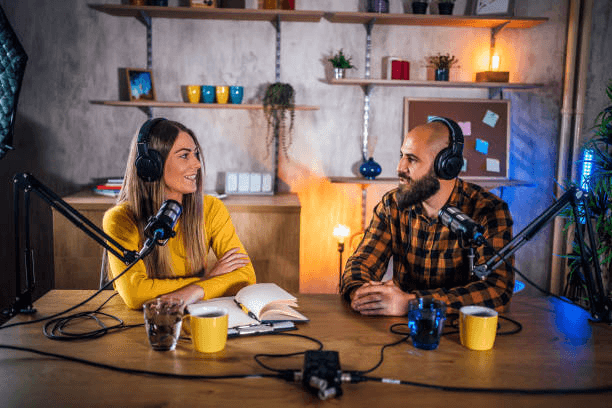
Picture two engaging hosts, say, Lilith (the curious host) and Adam (the knowledgeable guest), bantering on a screen. On a pane, slides pop up: charts, pictures, highlighted quotes, quick polls, even short explainer animation. They tackle your uploaded document(s), weave the core ideas into a storyline, and back every claim with a page number you can jump. It’s like having John Oliver and Hans Rosling read your research report, debate it, draw graphs, and hand you the spark notes, without the late-night ads.
Visual recap goes beyond pre-scripted generation.
The AI system dissects the source, drafts a narrative arc, and then feeds it to two final “performer” agents that improvise, question each other, and adjust visuals on demand. The result: a 5 to 30-minute interactive video that our beta users said it feels “surprisingly relatable, delightfully nerdy, and way easier than reading 80 pages.”
Why Go Visual?
Audio summaries solve one problem, eyes-free consumption, but they create three new ones:
1. No Diagrams: Try describing a Sankey flow or a body of policies purely in words.
2. Linear Lock-in: If you zone out or get distracted at minute six, your only choices are to rewind or remain confused.
3. Zero Citations-Unverifiable: “Somewhere in the report it said…” isn’t scholarship.
Visual Recap addresses all three abovementioned. It shows the diagrams and graphs, you can jump to the main source and take it from there, and you can just verify by looking at the video. For researchers, that means trust. For students, that means less time hunting vague references. For everyone else, it simply feels natural: we evolved to process images 60,000x faster than text, after all.
A brain that sees is a brain that remembers.
How Does It Work?
Architecturally, Visual Recap sits on top of the Nouswise search system with a twist: parallel agents tasked to execute specific tasks. Instead of a single generalist LLM juggling everything, we shard tasks: extraction, verification, pedagogy, visuals and so on. Our proprietary content analysis technology allows us to distill and extract the information from the raw unstructured data (such as pdfs, ...). This enables the other AI agents work together in harmony in order to create a visual overview (a video) end-to-end.
How to make a Visual Recap?
It is indeed pretty simple, you just need to say what you want to listen to, be it the latest financials of NVIDIA or the ECB annual meeting.
First you need to upload your file or select it from the libraries within the app:
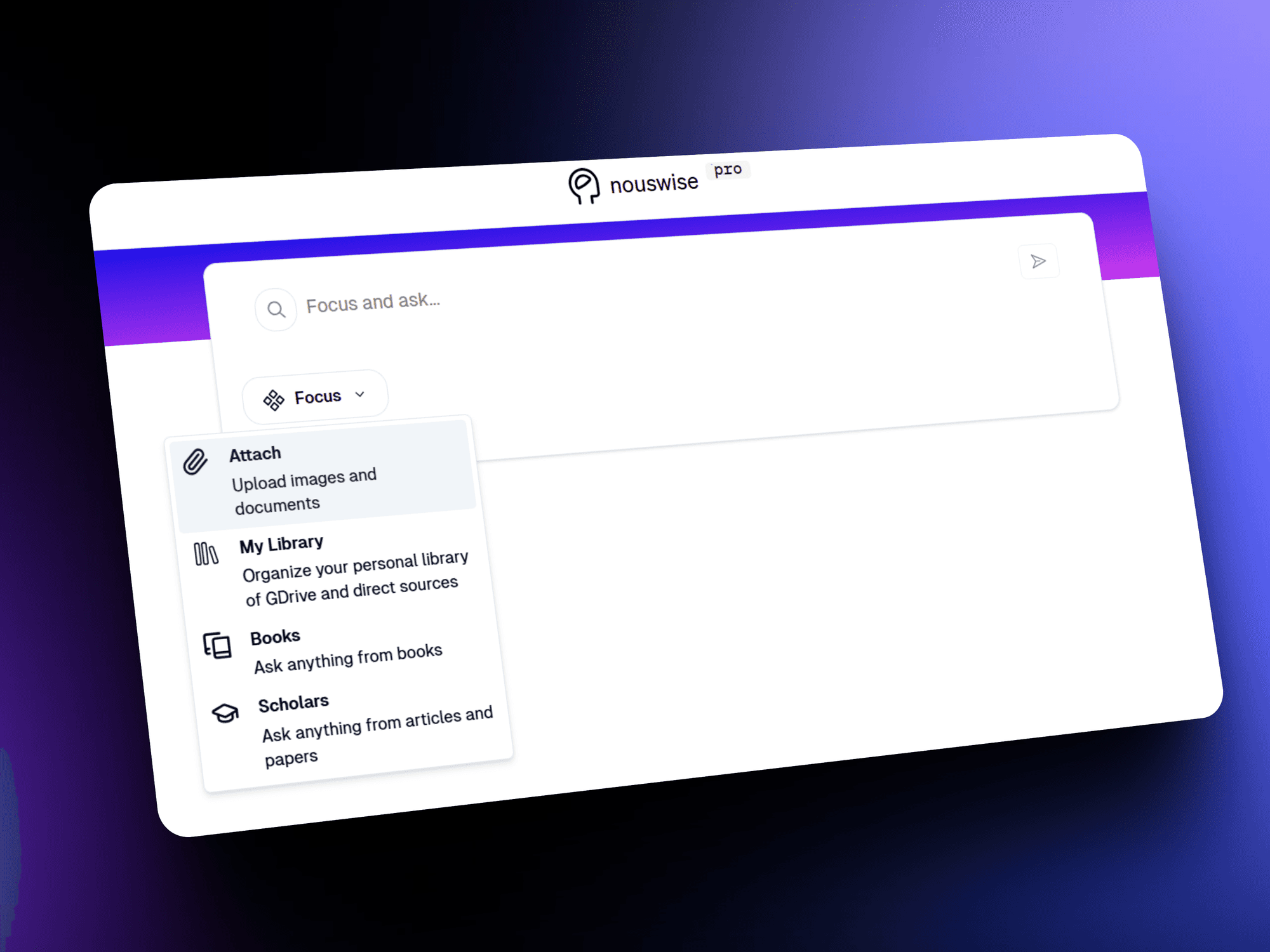
Once it's processed you just need to send the query:
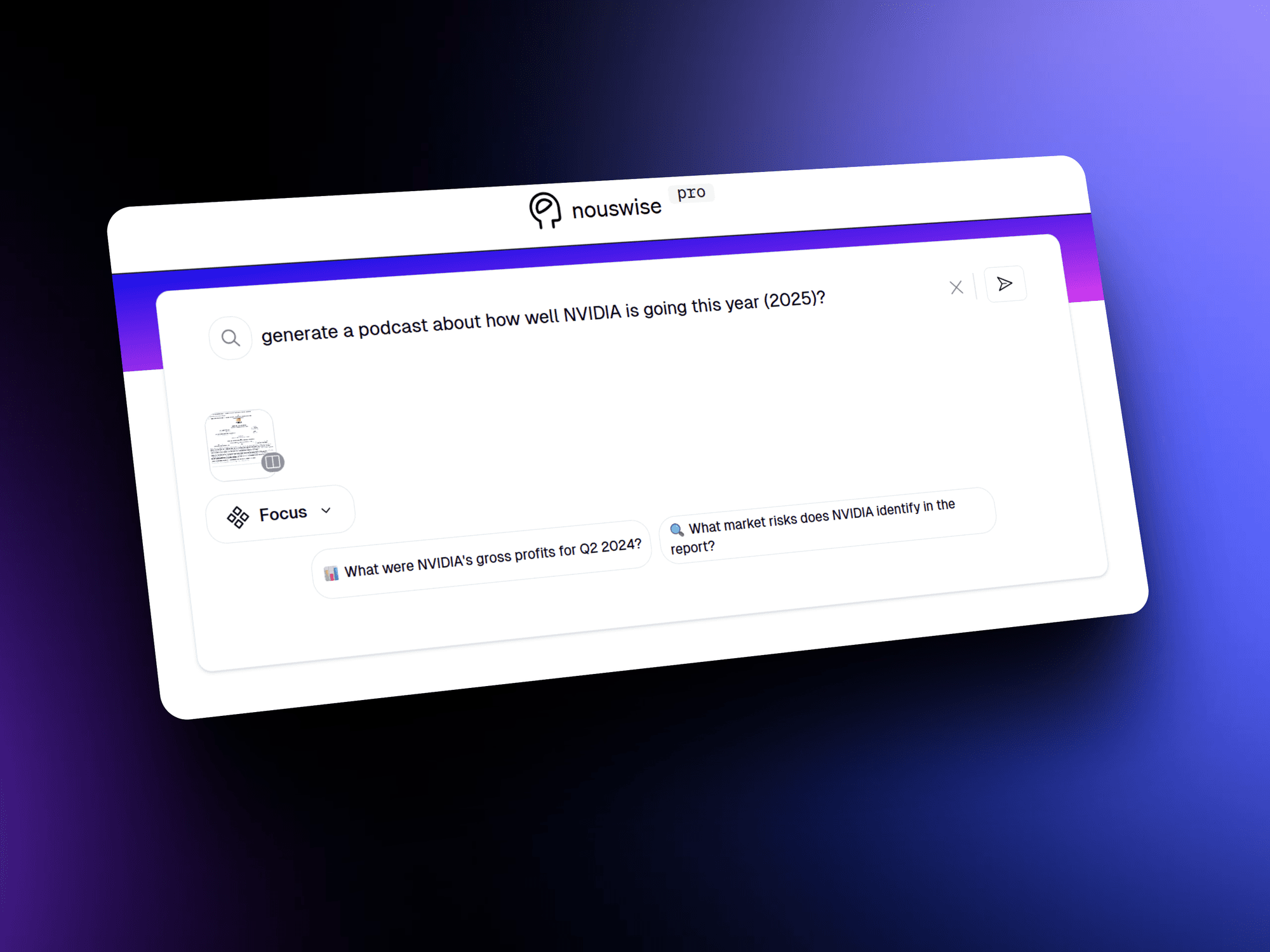
It takes a couple of minutes:
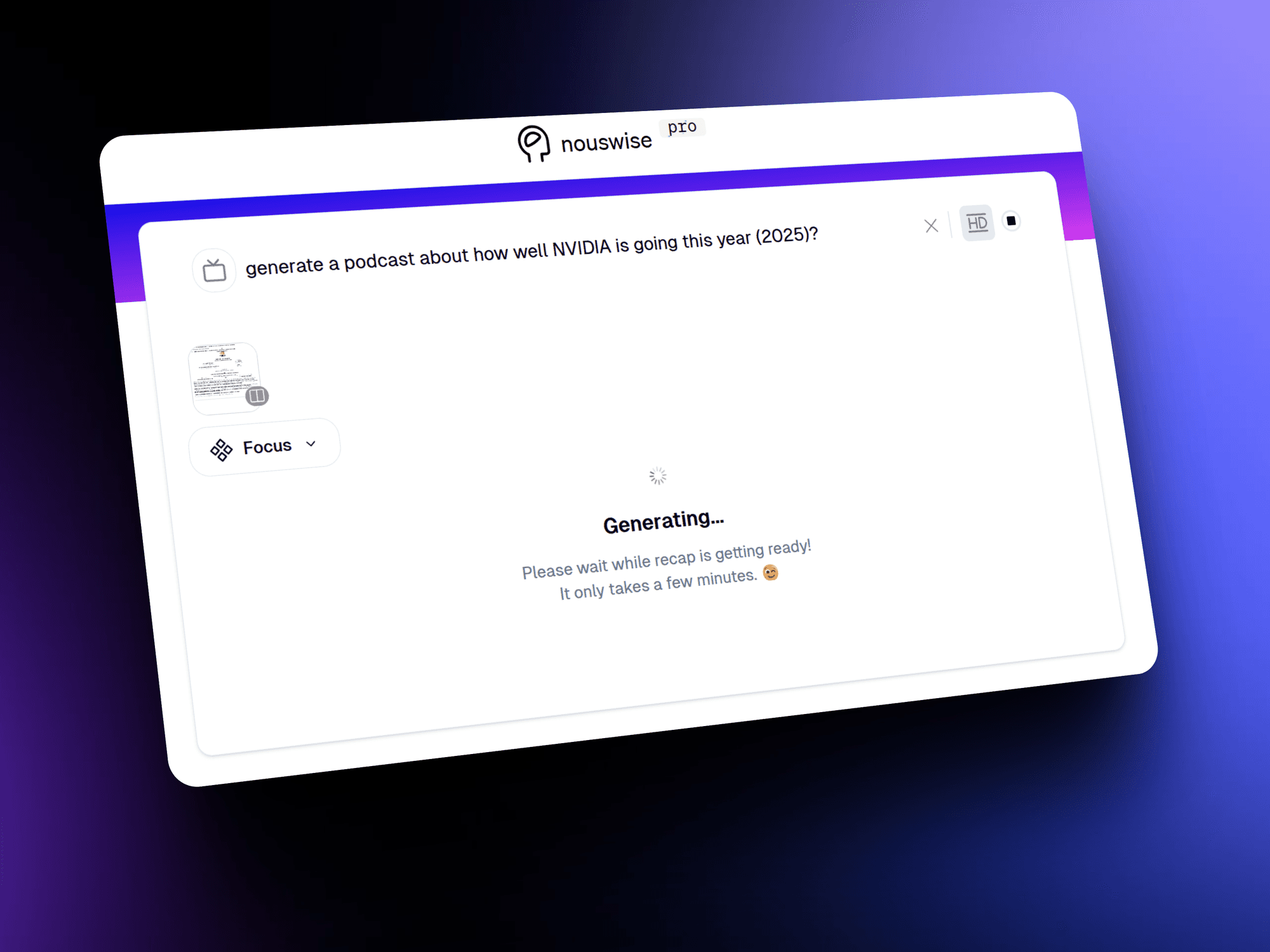
After a few minutes it's ready:
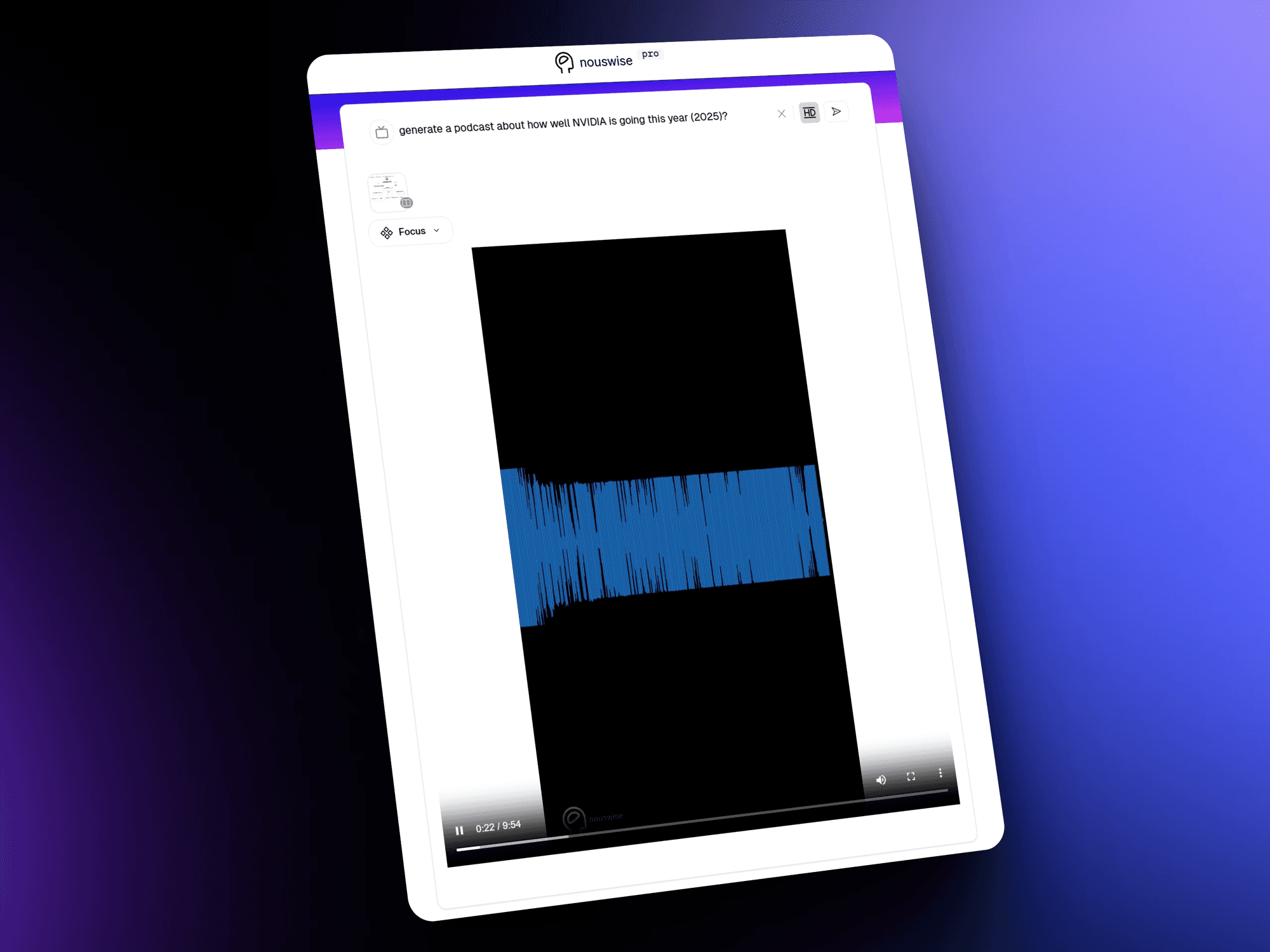
And the output video looks like this:
The other sample from ECB's 2024 annual report:
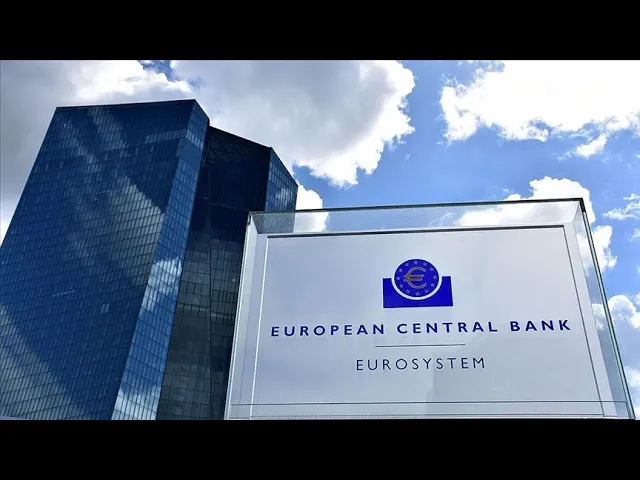
Reading vs. Understanding
Knowledge shouldn’t feel like spinach, necessary but joyless. Visual Recap doesn’t kill reading; it rescues it. By letting AI shoulder the grunt work of extraction and visualization, we free humans to do what we’re uniquely good at: questioning, connecting, creating.
Upload your most intimidating PDF right now and give Visual Recap a spin. Then tell us: what did the hosts taught you that the author couldn’t? Share your experiences at team@nouswise.com.