This video clip illustrates how Norman Doors can have big impacts on their users.
A PushaPull handle - Same on Both Sides
The most annoying door in Chicago… No sign, looks like a pushapull handle…

Anonymous asked:
The latest photo posted of the 'Pullsh' door is photoshopped from a still the video by Vox media.

green-tea-and-go asked:
Sorry for the super late reply! I didn't even realize you answered my original ask >.< I just find the post funny and wanted to show a friend because the door handle is on the outside which I find absolutely ridiculous. Just... so many steps in order to leave the train with first rolling down the window and then sticking your arm out to access the handle hahaha I can totally imagine people getting stuck in the train and riding to the next stop just because they couldn't open the door

The British School of User Interface design - train doors

Bartosz Milewski has an excellent example of wonderfully functional but incredibly baffling design: the traditional British train carriage door.
I’ll let Mr. Milewski describe the situation that creates mild panic in the users mind:
Do you see any kind of a handle? In the obvious location, you see a steel plate. You push it, kick it–nothing! Maybe there is a button? You start searching, more and more desperately as the train gets ready to continue its ride. If you are lucky, you’ll notice a blue plaque above the window.
Here’s what it says:

Image 2: Instructions on how to open the door on a sign, above the door.
That’s right! The handle is outside. Please notice that the climate in those parts of the world is not very user-friendly. It gets cold in winter and it rains a lot. I presume they don’t have special winter railway cars. On second thought, I shouldn’t presume anything.
Dan Lockton has an interesting theory on why these doors follow this design:
I’m assuming that this design was intended to introduce an extra step into the door-opening procedure, a speed-hump, if you like, to make it less likely that a door was opened accidentally while the train was in motion (before central door locking was introduced – which makes it less necessary). From a usability point of view, we might immediately dismiss any system which has to have such detailed instructions to inform the user about performing such a simple task, but it’s certainly interesting to consider this kind of poka-yoke.
Being forced to lowering the window to get to the handle is almost like a modal ‘Are you sure you want to delete this file?’ dialogue box.
Interesting thought: the door has been designed in such a way to make it “less usable” in order to deter users from using it except when vital, i.e. getting off the train.
But, as Mr. Bartosz mentioned above:
You start searching, more and more desperately as the train gets ready to continue its ride
Mr. Lockton hits the nail into the coffin of this functional but borderline unusable door when he mentions the impact this door has on train fuel efficiency.

Image 3: Signage is now needed to persuade users to close the windows, they need to open in a hurry to get out of the train, for train fuel efficiency.
This sticker suggests keeping the window closed to cut drag and save fuel, but as I walked along the train, almost all these windows were dropped down, left in that position by the last person to close the door.
The urgency of scrabbling to lower the window, stick your hand out and use the handle, with a crowd of commuters behind you probably overwrites any intentions to close the window again engendered by the ‘Make a small change’ sticker.
An excellent example how a badly designed interface leads to extra visual noise in the form of extra signage.
How to design doors to be less confusing
You’ve encountered a door like this. One that looks like you should pull on it, but really you’re supposed to push. Those doors you hate have a name: “Norman doors.”
They’re named after Don Norman, a UC San Diego cognitive scientist, who identified this phenomena in his book “The Design of Everyday Things.”
According to Norman, pushing on a door that says “pull” isn’t necessarily your fault. It is just poorly designed.

So what’s the solution to this mess?
Norman explains two principles of design that make objects, including doors, more intuitive to use.
One is discoverability — that is, just by looking at the door, you should be able to detect what you could do with it. So a door with only a flap would be more intuitively interpreted as something you push on rather than pull.
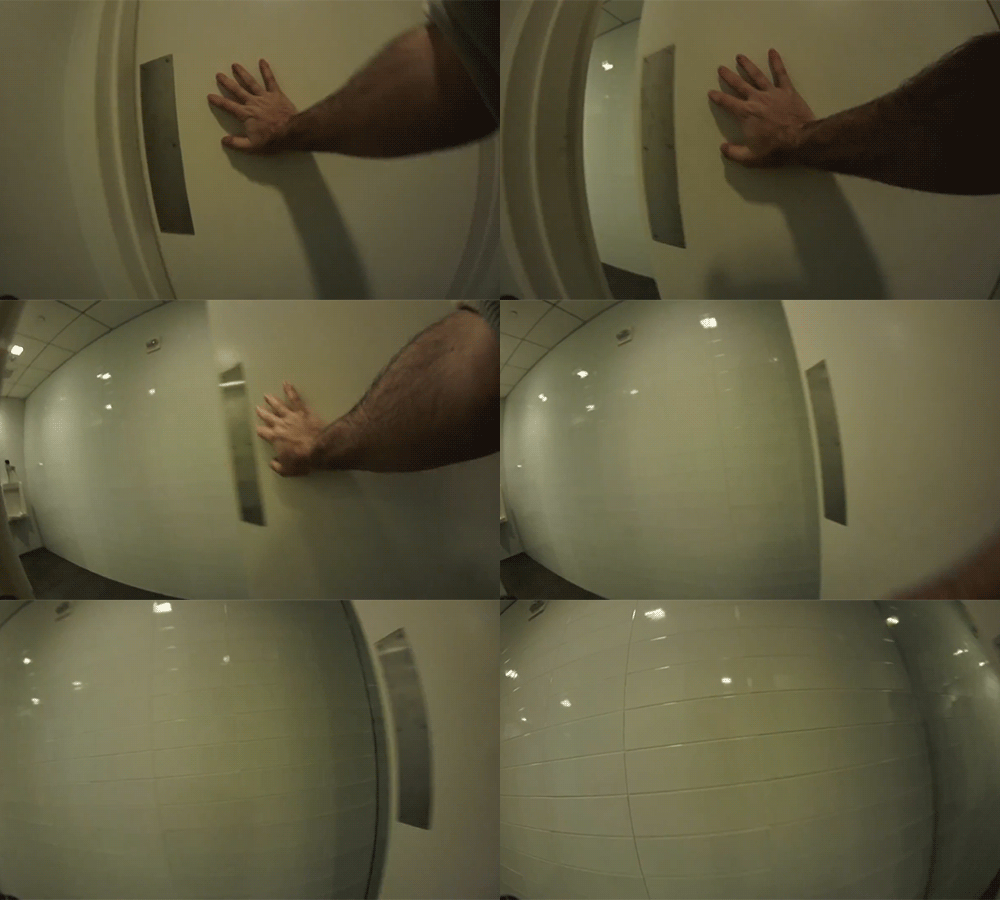
A well-designed object should also provide you feedback while using it.
Feedback involves any visible, tactile, auditory or sensible reactions that help signal whether your attempted use of the object was successful. In the case of doors, the twistable knobs would signal to you whether the door is locked or not.

And perhaps the true test of a well-designed door may be whether your family cat can open it with ease.
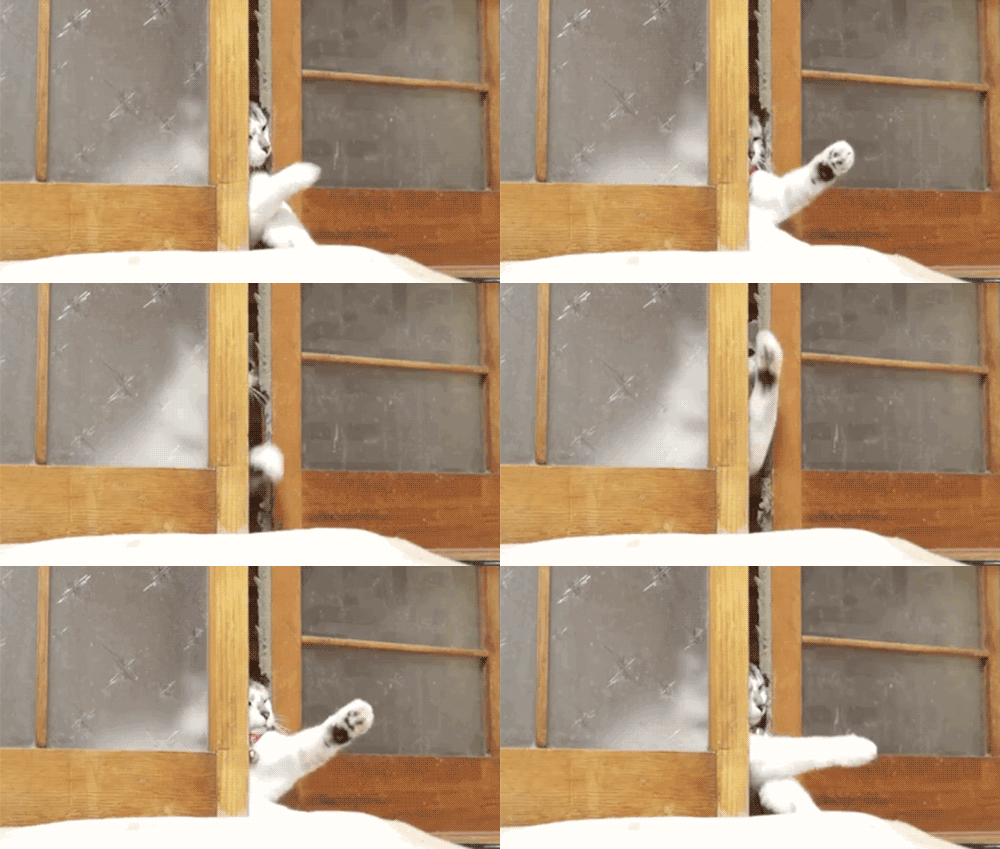
Watch the full @vox video on Norman doors (and human-centered design)
green-tea-and-go asked:
Sorry to hear that your previous Norman doors blog got deleted! I’m trying to find a post to show my friend. It’s the one with a British train door (I think) where the handle is on the outside and you have to stick your hand out the window to access it... if you find it again, could you post it? (Not sure if you were the one who originally posted it or if it was a reblog)

“Stop, please stop! I’m never going to read and I’m always going to pull a handle that looks like it should be pulled. #uxfail”