- A new study in Panama finds that nitrogen availability limits forest growth in the early stages of regeneration.
- Nitrogen addition to newly cleared land and 10-year-old forests substantially boosted regeneration, though adding nutrients to older forests did not have the same effect
- The study also found that phosphorus availability did not limit forest growth at any stage of forest maturity.
- The researchers recommend ensuring nitrogen-fixing species are included during reforestation.
Regenerating tropical forests pull carbon dioxide from the air, but a lack of nitrogen in the soil could slow this process, a new Nature Communications study has found.
Restoring tropical forests is widely seen as one of the most important ways to mitigate climate change, but scientists still don’t fully understand how nutrient availability may constrain tree growth. That means we can’t really predict how quickly regenerating forests will accumulate carbon.
Both nitrogen and phosphorus are critical for plant growth, but when forested land is cleared, nitrogen in disturbed soils can evaporate or wash away. Phosphorus is also thought to be limited in many tropical soils.
Now, a large-scale experiment in Panama finds that a lack of nitrogen in soil limits the early stages of tropical forest regrowth. When researchers added nitrogen to recently cleared land, the trees grew nearly twice as fast.

The finding “totally blew us away” says study author Sarah Batterman, an ecologist at the Cary Institute of Ecosystem Studies and associate professor at the University of Leeds.
“We didn’t realize that nitrogen could be that important in tropical forests, and the fact that the forest grew back twice as fast in the first decade was just kind of amazing.”
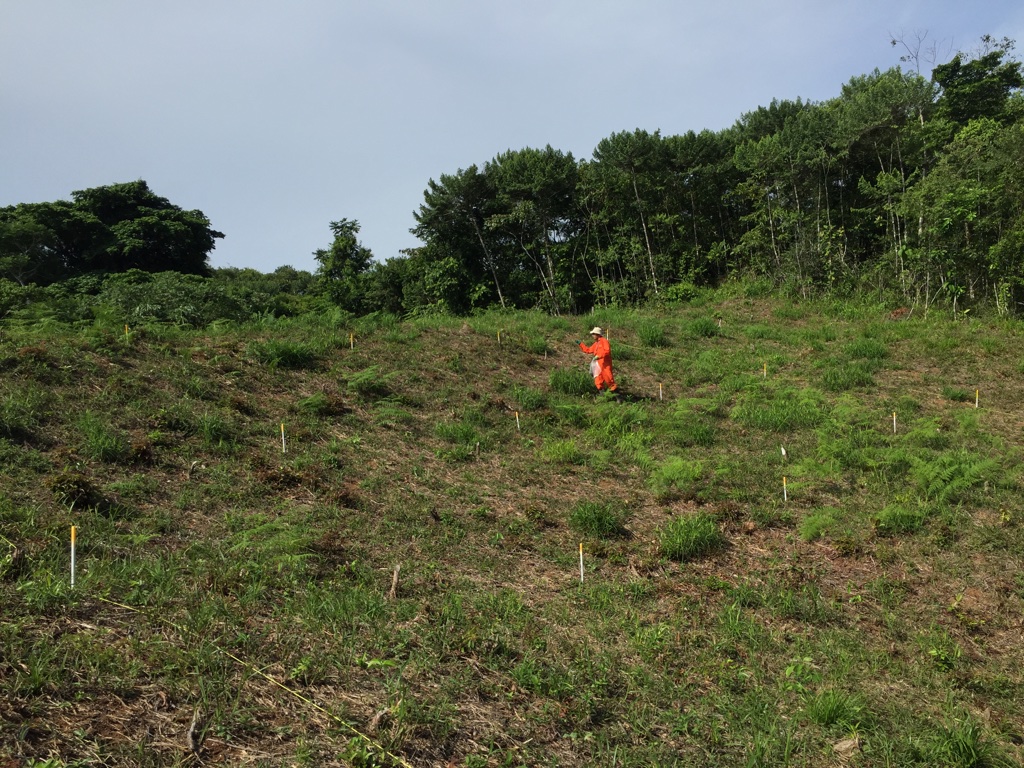
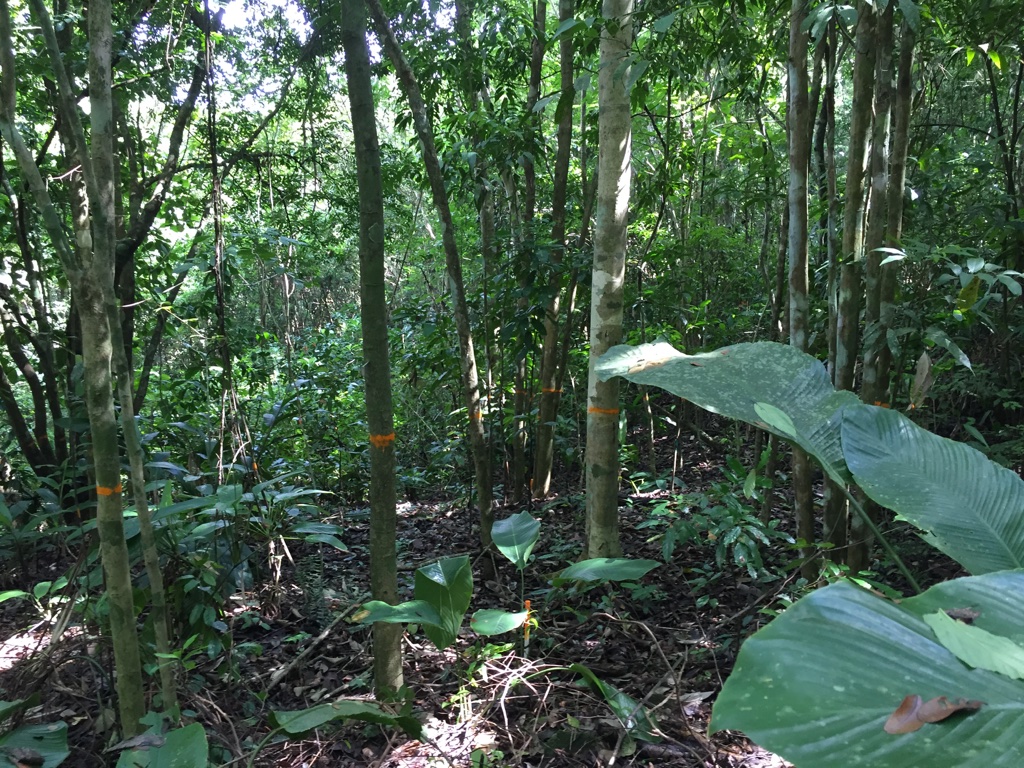
The study took place within the Panama Canal Watershed in lowland tropical forest. To understand the impact of nutrient availability on tree growth, the researchers applied nitrogen and phosphorus, alone or in combination, to forest plots at different stages of maturity, from newly cleared land to middle-aged stands (10 and 30 years old) and mature forest. Then they monitored tree growth, meticulously measuring the diameter of each tree stem within the sample plots and compared the results with control plots that had not been fertilized. The researchers censused each plot at least five times.
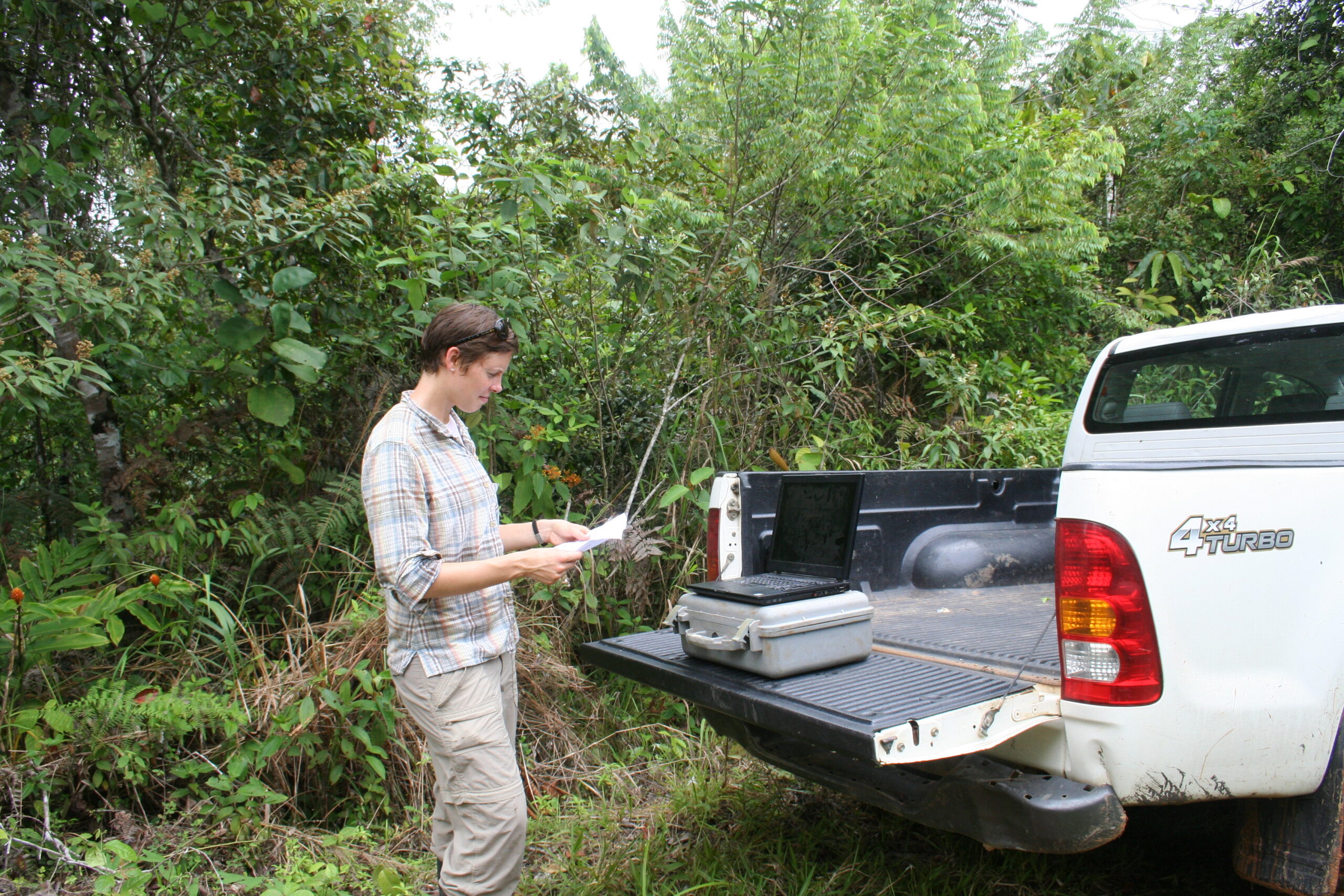
The data set was huge, says Wenguang Tang, a research associate at the University of Glasgow and the study’s first author, with around 200,000 individual tree stem measurements; it took him more than a year and half to sort, check and analyze the data.
When the results came in, the impact of adding nitrogen to young forests stood out; newly cleared pastures regenerated nearly twice as fast, with net above ground biomass accumulating 95% faster, while 10-year-old forests regenerated 48% faster. These changes could be seen on the ground, Batterman says, with the trees growing bigger much faster, the canopy closing more quickly and the forest beginning to naturally thin as it matured.
The study also found that the nitrogen limitation eased after 10 years, with nitrogen additions showing no additional benefit in 30-year-old or mature forest.
Notably, the study also found that adding phosphorus did not boost tree growth.
“We thought that there would be a switch to phosphorus limitation when nitrogen limitation went away, but we didn’t find that in the 30-year-old forest or in the mature forest, which is somewhat surprising given the theory about phosphorus limiting tropical forests,” Batterman says.
It could be that phosphorus limits belowground growth or leaf production, which wasn’t measured in the study, or plants may have evolved strategies to overcome phosphorus limitation, something Batterman and other researchers are also looking into.
The study findings are “super cool” says Kelly Andersen, a research scientist at the Missouri Botanical Garden, who was not involved in the study. “[We] will be seeing more tropical land going through secondary succession in the next decades. Now we have clear evidence demonstrating that the carbon accumulation in these regenerating landscapes will likely be nitrogen limited.”
Jennifer Powers, a professor at the University of Minnesota, who was not involved in the study, says the study’s scale was impressive. “Next steps would be extending this study to … other types of conditions.”
Powers heads a long-term study in dry tropical forests in Costa Rica. Her findings broadly align those of the Panama study, though she has found phosphorus additions contribute to belowground root nodule development in 30-year-old forest.
Scaling up, the Panama study estimated that nitrogen limitation in young forests prevents the sequestration of roughly 0.7 gigatons of CO2 per year. Still, the researchers caution against adding fertilizer to regenerating forests. Nitrogen fertilizers come with all kinds of negative impacts, from pollution to the release of nitrous oxide, a powerful greenhouse gas, Batterman says.
Instead, they recommend making sure nitrogen-fixing trees are present in naturally regenerating forests or included in reforestation projects.
Another suggestion is to plant trees in areas where there is nitrogen deposition, for example, downstream from industrial pollution.
“This is a way that we can just boost that drawdown [of reforestation] … as we switch to other carbon technologies and find other ways of reducing our emissions,” Batterman says.
The findings also contribute more broadly to understand the role nutrients play in forests.
“If we want to understand the carbon cycle across the globe – and we do because it’s so intimately linked to the climate system – really understanding where and when and … at what time point in the lifespan of a forest does that forest productivity experience nutrient limitation” is important, says Powers.
As carbon dioxide in the atmosphere increases, trees and other plants are expected to grow faster, taking in carbon as they do so. However, this expected extra growth, called CO2 fertilization, could be limited by the availability of certain nutrients in soils.
A July Nature study, on which Batterman was a co-author, found that current estimates of the amount of nitrogen available to plants, called biological nitrogen fixation, is overestimated, especially in the temperate forests and grasslands. This overestimation of biological nitrogen fixation means that models overestimate the CO2 fertilization effect by about 11%, according to a November PNAS study, on which Batterman was also a co-author.
Banner image: A root nodule on a legume tree where symbiotic bacteria fix nitrogen from the atmosphere into a form of nitrogen that the trees can use to grow. Legume trees are abundant in tropical forests and can be used in reforestation efforts to naturally enrich the soil with nitrogen that speeds up carbon sequestration and storage. Image by Sarah Batterman / Cary Institute of Ecosystem Studies.
Citations:
Kou-Giesbrecht, S., Reis Ely, C. R., Perakis, S. S., Cleveland, C. C., Menge, D. N., Reed, S. C., … & Wurzburger, N. (2025). Overestimated natural biological nitrogen fixation translates to an exaggerated CO2 fertilization effect in Earth system models. Proceedings of the National Academy of Sciences, 122(48), e2514628122. doi:10.1073/pnas.2514628122
Reis Ely, C. R., Perakis, S. S., Cleveland, C. C., Menge, D. N., Reed, S. C., Taylor, B. N., … & Wurzburger, N. (2025). Global terrestrial nitrogen fixation and its modification by agriculture. Nature, 643(8072), 705-711. doi:10.1038/s41586-025-09201-w
Tang, W., Hall, J. S., Phillips, O. L., W. Brienen, R. J., Wright, S. J., Wong, M. Y., … Batterman, S. A. (2026). Tropical forest carbon sequestration accelerated by nitrogen. Nature Communications. Retrieved from https://www.nature.com/articles/s41467-025-66825-2
Credits
