Christie’s has quietly shuttered its digital art department, marking the end of a short but influential experiment that helped propel NFTs and A.I. art into the mainstream. The move comes as the art market weathers a prolonged contraction and as trading in digital art has dropped from its 2021 peak.
The global auction house “made a strategic decision to reformat digital art sales,” a spokesperson told Now Media, which first reported the news. “The company will continue to sell digital art within the larger 20th and 21st Century Art category.”
Two of the department’s staff members were let go at the end of August, including the vice president of digital art, Nicole Sales Giles, according to Now Media. One digital art specialist will remain on staff in New York.
Christie’s did not respond to a request for comment on the staff reductions by press time.
The decision to downsize comes amid a two-year contraction in the art market. Christie’s brought in almost $1.5 billion in fine-art sales in the first half of 2025, a decline of 1.9 percent from the same period last year, according to Artnet’s Mid-Year Intelligence Report, published on September 8. However, sales were down nearly 25 percent from the first six months of 2023.
The NFT art market, meanwhile, has also faced closures, including the shuttering of digital art platforms like Async Art, KnownOrigin, and LG Art Lab. The trading volume of art NFTs fell from a high of $2.97 billion in 2021 to just $197 million in 2024, according to one analysis by DappRadar.
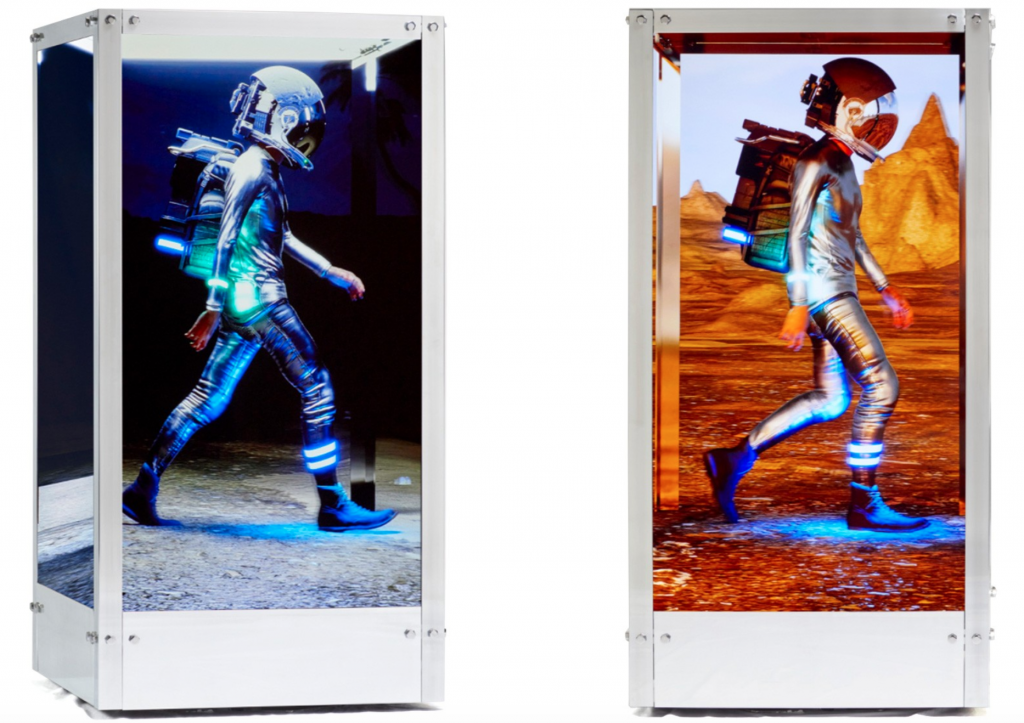
Beeple’s HUMAN ONE (2021) sold for $29 million (estimate $15 million) at Christie’s November 21st century art evening sale in New York in 2021. Courtesy of Christie’s.
Last year, Sotheby’s laid off most of its Metaverse and NFT team, retaining only three staffers, including digital art head Michael Bouhanna.
“Auction houses can’t justify a whole department when it brings in less revenue than the others (even with some recent successful sales),” said digital art advisor and collector Fanny Lakoubay. “It’s definitely not a great public signal, but we should also remember: auction houses only focus on secondary sales of already well-known artists and brands. It’s still too early for that model to really work/scale with digital art.”
Other commentators had a positive spin on the news, seeing it as a new beginning. “Congrats to NFTs on graduating from ‘digital collectible’ to ‘serious art that belongs in a museum,'” the platform LiveArt wrote in a post on X, noting that the auction house was folding NFTs into contemporary art sales.
Christie’s has led the way in integrating the nascent category of digital art into the mainstream art market. It began shaping the conversation in around 2018, when it sold the first-ever A.I.-generated portrait at auction, which fetched $432,500, including fees. That same year it inaugurated its annual Art + Tech Summit.
In 2021, the auction house made headlines with its landmark $69 million sale of Beeple’s Everydays: The First 5000 Days, contributing to an NFT gold rush across the art world that spurred the development of a dedicated digital department. The firm launched Christie’s 3.0, its fully on-chain, Web3 platform for collecting digital art in 2022.
Earlier this year, the auction house held “Augmented Reality,” the first sale dedicated exclusively to A.I. art, which generated widespread debate about the use of A.I. in art and surpassed expectations when it netted $700,000 in total.