On Thursday, August 21, 1980, Phil Nelson, a technical support representative at DRI’s headquarters in Pacific Grove, CA, answered a phone call. It was Bill Gates, asking about the status of the CP/M port to the Intel 8086 processor. Nelson replied that CP/M‑86 was scheduled for release by the end of the year. Gates then asked to speak with DRI president Gary Kildall; he explained there were some very important visitors in his office that he intended to send over.
It was IBM, looking for a disk operating system for their upcoming IBM PC.
Digital Research Incorporated (DRI) was one of the most innovative software companies of the late 1970s and early 1980s. CP/M was first implemented by the DRI founder Dr Gary Kildall in 1973/74 - before any commercial microcomputers even existed. The company’s next operating system MP/M, released in 1979, brought multi-tasking, multi-user support, and built-in networking to eight-bit machines - features that became common on personal computers only in the mid-1990s. Some of the best compilers of the early 1980s were developed by DRI, including PL/I-80, Pascal/MT+, CBASIC, DR FORTRAN and DR C. Graphics were another area where DRI left a significant mark: the GSX graphics library, developed from 1982, was a foundation not only for the GEM desktop environment but for many other graphic applications, including the Ventura Publisher.
DRI could be described as a “big fish in a little pond.” At its peak it employed just over 500 people and generated roughly $55 million in revenue, yet it was the fourth‑largest micro‑software company of the era and held a virtual monopoly on disk operating systems for business microcomputers. By mid‑1991, when Novell acquired the company, it was perhaps two‑thirds of that size in both revenue and headcount; but by then the industry had grown so much that DRI had become almost insignificant.
The history of the company can be divided into the following periods:
Early days (1976-1980): organic growth from a family shop to an organization with about 40 employees and $6 million in revenue.
Rapid growth (1981-1983): venture‑capital investment.
Decline (1984-1986): as the market standardized on IBM PC‑compatible machines running MS‑DOS, pushing DRI to the brink of bankruptcy.
Survival (1987-1991): reduced in size, the company barely managed to stay in business until it was acquired by Novell.
The first period is relatively well covered in various sources, including Kildall’s own writings and interviews with his friends and co-workers. The last one, on another hand, is much harder to research; the company was largely forgotten and received little press coverage. Its most successful product from that period was an MS-DOS compatible product called DR DOS. Eventually, Novell acquired DRI as part of a misguided attempt to compete with Microsoft by spending obscene amounts of money on various obsolete technologies.
This text is focused on the period from 1980 to 1986 starting with the negotiations with IBM and ending with the change in leadership that resulted in prolonged existence of the company, if not in return to relevance.
If you are looking for a biography of Gary Kildall, this is not it. The closest thing to a biography that I am aware of is the chapter on him in They Made America: From the Steam Engine to the Search Engine: Two Centuries of Innovators by Harold Evans, Gail Buckland and David Lefer. Kildall is probably the person I mention most in this article, but the story is really about his company, not his personal life.
While this article is less technical than most of my writing, it is still written by a techie for techies. I assume readers’ familiarity with computer concepts. I focus primarily on engineers at DRI, even though I recognize that many people in non‑technical roles also deserve credit.
I did not have the opportunity to speak with any former DRI employees1 and instead relied on various sources: DRI publications (DR News and Digital Dialog); various interviews with Tom Rolander, Gordon Eubanks, Alan Cooper, Lee Lorenzen, Kathy Strutynsky, Dick Williams, Frank Holsworth; archives of old computer magazines; and a few books, including the above mentioned They Made America and Gates by Stephen Manes and Paul Andrews. No AI tools were used for research and writing, except for spell-checking and grammar2. The photos were taken from old magazines and DRI publications.
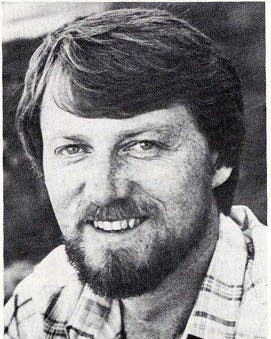
Digital Research Incorporated was officially founded in June 1976 by Dr Gary Kildall and his wife Dorothy McEwen, with assistance of their family lawyer, Gerry Davis, who served on the board for the entire existence of the company. The goal was to commercialize CP/M, which Kildall had developed in 1974. He had hoped to sell CP/M to Intel, just as he had sold them PL/M - the first high-level programming language specifically aimed at Intel-based microcomputers. Kildall was happy with his job at Naval Postgraduate School in Monterey CA and occasional consulting gigs for various high-tech companies based in Silicon Valley. The idea to start a company came from McEwen, who took on the operations while leaving the technical work to Kildall. They placed an ad at Dr Dobbs’ Journal and started selling CP/M 1.3 to hobbyists for $70 via mail order.
In the beginning, the business brought barely enough revenue to sustain the small software shop. The deal with IMSAI in 1977 established CP/M as a viable operating system, and from that point the company began to grow. A merger with Microsoft was discussed late that year, but nothing came of it.
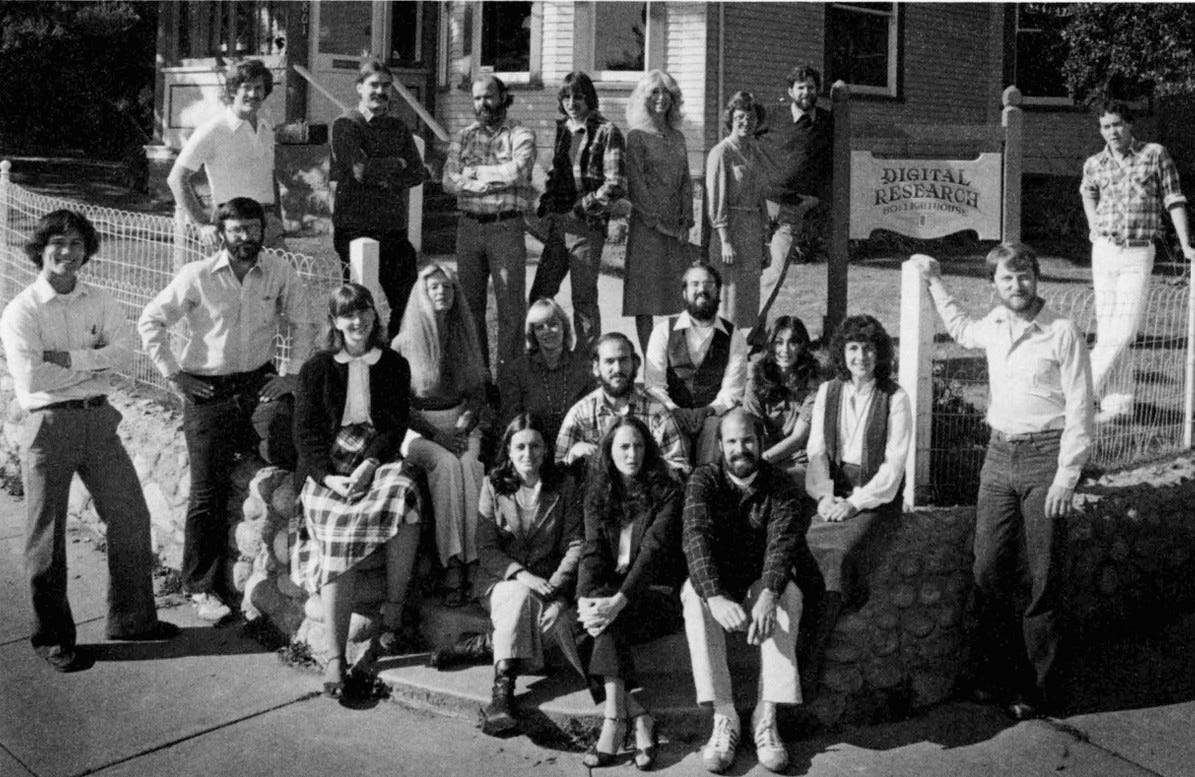
In early 1978, they hired their first full-time employee, John Pierce. By the end of the year the headcount had reached nine and the company moved into a new building - a Victorian house converted into office space. CP/M 1.4 was released the same year and sold for $100 per copy. Sales reached $100K a month with a 57 percent profit margin. Kildall started working on a PL/I compiler.
The year 1979 was marked by the release of CP/M 2.2 which was a significant re-design of the operating system and the most commercially successful CP/M ever. Also, MP/M 1.0 - a multi-user, multitasking operating system compatible with CP/M was developed and released.
By August 1980, DRI had expanded into another building and employed 24 full-time staff. The flagship product - CP/M 2.2 was by then the industry standard, but the company was looking toward the 16-bit future: CP/M-86 was being developed as an upgrade path for the existing CP/M customers, while the multi-tasking MP/M was seen as the real future: MP/M-86 was under development by Frank Holsworth who was hired earlier that year. Kildall himself was busy wrapping up the PL/I compiler which he saw as a useful tool for developing both system and business applications for microcomputers.
All this success does not mean Kildall was happy with the situation. A brilliant computer scientist, he never had much patience for mundane aspects of running a business; he would much rather work on things that interested him than worry about customer satisfaction. Early on, he offered to sell DRI to the Oakland-based Structured Systems Group, led by Alan Cooper for $70K, but they could not afford it, and Gary Kildall reluctantly carried on, leaving the business operations to his wife as much as possible.
The arrangement worked, at least while CP/M was generating strong revenue, but the problems became obvious early. Gordon Eubanks later described the organization as very dysfunctional: “Gary was very laid-back. He didn’t care that much. Dorothy ran the business and he ran the technical side, and they did not get on.”
By the summer of 1980, 16‑bit microprocessors had been available for some time: Intel’s 8086 was released in 1978, followed by the Zilog Z8000 in early 1979 and Motorola’s 68000 later that year. Computer manufacturers (“OEMs”) were in no hurry to adopt them, though. Virtually all business microcomputers at that time were based on Zilog Z80 CPU and S-100 bus and ran CP/M.
The change came from a direction few expected. IBM CEO Frank Cary was so frustrated with his company’s inability to develop a successful personal computer that he allowed the Entry Level Systems department in Boca Raton, Florida, to bypass the IBM’s development process and build a computer in a year using of-the-shelf components (including the Intel 8088) and third-party software. The software lead for the project, Jack Sams, immediately contacted Microsoft for a BASIC interpreter. He also hoped to license a disk operating system from Microsoft, but there were none at the time. Instead, Bill Gates directed him to Digital Research.
The initial meeting between the IBM and DRI took place on Friday, August 22, 1980, at DRI’s headquarters in Pacific Grove, CA. What exactly happened is impossible to establish, given the widely different accounts from the people who were there3. According to Jack Sams, the DRI representatives refused to sign the NDA, and the IBM delegation left without even meeting Kildall or starting discussions about licensing of CP/M. The DRI side maintains that Kildall returned from a business trip in the afternoon, signed the NDA, and reached “an understanding” with IBM to license CP/M.
Descriptions of the aftermath also differ: Kildall said he repeatedly tried to contact Sams without success. Sams recalled having phone conversations in which he asked DRI to commit to IBM’s deadline for delivering CP/M-86 and was turned down.
Interestingly, there is no controversy about Bill Gates’ role in these early negotiations. All sides agree that he sent the IBM team to Digital Research. Furthermore, after the meeting broke down, he called Kildall to urge him to restart the talks. It was not until a month later that he got convinced by Paul Allen and Kay Nishi that Microsoft should offer an operating system to IBM to save the project.
Details aside, IBM and DRI were not able to reach the agreement for multiple reasons:
First, there was DRI’s attitude toward the opportunity. Claims that Gary Kildall went flying for fun that day are not fair, but Jack Sams and his team had reason to be frustrated. Gates had rescheduled an important meeting with the Atari’s CEO to meet Sams, personally greeted the IBM visitors in a suit, and even sent a thank‑you note after the meeting. By contrast, Kildall flew off to deliver documentation to a client and left the IBM delegation with his wife and lawyer for the entire morning. Microsoft was eager to put all other projects on hold to help IBM meet its schedule. DRI had no interest in doing such a thing. Kildall had little faith that a big and slow company like IBM could succeed in the fast-moving microcomputer market.
Second, there was a fundamental technical disagreement. In Kildall’s view, CP/M was adequate for 8-bit computers with 64 KB of address space, but the new generation of personal computers built around 16-bit processors was ready for multi-tasking operating systems. DRI had already built one - MP/M, and was porting it to the Intel 8086 as MP/M-864. CP/M-86’ s role was merely an upgrade path for the existing CP/M users. IBM was not interested in multi-tasking capabilities of the operating system; they wanted something familiar to existing personal computer users, not to go overboard with innovation.
Finally, IBM asked to pay one-time fee for CP/M-86 and market it as PC-DOS. DRI insisted on per-copy royalties and keeping the CP/M name. Apparently, they felt caving to IBM’s requests would cause displeasure from the existing customers and maybe even lawsuits. Interestingly, the important IMSAI deal of 1977 had included both a flat fee and a name change. More recent agreements with Osborne Computer and Microsoft involved one‑time payments without name changes. Kildall later regretted both arrangements and did not want to repeat the mistake.
One way or another, at some point Jack Sams had had enough and went back to Bill Gates who was much more enthusiastic about participating in the IBM project. Microsoft agreed to provide an operating system. Instead of developing it from scratch, they licensed, and later bought, 86-DOS, recently developed by Seattle Computer Products. 86-DOS implemented the CP/M application interface to ease transition of existing software from the popular 8-bit operating system. Microsoft generously offered the OS to IBM with no per-copy fee but kept the right to license it to other OEMs as MS-DOS.
The contract between IBM and Microsoft remained secret, and DRI was initially kept in the dark. Eventually, as the release date approached, IBM started sending the API specification to software developers to ensure support for its new machine. It was pretty obvious the API was a copy of CP/M’s, and Kildall notified IBM of his intention to sue SCP for copyright infringement.
That caused immediate reaction in Boca Raton. Regardless of the outcome, a lawsuit would have delayed the release of PC-DOS, and that was the last thing IBM wanted to happen. IBM’s Don Estridge invited Kildall to his headquarters, and on July 21, 1981, the two sides reached an agreement: IBM would market CP/M-86 alongside PC-DOS and pay a per-copy fee, just as DRI had originally asked. There was no agreement on the retail pricing at that time, though.
On August 12, 1981, Estridge presented the IBM PC at the Waldorf-Astoria in New York City. The only available operating system for the new computer was IBM PC-DOS, priced at $40. Two alternate operating systems were announced for a future date: DRI’s CP/M-86, at $240 and the UCSD p-System from the Lowel, MA based company SofTech at $260. According to Estridge, it was research conducted by SofTech that determined the pricing for both systems5. Other sources from IBM mentioned the per-copy fee as the reason for the difference, though the fee was nowhere near large enough to justify it.
The price came as a shock for DRI - it was similar to the retail price of CP/M-86 for direct sales ($250), but was not what they expected from an OEM, especially given the six-to-one difference from PC-DOS. Tom Rolander described it as the biggest shock of his life and “the loss of innocence”.
Interestingly, in November 1984 interview with Computer Language Magazine, Gary Kildall downplayed pricing as the reason for losing to PC-DOS. In his words: “If we had been prepared with a CP/M-86 strategy we would have been able to do the pricing right, and we would have been prepared for the IBM phenomenon. We were prepared for a multitasking phenomenon”.
Timing was another major problem. CP/M-86 was first released in January 1981, more than a year late. Then it took another eight months after the agreement with IBM to release a version for the IBM PC. For the first six months IBM PC was shipping with PC-DOS as the only option.
Perhaps it did not matter. It was clear that IBM really wanted PC-DOS as the operating system for its new microcomputer. CP/M-86 was a distraction to be handled without going to court and UCSD p-System wasn’t seen as a viable operating system, but as a runtime for the UCSD Pascal compiler which was popular in education.
CP/M-86 1.1 for IBM PC was released on April 5. 1982 and by that time over 60,000 IBM PC computers were sold with PC-DOS. The game was over. It would take time to understand just how important that game had been.
In October 1980, Jacqueline “Jaqui” Morby6, a vice president at the venture capital firm T.A. Associates, began exploring the possibility of investing in software companies. As she later put it: “I started simply by browsing through computer trade magazines and paying attention to the largest ads - I said to myself, this must be more than just a garage type operation if it could afford to place a $4,000 ad in a magazine”.
Venture capitalists wanted a piece of the microcomputer software market, which in 1981 was estimated at $300 million in annual sales and projected to grow to more than $5 billion by 1985.
For their part, the Kildalls wanted additional investment to help the company grow and diversify. They had become painfully aware of their shortcomings as business leaders and felt it was time to bring in professional management.
Morby met Gary Kildall at the San Jose airport. He flew her in his plane to Sacramento and, over lunch, explained his views on the software industry. Kildall strongly believed that a systems software company should stay out of applications to avoid competing with its customers. “It was a fatal mistake,” Morby said in 1995. “One of the fatal mistakes…,” she added.
The project took a few months to complete, but by August 1981 four venture capital firms, led by T.A. Associates had invested in DRI. Morby and another representative of venture capital companies, Larry Mohr, joined DRI’s board alongside the Kildalls and Davis.
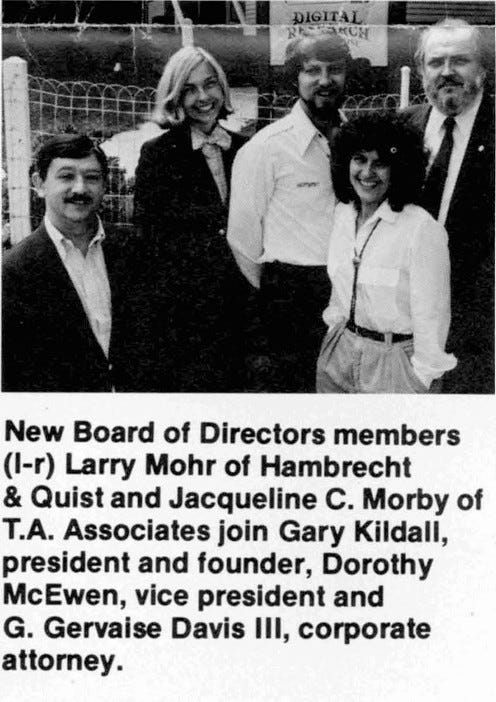
In November 1981, at Morby’s recommendation, John Rowley, who had previously worked at Intel, was hired as COO and took over day‑to‑day management, to the great relief of the Kildalls who were struggling to manage 82 people. Rowley did his best to turn the fast-growing startup into a proper corporation by introducing a management hierarchy, ranking systems and stock options.
Alan Cooper described Rowley as optimistic and enthusiastic, but unfocused and disorganized. Eubanks called him “an interesting guy” but added that he was a not a good choice for DRI.
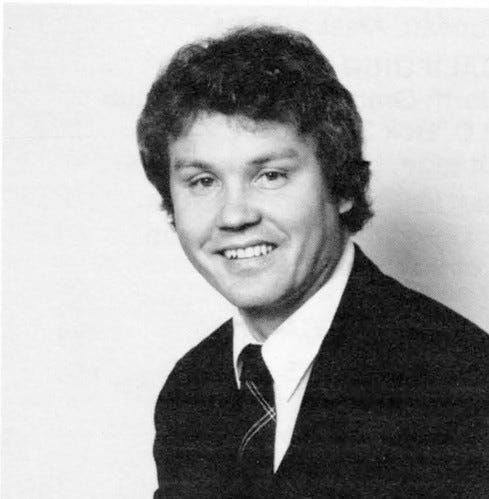
Some of the old-timers did not appreciate the changes. DRI was quickly shifting from a small business that felt like loving, albeit dysfunctional family into a soulless corporation. Others welcomed the new order. Kathy Strutynsky had been hired by Gary Kildall who stormed into her office at Naval Postgraduate School and with the words “I can finally afford you”, grabbed her bag and took her to DRI without even discussing salary. When pay grades were introduced, she got a raise. She never accused her friend of exploiting her: “Gary only understood whether you liked what you were doing in programming” she explained many years later. On the other hand, when Frank Holsworth was hired, he boldly asked for a salary almost 40 percent higher than what he was earning at the University of California, and Kildall agreed on the spot. “Damn!”, Holsworth thought, “I should have asked for more”.
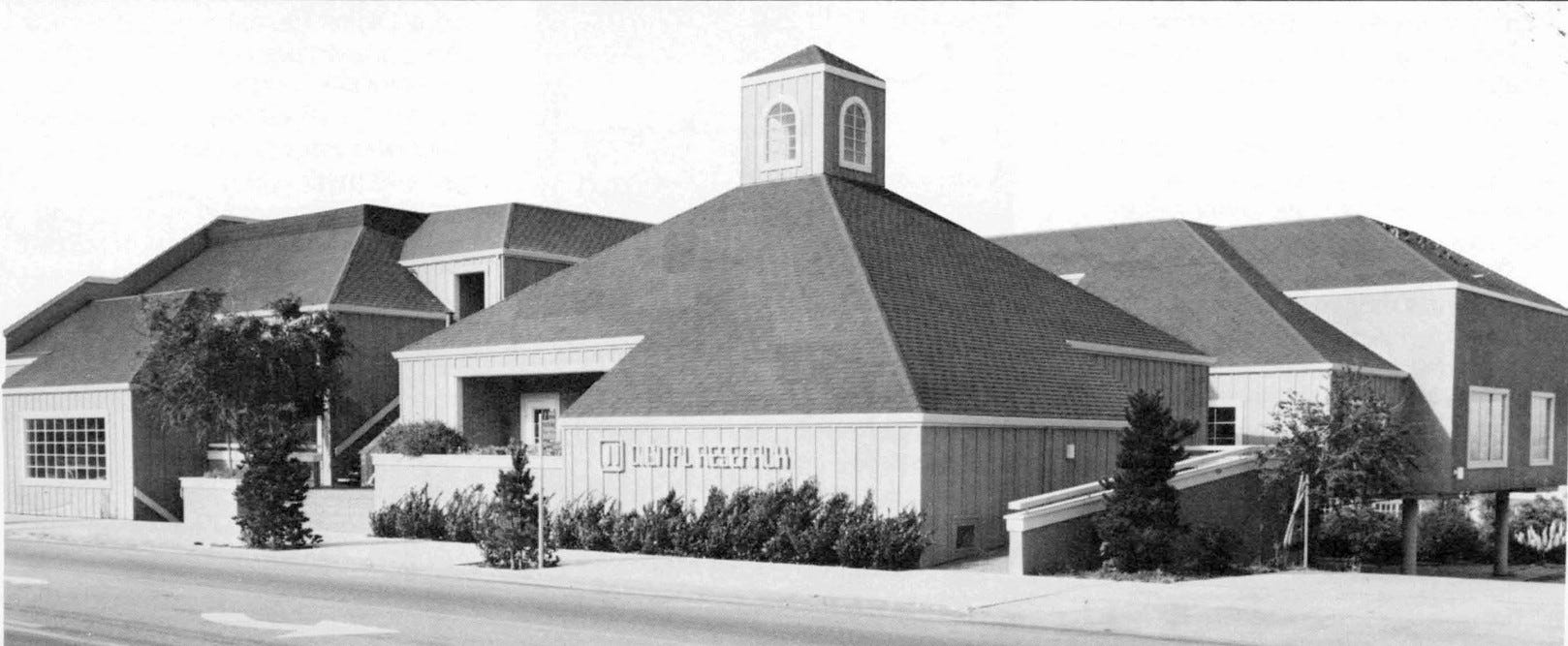
The company expanded from its two Victorian-style houses into modern office space at 160 Central Ave, Pacific Grove.
By the end of the 1970s, the business microcomputer world had settled on a de facto standard: hardware built around the S‑100 bus and an Intel 8080‑compatible CPU (usually the Z80), running CP/M. There were thousands of different computer models7 that adhered to this standard and could share both software and peripherals.
Writing portable software for an 8-bit CP/M machine was straightforward as long as only the documented calls were used to interact with the hardware. That meant no graphics, sound or anything else CP/M did not directly support, and it supported very little. Still, the existing software covered word processing, spreadsheet, databases, development tools. Obviously, almost no games.
When the IBM PC appeared, it quickly became popular enough that many applications (most notably Lotus 1-2-3, released in January 1983) were written specifically for that model and accessed its hardware directly for graphics and performance.
Unlike Apple, IBM was not able to stop other manufacturers from cloning its flagship microcomputer and soon “compatibles” appeared - the first probably being Columbia Data Products’ MPC 1600, released in June 1982. Buyers of these machines expected to run IBM PC applications unmodified, and MS‑DOS compatibility alone was not enough; the hardware had to behave like IBM’s as well.
By early 1984, there was consensus about the new “industry standard” for business microcomputers: software compatibility with PC-DOS (in other words, MS-DOS) and hardware compatibility with the IBM PC.
The first multitasking operating system DRI produced was MP/M. Developed in 1979, it was written single‑handedly by Tom Rolander and ran on 8‑bit Intel 8080‑compatible computers. The following year, Frank Holsworth was hired to write the 16-bit version, and MP/M-86 2.0 for Intel 8086 processors was released in September of 1981.
MP/M would nowadays probably be described as a “server” operating system. It supported multiple users connected to a central machine via dumb terminals. This usage model was common among minicomputers running UNIX or some other timesharing operating system. Several microcomputer manufacturers, such as Altos Computer Systems, followed the same model and largely adopted MP/M.
It was not necessarily well-suited to personal computers where a single user had a machine for himself. In that world, a user needed to run multiple applications at the same time and easily switch between them as needed. DRI decided to introduce a single-user multitasking version of MP/M, where a user could run multiple programs in virtual consoles on a single screen.
The new product ended up being named Concurrent CP/M-86. As Tom Rolander, then head of the Operating Systems Division, explained: “Concurrency is a better word than multi-tasking. It is friendlier. It means that now you can do more things with your microcomputer at the same time”8.
Concurrent CP/M-86 was announced at the West Coast Computer Faire in March 1982 and released in September for the IBM PC. The minimum system configuration required two floppy disk drives and at least 256 KB of RAM, which was a very high requirement for 1982. The base IBM PC came with only 16 KB of RAM, though 64 KB configurations were more common.
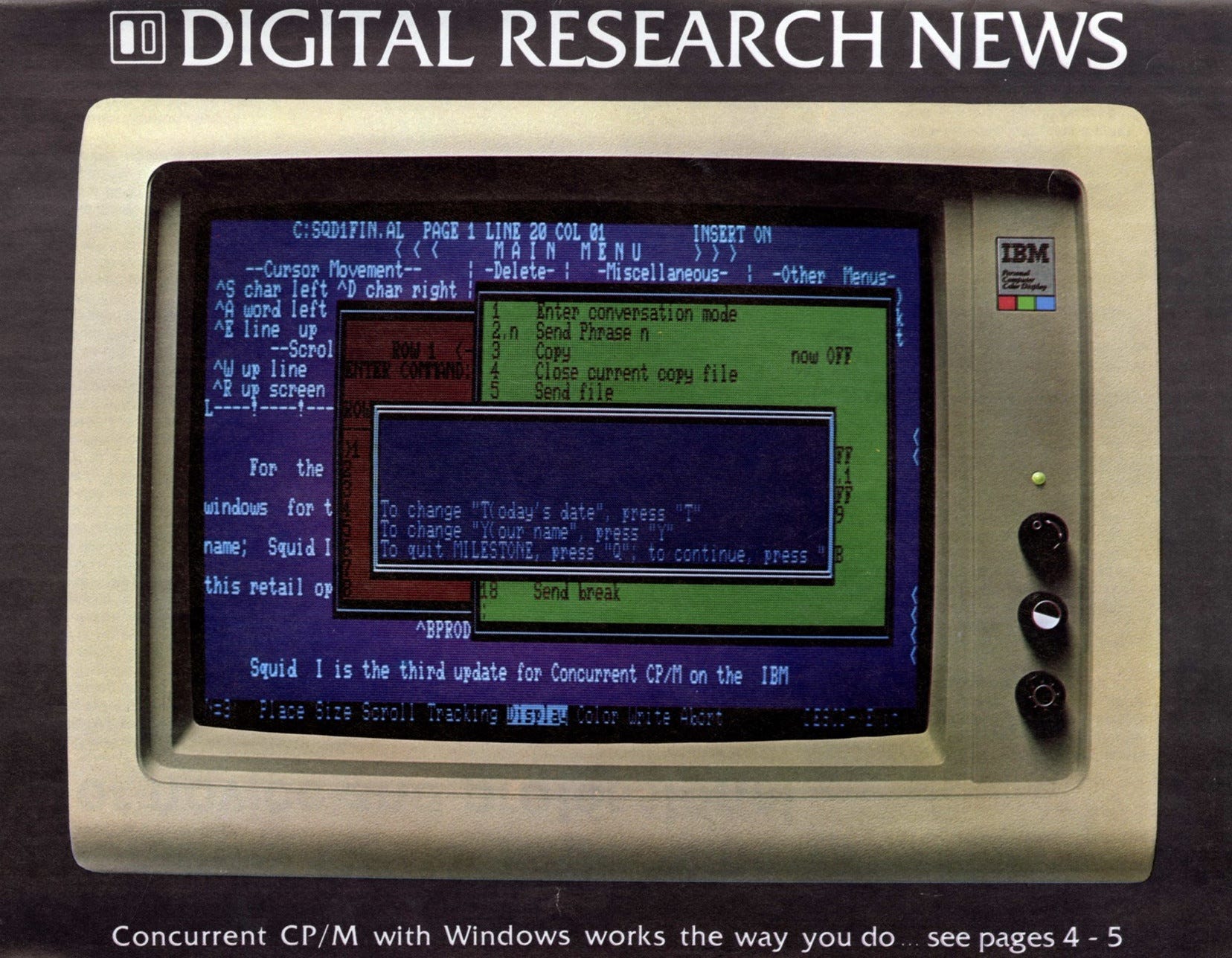
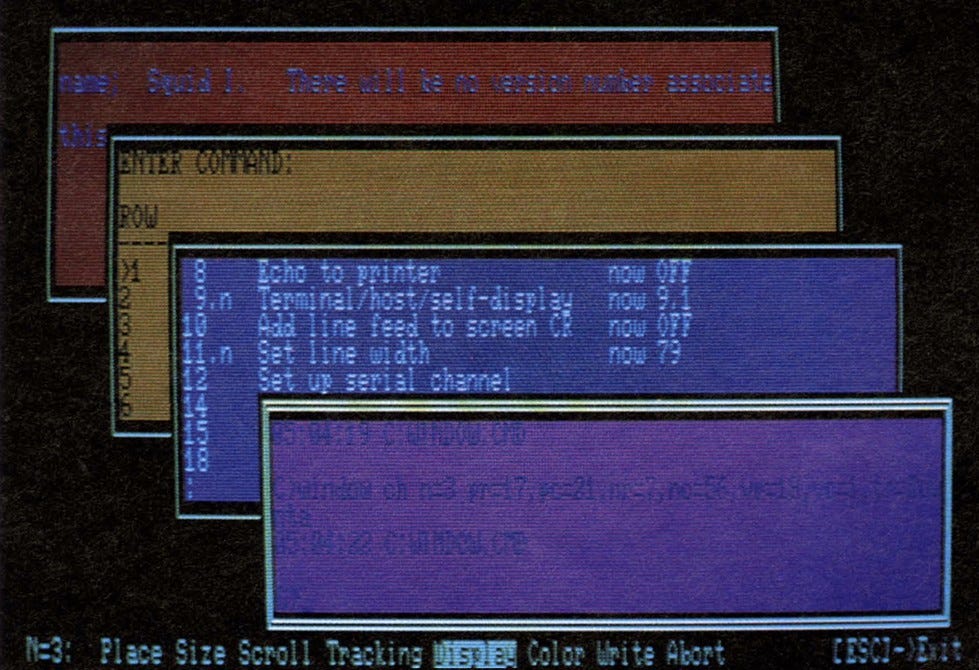
In February 1984, Concurrent CP/M Release 3.1 shipped. Multi-user mode was re-introduced and MP/M was retired as a separate product line. It contained some rudimentary support for character-mode windows. An interesting optional feature was the PC-Mode - a compatibility layer that enabled CCP/M users to run “most” PC-DOS applications. In reality, it was somewhat compatible with PC-DOS 1.1. It did not support hierarchical file system and other advancements that came with version 2.
In May, the entire product line was renamed Concurrent PC-DOS and the new version was released in the fall. From that point on, there would be no more new operating systems with CP/M or MP/M in its name.
Now that DRI had a clearly superior operating system, all it took was to convince people of its value on personal computers. That proved difficult. Users wanted something inexpensive that would run any IBM PC program while taking as little precious memory as possible. Concurrent DOS was none of these things. Peter Norton commented: “It’s like turning a passenger car into a dump truck”.
Frustrated, Gary Kildall spent years trying to explain why modern hardware deserves better than the simplistic single-tasking MS-DOS. But the time for multitasking on PCs had not yet come. A true visionary, Kildall saw “what”, but not “when”. In his memoires written a decade later he noted: “I was competing with an operating system clone, MS-DOS, of my original design, and both operating systems were by this time completely out of date.”.
Concurrent DOS never became a dominant OS on personal computers but was not necessarily a failure either. It found use in office environments to run small servers, much like the original MP/M and later Xenix even after DRI was acquired by Novell.
DRI started and ended as an operating systems company. That said, CP/M itself was developed almost accidentally, to host a compiler for a programming language called PL/M that Gary Kildall had previously created. Kildall’s core expertise were programming languages, and he kept returning to them even after CP/M made him famous.
Apart from Kildall, the most important person for starting the DRI Language Division was his friend and former student Gordon Eubanks who had developed a popular BASIC compiler, CBASIC. In June 1981, DRI acquired his company Compiler Systems Inc for $1M. Eubanks felt the amount was very generous: “all this because Gary was pissed at Microsoft”.
Before the acquisition, DRI already produced some programming languages and tools. Kildall’s PL/I-G compiler was released in December 1980 as PL/I-80. The XLT86 assembly code translator was offered to ease migration from 8-bit platforms. Other programming tools included a macro-assembler, linker, and an indexing library for PL/I called BT-80.
Over the summer, Eubanks and Kildall approached Mchael “Mike” Lehman of MT Microsystems, producers of the excellent Pascal/MT+ compiler. In November, DRI acquired the company. Interestingly, Lehman did not join the Language Division, but the small R&D group recently started by Alan Cooper. He soon got busy developing a C compiler for CP/M, code named MCC (Mike’s C Compiler). It was released as “DR C” in July 1983 and priced at $600. Around that time, Kildall announced internally that all future operating systems would be developed in C; until then, they had been coded in a mix of assembly and Kildall’s PL/M.
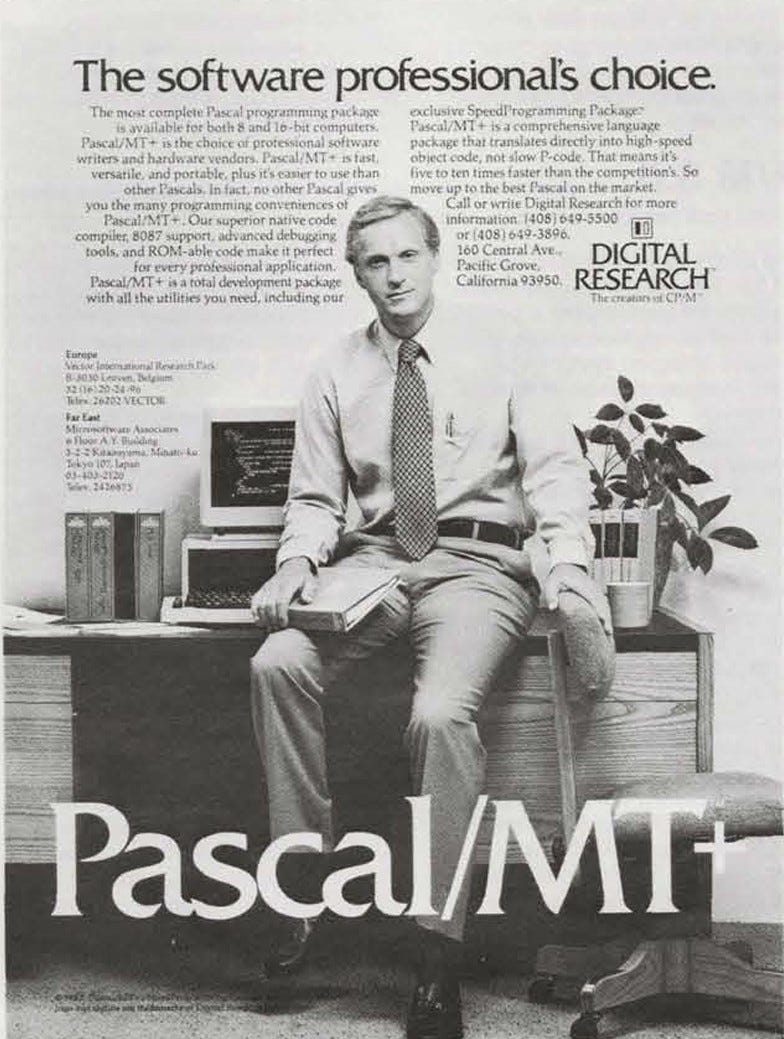
Within the Languages Divisions, engineers were assigned to specific products. Rick Rosenbaum was in charge of Pascal and led the ports of Pascal MT/+ compiler to the 16-bit Intel 8086 and Motorola 68000 architectures. Charles “Chuck” Spitz took over PL/I from Gary Kildall and Dan Davis, and developed a new compiler back-end for the 8086. Paul Lancaster worked on CBASIC products, and Bob Silberstein on assemblers and linkers for new target architectures.
By July 1982 the Languages SBC released Pascal/MT+86 for Intel 8086 compatible systems ($600), and two programmer productivity tools: Access Manager - a generic file indexing library ($300) that replaced BT-80, and Display Manager ($400) - a tool for designing input and output forms. One of the main strengths of Access Manager was that it was, unlike its predecessor BT-80, accessible from other programming languages released by DRI, and in a sense could serve as a common file format. Display Manager included both an editor and a runtime for accessing screens in device-independent way.
Around that time, a deal was made with Micro Focus to market and sell their COBOL compilers: CIS COBOL and Level II COBOL.
In late 1982 Allen Beebe was hired as director of engineering for the Languages SBC. In the beginning he focused on porting DRI languages to 16-bit platforms.
Eubanks and Beebe defined “three charters” for the DRI Languages SBC: programming languages, development tools and products for learning programming.
The languages were being ported from 8-bit Intel 8080 compatible platforms to 16-bit Intel 8086 family and Motorola 68000. They were being extended to work not only on CP/M but also on MP/M, UNIX and “other operating systems”.
Sometime that spring, Allen Beebe was promoted to director of the Language SBC, and Eubanks started a new Commercial Systems Division.
Soon, two “beginners” programming languages were announced. In February, DR Logo, a port of Logo programming language which was designed as a learning tool. Gary Kildall had coded it himself to give his son a good language for learning programming. On May 27, DRI shipped Personal BASIC, an inexpensive interpreter bundled with an editor, debugger and syntax checker also aimed at beginners.
In March 1984 DR FORTRAN-77 was scheduled to be released. It was based on the new compiler back-end and compatible with Access Manager, Display Manager and other DRI programming tools.
Early DRI operating systems were graphics-agnostic. It was probably the release of Xerox Star in 1981 that pushed the company to explore the potential of adding graphics to the existing products or even adding new ones. The task fell to Fred Langhorst who joined the R&D group in early 1982.
The initial plan for entering the graphics field relied on collaboration with the Oregon‑based company Graphic Software Systems Inc. (GSS), which provided a library for drawing graphics primitives called GSS-CORE9 and on top of it GSS-PLOT for plotting data charts.
DRI formed a graphics group led by Langhorst that initially included a marketing manager, an administrative assistant and three engineers. The group started working on a library that would expose the functionality of the GSS libraries via an interface called Graphical Kernel Standard (GKS) that was standardized by ISO and ANSI. DRI’s implementation of GKS was named Graphics System Extension (GSX). The plan was to ship GSX with CP/M operating systems (and make it available on others) and to modify DRI programming tools to use it to gain graphics capabilities. Even end-user graphical applications were shyly mentioned - something that was generally against Gary Kildall’s principles.
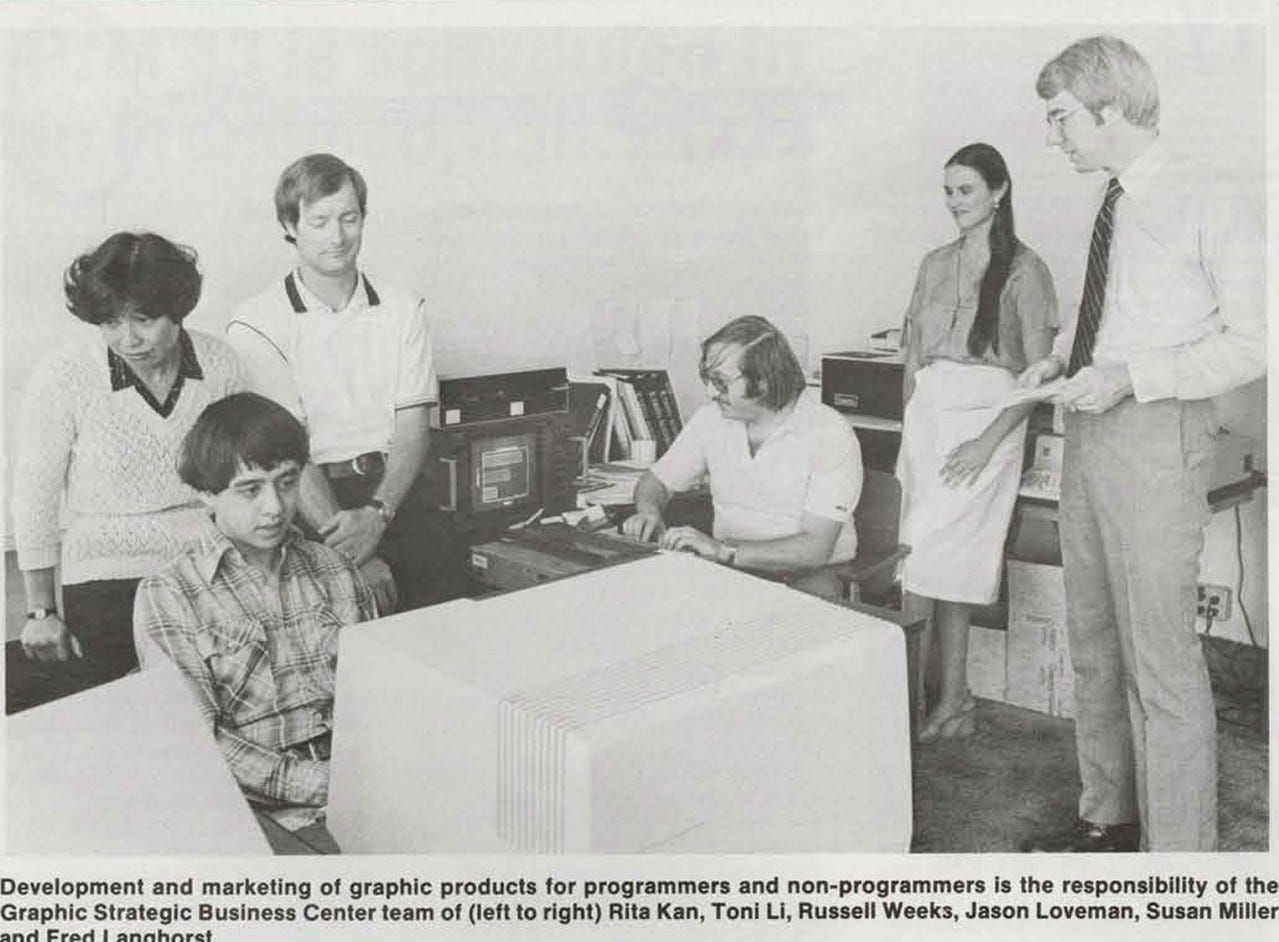
On July 27 1982, Graphic products group was officially promoted to a Strategic Business Center (SBC) with Fred Langhorst as a director, reporting directly to John Rowley. Graphics were seen as a potential high-rate growth opportunity for the company.
A diagram published in DR News for Q1 1983 showed the architecture of the GSX library in parallel with the CP/M operating system. That was not an accident - GSX was supposed to help with portability for graphics applications just as CP/M had done with character-based business software.
On April 1, 1983, the agreement with GSS was revised: DRI acquired rights to use their libraries and renamed them accordingly, replacing “GSS-” prefix with “DR-”. More developers were hired, including the new engineering manager for the SBC Don Heiskell who brought industry experience with graphics software (Langhorst’s background was mostly in academia). Dana Firth came from DEC as products marketing manager for Graphics.
In the fall, first concrete results were ready to be announced: the popular CBASIC compiler was ready to use graphics - on either CP/M or MS-DOS as long as GSX was available.
Even bigger news was the release of the first DRI commercial application: it was DR Graph - a menu driven graphical program that could display or print graphs and charts based on data entered manually or imported from spreadsheets.
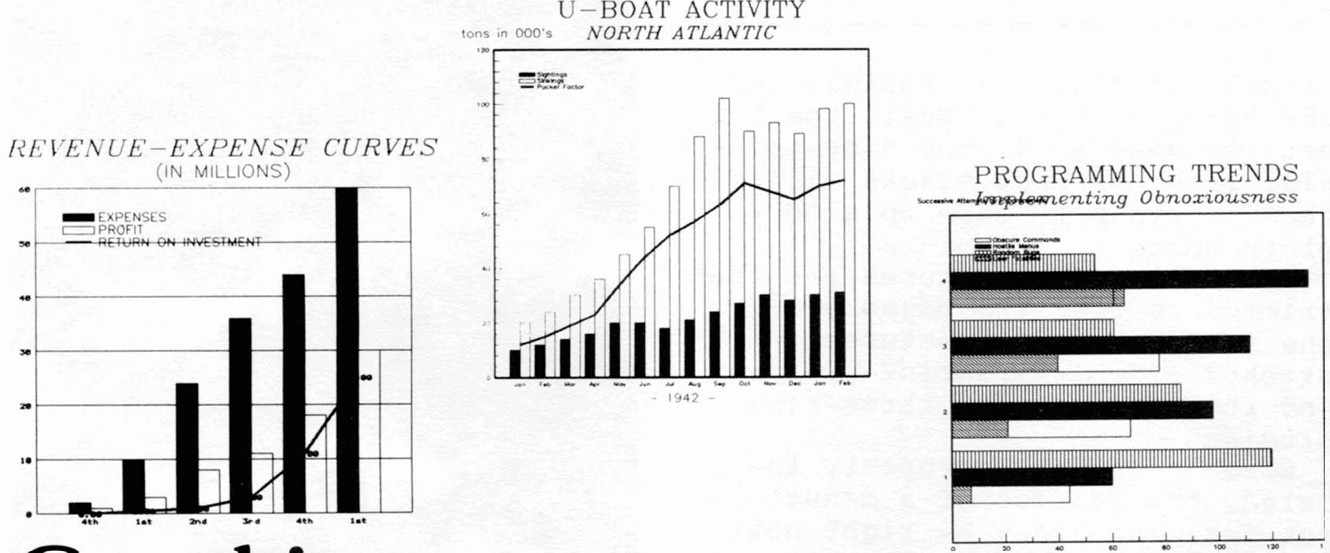
In December ‘83 an internal call went out for testing another GSX-based application: DR Draw. It was meant to be used to create presentation graphics for businesses.
The applications supported not only with printers and plotters, but also the Polaroid Palette - a digital film recorder popular in the 1980s. In May, DR Graph, DR Draw and Polaroid’s Palette driver were packed together as “Presentation Master” and marketed as a solution for creating slides for business presentations.
The big one had to wait until November: GEM Desktop was announced at COMDEX/Fall ‘84 and released on February 28, 1985.
I already wrote about the history of GEM10 and will not repeat it here. It was a fine piece of software, but the combination of Apple’s litigation threats and DRI’s half-hearted marketing efforts ensured it faded into obscurity.
Yet, a couple of GEM-based applications were developed and continued to be sold for a while. In the May 1989 issue of Byte, there were adds for Gem Desktop, Gem Draw Plus, Gem 1st World Plus, Presentation Team, Desktop Publisher and Gem Artline.
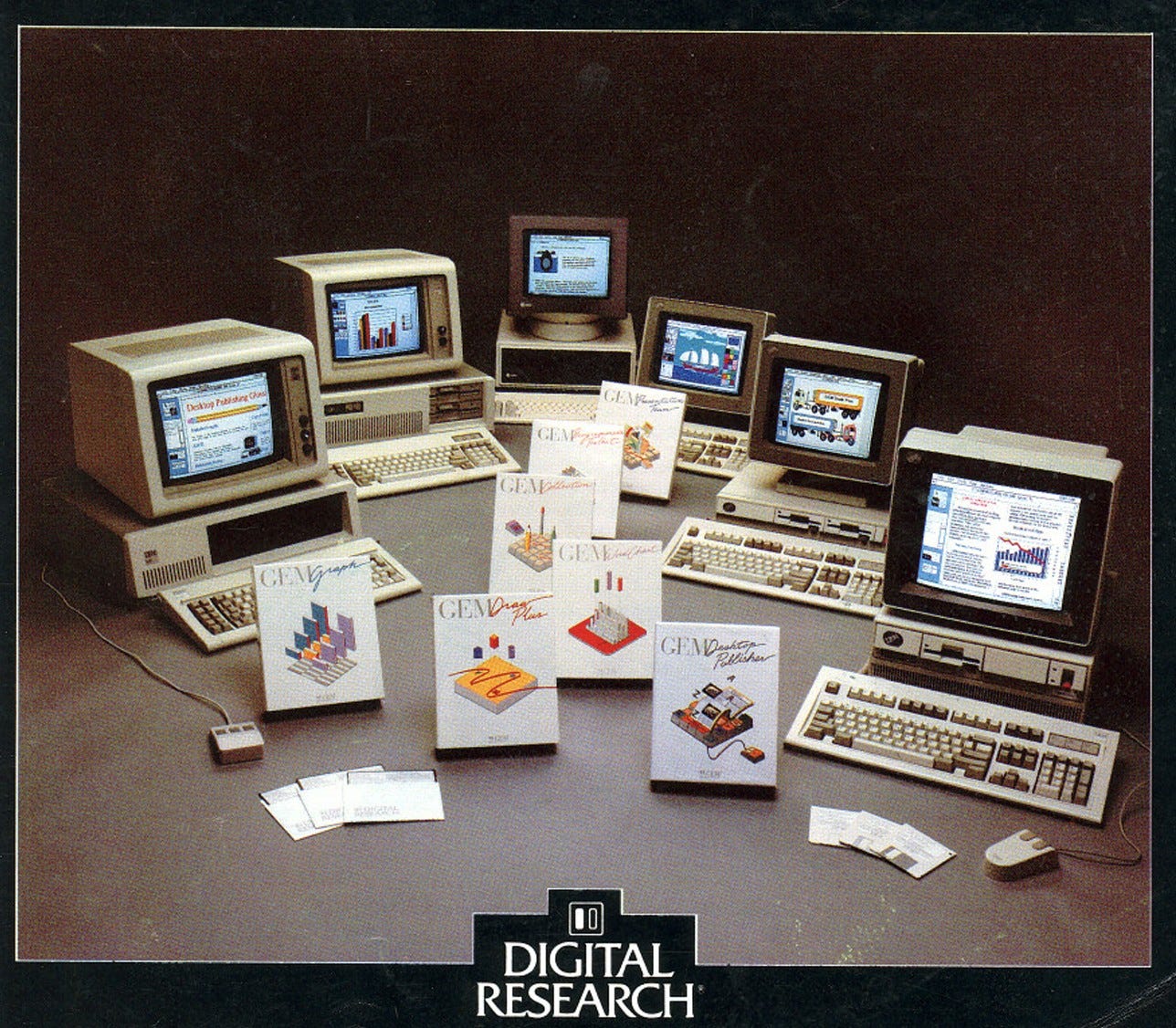
By March of 1990, only two survived: a Computerworld article from Mar 26, 1990: “New versions of Artline and Presentation Team” mentioned the last remnants of DRI graphics offerings, mostly criticizing them for not running natively under MS Windows.
Microsoft Windows 3.0 was released on May 22, 1990. DRI leaders saw the writing on the wall and closed the Graphics Unit.
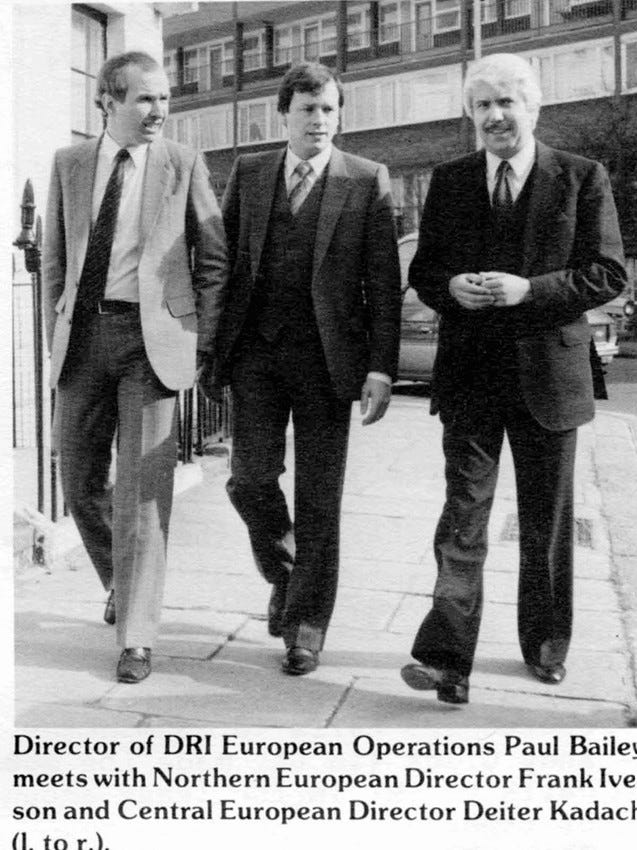
In 1982, DRI was quickly expanding: first into larger offices in Monterey area, then into several locations across the United States. In October, international expansion was officially announced. Paul Bailey was appointed Director of European Operations. His first task was to open a sales and support office in the U.K. and then in Germany and France. In January 1983, a small group from Monterey area travelled to England to help set up the office and train new employees. Frank Iveson, who would later become DRI’s vice president of marketing, was appointed Director of Northern European Operations at that time.
The U.K. office opened in Newbury, England. Initially it was a sales and support site, but soon the OEM Support Group was started there to help customers adapt DRI operating systems to their hardware. According to Joe Wein11 , the first new product that came from the group, DOS Plus, began as a support project for Philips Vienna. They took the abandoned CP/M-86 OS and added the Concurrent DOS PC-Mode emulator to it, imperfect as it was. DOS Plus turned out to be surprisingly successful in Europe; it was bundled not only with the Philips computer it was originally developed for, but also with popular models from Amstrad and Acorn.
In 1986, the OEM Support Group was renamed the European Development Centre (EDC) and moved to Hungerford, England. Concurrent DOS 4.1 was handed over to EDC, and development continued there, including all versions of Concurrent DOS XM and DR Concurrent DOS 386. The OS was commercially pretty successful in Europe, where customers were less obsessed with IBM than in the US12.
DOS Plus, with all its limitations, showed that there was real demand for a drop-in replacement for MS-DOS. In 1987, after receiving $1M investment from Kay Nishi, of all people13, DRI started planning a product that would be 100% compatible with MS-DOS while still offering technical improvements. The operating system was developed by the EDC, with Joe Wein as the chief architect. It was named DR DOS, and first announced on May 28, 1988, as DR DOS 3.31.
DR DOS turned out to be the most popular DRI product of its later years. Ironically, it abandoned concurrency that DRI had been so desperately trying to promote since 1979, but was truly compatible with MS-DOS and inexpensive. DR DOS 5.0, released in 1990, was sold as a retail product and caused genuine panic at Microsoft and, one hopes, a smile on Gary Kildall’s face.
In the first half of 1982, a major restructuring was implemented. The Operating Systems Division and the Languages Division were promoted to Strategic Business Centers (SBC) with their own independent development and marketing. The idea was to make these key divisions more responsive and allow them to operate almost as independent companies.
The new structure was described in detail in the first (August 1982) edition of Digital Dialog, the DRI employee newsletter. It included a complete list of DRI’s employees - some 200 of them, divided into divisions: R&D, Graphics, Operating Systems, Languages, Finance & Administration, Manufacturing, Operations and Sales. Gary Kildall was President and John Rowly the COO. The three Vice Presidents were: Dorothy McEwen (Operations), Tom Rolander (Operating Systems) and Gordon Eubanks (Languages).
In 1982, DRI did not appear to be much affected by the rising popularity of the IBM PC, and continued to grow in headcount, products lines and revenue.
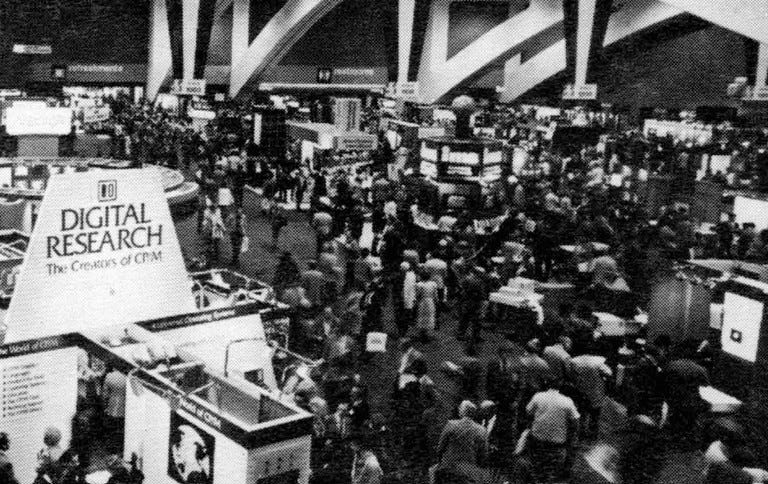
Tom Rolander considered the CP/M ‘83 trade show, held Jan 21-23 at Moscone Center, San Francisco, to be the company’s peak moment. Financially, it was not; DRI’s revenue would continue to grow for another couple of years. But in terms of presence and visibility, it probably was. The speakers included Alan Kay, Adam Osborne, Dan Bricklin and Dan Fylstra. Among more than 400 exhibitors were companies like Altos, Commodore, DEC, Fujitsu, Hewlett-Packard, NEC, NCR, Osborne, Radio Shack/Tandy, Televideo, Vector, Xerox and Zilog. Some 50,000 people attended.
Early 1983 marked the beginning of international expansion. The first international office was established in Newbury, England. The Munich, Germany office was opened next, led by Dieter Kadach, director of Central European operations. On May 12, the Japan office was officially opened with John Rowley hosting the event. Masahiro Morimoto was appointed Director of Pacific Operations and Masaho Okabe President of DRI Japan.
In the summer of 1983, another reorganization introduced the Consumer Division and folded the former Strategic Business Centers into the Commercial Systems Division under Allen Beebe. It was renamed the Systems Software Division by early 1984.
In September, the plan to relocate the headquarters to Garden Court Office Complex in Monterey was announced. At that point, DRI had 427 employees. It would take a year to complete the move.
By 1983 revenue, DRI was estimated to be the fourth largest software company14, with sales around $45M. It trailed MicroPro ($60M), Microsoft ($55M), and Lotus ($53M) but was ahead of VisiCorp ($43M) and Ashton-Tate ($35M).
The Consumer Systems Division was created as a peer to the Commercial Systems Division. It was built from scratch by Ken Harkness, who came from Atari with the idea of producing home and educational software.
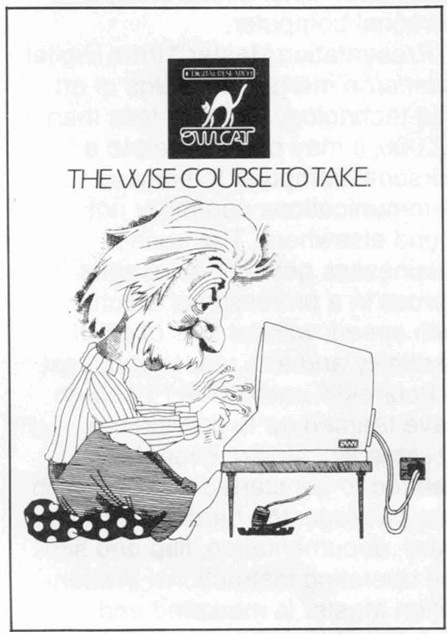
The first products from the new division were transplanted from the Languages group: Personal Basic and DR Logo. Then OWLCAT, Inc., a producer of S.A.T. preparation tutorials, was acquired and added to the Division. An operating system - Personal CP/M, a ROM-able menu-driven variant of 8-bit CP/M 3, was added to the product list as well.
Kildall and Rolander joined the Division from R&D (formally or not) and started exploring new optical-storage technologies, like video discs. They saw the new types of media as an opportunity to create new kinds of educational software, including electronic encyclopedias. When they suggested to add the technology to the existing product line, the idea was shut down. They then started a separate company, named Activenture Corporation to pursue it.
As early as April 1984, some analysts were warning that the Consumer Division was not producing the expected results and that growth opportunities in the home and educational market were limited.
By late 1984, it was clear the division was a failure. Kildall said in an interview: “The difficulty in concentrating in educational products— which I’d like to— is that there is a much larger margin in commercial software.”
The Consumer Division was likely shut down sometime in 1985, although ads for DR Logo continued to appear in computer magazines for a while.
The February 20, 1984 issue of InfoWorld included an article titled “New developments may decide battle over Unix”. It quoted Gary Gysin, DRI’s product manager for operating systems: “Round one was the 8-bit processor. We provided the standard operating system, CP/M. Round two was the 8088; we lost that one. Round three is the 286 and the 68000. We’re winning that one.”
Back in April 1982, the famous Homebrew Computer Club had been shown the recently announced Intel’s 80286 CPU. At the same event, it was announced that DRI was developing a new operating system called MP/M-286 specifically for the new processor. DRI was working hard to position itself for the next generation of personal computers, and it was betting on its MP/M - based technology.
Then, in early 1984 three separate agreements with AT&T, Intel and Motorola marked DRI’s entry into the UNIX market.
The Motorola project was really more about porting Concurrent DOS to their VME/10 development system. It did include source-code portability with UNIX. The more interesting agreement was with Intel and AT&T to port UNIX System V to Intel 80286.
It made sense. AT&T was a technology giant and, after the breakup mandated by antitrust law, was finally allowed to sell computers. The company decided to make use of its popular UNIX operating system and saw DRI as a potential ally against IBM and Microsoft. The offer was hard to refuse - having AT&T in their corner for the “round three” sounded more promising than going alone with MP/M-286.
DRI and AT&T committed to developing something called the “UNIX System V Applications Library”. It was hard to pinpoint what exactly that “library” would contain: it seems the agreement was open-ended in that regard. Allen Beebe, at the time the director of the Systems Software Division, mentioned that DRI’s programming languages and tools would be ported to UNIX System V. The May issue of “Digital News” had an announcement about DRI and AT&T jointly evaluating third party applications for inclusion in the library.
By fall, all the hoopla about DRI and AT&T working together on UNIX suddenly stopped, and in November Kildall even admitted in an interview that he did not like UNIX, although he did like the C programming language and its runtime.
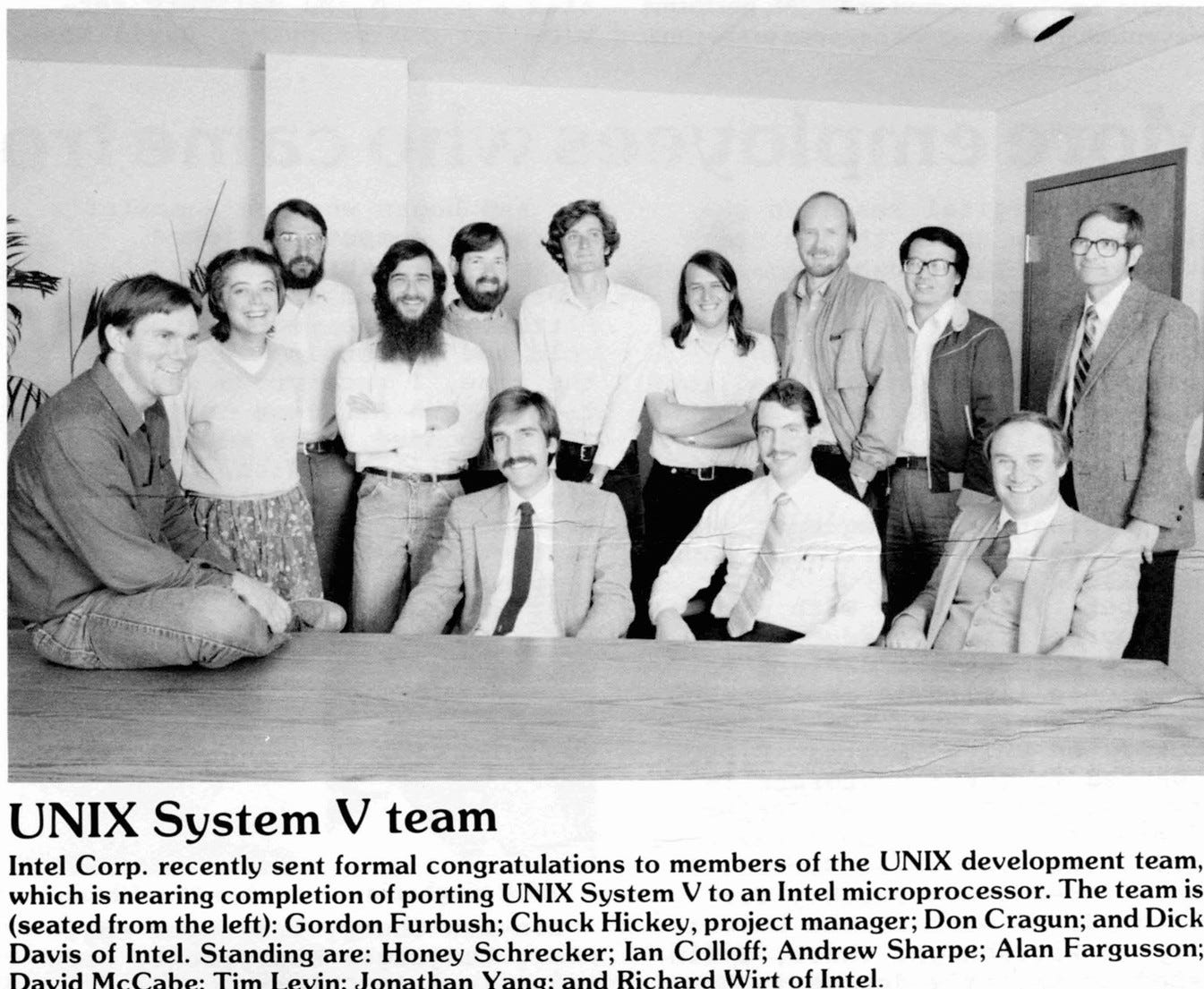
December issue of Digital Dialog included the photo of the “UNIX V Team” which was “nearing completion” of porting UNIX System V to the Intel 80286. Intel sent “formal congratulations”. Not a word about AT&T. One person in the photo was DRI’s program manager for the project, Chuck Hickey. In the end, DRI never released the port, but a few months later Hickey founded Microport Systems, and released Unix System V/AT15.
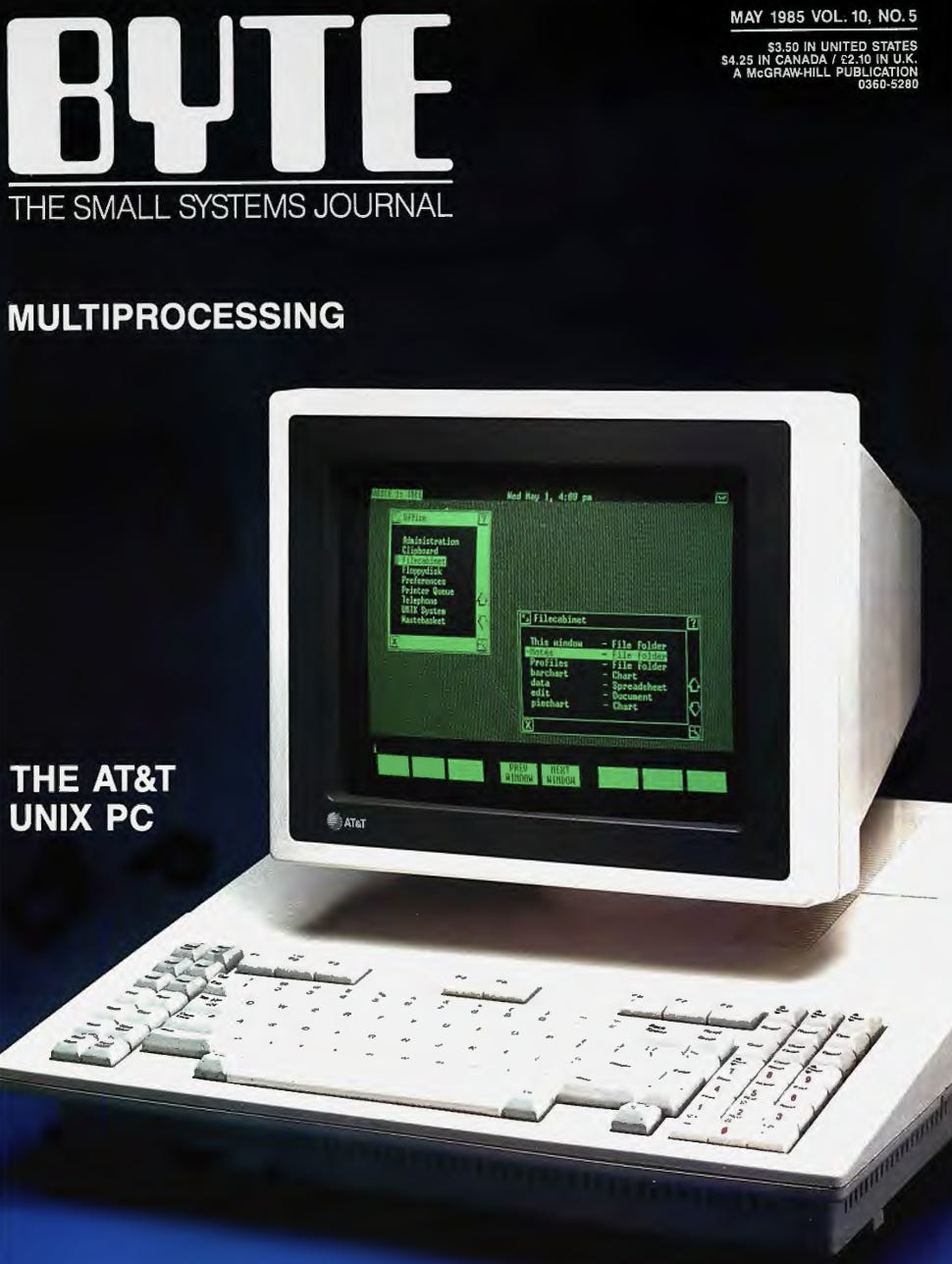
AT&T UNIX PC was introduced on March 26th 198516. It was based on the Motorola 68010 CPU. Available software included products from Microsoft (Word, Multiplan), Ashton-Tate and Language Processors but there was no DRI’s “System V Library”. When asked about it, AT&T’s president of computer systems James Edwards answered17 they decided to change the strategy and port software to UNIX more selectively.
The computer was a commercial failure - Unix personal computers would have to wait for the 21st century; Apple Power Mac G4 running Mac OS X arrived in 2001.
One way to explain what happened with the UNIX saga is that at some point (perhaps after IBM announced its 286-based AT model in August 1984) AT&T decided to abandon the idea of basing their UNIX PC on the 80286 and opted for Motorola 68000 instead. DRI was left behind.
That was the end of DRI’s big UNIX plans. Yet another expensive distraction.
At least MP/M-286 was still there. When Frank Holsworth was hired in 1980, he had half‑jokingly offered to develop a proper operating system, as he did not have a great opinion of CP/M, given his UNIX background. Instead, he first worked on MP/M-86, a port of Rolander’s MP/M to the 8086 CPU. Later, as engineering manager in the Operating Systems Division, he led the design of the first generation of Concurrent CP/M systems, based on MP/M-86.
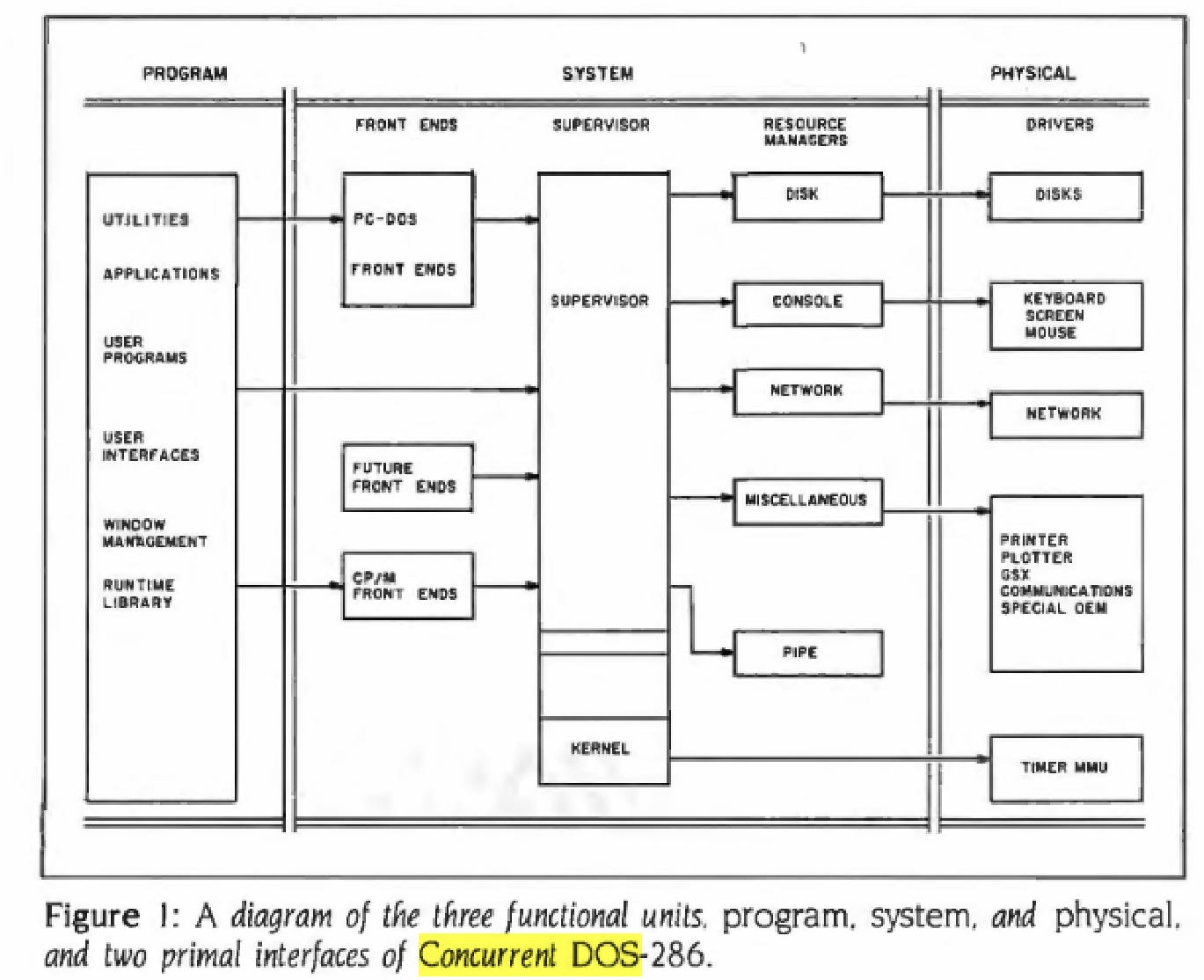
Finally, with the arrival of the Intel 80286, Holsworth could design an operating system the way he felt it should be done. It was a masterpiece18 with modular design, dynamically loadable drivers instead of Kildall’s old BIOS, a brand-new hierarchical file system with support for file sharing and locking, built-in security mechanisms, support for internationalization, memory protection. It was written from ground-up in C with intent to be easily ported to other modern CPUs - specifically Motorola 68000. By the time it was ready for release, MP/M and CP/M brands were out of fashion, and it was confusingly named Concurrent DOS-286.
One feature meant to differentiate Concurrent DOS-286 from UNIX was its built-in compatibility layer with the “industry standard”; applications written for the IBM PC, both “well-behaved” and “poorly behaved”, including Lotus 1-2-3 were supposed to run within Concurrent DOS-286 virtual consoles.
The 80286 could operate in a compatibility mode (“real mode”) where it behaved just like 8086. Its native mode (“protected mode”) offered all the interesting new features, such as much larger address space, memory protection and support for multi-tasking. The problem was that the 80286 would start in real mode and could switch to protected mode, but once switched, it could not return without a reset19. Concurrent DOS-286 was designed to run in protected mode and emulate 8086 from there rather than relying on real mode.
Concurrent DOS-286 was already shipping to select customers, when a change in the Intel 80286 hardware broke the emulation and forced a postponement. Before Intel provided an acceptable fix, DRI decided to retarget Concurrent DOS-286 from a general-purpose DOS-compatible OS to a real-time system for manufacturing. It was renamed to FlexOS in October 1986, and a new Flexible Automation business unit was formed from the remnants of the Operating Systems department in the Monterey office to continue its development. FlexOS was successful in its niche but was never going to replace MS‑DOS.
As for the “bad guys”, they were not idle either, but saw even less success with multitasking than DRI. IBM refused to endorse Microsoft’s Xenix and instead started selling Interactive Systems' PC/IX. It also released a somewhat multitasking “operating environment” called TopView which was deemed both memory-hungry and hard to use and was eventually abandoned. Microsoft produced a multitasking MS-DOS 4.0, which IBM also rejected. Eventually, the two companies buried the hatchet and jointly began developing a next-generation operating system. That took a while…
In the end, there was no “round three”. Frustratingly, PCs continued running MS-DOS, with the 80826 used simply as a faster 8088/8086.
In May 1983, DRI announced ports of its development tools to PC-DOS. According to Carmen Governale, the Product Marketing Manager of the Languages SBC (PCMag July 1983), “The fact that CP/M-86 had not done as well as DRI had hoped has nothing to do with our decision to create more portability with our languages”. Ports to UNIX were also announced.
It made sense for the Languages SBC to want its products on as many platforms as possible. Unfortunately, by that time the competition started to overwhelm DRI’s development tools.
Some never got any real traction to begin with. The PL/I compiler, originally coded by Kildall himself, was praised for its quality but the language itself was (and still is) used almost exclusively on IBM mainframes.
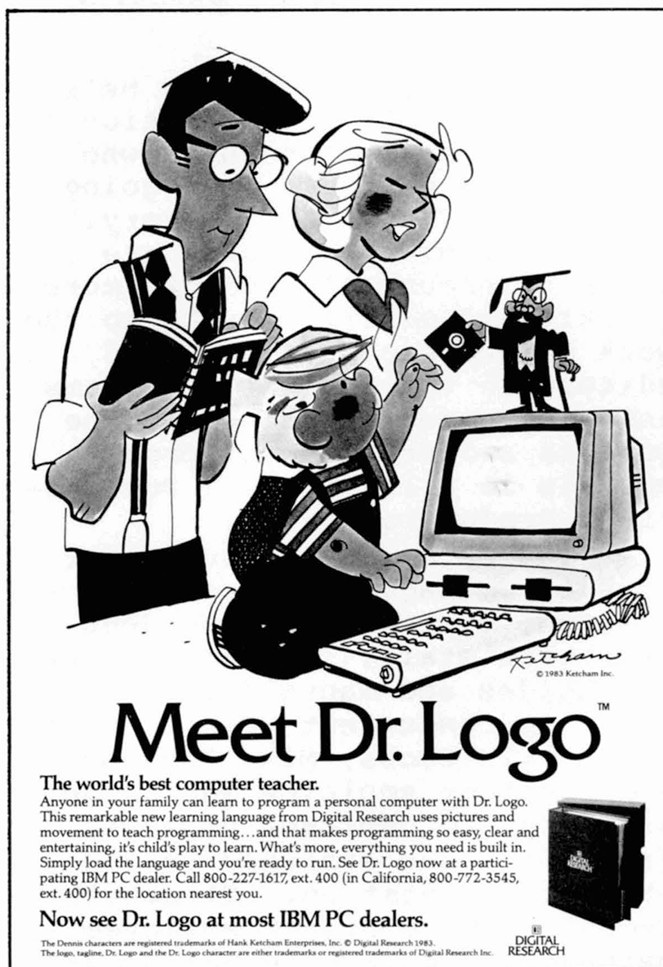
DR Logo was another example. I remember Logo being mentioned as a good language for learning programming in the mid-1980s, but the schools used BASIC first and later Pascal much more than Logo.
Pascal/MT+ at first competed with similarly priced Microsoft Pascal and while I couldn’t find any actual numbers about its market share, seemed to be doing fine. Then Borland appeared out of nowhere: Turbo Pascal, designed by Anders Hejlsberg was released on 20 November 1983. Compared to Pascal/MT+ the compiler itself was nothing to write home about in terms of language features and optimization capabilities. But, at $49.95 it was more than ten times cheaper and contained an excellent IDE. It became an instant hit, and Pascal/MT+ was soon struggling. The last release I am aware of was 3.3; it came out in early 1985 with price reduced from $600 to $400. Too little, too late. If it was any consolation, Microsoft Pascal held on a bit longer but was eventually destroyed by Borland as well.
The most successful DRI language was Eubanks’ CBASIC. In the late 1970s and early 1980s, CBASIC was a popular tool for developing business software for microcomputers and was successfully competing with other BASIC compilers such as Microsoft’s BASCOM. But then unexpected competition appeared: Ashton-Tate’s dBASE II was one of the products IBM chose to be ported to the IBM PC in time of its release. As the platform picked up in popularity, dBASE started replacing BASIC dialects as the development platform for business applications. Ads for CBASIC became less frequent after late 1983, and by 1985 it had mostly disappeared. Interestingly, it was offered as an option for FlexOS 286, released in January 1987, which is the latest mention of CBASIC I could find.
The February 1985 issue of Digital Dialog includes a photo of the Languages Department, then led by John Yu. The team was much larger than the one listed in August 1982. Names that appear in both lists include Rick Rosenbaum, Nancy Zetner and Rich Bielsker.
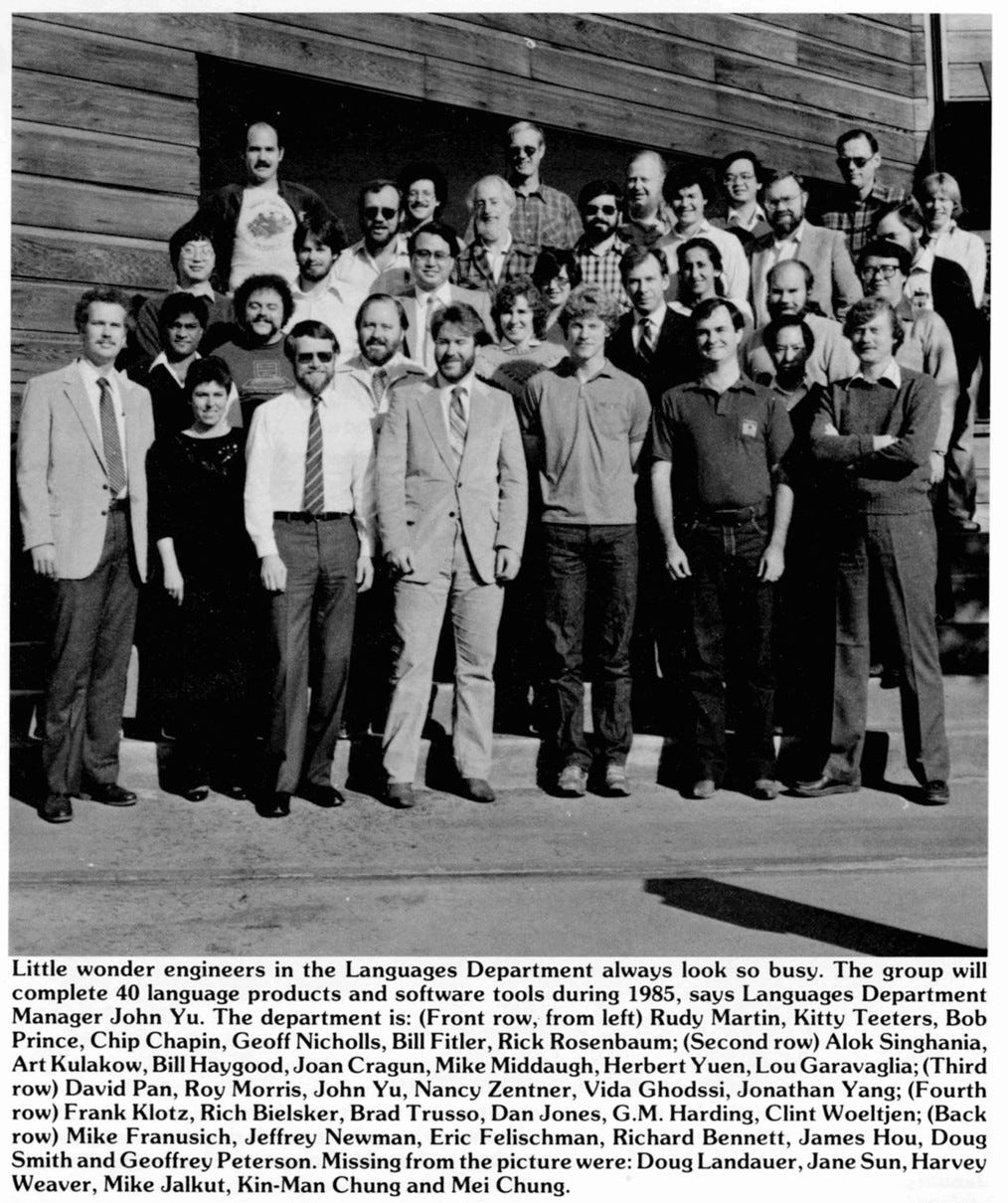
The plan for 1985 was to complete 40 software development products. It is safe to assume this did not happen. The Languages Department was probably dismantled before the end of the year.
The “reorganization” of the Oct 1986 doesn’t even mention languages.
In the March 1985 edition of Byte Magazine, Jerry Pournelle casually remarked that “Many people of stature seem to have left or are leaving Digital Research”. By 1985 many of the DRI brightest minds were indeed on the way out, but the process had begun much earlier.
When Tom Rolander accepted Gary Kildall’s invitation in 1979 to join DRI, it was a very different place: Rolander worked hard and had a lot of fun at the same time. He and Kildall were both pilots and would often discuss software while flying together. Kildall later described him as his “copilot in flying and in life”. Rolander met his wife Lori at the office: “I don’t know where else I would’ve met a woman.” he said, laughing. When they married, Gary Kildall was the best man.
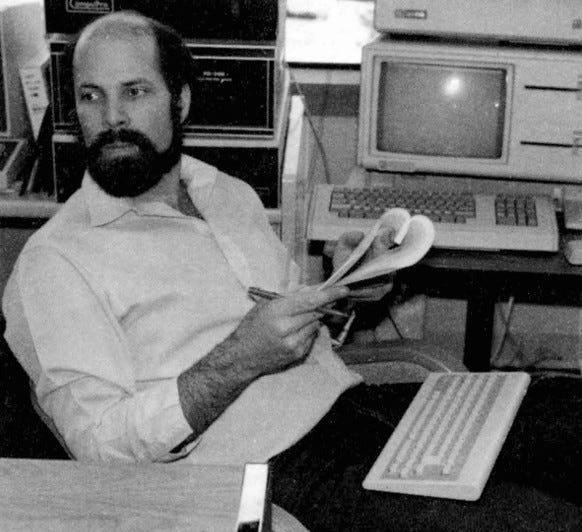
Rolander accepted a position of VP of engineering, and enjoyed it while DRI was small. After the VC came in, the organization grew rapidly, and by 1983 he was Director of Operating Systems Division, managing 150 people and having no time for the engineering work he loved so much. One day, he had enough; instead of going to the office, he relaxed drinking beer on a beach. The following day he presented his resignation to Kildall and Rowley. They managed to convince him to stay for a while in R&D - a much smaller group within DRI. In 1984, he and Kildall founded Activenture Corporation, and they both left DRI in June 1985.
Alan Cooper was a co-founder of Structured Systems Group, one of the first companies to develop business applications for microcomputers. In 1980, he left it to start another business that quickly folded, and in 1981 accepted Gary Kildall’s invitation to start an R&D department at DRI. He spent less than two years with the company and came up with a few proposals for new products that were never approved; apparently his relationship with John Rowly was not good. The June 1983 edition of Digital Dialog mentioned that he was transferred from R&D to the Graphics SBC as the “planner and strategist”. Soon after, he left.
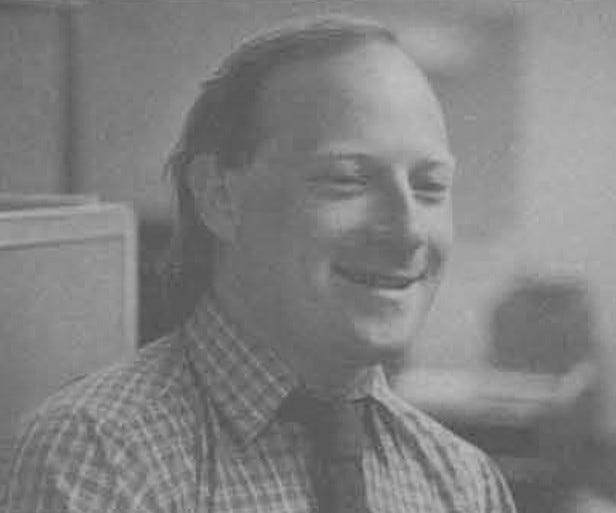
One of Cooper’s unused ideas was a visual programming language which he named Ruby (unrelated to the popular web scripting language). He sold it to Microsoft in 1988. Microsoft adapted it and changed the name to Visual Basic; it became the most popular tool for developing business applications in the 1990s.
Gordon Eubanks had been Kildall’s student at the Naval Postgraduate School and created a BASIC compiler for CP/M as part of his master’s thesis. Kildall described him in his memoirs as: “a prime mover and often, but not always, my friend”. Eubanks had a great respect for Kildall as a programmer and liked him as a person but would often criticize his attitude towards business.
At DRI, Eubanks served as VP of the Language Division until promotion to head of Commercial Systems Division. In August 1983, he had enough: “It became clear to me that Digital Research did not have the will to win and they were losing opportunities. So I went off and did my own thing.”.
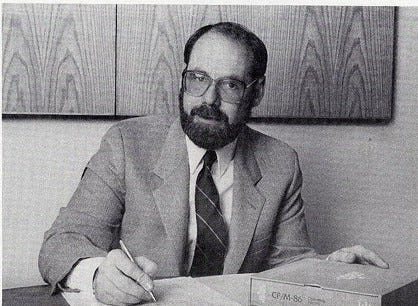
Eubanks had a very successful career after DRI. Among other things, he was a CEO of Symantec.
Mike Lehman founded MT Microsystems with his wife Nancy in 1979 in Solana Beach, California. He developed a Pascal compiler Pascal/MT+ which was considered superior to other offerings, including the popular UCSD Pascal. The Lehmans and their assistant Pattie McCracken20 became DRI employees 61, 62 and 63 in November 1981. Most of his time with DRI, Lehman spent at R&D, developing a C compiler, DR C.
Lehman left DRI probably in 1984, but definitely before March 1985 when he is mentioned in the Pournelle’s Byte Magazine article as the author of FastFinder for Macintosh. He must have coded it in Pascal.
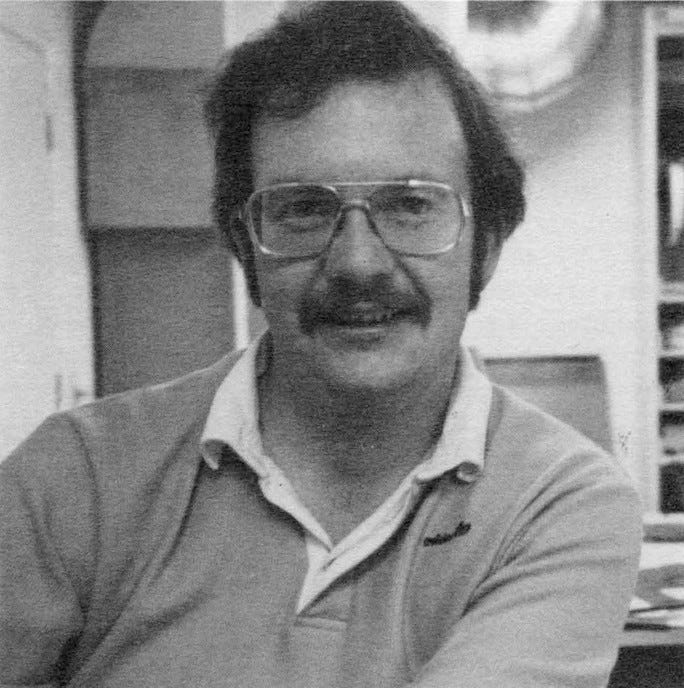
In March 2005, Lehman posted a short text after Dorothy McEwen had died in which he called DRI “his family”.
Fred Langhorst earned a PhD in Computer Aided Design at Purdue University in 1977. At DRI, he started the Graphics Division and led it through various reorganizations through the company’s growth.
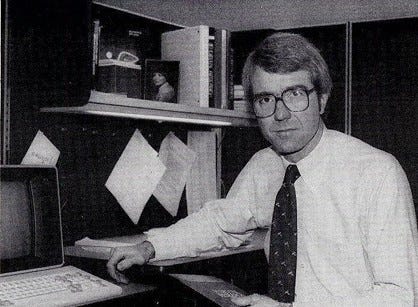
He left in late 1984 and joined (as the VP of Engineering) Lifetree Software which released GEM Write in 1985. Later he worked as a GM at various companies including Mentor Graphics and Intel.
Lee Jay Lorenzen started at Xerox (not PARC, but the Office Products Division in Dallas Texas) where he produced a prototype desktop graphical environment that ran on 8086 platform, called “Lone Star”. He was recruited to DRI in early 1983, by his former skip-level manager from Xerox, Jackie Pakarinen21 and led the development of GEM, from first prototype to release.
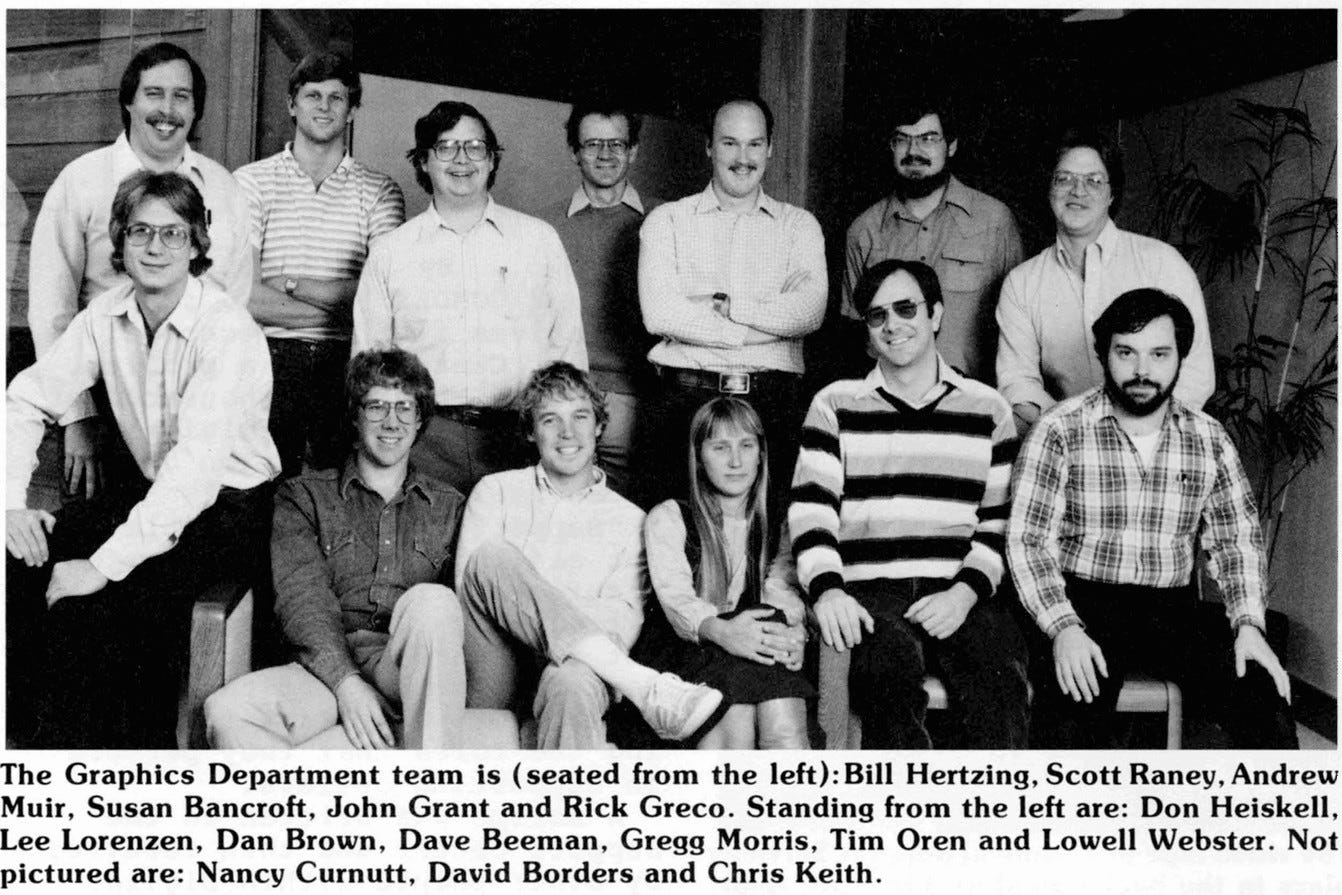
In September 1985, Lorenzen and his boss Don Heiskell resigned from DRI to start Ventura Publishing where they developed one of the most successful early desktop publishing applications: GEM-based Ventura Publisher.
Kathryn Strutynski worked with Gary Kildal at Naval Postgraduate School (NPS) in Monterey. He recruited her to DRI in early 1979 as employee number four. Strutynski helped Kildall release CP/M 2.2, then led the CP/M-86 development and later became a project manager overseeing Concurrent CP/M, CP/M Plus, and CP/M‑DOS.
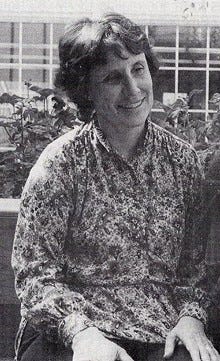
In mid-1985, with mass layoffs hitting DRI, Strutynski returned to NPS. “Gary came to the Navy School and started to cry.”, she said two decades later22.
In early 1984, DRI was financially at its peak, but the downturn was coming quickly. The company depended heavily on CP/M sales to OEMs, and that market was disappearing. As early as April of 1984, InfoWorld mentioned Digital Research’s upcoming “resurgence” as new products were being announced. In the same month, DRI received some $20M in investments - mostly from AT&T.
The first layoffs I can pinpoint occurred in early August 1984 during one of the many reorganizations Rowley seemed to be so fond of. The number of impacted employees was probably not large, as it was referred to “some cutbacks”, but morale suffered. The October issue of “Digital Dialog” included some tough questions from employees to the President. Rowley admitted the growth was slowing but remained characteristically upbeat about the future.
In December, he sounded openly pessimistic about the outlook for 1985: “The retail market is experiencing compression of revenues and a general slowdown in the sales of personal computers and related software”23, he said. The consumer market looked especially worrisome, but Rowley hoped GEM would be a commercial success.
By mid-1985, the situation had deteriorated24. After another round of layoffs, headcount fell below 300, but even that was not enough as revenues were expected to fall by at least one third from the previous year. Gary Kildall officially resigned as CEO on June 28, though he remained chairman of the board.
As bad as 1985 was, 1986 was worse. By the end of that year, annual revenue had fallen to $20M. In October, Rowley carried out yet another desperate reorganization; this time 30% of remaining employees were sacked. Only 140 remained in America and another 100 overseas.
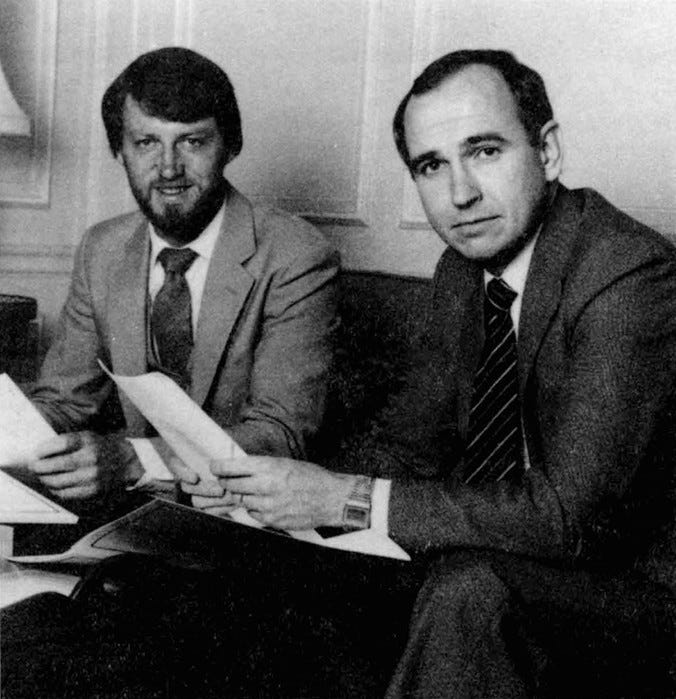
Digital Research was on its last legs. It was $14M in debt and had $10M in cash reserves. Lenders were expected to call the debt at any moment. In November, the board finally fired John Rowley and asked Gary Kildall to find a buyer for the company. Kildall called Bill Gates. When they met in San Francisco, he asked $26M for DRI. Gates replied that the company was not worth more than $10M.
Kildall refused and bade Gates farewell amicably.
In 1986, Dick Williams25 was a 23-year IBM veteran and Vice President of the General Products Division, headquartered in San Jose, CA. He was growing unhappy with how things were ran at IBM, and in November, while visiting the White Plains, NY office, he told his boss he would be leaving at the end of the year. That evening, while waiting to board a flight at JFK airport, he skimmed Electronic News magazine, and saw on the front page that Gary Kildall had fired John Rowley and was looking for a new CEO.
Williams did not know Kildall, but managed to locate and call him from a pay phone at the airport and offered to help. Kildall did not know him either but was desperate enough to agree to meet this random man who claimed to be an IBM vice president. Long story short, on January 8, 1987, Dick Williams started his new job as the CEO and President of Digital Research Inc, an experience he later described as the hardest five years of his life.
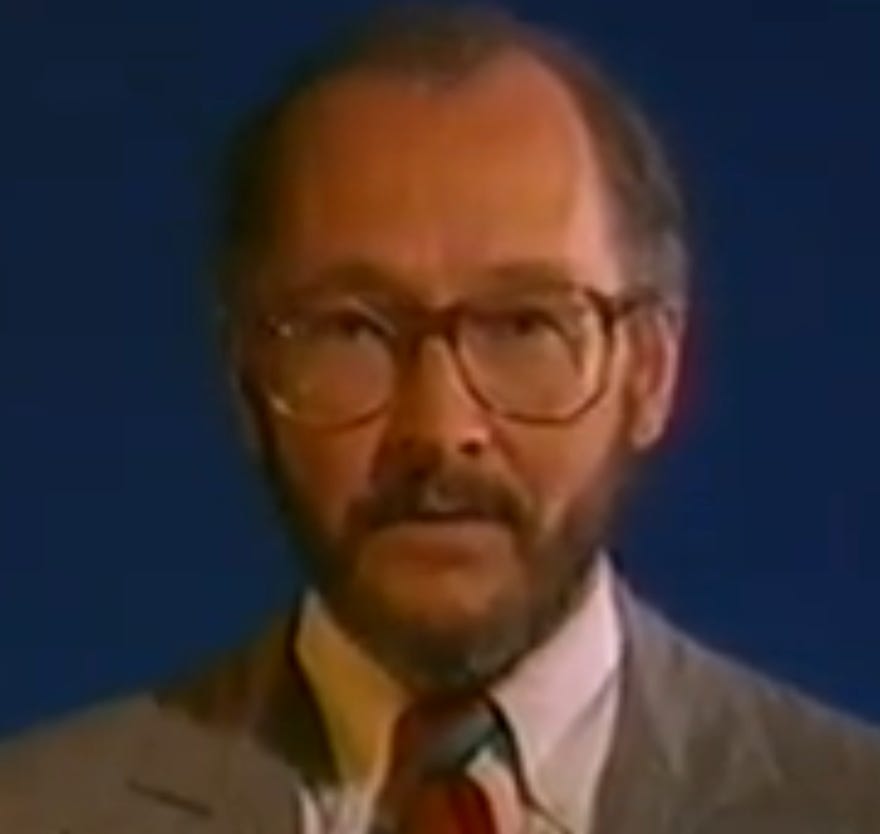
With the computer market downturn of 1985/86 finally over, and under the steady hand of the new CEO, DRI managed to reach calmer waters. In April 1988, Marketing Vice President Frank Iveson told Computer Business Review that DRI was not only profitable again but was also paying back the loans taken during the bad years. Annual revenue for fiscal 1987 was reportedly up to $35M.
FlexOS was being licensed to companies like IBM and Siemens and its development continued in Monterey. Concurrent DOS was developed in England, along with DR DOS which started to make Bill Gates increasingly nervous and forced Microsoft to re-invest in the mostly neglected MS-DOS.
But DRI never returned to its old days of glory. Even if (barely) profitable, its influence on the industry was gone forever. The company was largely forgotten by the press, and it gets increasingly difficult to find articles about it after 1985.
After Microsoft Windows finally started being widely adopted in 1990, Williams concluded DRI could not survive long on its own and started looking for a partner to acquire the company. After a year of searching, he finally found one: Novell.
On July 16, 1991, the definitive agreement to merge DRI into Novell was signed, and the announcement followed the next day. According to Business Wire on July 17: “Digital Research, with 273 employees, had revenue of $40.9 million in its fiscal year ended Sept. 30, 1990, up from $36.2 million in fiscal 1989”.
In November 1991, after the acquisition was completed, Novell was restructured into three “Systems Groups” and Digital Research became one of them.
Concurrent DOS, renamed to Multiuser DOS a couple of years prior, was sold off in 1992.
The latest mention of the Monterey offices I could find is a Computer Business Review article from March 8, 1993: “NOVELL FORMS A DEDICATED SYSTEMS BUSINESS UNIT” which notes that the new Dedicated Systems Business Unit was formed in the old DRI headquarters.
In July 1994, Novell sold FlexOS to Integrated Systems and relocated the remaining engineers to Novell’s headquarters at Provo, Utah26. It was roughly ten years after DRI moved into the Garden Court offices, so one can speculate that the lease expired around that time and Novell closed the site.
The EDC at Hungerford, England27 seems to have remained active into 1995.
A short Computer Business Review article from August 16, 1994, titled “NOVELL TO FADE OUT THEIR DOS 7 TO AVOID MICROSOFT” reported that new Novell CEO Robert Frankenberg had decided to abandon DR DOS: “a big round of lay-offs is in the wind, with some observers saying numbers could go as high as 2,000;”.
Gary Kildall did not live to read that article. He died of a cerebral hemorrhage on July 11, 1994, in Monterey.