We bootstrapped Maker.ai for 2 years.
I drank the bootstrap koolaid for years. I believed VCs were mostly there to screw me out of my own company. I believed raising money would lead to a broken culture, stress and random strangers owning my life’s work.
Since then, I’ve raised considerable amount of venture capital ($30m+) and worked with dozens of investors. I’ve certainly faced some of the venture horror stories - yet 2 years in, I wouldn’t go back to a bootstrapped life.
If you want to build a big company, bootstrapping isn’t a great idea. Why?
1. No margin for error
Very few companies knock it out of the park from day 1. The path to building a unicorn isn’t a straight line.
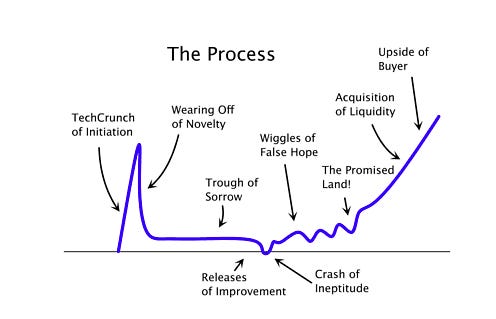
It’s hard to iterate and experiment as a bootstrapped company. Your livelihood depends on your profit next month - trying some crazy new idea, exploring a pivot or even messing around with pricing could mean trouble paying rent next month.
The path to at least $10m ARR is one of experimentation and iteration. A straight line drive will land on a local optimum - you can luck your way into product market fit, but you’ve probably just nailed a lifestyle business.
2. Your competitors will outspend you
The only companies that bootstrap to becoming a unicorn do it two ways. Either they start so far ahead of anyone else, they build an insurmountable lead once the market catches up (i.e Mailchimp). Or, they have some key mote that’s largely winner-take-all, combined with being an early mover (i.e Zapier).
Any other space, and more often than not a venture funded competitor that has their shit together will beat you. Why? Unless you have some special, insurmountable insight or advantage, they’ll line up their ducks in your row and spend to get ahead of you.
If you get big enough and start experiencing real brand lift, this matters less. That usually doesn’t happen until at least $5-7m ARR - the hard part is getting there.
3. It’s lonely
Bootstrapping is a lonely life. You might have advisors, but advisors don’t tend to get out of bed long-term unless you’re hypergrowth or building space robots. More often than not, it’s you and your co-founders in a room trying to figure out how to continue surviving.
You can’t talk to your family or friends about it. Unless you’re really well connected (in which case you’re probably not bootstrapping, let’s be fair), your friends aren’t going to be much help.
Why? The problem set that exists when you’re actively watching six to seven figures move in and out of your bank account is one only a few people understand.
I spent years believing VCs were evil capitalists out to steal my lunch. Once I “got in bed with them”, I realized the good ones are mostly aligned with you. They’re a voice in the room who’s seen dozens of companies like you go through the same challenges.
Our best investors are part-advisor, part-cofounder, part-therapist. That’s a game changer when things get rough.
—
If your goal is to build a lifestyle business, bootstrap. You can get significantly rich ($5-$10m+) in a couple of years while having a much more relaxed lifestyle.
If you want to build a reasonably big business in a particularly big market while bootstrapping (ala Mailchimp), you might crack it if you aren’t too late out of the gate. But even if you’re wildly successful, you’ll constantly have to watch your back for venture upstarts (just ask Jotform).
Raising money, raising fast, growing fast and become good at growing fast are the common pattern among the fastest growing companies of all time.