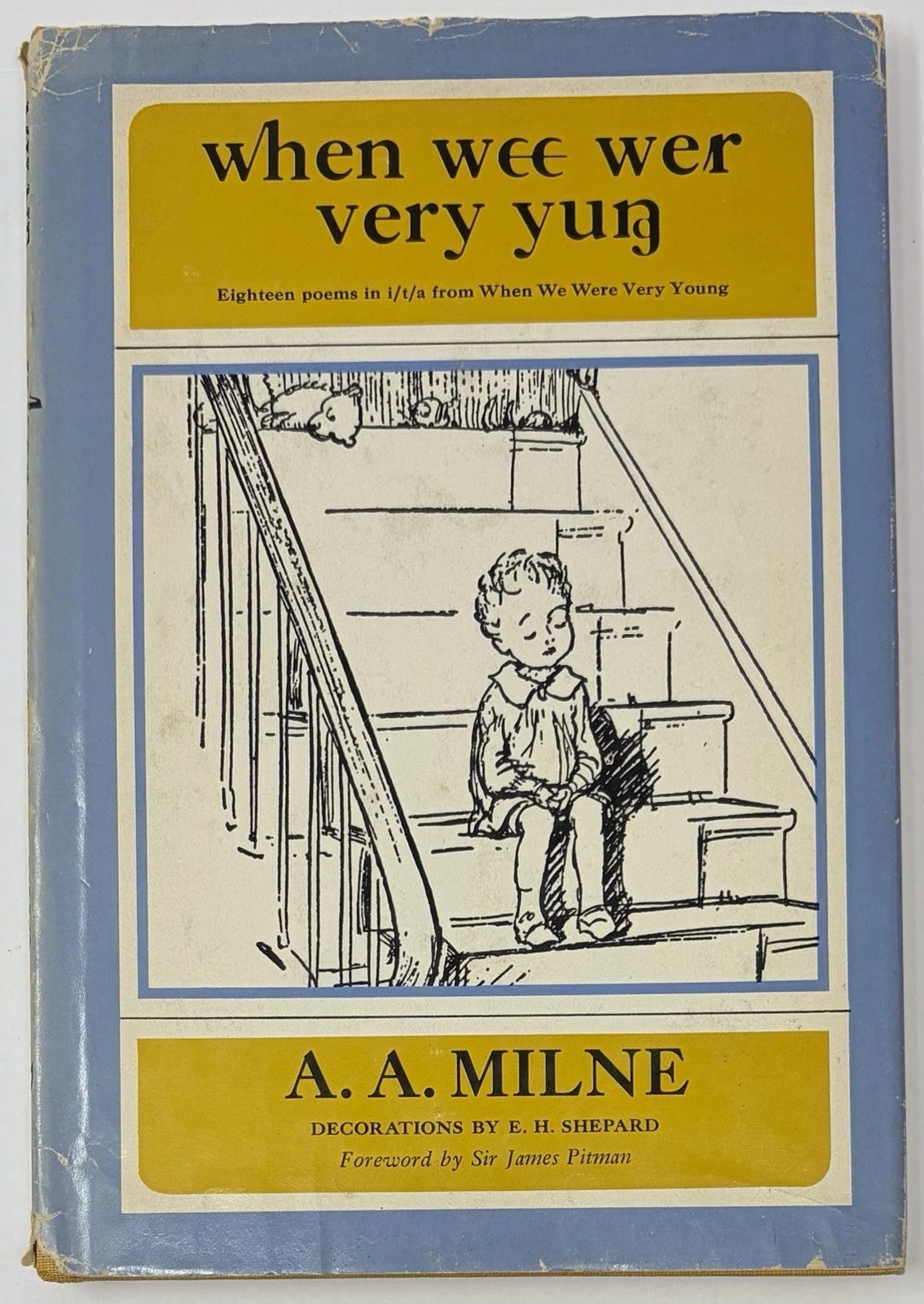
At Longfellow Elementary in Mayfield, Kentucky, I was taught how to read and write using a system that no longer exists, a system almost no one even remembers.
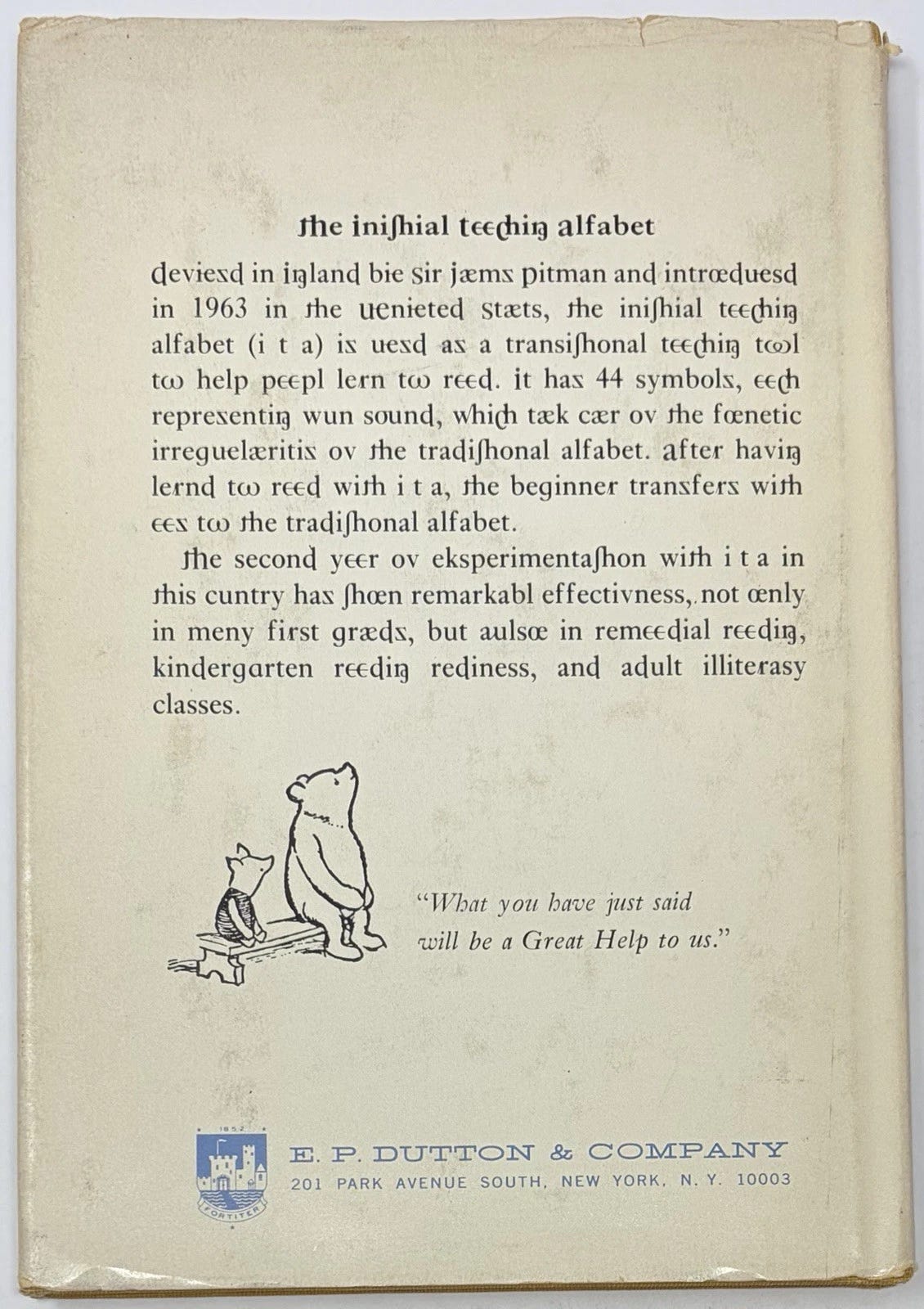
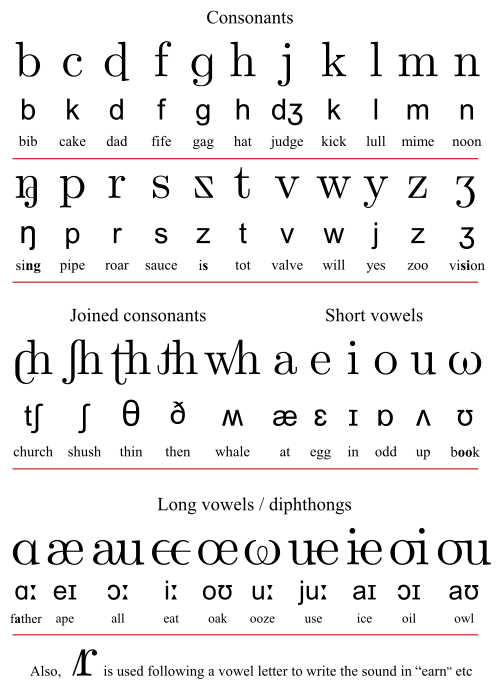
Called i/t/a (Initial Teaching Alphabet), it consisted of forty four different letters, each representing its own unique sound (similar to Italian or Spanish). For example, the long a sound as in “angel” was spelt æ; and, the long o in “goat” was spelt œ. We had two “z”s: the ordinary “z” letter and a special backwards “z” letter (called “zess”) which was used in many plural forms and in verbs like “is.” There were other symbols I can’t replicate with this keyboard, but they were wild — “n” combined with “g” in a way that made them look like they’d stayed out too late partying and “g” needed a little help to get in the door. If, as first graders, we needed to write about a “king,” we’d plop down a k and an i and then use this symbol:

Also, sentences were all written in lower case.
So, the year that Ronald Reagan was settling into the Oval Office, I learned to write, “i hav a gœt.” At least for a time, I couldn’t write in English, but I could create my own stories no one else could read with letters that looked like hieroglyphics. If this didn’t sound like the sort of thing American schoolchildren were experiencing at the time, you are (at least partially) correct.
The radically progressive alphabet was created in England.
Sir James Pitman argued in a 1953 parliamentary debate that English’s “illogical and ridiculous spelling” was the “chief handicap” to easily teach children how to read. And it does seem unnecessarily confusing. There are just too many ways to make the same sound — and the “ou” letter combination shouldn’t be doing all this: ‘through,’ ‘though,’ and ‘thought.”
Absolute chaos. I can see why Pitman wanted to intervene.
To solve this nuttiness, he unleashed this radically reimagined alphabet onto school children everywhere. According to Emma Loffhagen, i/t/a was a “radical, little-known educational experiment trialled in British schools (and in other English-speaking countries) during the 1960s and 70s.” After radically rewriting the rules of literacy for tens of thousands of children all over the world, “then it vanished without explanation. Barely documented, rarely acknowledged, and quietly abandoned – but never quite forgotten by those it touched.”
I’m not sure how this alphabet made it all the way from England to Western Kentucky, but it did. You’ve probably already guessed this is now considered an educational disaster. Parents didn’t understand it, transfer students were completely baffled, and i/t/a-trained students had to transition in second grade to actual English — unlearning everything we’d been taught previously. It was a lot of extra work for everyone, with mixed results. The main complaint against it? Students could read but couldn’t spell.
University College London Professor Dominic Wyse said, “ITA is regarded now as an experiment that just didn’t work.” Professor Rhona Stainthorp commented, “It was a bizarre thing to do.”
I’d been caught up in a flash-in-the-pan educational fever dream after all the major city school districts abandoned by the mid-1970s. In Mayfield, Kentucky, we were still taught this three decades after Sir James Pitman’s presentation in Parliament. Apparently, isolated rural schools weren’t able to pivot as quickly. Or maybe no one really was keeping track. Or most likely, they sent a letter telling us to stop, and we couldn’t read it.
So, while the other children across the country were learning to see Spot run, I was learning this wild code. And honestly, I loved how every symbol had a sound. Sure, I couldn’t read the newspaper. But the shelf of books written in i/t/a at our school was more than enough for me. Also, my parents couldn’t help with my homework, which I understood to be a shortcoming of theirs, but even this was weirdly empowering. I knew something — finally! — that adults in my life didn’t. And because it was essentially secret, specialized knowledge, it felt more adjacent to Nancy Drew than Dick and Jane. Nancy Drew solved mysteries. Dick and Jane mostly watched their dog exercise.
When the dust settled on this experiment, no one really knows if i/t/a worked. “For all its scale and ambition, the experiment was never followed by a national longitudinal study. No one tracked whether the children who learned to read with ITA went on to excel, or struggle, as they moved through the education system,” writes Loffhagen. “There was no formal inquiry into why the scheme was eventually dropped, and no comprehensive lessons-learned document to account for its legacy.”
I’ve found this to be anecdotally true. Some of my friends seemed to never get the knack of real English when we transitioned to it later. And even though I couldn’t remember which way a “z” went for years, I fell in love with words and writing.
It’s possible I’m a writer because of i/t/a — or even in spite of it. But before I knew anything about educational experiments, I knew that those strange little symbols could become a goat, a person, a whole story, and a whole world. What some people remember as a confusing educational detour, I remember as the place where words first became interesting.
But now, if I write something that readers find indecipherable, I have no one to blame but myself.
Want to try your hand at reading i/t/a? The back of this book — which I got from an eBay listing — is a great example of i/t/a language use! Can you read it easily?