All great work begins as an act of imagination.
Before the equations, before the patents, before the pitch deck with the hockey-stick chart that made an investor lean forward in her chair, someone imagined. Someone read a novel, or watched a launch, or stared at a problem so fundamental it bordered on embarrassing to say out loud, and thought: what if we actually did this?
Science fiction has always been the rehearsal space for science fact. Satellite constellations lived in Arthur C. Clarke’s notebooks decades before they lived in orbit. Videophones were a throwaway detail in mid-century paperbacks before they became the infrastructure of a pandemic. The electric car was a dream, then a footnote, then a punchline, and then—after enough stubborn people refused to stop—the thing parked in your neighbor’s driveway. Imagination is engineering’s first raw material.
But imagination alone builds nothing.
Somewhere right now, someone is staring at a whiteboard full of physics that says a thing is possible, a bank account that says it’s improbable, and a timeline that makes venture capitalists quietly check their watches. Her problem does not live neatly inside a single domain. It spans hardware and software, science and regulation, laboratory and factory floor. It is measured in gigatons, in orbital mechanics, in the thermodynamics of a planet that hasn’t yet decided whether to keep us.
The reasonable thing to do would be to stop. She is not going to stop.
Here is the part that rarely makes the founding myth: she cannot do this alone. Not because she lacks brilliance (she may be the most capable person in any room she enters) but because the problem is architecturally collaborative. It was designed by reality to require more than one mind, more than one discipline, more than one kind of courage.
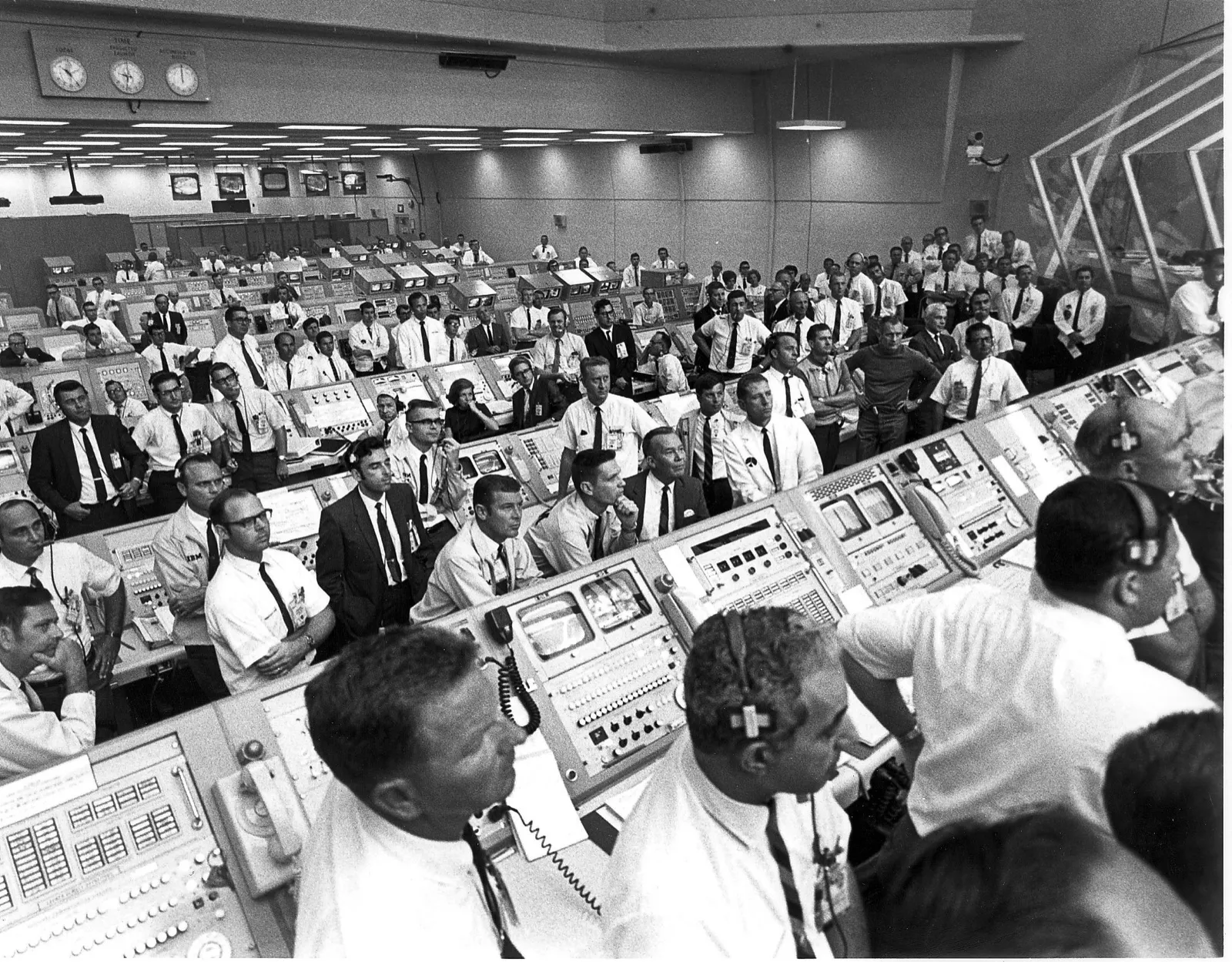
Tough technology has always worked this way. The semiconductor didn’t emerge from a lone inventor’s garage. It emerged from physicists who understood quantum tunneling, chemists who could purify silicon to nine decimal places, engineers who figured out photolithography, manufacturers who could hold tolerances that would make a Swiss watchmaker weep, and investors (and spouses) patient enough to fund all of it before a single dollar came back. The myth of the solo genius makes for a better magazine cover. The truth of the ecosystem makes for a better civilization.
Here is why.
The hardest problems on earth sit at the intersection of three substrates: bits, atoms, and brains. Information, matter, and human systems, with energy as the exchange rate between all of them. A fusion reactor is an atoms problem that requires bits to control plasma and brains to navigate regulatory frameworks, utility procurement, and public trust. An orbital logistics company is a bits problem running on atoms that must survive launch loads and reentry heating, built by brains that somehow hold together through seven years of pre-revenue operation. A breakthrough cancer therapeutic is a brains problem, literally, that depends on computational modeling at the molecular level and physical manufacturing that must be sterile, scalable, and affordable.
No single discipline owns more than one of these substrates. No single founder masters all three. The problems that matter most are the ones that refuse to stay inside a single domain, and solving them requires people whose expertise doesn’t overlap but whose conviction does.
So let’s talk about who actually shows up.
The scientist who spent a decade on a result that fits in a single equation, and who now has to watch someone else translate it into something that ships. The engineer who left a perfectly comfortable salary because she realized comfort and meaning had diverged. The investor who wrote a check before the unit economics made sense because the unit physics already did. The operator who learned that building hardware means your supply chain has feelings, your factory floor has opinions, and your timeline has a dark sense of humor. And there are more: the program manager at a national lab who quietly made an introduction that changed everything; The university tech transfer officer who chose to be helpful instead of territorial; The limited partner who convinced a pension fund that fourteen-year hold periods aren’t reckless when the underlying asset is the energy transition; The corporate strategist who fought three layers of bureaucracy to run a pilot with a startup that had eleven employees and a prototype held together with kapton tape and conviction.
And then there are the sensemakers.
The ones who look at a landscape shifting in twelve directions at once and find the pattern. The analyst who can explain why a breakthrough in solid-state batteries matters to someone who builds rockets, and why it should matter to the pension fund behind both of them. The writer who translates dense technical progress into language that lets a policymaker act, an allocator commit, a founder realize she has company. The advisor who sits across the table from a leadership team and says, with precision, here is what is actually happening, here is what it means for you, and here is what you do about it.
Sensemaking is infrastructure. The distance between a laboratory result and a launched product, the infamous valley that has swallowed careers whole, is fundamentally a comprehension gap. Technologies die in that valley when the people who could help them survive simply don’t understand what they’re looking at.
When someone makes the frontier legible, when they connect the researcher to the investor, the investor to the operator, the operator to the market, not just with introductions but with shared understanding, they are doing structural work. They are load-bearing. They are part of the build.
This is the ecosystem. A living, working system of people who decided that the problems worth solving are the ones too large for any single actor, any single discipline, any single kind of courage.
You know these people. You might be one of them.
You recognize each other by a frequency that hard problems emit. A frequency that a certain kind of person cannot ignore. It sounds like a problem worth your finite years on earth. It sounds like the particular silence in a room after someone explains what they’re attempting and everyone present realizes that science fiction just became a plausible engineering roadmap. It sounds like a bet on atoms and brains in a world that learned to worship bits, and the slow, stubborn accumulation of evidence that the bet is paying off.
Building at the frontier is grueling. The timelines are punishing. The capital requirements are severe. The gap between a breakthrough in the lab and a product in the field has humbled people far smarter than any of us. Anybody who tells you this work is glamorous is selling you a conference ticket.
But it is meaningful. Unreasonably, stubbornly, almost suspiciously meaningful. The kind of meaningful where you look up from a twelve-hour day and realize you wouldn’t trade it for anything that pays better, which is nearly everything.
And the secret—the structural secret, the one hiding in plain sight across every tough technology that ever made the leap from lab to launch—is that the people who succeed at this do not succeed alone. They succeed because somewhere along the way, someone imagined it first. Someone made it legible. Someone believed before belief was justified. Someone funded the bridge round. Someone made the introduction. Someone stayed.
No one builds alone.
Not the fusion founder. Not the rocket engineer. Not the investor who backs them. Not the operator who scales them. Not the sensemaker who makes the whole landscape intelligible. Not the institution that sustains them when the market decides it has shorter-term things to worry about.
Call it what it is: an engineering constraint. The grandest challenges facing our species are, by their very structure, team problems. They require the scientist and the storyteller, the patient capital and the impatient founder, the ones who imagine what’s possible and the ones who refuse to accept what isn’t.
The frontier was never meant to be crossed alone. Every breakthrough you admire, every technology that made the impossible first laughable, then controversial, then obvious, was carried across that line by a group of people who found each other and decided the problem was more important than the odds.
You are one of these people. You are here because something in you responds to problems that most people have the good sense to avoid. And the most important thing you can know, more important than your cap table, your technical roadmap, or your five-year plan, is that the others are out here too.
They are looking for you the same way you are looking for them.
Find each other. Build together. The problems are not patient, and they are certainly not going to be solved by anyone building alone.
All great work begins as an act of imagination. World-changing work begins as an act of imagination shared.