June 22, 2026
“[I] won a proxy fight and eventually made money but it was not worth the pain. My first and last foray into activist investing.”
In early 1994, Joel Greenblatt found a beautiful, straightforward setup in American Express. The company was preparing to spin off its underperforming, volatile Lehman Brothers subsidiary. Stripped of Lehman, the remaining company would own two attractive assets: its irreplaceable travel-related services and Investors Diversified Services (IDS), a financial planning network compounding earnings at 20% annually.
Greenblatt did the math: with American Express trading at $29/share and the Lehman spinoff valued around $3-5, investors were buying the new and unencumbered American Express for $24-26/share. This translated to a price-to-earnings ratio of less than ten, a massive discount compared to peers. Within a year, American Express hit $36/share, resulting in a gain of over 40% for relatively little heavy lifting1.
This is the allure of “special situation” or “event-driven” investing. Instead of waiting years for a stock to mysteriously converge with its intrinsic value2, you find a built-in corporate event, like a spinoff, that forces the market to value the company appropriately on a distinct timeline.
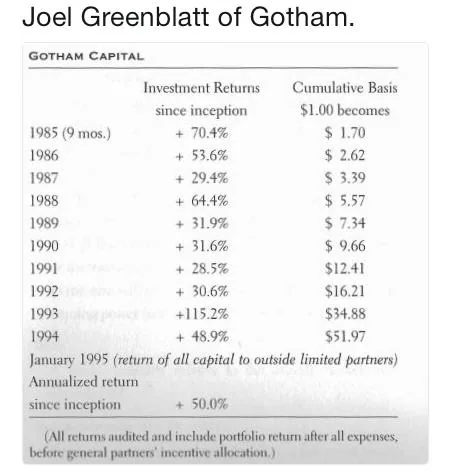
But what happens when you don’t just wait for the catalyst, but force it yourself? You become an activist. And in 1994, the exact same year Greenblatt made an effortless 40% on American Express, he launched his first, and last, hostile activist campaign3. The opportunity cost of activism isn’t abstract. It is exactly investments like American Express which show how expensive activism campaigns can be.

§American Defense, 1990s
The Cold War was over. Defense spending was careening downward. Procurement budgets were being slashed. Defense companies were slow to react. They had excess capacity, and had no idea what to do with it. The once growth industry was going de-growth, while still being capital intensive with thin margins.
Seeing this, Honeywell spun off Alliant Techsystems to be its own public company in 1990. Shareholders would receive 1 share of ATK for every 4 of HON. This would lead to the 17th largest independent defense contractor, with 8,300 employees, $1.1B in revenue, $54M in income, and roughly $225M in debt.
The company was bloated. They had two groups and six divisions. Far from nimble. Toby Warson, the first CEO, removed 1,600 administrative and managerial positions, took the company’s layers of management from fourteen to seven, and significantly reduced the debt load.
Everything seemed great, until 1993. Revenue dropped from $1.1B to $800M. Income went from positive $54M in 1990 to negative $80M. Perhaps they were still bloated. But the defense industry had not been set up to reach its peak during the Cold War. The Gulf War kept the company stable during the early 1990s, but at this point, it was clear the company was overprovisioned.
§Acquire to Survive
Alliant acquired their way out of this problem. In 1992, they attempted to acquire Olin Corporation’s ordnance division for $68M. Another defense contractor, this time a sole supplier of certain specialized large-caliber munitions. This was blocked by the FTC on antitrust grounds. The combined company would be the sole supplier for their market4.
Rebuffed by larger acquisitions, Alliant turned to smaller ones. In 1993 alone they acquired Accudyne, Kilgore, and Ferrulmatic for $100M in total. None of these arose to the level of anti-trust, but management was maligned with an appetite for acquisitions. So they went bigger.
In July 1994, Alliant announced a deal to acquire Hercules for $470M, with roughly $105M of the purchase being in stock. This would have doubled the size of the company, but critics would argue they were overpaying. And critics could buy your stock, and force a proxy contest.

§The Proxy
Management and the board were all for this deal. They would acquire one of their larger competitors, bolstering their position and operating leverage. By securing valuable manufacturing facilities, the combined company would be an indispensable asset to the DOD.
Joel Greenblatt and his team thought otherwise. They accused management of going on a debt-fueled M&A spree instead of downsizing. These sorts of transactions, handled poorly, would kill the company and permanently impair its cash flow. Instead of an acquisition, cash should be used to reduce their debt or perhaps buyback stock.
Buying other defense companies at these prices was effectively transferring the shareholder’s wealth to the sellers. The integration risk would go against all of the streamlining they’d already done. Not to mention going through the nightmare of anti-trust, again. So, holding just 2.8% of the stock, moved to replace 6 of the 9 board of directors.
§Outcome
Joel won. They got their six board seats. Joel remained as chairman before stepping down after 1 year. He and the other directors did stay on the board until 2000, retaining this particular position and investment vehicle5.
After the board turned over, Warson was ousted. They brought in a new management team, one who they believed were not as interested in expanding for expanding’s sake. However, the official posture of the company did not change: they still expected the deal to go through.
The new board was not too quick to dismiss the deal, now that they were inside the company. Their stance changed from “this deal should not go through” to “we should reconsider this deal” to “we should lower the price”. And lower the price, they did.
The original ink said $365M cash and 3.5M in shares. They closed at $296M in cash and 3.86M in stock. The FTC issued a final consent order in 1995, and the board added capital allocation metrics, to make sure they were focused on making the acquisition accretive to earnings.
Although Joel got what he wanted, this was not a successful investment by his standards. By the time he had stepped down as a director in 2000, the company was doing $1B in sales and $75M in net income. Suspiciously similar to the post-spinoff numbers, a decade earlier.
Greenblatt had entered the investment around $35 per share and exited near $65 per share. This worked out to a roughly 10% annual return for steering a company through a grueling, half-decade turnaround. Compare that to the quick 40% he made on American Express in under a year, and it is easy to see why Greenblatt decided to not become hostile again.
However, after leaving the board, the industry was revitalized due to the War on Terror. The stock rose from $65/share to $250/share over the next five years. Joel, I hope you held on!
-
You should read the terribly titled book, You Can Be A Stock Market Genius ↩
-
Even Ben Graham does not know ↩
-
He does indeed have a friendly campaign, but that’s another story ↩
-
This is unfortunately reality today. So many sole-suppliers with little competition. Alliant were ahead of their time ↩
-
In 1995, Joel and his fund returned all outside money to investors to become a family office. He had a couple vehicles, such as this one, which remained active for a few years after. ↩