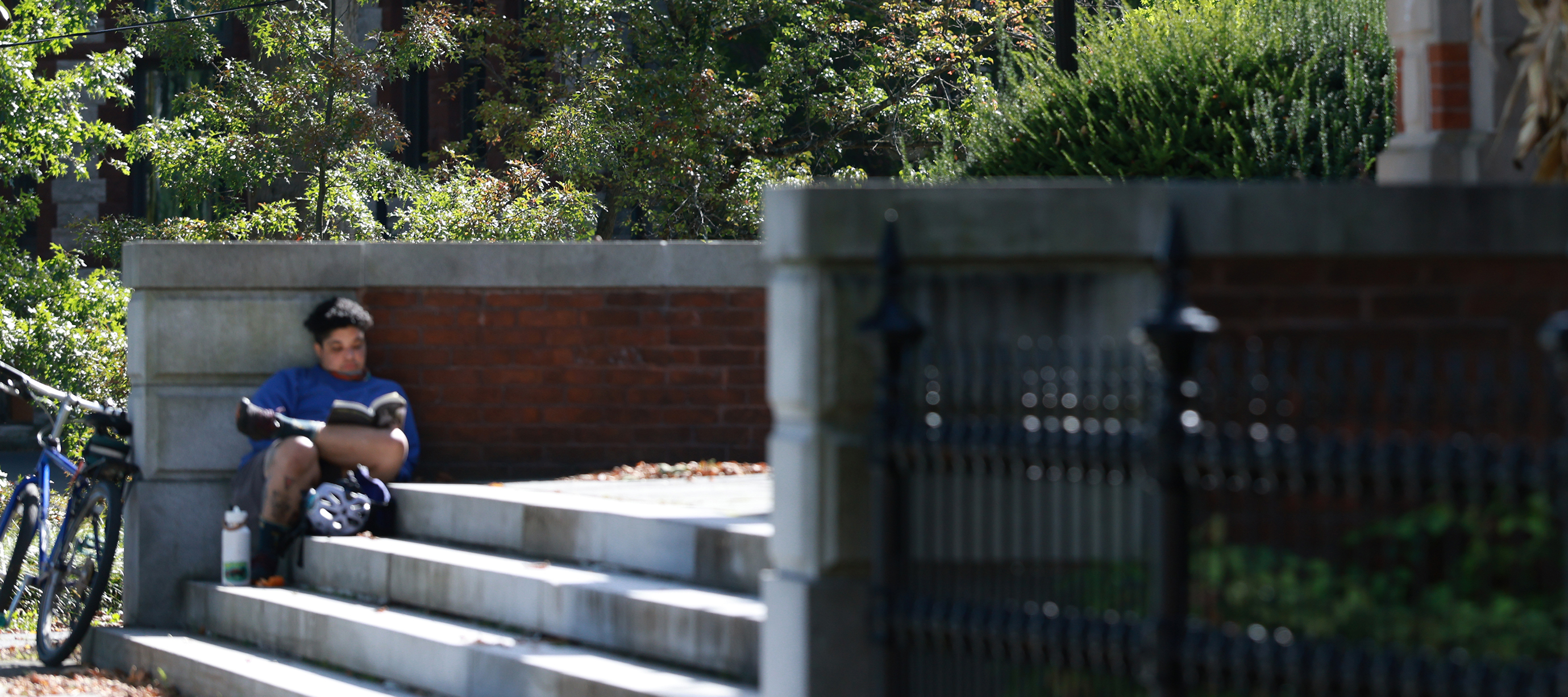

For many of us, the best part of school was simple: sitting cross-legged on the carpet while the teacher read aloud, listening to the story unfold.
That love of reading often followed primary grade students home, leading to library books under the covers and paperbacks tossed into backpacks. But as Gen Z packs their bags for college, students are arriving unprepared.
The shift didn’t happen overnight; it slowly slipped out of daily life. Nearly half of all Americans didn’t read a single book in 2025, with the habit falling roughly 40% over the past decade (1).
Even as TikTok’s subcommunity BookTok has helped make cracking a novel open feel cool again, Gen Z’s habits still trail every other generation. Americans ages 18 to 29 read an average of just 5.8 books in 2025.
As literacy rates continue to slip and fewer Zoomers engage with reading, a more concerning question arises. If students are arriving on campus without meeting literacy expectations, is the financial and academic cost of college still worth it, or does the path need rethinking?
Is this really a problem?
Educators often describe reading as a predictor of long-term success, both academically and professionally. A JPMorgan survey of more than 100 billionaires, reading ranked as the top habit elite achievers had in common, including Bill Gates, Barack Obama and Oprah Winfrey (2).
Roughly 54% of U.S. adults have literacy skills below a sixth-grade level, and about one in five fall below a fifth-grade level (3). Leah Frazier, an Adjunct Professor in Digital Marketing, says she’s seeing the decline firsthand.
“There is absolutely, without a doubt, a decline in literacy with our students,” she told Moneywise. “The irony, however, is that they know it and don't care. I had students this semester tell me that they feel as though they are getting ‘dumber’ and that AI and ChatGPT do not help the issue.”
Frazier added that many students avoid wading through their textbooks altogether and resist scanning the summarized lecture slides provided to them.
“Their basic levels of reading, writing and comprehension are poor as well,” she explained.
But not all classrooms are seeing the same decline. At New York University Stern School of Business, clinical professor of business Alison Taylor says the picture is more nuanced.
She told Moneywise that in an undergraduate class she taught earlier that morning, students had completed the assigned readings and were “very smart and engaged.” Taylor added that while AI tools are now part of academic life, the bigger challenge is figuring out how institutions respond to them.
trending now
“I think we’ve got to address the entire conversation a bit differently and rethink how we educate people,” she said. “It’s concerning, but it’s a nuanced picture, especially for younger students; there’s awareness that they need to focus on their concentration and critical thinking.”
The NYU Stern School of Business operates within a specific academic environment. As a highly competitive business school with a grading curve, the incentives for students are different. The department also enforces a no-screens classroom policy to support focus and engagement.
Must Read
- Dave Ramsey warns nearly 50% of Americans are making 1 big Social Security mistake — here’s what it is and 3 simple steps to fix it ASAP
- I’m 49 years old and have nothing saved for retirement. Should I panic? No — here are 6 easy ways you can catch up (and fast)
- Get early access to privately-held AI companies with Fundrise Venture Capital for as little as $10. Join 350,000+ investors today
Join 200,000+ readers and get Moneywise’s best stories and exclusive interviews first — clear insights curated and delivered weekly. Subscribe now.
The path forward
For students who are already struggling academically or who dread the idea of weekly, page-long assignments, the traditional four-year college path isn’t their only option.
Frazier said post-secondary education will always matter, but she encourages students to consider alternatives that better match their skills, interests and readiness. In her own classrooms, both at the high school and college level, she often emphasizes entrepreneurship and self-directed work, pointing to freelancing and small businesses as ways students can invest directly in themselves, rather than taking on debt upfront.
She added that more high schools are expanding Career and Technical Education (CTE) programs, while colleges are offering shorter, more targeted pathways, including certifications, trade programs and entrepreneurship-focused credentials that cost significantly less but can still lead to great outcomes for students (4).
Trade school, for example, typically costs between $3,973 and $16,877, according to Citizens College Raptor (5). Compare that with the average cost of college in the U.S., which now runs about $38,270 per student per year once tuition, books, supplies and living expenses are factored in (6).
The difference matters. The average student loan borrower graduates with about $39,075 in debt, a sum that takes about 20 years to repay (7).
“We will always need our HVAC technicians, IT technicians, plumbers, etc., and some of these essential careers are doing very well for themselves and live very fulfilling lives,” Frazier said.
Planning for the future
The question of whether college is worth it, experts say, cannot be answered with a blanket yes or no.
Nick Maggiulli, Chief Operating Officer at Ritholtz Wealth Management and author of the Wealth Ladder, recently told Moneywise the value of higher education increasingly depends on a student’s individual circumstances.
“If you’re thinking like, ‘Hey, I’m going to spend all this money to go to a school that no one’s heard of,’ how well are they placing people?” Maggiulli said, adding that students should research post-graduation employment trends before committing to a school.
As the job market, education system and student engagement continue to shift, the path forward is becoming less one-size-fits-all. For students and families, financial security now matters just as much as academics, and choosing the right path that aligns with both may be the smartest investment of all.
Article sources
We rely only on vetted sources and credible third-party reporting. For details, see our editorial ethics and guidelines.
YouGov (1); Fortune Magazine (2); The National Literacy Institute (3); Institute of Education Sciences (4); College Raptor (5); Education Data (6, 7).
You May Also Like
- A whopping 41% of Americans making $300K to $500K still live paycheck to paycheck. Here are Suze Orman's 6 practical tips to leave that stressful trap behind
- This $1B private real estate fund is now accessible to non-millionaires. Here’s how you can get started with as little as $10
- Warren Buffett used these 8 repeatable money rules to turn $9,800 into a $150B fortune. Start using them today to get rich (and stay rich)
- Here are 5 easy ways to own multiple properties like Bezos and Beyoncé. You can start with $10 (and no, you don’t have to manage a single thing)
Victoria Vesovski is a Toronto-based Staff Reporter at Moneywise, where she covers the intersection of personal finance, lifestyle and trending news. She holds an Honours Bachelor of Arts from the University of Toronto, a postgraduate certificate in Publishing from Toronto Metropolitan University and a Master’s degree in American Journalism from New York University’s Arthur L. Carter Journalism Institute. Her work has been featured in publications including Apple News, Yahoo Finance, MSN Money, Her Campus Media and The Click.
more from Victoria Vesovski
trending now
