Timothée Chalamet Just Showed Us Why AI Music Licensing Will Fail

8 min read Original article ↗

Four days into 2026 and we already have the year’s cleanest illustration of why music rights infrastructure is broken.

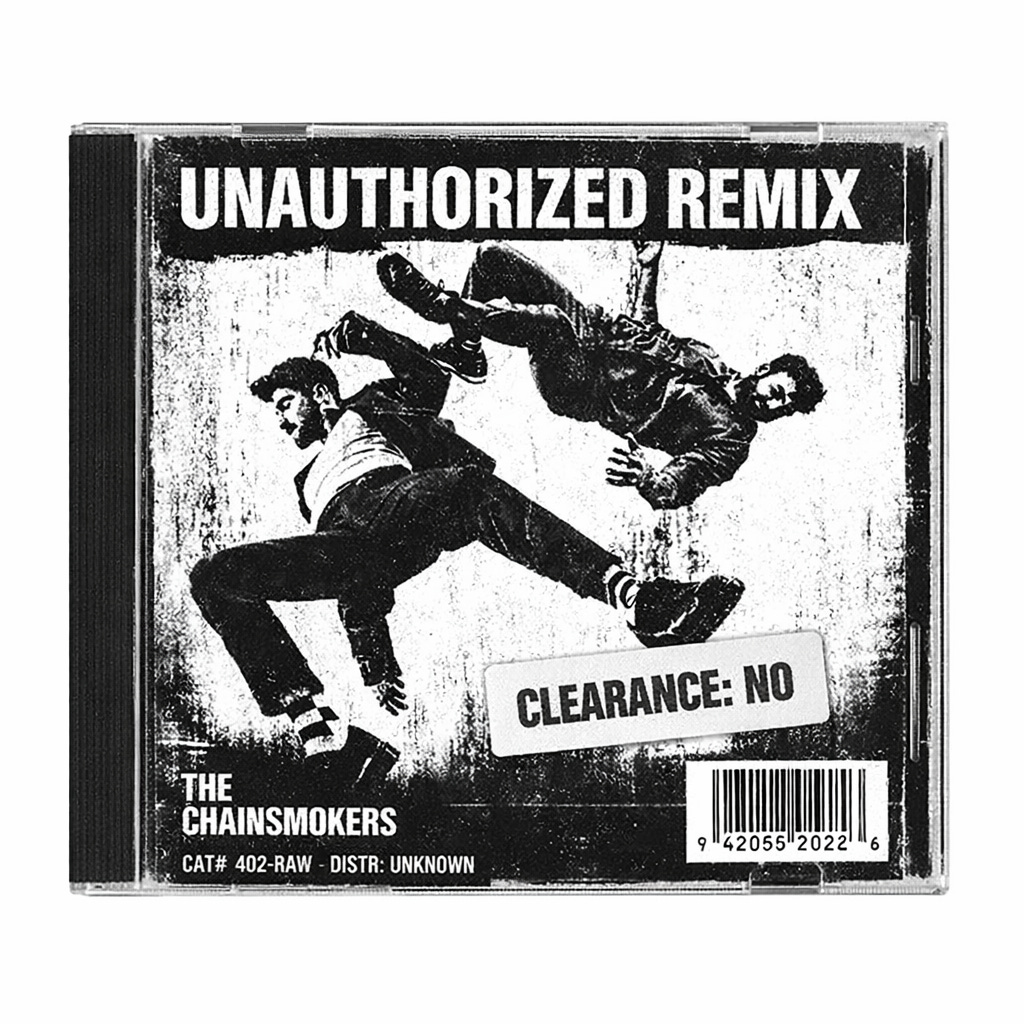
On January 2nd, EsDeeKid, the masked Liverpool rapper who spent 2025 fending off rumors that he was secretly Timothée Chalamet (he’s not, they did a remix together to prove it), posted this on X:

“that chainsmokers remix is getting NUKED mate wow 💀💀 please don’t remix my shit and think it’s cool to post to all DSPs 🕊️”

X avatar for @esdeekidd

EsDeeKid@esdeekidd

that chainsmokers remix is getting NUKED mate wow 💀💀 please don’t remix my shit and think it’s cool to post to all DSPs🕊️

12:32 AM · Jan 2, 2026 · 3.73M Views

434 Replies · 2.12K Reposts · 60.5K Likes

The Chainsmokers had uploaded an unauthorized remix of his track “4 Raws” to YouTube and SoundCloud, with the track briefly hitting streaming before being pulled. Within hours, it was gone from everywhere.

This wasn’t some underground bootleg situation. The Chainsmokers have nearly 48 million monthly Spotify listeners. They’ve been doing this a lot lately, posting unsanctioned remixes of tracks by Charli XCX, Chappell Roan, Gracie Abrams, and others. The only one that stuck was their Taylor Swift remix, which had official approval.

The reaction was brutal. One YouTube commenter said it had already “ruined 2026.” Another joked that Benjamin Netanyahu had made it his ringtone.

But here’s the thing nobody’s asking: why did The Chainsmokers post it without permission in the first place?

Share Moment of Creation

I don’t think The Chainsmokers are villains. I think they’re rational actors responding to a system with misaligned incentives.

Maybe they treated these as promotional UGC-style remixes, never intended for DSPs until someone pushed them there. Maybe they were testing fan reaction first. Maybe they figured they could negotiate retroactively—they have the leverage. All of those explanations are plausible.

But here’s the one that should concern everyone: the clearance process is so slow and uncertain that even artists who want to do it right can’t.

If they wanted to release that EsDeeKid remix properly, here’s what they’d need to do:

  1. Identify EsDeeKid’s publisher (composition rights)

  2. Identify his label or distributor (master rights)

  3. Contact both parties

  4. Negotiate terms with each

  5. Wait for legal review

  6. Get written approval from both

  7. Sort out the royalty splits

  8. Clear it for each territory where rights might be held separately

For a remix. Of one song. By one artist.

The timeline for this process, if everyone’s responsive and motivated? Weeks to months. If anyone ghosts you or the rights are disputed? It might never happen.

So what do artists do? They post and hope for the best. Or they wait to get nuked.

Here’s the real absurdity: if that remix hit streaming, some distributor somewhere clicked a box asserting they had the rights. The pipeline to ship content is frictionless. The pipeline to legitimately clear it is a maze. We’ve made it easier to lie than to license.

This is the part that should make music people angry. Other creative industries solved this problem decades ago.

Stock photography: Shutterstock processes millions of licenses per day. You search, you click, you pay, you download. The photographer gets their cut automatically. No emails. No lawyers. No waiting. Getty Images works the same way. The entire transaction takes seconds.

Creative Commons: If you want to let people remix your work under certain conditions, you pick a license from a dropdown menu. CC BY, CC BY-SA, CC BY-NC. Done. Anyone who wants to use your work knows exactly what’s allowed. No negotiation required.

Software patents (FRAND): When a technology becomes essential to an industry standard, like 4G or 5G or Wi-Fi, the patent holders commit to licensing on “Fair, Reasonable, and Non-Discriminatory” terms. The rates are public. The process is defined. Companies can build products knowing they can get a license.

Book publishing: Want to quote someone else’s work? There are established norms, permissions departments, and standard contracts. It’s not instant, but it’s a defined process with understood terms.

Music has pockets of standardization—covers are the relatively easy case, with compulsory mechanicals in the US and collective mechanisms elsewhere. But for derivative works like remixes and samples, and for master recordings everywhere, we’re still doing bespoke negotiation like it’s 1998. Every clearance starts from zero.

When you point this out to publishers and CMOs, they have an answer ready: “You don’t understand. For every composition there are 20 people to seek approvals from. Songwriters, co-writers, publishers, sub-publishers, estates, administrators across territories. You can’t just click a button.”

And sure, photography doesn’t have 20 clearances per work. That’s true.

But here’s what they’re actually saying: no one but us can make decisions on behalf of so many people. Trust the system.

Really? Because if an organization can make decisions on behalf of 20 people, so can any organization. The ability to aggregate rights and grant approvals isn’t magic that only incumbents possess. It’s a service. And right now, that service captures most of the upside upstream, then asks artists to trust the spreadsheet.

What these organizations actually do, when you strip away the complexity theater, is distribute. They collect money and split it up. That’s valuable, but it’s not the same as “we’re the only ones who can possibly navigate this.”

The friction is the business model. Every bespoke negotiation justifies the sync department, the legal team, the “relationships.” If clearance was instant and automated, artists might start asking uncomfortable questions about what exactly they’re paying for.

The people who could build the infrastructure are the same people whose value proposition depends on the infrastructure not existing.

This isn’t purely a technology problem. The technology exists. Platforms can process instant transactions. Smart contracts can split royalties automatically. APIs can connect rights databases to approval workflows.

But technology doesn’t solve the hard parts: who has authority to say yes, what “yes” means contractually, and who bears liability when something goes wrong. APIs don’t fix disputed splits. Smart contracts don’t resolve who owns what.

Tech is necessary but not sufficient. The missing piece is standardized delegation—clear policies about who can approve what, under what terms, with what warranties. That’s a coordination problem, not an engineering problem.

Every publisher, every label, every CMO faces the same challenge: they need an approvals workflow that actually scales. They need to let artists say yes quickly, with clear terms, without the email chain nightmare. They need to stop treating every remix request like a custom legal engagement.

Some are trying. STIM in Sweden launched what they’re calling a collective AI music license in September. vers1ons is building remix infrastructure. There are startups working on instant clearance.

But the default is still: wait for the email, hope someone responds, negotiate from scratch, pray the rights aren’t split across three territories.

And while everyone waits, artists like The Chainsmokers just post the remix anyway. Because the path of least resistance is to ask forgiveness rather than permission.

If you’ve been following the AI music conversation, you might be wondering why I’m writing about a Chainsmokers remix.

Here’s why: the remix licensing gap shows exactly how artists will get cut out of AI deals.

The AI licenses will happen. They’re already happening. Publishers are cutting deals with AI companies. CMOs are announcing “collective licensing frameworks.” The money will flow.

But if we can’t give artists direct knobs for the simplest derivative use case, AI collective deals will predictably consolidate power upstream. The money will flow to the organizations that claim to represent them—the same organizations whose approval workflows are so broken that The Chainsmokers just post remixes and wait to get nuked.

Remix licensing is the simplest possible version of the attribution problem:

  • You know exactly which track is being remixed

  • You know who made the remix

  • The rights holders are identifiable

  • The output is a single, discrete work

And artists still can’t efficiently say yes on their own terms.

AI music generation is the same problem at impossible scale:

  • The “source” is probabilistic, not discrete (millions of training works)

  • Attribution is statistical, not certain

  • The rights holders number in the millions per generation

  • The output is infinite, not singular

If artists can’t participate in one-to-one licensing for a human remix where everyone involved is known and reachable, they definitely won’t participate in one-to-millions licensing for AI. The CMOs will do it for them. At the rates the CMOs decide. With the transparency the CMOs provide.

Which is to say: artists will get a check, eventually, for an amount they can’t verify, based on a formula they didn’t agree to.

This isn’t a plea for better technology. The technology exists.

This is a plea for artists to demand infrastructure that lets them participate directly. For publishers and CMOs to build approval workflows that actually serve creators, not just collect on their behalf. For the industry to stop treating “it’s complicated” as an excuse for opacity.

The window is closing. AI music generators are training on everything, and the deals are being cut now. Not in some hypothetical future. Now. Every week that passes without scalable, transparent approval workflows is a week where artists lose leverage they’ll never get back.

EsDeeKid nuked that Chainsmokers remix in hours. Good for him. He had the platform presence to make it happen.

Most artists don’t. Most artists won’t even know their work is being used to train models until the collective licensing deal is already signed.

The infrastructure that would let them say yes on their own terms, or say no, or set their own rates? That’s what needs to get built. Now.

Not after the AI deals are done. Not after the CMOs have already decided what artists are worth. Now.

The Chainsmokers, if you’re reading this: next time, try asking first. And EsDeeKid, if you’re reading this: good on you for holding the line. The rest of the industry should be paying attention.

Leave a comment

Discussion about this post

Ready for more?