Scientists and engineers understand the world through differential equations. You can too.
Introduction to Differential Equations
Scientists and engineers understand the world through differential equations. You can too.
How do you design: A boat that doesn’t tip over as it bobs in the water? The suspension system of a car for a smooth ride? Circuits that tune to the correct frequencies in a cell phone?
How do you model: The growth of antibiotic resistant bacteria? Gene expression? Online purchasing trends?
The answer: Differential Equations.
Differential equations are the language of the models we use to describe the world around us. In this mathematics course, we will explore temperature, spring systems, circuits, population growth, and biological cell motion to illustrate how differential equations can be used to model nearly everything in the world around us.
We will develop the mathematical tools needed to solve linear differential equations. In the case of nonlinear differential equations, we will employ graphical methods and approximation to understand solutions.
This is part of a 5-part series in Differential Equations:
What you'll learn
- Use linear differential equations to model physical systems using the input/system response paradigm.
- Solve linear differential equations with constant coefficients.
- Gain intuition for the behavior of a damped harmonic oscillator.
- Understand solutions to nonlinear differential equations using qualitative methods.
Prerequisites
Single variable calculus
Meet your instructors
-

Professor of Mathematics, emeritus
-
-
Abby Rockefeller Mauze Professor
-
-

Who can take this course?
Because of U.S. Office of Foreign Assets Control (OFAC) restrictions and other U.S. federal regulations, learners residing in one or more of the following countries or regions will not be able to register for this course: Iran, Cuba, Syria, North Korea and the Crimea, Donetsk People's Republic and Luhansk People's Republic regions of Ukraine.

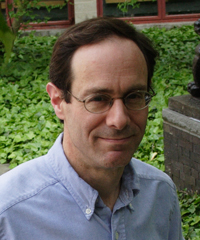
Haynes Miller
Professor of Mathematics, emeritus
Haynes Miller joined the MIT mathematics faculty as professor in 1986. A graduate of Harvard, he received the Ph.D. from Princeton under the direction of John Moore in 1974. Following assistant professorships at Harvard and Northwestern Universities, he joined the faculty of the University of Washington in 1977, and the faculty of Notre Dame as professor in 1984. Professor Miller is an algebraic topologist. In 1992-93, he served as Chair of the Pure Mathematics Committee. From 2004 to 2013 Professor Miller has chaired the Undergraduate Mathematics Committee, which he continued as Associate Department Head from July 2011-June 2013. He has worked on many educational initiatives, such as the Cambridge-MIT Exchange program, for which he received the Cambridge-MIT fellowship in 2003. Professor Miller was selected by MIT to be a MacVicar Faculty Fellow in 2005 for "exemplary and sustained contributions to the teaching and education of undergraduates at MIT." He also received the Graduate Student Council Teaching Award of the School of Science in 2006.
David Jerison
Professor of Mathematics
David Jerison received his Ph.D. from Princeton University in 1980, and joined the mathematics faculty at MIT in 1981. In 1985, he received an A.P. Sloan Foundation Fellowship and a Presidential Young Investigator Award. In 1999 he was elected to the American Academy of Arts and Sciences. In 2004, he was selected for a Margaret MacVicar Faculty Fellowship in recognition of his teaching. In 2012, the American Mathematical Society awarded him and his collaborator Jack Lee the Bergman Prize in Complex Analysis.
Professor Jerison's research focuses on PDEs and Fourier Analysis. He has taught single variable calculus, multivariable calculus, and differential equations at MIT several times each.
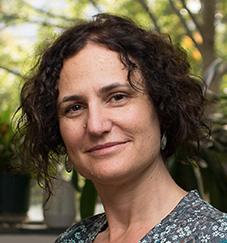
Gigliola Staffilani
Abby Rockefeller Mauze Professor
Gigliola Staffilani is the Abby Rockefeller Mauzé Professor of Mathematics since 2007, and was Associate Department Head from July 2013 to 2015. She received the B.S. equivalent from the University of Bologna in 1989, and the M.S. and Ph.D. degrees from the University of Chicago in 1991 and 95. Carlos Kenig was her doctoral advisor. Following a Szegö Assistant Professorship at Stanford, she had faculty appointments at Stanford, Princeton and Brown (tenured at Stanford and Brown), before joining the MIT mathematics faculty in 2002 as tenured associate professor (professor in 2006). Professor Staffilani is an analyst, with a concentration on dispersive nonlinear PDEs. At Stanford, she received the Harold M. Bacon Memorial Teaching Award in 1997, and was given the Frederick E. Terman Award for young faculty in 1998. She was Sloan fellow from 2000-02, a member of the Institute for Advanced Study, in Princeton, NJ in 1996 and 2003 and a member of the Radcliffe Institute for Advanced Study at Harvard University in 2010.
At MIT Professor Staffilani served as co-chair of the Graduate Student Committee in Pure Mathematics from 2009-2013, and is the Faculty Diversity Officer since 2015. In 2013 she was elected member of the Massachusetts Academy of Science and a fellow of the AMS, and in 2014 member of the American Academy of Arts and Sciences. In 2017 she received a Guggenheim fellowship and a Simons Fellowship in Mathematics.
Jeremy Orloff
Lecturer
Jeremy Orloff, now retired, was a lecturer in MIT's Mathematic Department and Experimental Study Group. While active he focused on undergraduate math education for non-math majors and teacher training.
Jeremy Orloff did his undergraduate studies at Brown University, received a PHD from MIT in harmonic analysis and representation theory, and worked as Research Scientist on speech recognition at Dragon Systems. Since 2002 he was a Lecturer in MIT's Experimental Studies Group, focusing on teaching freshmen Differential Equations. In 2010 he began teaching in the MIT Mathematics Department, where among other things he developed an innovative new curriculum in probability and statistics. He also led the creation of OpenCourseWare's Scholar publications of Differential Equations (18.03SC) and Multivariable Calculus courses (18.02SC).
Jennifer French
Lecturer in Mathematics
Jen French worked on developing online educational math content for 10 years with the MIT Department of mathematics. In that time she developed 10 MOOCs, several interactive visualizations, and a sketchResponse tool to enable instructors to auto grade student math sketches. She is currently teaching math in a first-year cohort at MIT called Concourse.