Talking about climate change is hard. It’s one of many topics in the world where conversations are wildly polarized, and tied with tribal identity. That matters a lot because climate change matters a lot. It also matters a lot because I think the ways we talk badly about climate change are typical of how we talk about a lot of things that really matter.
I want to say this right off the bat, for a number of reasons: Climate change is real. There’s near-unanimous agreement among experts that human action is warming the planet, with terrible consequences, and will continue to do so. We need to do a lot to curtail this, more than we are. A really important obstacle to fixing the problem (possibly the biggest one) is that there are people who deny that the problem exists.
The statement I made, above, about climate change being real, is something I fully believe to be true. Among the main social group I belong to in my home city Toronto - educated left-leaning people-it is more or less universally agreed upon. It’s also pretty well agreed upon that there are people who disagree with that statement, and that those people pretty much suck.
I’m going to say some things here that are not the beliefs commonly held in this group I belong to. I worry a little that this will alienate me from people around me.
This article has been sitting on my desk for a long time. I’m finally just hitting send on it. (Which means that some of the points are a little outdated. Sorry)
I talked to one friend about this article (a smart journalist) who said “what you are saying here is probably right, but don’t say it - the social costs are just too high, everyone will hate you”. I talked to another friend (a social scientist who is on twitter a lot) and his take was “why are you even saying this? Everything you are saying is just what everyone thinks.” Depending on who you are, you might find everything here shockingly controversial, or blindingly obvious. I think I’m writing this mostly for my left-ish, NYT-ish friends, for whom I think the ideas I’m going to express here are controversial.
Lots of writing on topics like climate change has a strong polemic tone. The writer has a position, and wants you to know they are right, and people who disagree with them are clearly wrong. I want to try something different here: I’m going to put forward a position I have, and explain why I see things this way, but also allow for the idea that a smart reasonable person might totally disagree with me. I think being able to hold a strong opinion loosely is a really important human skill that I wish more people exhibited. I’m going try and do it here. I expect I will not succeed entirely but I’ll try.
As mentioned, some of the stuff I say here is probably very controversial for some readers, and too-obvious-to-even-require-saying for others. Also this piece is crazy long. I’ve tried to write it in a way where it makes sense from start to finish, but I think peoples’ priors are just too different from each other. Feel free to skip around.1
What I’m going to talk about over the course of this post is how my opinions about climate change have shifted over time.
There is something that I see as the “mainstream leftish educated person view” on climate change, which goes something like this:
“Experts agree, in no uncertain terms, that humans are warming the world, and that we are not doing nearly enough. This is the largest problem humanity faces, possibly one of the largest we have ever faced, and is very likely to lead to unprecedented scales of human suffering. All of this is well-documented by science and represents expert consensus”
I think this is what you’d get if you read the New York Times or the New Yorker. I think it’s what a lot of people in my social circles think.
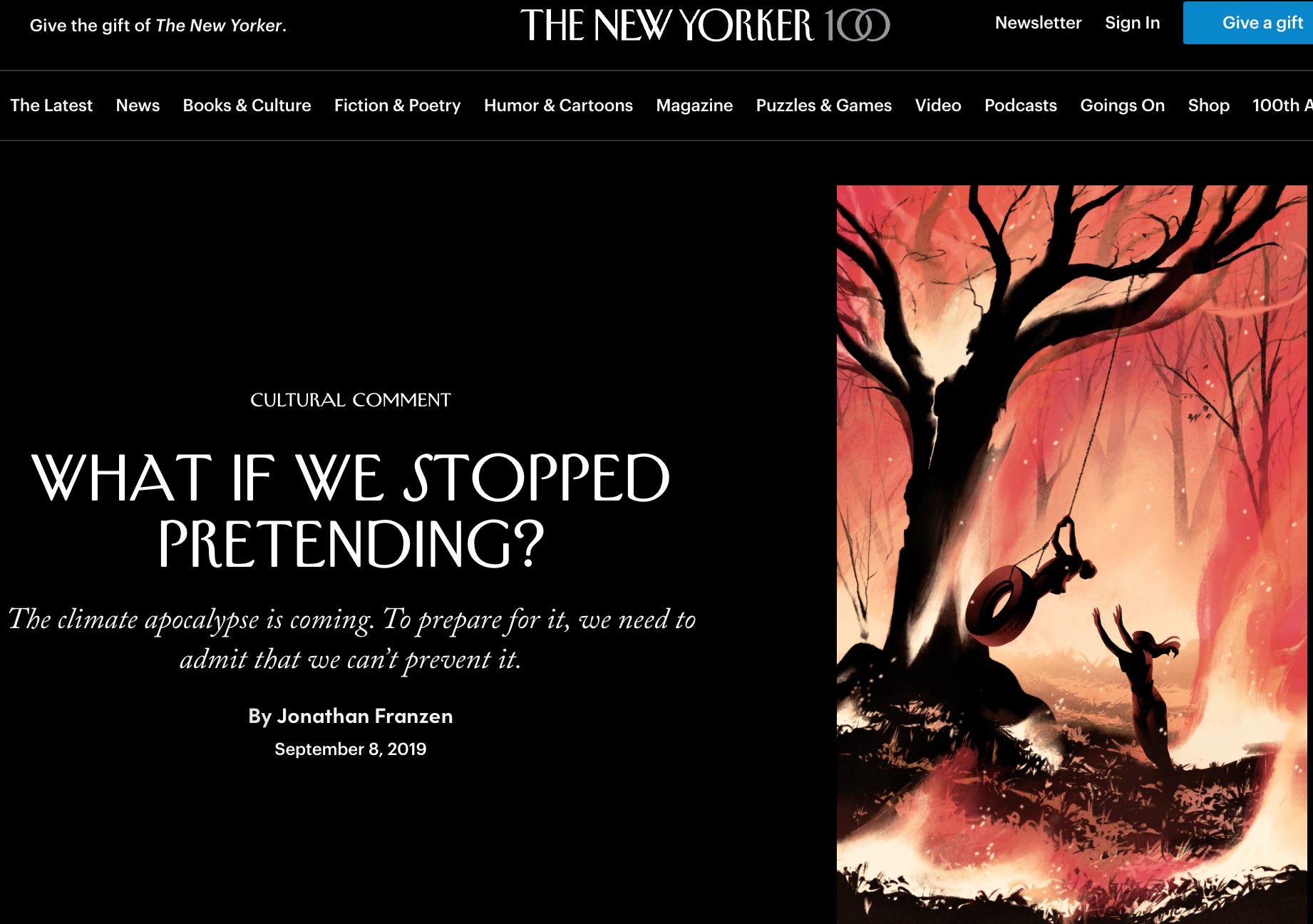
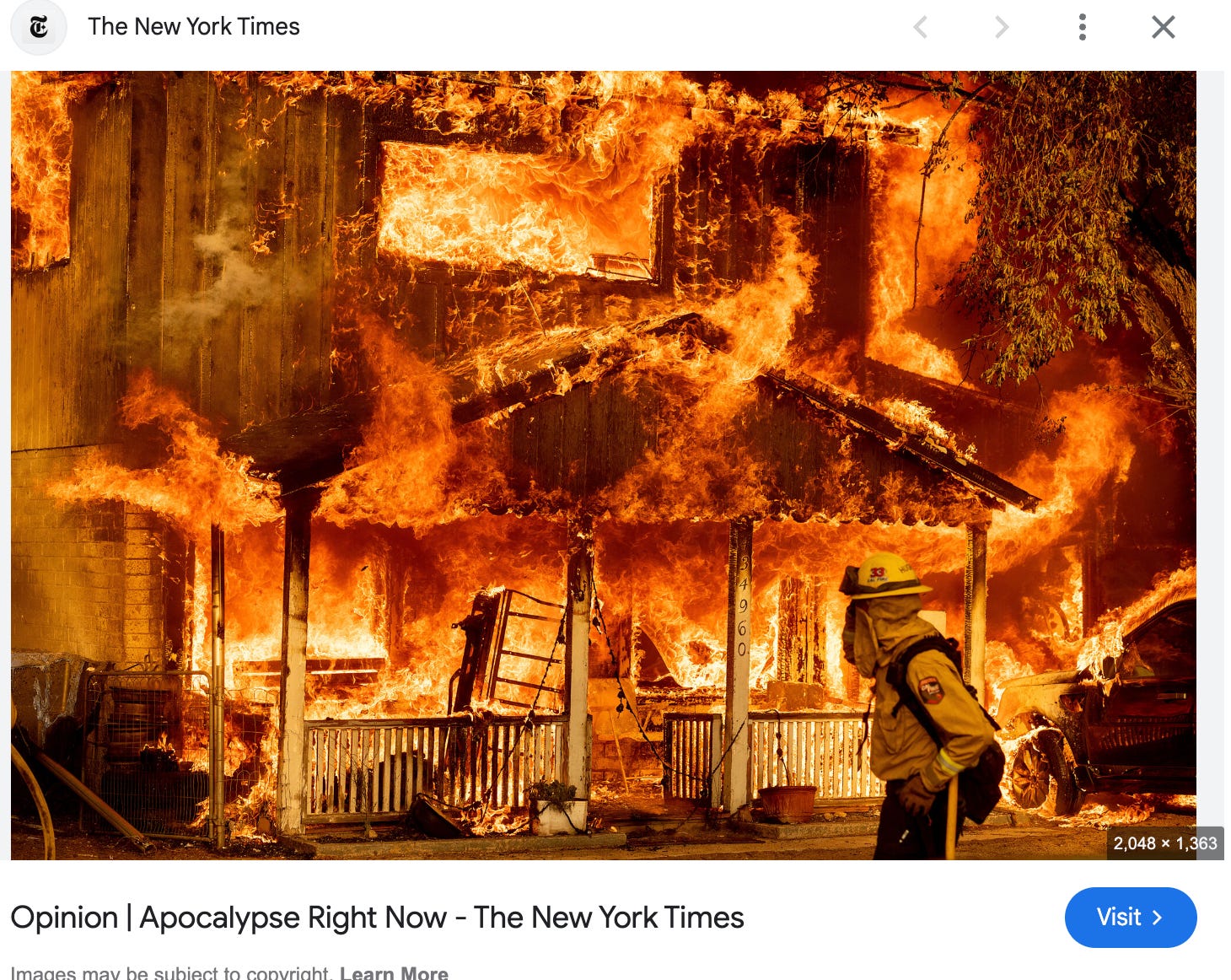
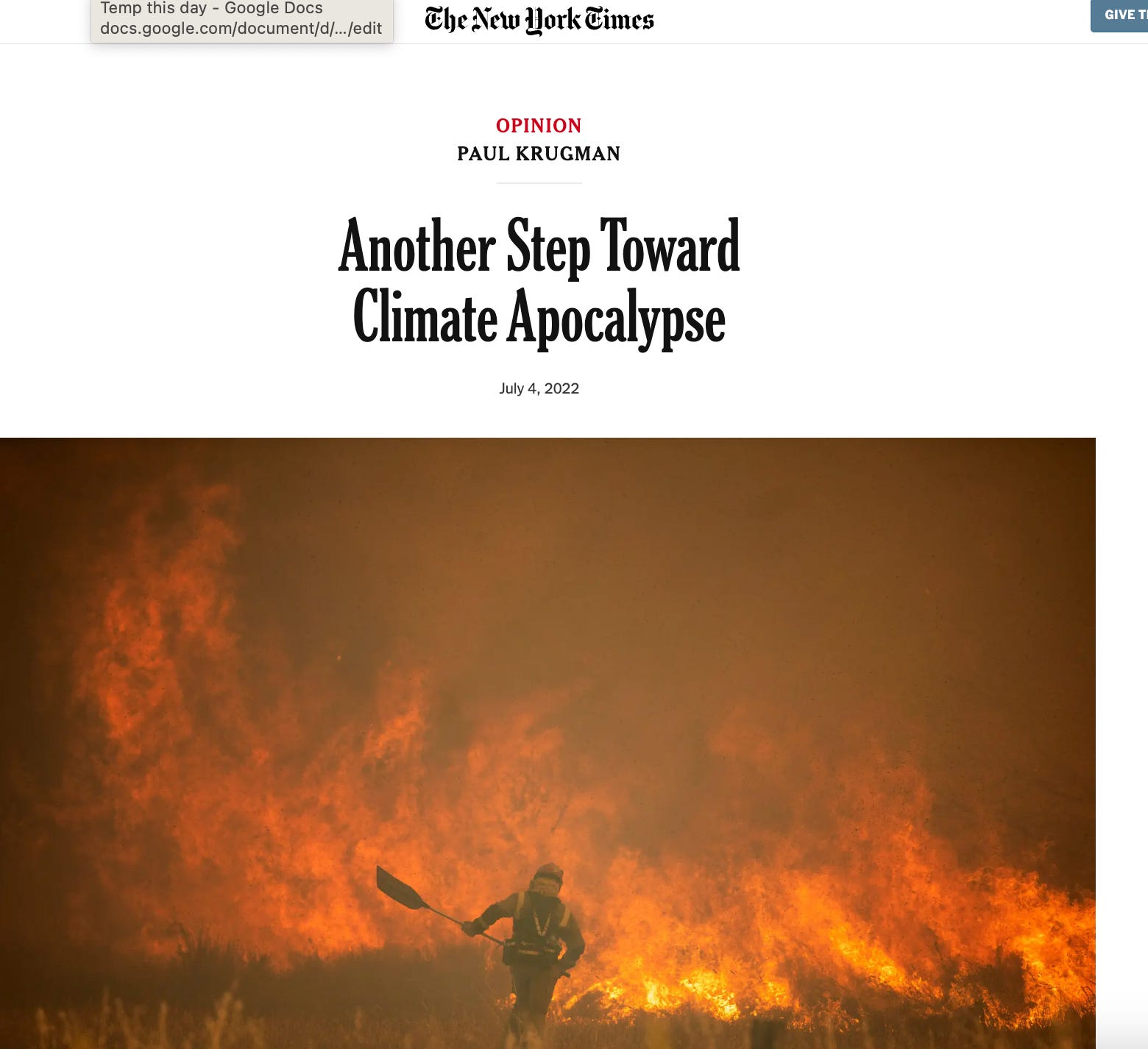
That view is what I used to believe, but my opinions have gradually changed. I still think climate change is real, and we need to do a lot. I still think climate change denial is infuriating and tragic. But I’ve changed my mind about a few things.
One thing that changed was, a couple of years ago, I tried to answer this question:
“If you look at the credible published studies and models, how large is the likely impact of climate change on human well being?”
I was really surprised by what I found. I tried to look at the best published sources I could find, and wherever I looked, if you actually dug into the numbers, they told a story very different from what I had understood: The numbers suggested climate change is a problem that is big, but of a comparable scale to many of the big problems we already live with. Total deaths in bad-case scenarios seemed to be in the same ballpark as what are currently attributed to smoking or diabetes, both of which are bad, but neither of which are seen as apocalyptic in their scope.
As I say- I was very surprised to discover this, and pretty confused. You may also be surprised. You may also be skeptical2. A bit later in the essay, I’ll go into a lot of detail about what I’ve found, and you can see if it looks compelling to you.
Before I got into that, I want to talk a little bit about why I think it’s worth seriously looking into why the question matters.
I wound up spending a lot of time investigating the idea “maybe the negative impact of climate change on humans isn’t as bad as the people around me seem to think”. More than a few people seem upset with that idea. The stance seems to be “we know climate change is a big deal. Why worry about how much of a big deal?” Here are some reasons (with more to follow):
Reason to care #1: The truth matters
It’s hard for me to even explain this, because it’s so deeply engrained in my values that I have a hard time putting it into words. I hold truth as a more or less inherent value. When it comes to understanding incredibly important things like climate change, it seems just inherently good to try and have an accurate understanding.
Reason to care #2: We need to allocate resources
If climate change is the very biggest threat that humanity faces, it demands urgent action, and we should prioritize fixing it over pretty much everything else. If it’s a very big threat but on par with other threats, we probably want to allocate resources differently. It’s worth having an accurate sense.
Reason to care #3: Climate anxiety creates a lot of suffering- maybe some of that can be alleviated
This one hits home for me. Many people close to me have, at various times, had their lives really damaged by anxiety and depression related to climate change. I personally used to suffer from a not-insubstantial amount of anxiety about this. If it turns out (as I think is the case) that many people who suffer from climate anxiety see the situation as worse than it is, then maybe we can reduce that suffering.
A very close friend of mine read an article by David Wallace Wells called “The Uninhabitable Earth”, in New York Magazine. It describes a catastrophically dangerous world. It begins by saying “It is, I promise, worse than you think”. The article describes world-wide food shortages, heat levels where “a human body would be cooked to death from both inside and out”, and suggests climate change could very likely lead to the collapse of civilization and even human extinction, in a timeframe of decades. It is the most-shared article ever published by that magazine.
When my friend read that article, she became depressed and anxious. She remained depressed and anxious for several weeks.
A big part of overcoming her depression and anxiety was learning that the article wasn’t an accurate reflection of mainstream scientific opinion on climate change. Multiple scientists had, it turned out, criticized it for being alarmist, for misrepresenting the science, for exaggerating. Learning this information helped her and reduced her suffering.
I care a lot about reducing suffering. If it’s true that climate change is bad, but not as bad as many people seem to think, it might really help them to know this. A deep hope I have for this essay is that some people who read it who suffer from depression or anxiety about climate might find some relief in reading this.
Before I dive into the research, I want to name a few objections that have come up in conversations.
I have focused here on impacts of climate change on humans. And I’ve focused mostly on impacts that are easily measurable (deaths, access to food and water, etc). This is, without a doubt, narrow and over-simplifying. I’m not saying the measurable impacts of climate change on humans are all that matter, but they are what I am focusing on here. If you are someone who cares very deeply about the environment as a thing in itself, independent of its role in the well-being of humans, parts of this may frustrate you3.
I’ve focused on human impacts here because these human impacts are often the ones that get the most attention, and often the ones that cause the most anxiety. I’ve focused on the most measurable impacts because they are… the most measurable.
In a few conversations with people, when I’ve suggested that it might be the case that climate change is something that could cause, say 5 million deaths per year at its peak a few decades from now, I’ve encountered the angry response that my saying this, I’m demonstrating that I don’t care about the world’s poorest, as they are the ones who will suffer most.
This makes me genuinely angry. Seven million people per year die of hunger right now, in addition to the millions who die and suffer because of poverty-related causes that are in many cases not hard to fix. I think it’s horrific that we allow extreme poverty to continue to exist in the world. I think one of the greatest moral failings of humanity is our willingness to allow this state of affairs to continue.
Of course it’s not an either-or situation. But climate change gets so much more attention. You don’t read articles about how therapist offices are deluged by people who wish we were doing more to stop malaria in developing countries. In the New York Times : A search on “climate change” gets 43,000 hits. “World hunger” and “global poverty” each get less than a thousand. This seems deeply wrong to me.
Another objection I’ve heard is something like this: We know it’s a huge deal, and so we don’t have to fuss about the details. We want to persuade people of how important it is- this means we want to make the story as dire as we can, rather than being as honest as we can.
This seems a tragically mistaken strategy. One of the largest obstacles to action on climate change, possibly the largest obstacle, is that many people think that climate change is not real. They think the people who are mobilizing for change are not telling them an honest story. Stretching the truth in the interest of making the case for climate action feeds this fire. Every time someone says something exaggerated or over-the-top or not-exactly true about climate change, the people who oppose climate change notice that. And they remember it, and it provides them with genuine reasons to mistrust the messengers of this otherwise true message. Lying to people is a very bad strategy for getting them to trust you.
This is true! The climate is enormously complicated, and the ecosystem is an even more complicated layer on top of that, and human response is an arguably even more complicated layer on top of that.
I think a very reasonable position on “what will be the impact of climate change” is “It’s very very hard to know”. That’s a very different position from “We are all for sure doomed”. Things like the IPCC reports do a very good job of capturing that uncertainty - there are lots of error bars, lots of measures of epistemic uncertainty.
We can’t know “what’s going to happen”- that’s a very complicated question about the future. But the question “What sorts of things do the best experts currently say is most likely to happen” is a less complicated question about the present. I think many people believe a factually incorrect answer to that question.
If you’ve read this far, thank you! If you skipped here, welcome!!
A couple of years ago, I got really interested in the question of what it would look like to try and get quantitative answers to the question “how bad is the human impact of climate change likely to be”?
One reason was that I was pretty anxious about climate change, and one way I like to address anxiety is to try and feed it information.
Another reason was that, like many people, I’d kept a close eye on all sorts of stats in the news during the pandemic. I noticed that it was often really hard to get quantitative information, and that a lot of coverage seemed biased by the politics of whatever outlet was covering the news.
I was curious.
I wanted to try and approach this in an open, curious way, using what Julia Galef calls a scout mindset. That’s the idea that you approach a question not by looking for evidence to support a specific view, but by trying to be open minded and finding out is true, whether or not it matches what you hope or expect to be the case.
As someone generally predisposed to thinking “climate change is a huge deal”, I thought about the sorts of things that climate deniers do, that we see as intellectually dishonest: focusing on fringe opinions rather than the consensus of experts, cherry-picking sources, that sort of thing. What I wanted to do was to be better than that.
I tried to follow the same standards to which we might want to hold people who disagree with me. Here are the standards:
Don’t cherry-pick sources: Try and get a sense of what’s out there, as opposed to trying to find a specific source that supports your preferred view
Try to be quantitatively specific: As much as possible, try and be really specific when talking about risks, impacts, etc. This means, among other things, using numbers whenever possible as opposed to more vague, evaluative language (Words like “crisis” or “catastrophe” can mean a lot of things. “Five million deaths per year” is specific)
Listen to actual well-qualified experts: eg: listen to climate scientists when trying to understand climate.
Try and get a sense of the consensus: Wherever possible- understand what is and isn’t an outlier belief among experts.
Prioritize better sources: Highly-respected journals are better than less-known sources. Meta-analyses and systematic reviews are better than individual studies
Avoid Conspiracy theories: Goes without saying
A reminder:
I am only talking about the impact of climate change on humans. There are lots of really bad and serious things about climate that will affect non-humans.
I am talking about impact in measurable things like food or sickness or things like that. There may be impacts that affect people in other ways, which are real - climate may cause anguish or heartbreak because of, say, unhealthy relationship to nature.
I want to distinguish between two questions that are related, but different.
One is “What is likely to happen with climate change”. This is an incredibly complicated question, resting on a huge number of variables, and is a statement about the future, which makes it pretty much non-verifiable.
The related question is “If you look at published studies on this topic, what do they say”? That’s still complicated, but much less than the first one. It’s also about a present and observable state of affairs, not about the future.
I’ll mostly be looking at the second question “What do the experts say” not the first one “What will happen”.
One reason is: I feel totally unqualified to answer “what will happen” apart from just asking “what do the experts say”, and believing they know better than I do.
Another reason is: I think a key part of the belief of the people I know who are terrified about climate is that they believe, specifically, that there is a clearly expressed consensus among experts that we are headed toward doom. I think that’s a real keystone of the belief. And I think there’s good reason to believe that it is empirically false.
I honestly thought I would be able to sit down, and in maybe an hour or two at most, dig up some clear models and numbers. Of course I expected there would be some wide error bars, and a lot of difference of opinion. But I thought there would be some sort of answer. It turned out this was not the case.
Here are some of the steps I took.
I wanted a quantitative measure, so I focused on deaths, which are countable, and seem like a pretty important metric.
In my efforts to not cherry pick sources: I googled “how many people are likely to die from climate change”, and figured I could look at the top hit(s) for a first stab at an answer.
This page, from the World Health Organization, was the clear frontrunner: It was the first hit, and half the other hits were just articles referencing it:
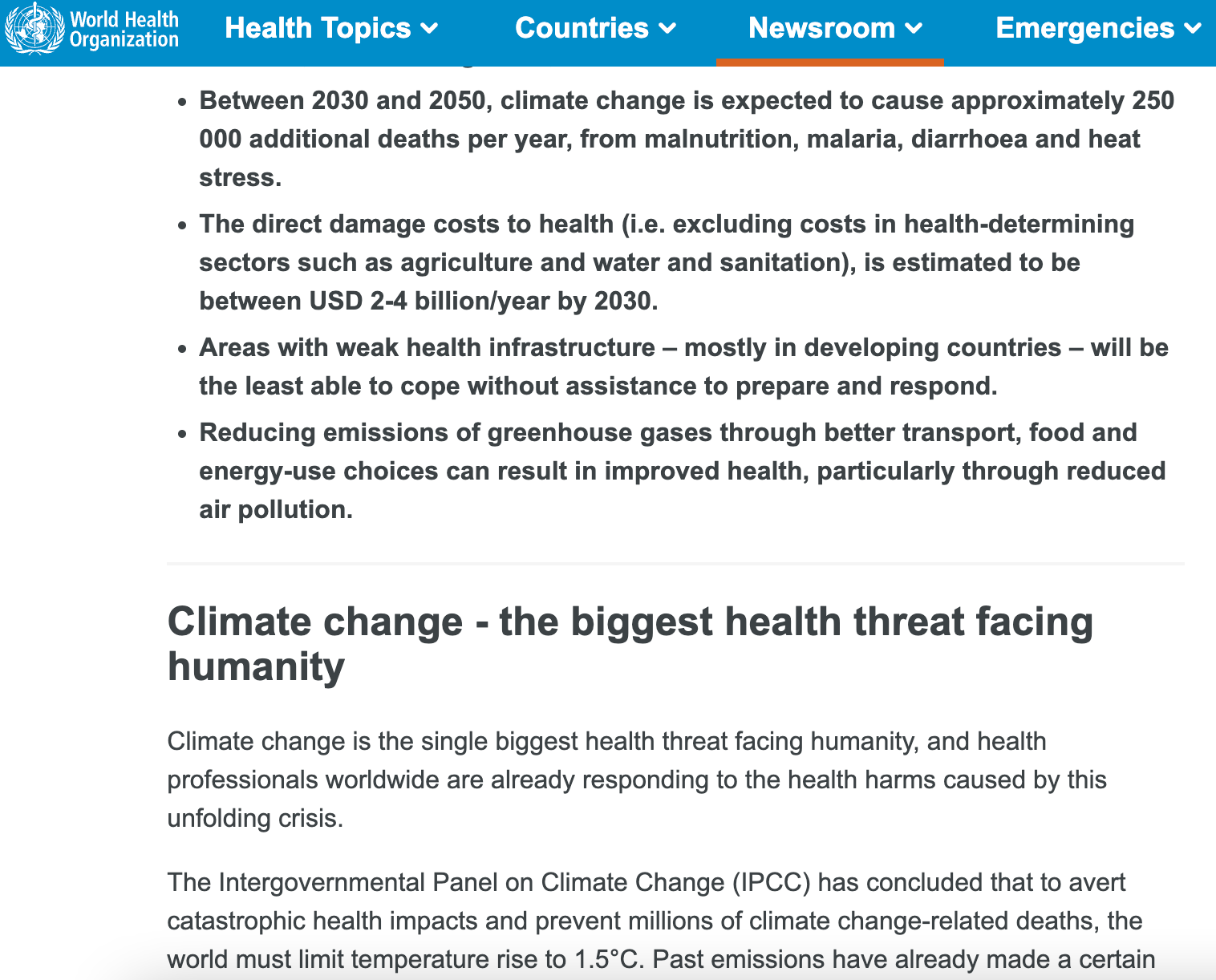
I was super-confused when I saw this page.
I was confused because the headline says climate change is “the biggest health threat facing humanity”, but the number of deaths is listed at 250,000 per year. 250,000 is a lot, but it is nothing like the biggest health threat facing humanity. Around 10 million people die every year from cancer. 1.6 million die from diabetes. Around 8 million die from smoking. 600,000 die of Malaria. Around 685,000 people die from falls. 7 million die from famine.
This was the beginning of a pattern I ended up seeing a lot: I’d see an alarming headline with a not-super-specific claim4, and then when I read past the headline, I’d find numbers that seemed shockingly low giving the alarming headline. That same WHO page, you may notice, describes direct costs to health as $USD 2-4 billion a year. That’s a big number, but it’s also about 25 cents per year per person in the world. It’s less than the world spends on Aspirin, or what one mid-sized US state spends on Netflix. It’s not a world-changing number.
It seemed impossible that that number was right. It was also just from some causes (“undernutrition, malaria, diarrhoea and heat stress”). I wanted aggregate impact. I looked more
After that initial search, I tried a lot harder. I did bunches of searches, and talked to scientist friends. I tried to look broadly, while also restricting myself to sources I considered credible: Articles in top journals, reports from the IPCC, statements from large NGOs or professional organizations5. There was a not a ton but here is what I found:
World Economic forum: “Climate Crisis May Cause 14.5 Million Deaths by 2050”
Lancet Countdown: Unabated climate change will cause 3.4 million deaths per year by the end of the century.. if no action to limit warming is taken, the data shows.
Nature: 83 million cumulative excess deaths by 2100 in DICE Baseline Scenario
Let’s look at those one at a time:
World Economic forum: “Climate Crisis May Cause 14.5 Million Deaths by 2050”
That 14.5 Million is not annual. It’s cumulative. 14.5M by 2050 is about 560,000 per year, less than malaria, less than 10% of smoking or famine.
Nature: 83 million cumulative excess deaths by 2100 in DICE Baseline Scenario
Nature is of course a very highly respected journal. 83M by 2100 is about 1.1 M a year. That’s a lot, but, again, this is a problem on the scale of many problems we already live with. Current deaths from famine are six times that number.
Also, importantly, this is excess deaths in the DICE baseline scenario. The DICE baseline scenario is not a prediction. It’s a model of what would happen in a very worst-case if we stopped literally all efforts to reduce carbon emissions. It is not the path anyone thinks we are on.
Lancet Countdown: Unabated climate change will cause 3.4 million deaths per year by the end of the century.. if no action to limit warming is taken, the data shows.
3.4 million deaths is a lot. But it’s still half as many as are dying annually of famine right now, fewer than die of smoking, etc…
Also, very notably, the quote says that “Unabated climate change will cause 3.4 million deaths… if no action to limit warming is taken” (emphasis mine). So this is, as in the Nature article above, not a prediction but a warning of how bad it would hypothetically be if we stopped absolutely all our efforts to work on the problem.
I want to really emphasise this: Spending a few hours, looking hard, asking scientist friends, etc, the highest number I could find looking at top journals, top NGOS, studies from top universities was 3.4M per year, and this was not a prediction, but description of what could happen if we stopped all our activity. This is substantially smaller than the number of people who who currently die of famine, smoking, or obesity.
Climate scientists are experts in making predictions about the physical systems of the climate.The physical effects of climate change are a complicated interplay of lots of forces- physical, meteorological, etc. There are models for this, and people who do climate science need to be experts in this incredibly complicated interplay.
You’ll often see quotes from climate scientists about the likely ways that human societies might respond to these changes. I wish no one asked them this, and wish when people did ask them, they didn’t answer. The question of how human systems might respond to changes in climate is enormously complicated. Being an expert on the physical systems of the earth’s climate does not confer any expertise in how these human systems operate.
There are experts in how human systems interact and work: Social scientist, political scientists, economists, etc. These experts are also involved in the IPCC. (Which as I discussed elsewhere is very hard to get concrete answers from)
The best, most recent source I was able to find that collects opinions from people in the social sciences is This 2021 Survey from NYU. It surveys over 700 economists, all of whom had published articles about climate economics. 74% agree that ““immediate and drastic action is necessary”. That said, they also predict that if current warming trends continue (a pessimistic outcome), we would see annual damages at about 5% of global GDP. That is a lot. But it worth noting: That projection suggests a per capita global GDP is 4 to 5 times higher than today, because the positive impacts of general economic growth outweigh the negative impacts of climate change: Even in a bad scenario, these experts predict, we will be in a much richer world - one with more food, more medical care, more education, more of the things we value. We will have less of these things than we otherwise would. And, perhaps more concerningly, those things may be even more unequally distributed than they already are. But the image of, say, a devastated world, with not enough food to go around is deeply incompatible with what experts say in this survey. This is in keeping with what I saw in other sources.
Sometimes experts disagree with each other! If we’re trying to make predictions on expert opinions, how do we weigh all those different ideas? If only there were some sort of person who was expert in making predictions based on varying expert opinions.
Luckily, such a person exists!! There are superforecasting teams who compete to see who is best at predicting future events. The best of these get recruited to work collaboratively in groups to work in predictions.
There have been superforecaster reports on climate, notably this one from 2022. The questions in it are frustratingly weird and technical, but as near as I can tell, they predict that food production and availability will go up, and generally paint a picture compatible with every other source I’ve talked about.
Prediction markets are another way to sort and prioritize expert opinion. Prediction markets allow people to bet on future events6. The idea is that the markets should be reasonably self-correcting - if they are wrong, or biased, smart money should come in and adjust them. I won’t get into the details here. Scott Alexander’s FAQ article is as good a place as any to start.
What do the prediction markets say? Unsurprisingly at this point: they paint a picture similar to what we see everywhere else:
This is what I think now: Lots of people seem to think that climate change is an apocalyptic level issue that puts them and their well-off North American families at substantial risk.
They think that people who question this are failing to listen to experts.
But if you actually try to get an overview of mainstream, consensus beliefs among experts you get a very different picture:
Climate change is a big problem, but something on the scale of obesity or smoking, smaller than current problems of global poverty, and even in bad scenarios, would mean we are most likely headed to a world where most people are better off than they are today.
There are lots of reports about people experiencing real, debilitating anxiety and depression because of their fears about what might happen to the planet and their own personal safety. This appears to be a very real phenomenon.
Here is a study in the Lancet. It finds that 45 percent of teens and young adults say climate anxiety is affecting their daily lives and ability to function. It also says that 56% of respondents believe that because of climate change “humanity is doomed”. As near as I can tell, that is not in any way a belief that is aligned with the opinions of experts7.
In most cases of anxiety, part of the treatment is to help the anxious person sort out what parts of their fears are accurate and what parts aren’t. The inclination to see things as more dangerous than they are is both a symptom and a cause of anxiety.
But for some reason, in the case of climate anxiety, the general stance seems to be to avoid challenging the beliefs of the anxious people.
Here’s a quote from https://magazine.hms.harvard.edu/articles/climate-anxiety
Talk therapy for anxiety typically aims to help people identify and replace irrational thoughts, called cognitive distortions, with alternative thinking that isn’t so stressful. But since climate anxiety is based on rational fears, this particular approach risks alienating anyone who might feel their worries are being dismissed.
The same Lancet study that shows that 56% or respondents holding the outlier view “humanity is doomed” says this: “Although painful and distressing, climate anxiety is rational and does not imply mental illness.” (emphasis mine)
If this study is right: Half of young people are suffering from debilitating anxiety because they believe that climate change means that humanity is doomed. As near as I can tell the most commonly-held view among experts is that humanity is not doomed. You’d think someone would suggest that it would be helpful to let people know this. But everything I’ve read seems to take the opposite strategy - not just refusing to challenge the mistaken beliefs, but effectively saying that the mistaken beliefs are true. This seems like the cause of an enormous amount of suffering.
As I mentioned, this is an article that’s been sitting on my desk for a long time. Because of this, a lot of the sources and examples are a little old. Sorry.
I want to make clear for the billionth time: The point is not “we don’t need do do anything”. A lot of why the situation is not so bad is because of all the things we’ve done and are expecting to do!
If you want to hear someone who is arguably a lot more expert than me disagreeing with me about this point: a couple of years ago, I appeared on my friend Spencer Greenberg’s podcast Clearer Thinking, talking with an IPCC scientist who thinks I am wrong. You can hear it here.
As I mentioned above, most of this is based on writing and research I did a few years ago, so some of it might be out of date. Hannah Ritchie has written about this really well, I think.
Here’s a good article from Matt Yglesias and one from Scott Alexander.
Here’s an earlier version of this that I published as a slide deck. It might have a little bit more information.
Thanks to Natalie Cargill, whose essay helped encourage me to finally hit “publish” on this thing.