I first became an addict at nineteen.
I had shuffled my way out of a small engineering college outside Boston, where I hadn’t managed to make many friends, into a three-bedroom apartment deep in the Fens of Boston that somehow housed seven people, one bathroom, a kitchen unexplainably never used. My memories of that year are closer to a kaleidoscope than any coherent narrative. We didn’t have fake IDs, so we fermented our own alcohol in a sink-still my roommate had built in his college metal shop, and drank the fortified hard cider that came out of it at a rate of several gallons a week. Looking back, we were consuming enough ethanol to run a tractor.
My body had decayed significantly. The house swelled with heat that slipped in through every open window and every open door, and the elevator had been broken for as long as anyone could remember, beer cans crushed into the ceiling tiles, buttons jammed out by parties long since passed.
I was working a research desk at a cancer diagnostics company across the river. On a good night I was sleeping four hours before shaking awake in the living room, waiting my turn for a strictly timed five-minute shower, before pretending to be functional in an office full of people who were.
This was also the period in which I discovered Twitter dot com.
My life got absorbed into the app. Everything was in there. It felt like a country club you couldn’t get kicked out of, a college party you couldn’t not be invited to. Whatever social rejection I faced from kids more normal, more well-adjusted than I was, didn’t exist on the little black square. And the crowd told me I was right. You could be mean to people. You could tell them their life’s work was meaningless. You could tell them it wasn’t going to work, and most of the time it wouldn’t.
I was an addict for that feeling. For confusing cynicism with wisdom. I spent my days getting likes and retweets for telling people their work was worthless, without merit, unlikely to work.
The simple truth about technology is that most of it won’t work. The Bay Area is full of fools buying into dreams that were never possible, wasting their lives on quests they’ll never finish, climbing mountains that cannot be climbed. The industry takes itself far too seriously. People are getting unbelievably rich doing things that make no sense. The entire world watches from the outside, rooting for the downfall of this silly little halcyon thing, and most of the time the world is right.
The harder truth is that some of the time it works.
In rare moments, against every reasonable prior, the thing in someone’s head ends up in the world. A drug that wasn’t there last year is in a pharmacy this year. A model that didn’t exist eighteen months ago is now reading a doctor’s notes back to her. A rocket lands on its tail. The people who built these things get very rich, and they should -- and even at private-jet money, super-yacht money, the compensation is a rounding error against the consumer surplus on the other side.
I lost a good friend a few months back. I couldn’t make the funeral.
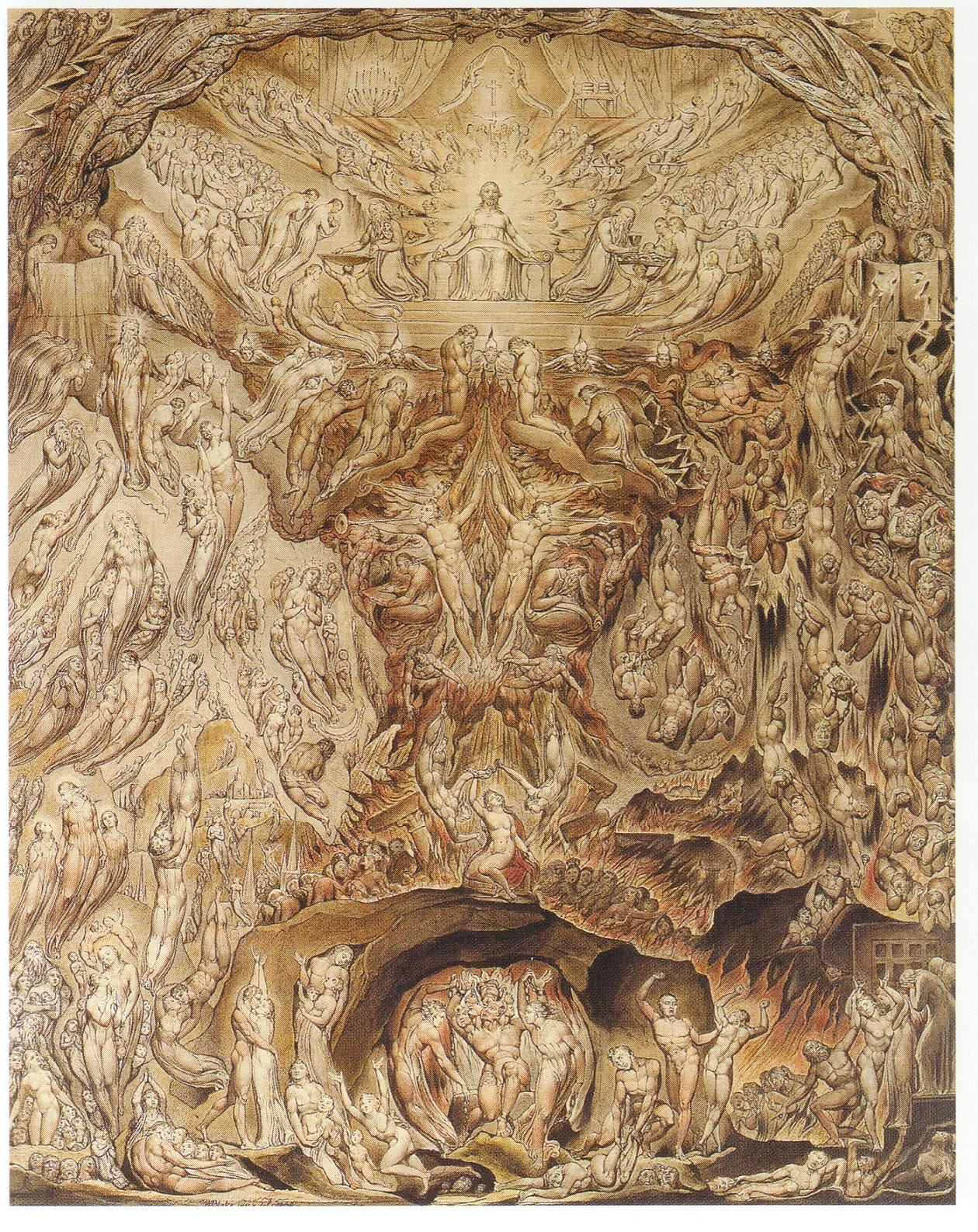
I was texting back and forth with another buddy who knew him, and he said something I haven’t been able to get out of my head. He said the greatest gift we have here on earth is that at the end of time, when the sky rolls up like a scroll and Gabriel blows his trumpet, we’ll get to stand before God and be judged. And then we’ll get to stand alongside him and laugh and laugh until we cry, telling the stories of all the things we got to do together. If our lives were good, we get eternity. And even if we weren’t, even if this whole thing was some kind of misguided adventure -- it will be worth it to see each other again and tell the story of what happened here.
At some point along the way, being mean on the internet lost its thrill.
It started working all at once. The world I had grown up in began to fade. Technological progress went from a standstill to a sprint, and the judgments I had cast along the way turned out to be wrong. Even where I was right -- the individual frauds, the individual grifts, the guys who should have never made it and didn’t work as hard as we did and didn’t have as good of a time and didn’t do right by anyone-- even where those guys fell out, it wouldn’t have mattered. The successes that came outnumbered them a hundred to one.
Around that same time I kicked the brutal addiction of cynicism. My life started to get better. Not all at once. I have an incredible toll to pay for the way I behaved and the way I acted in those years, because cynicism comes at a cost -- and the cost lands exclusively on the cynic.
There’s a refrain in Twin Peaks I deeply adore. The villain looks in the mirror and discovers he is evil, and his hair goes gray instantly. His body cannot bear what his soul has done, and the rot becomes physical in the same moment it becomes visible. It’s easy to read this as a David Lynch at his worst. I don’t think it is. The hardened cynicism, the practiced contempt, the relationship to the world that demands every new thing prove itself before you’ll allow it to exist -- it will destroy you. It will rot your soul.
Unlike many other addictions, the heart is slower to recover from moral injury than the body is from the physical. The years spent in critique, the years spent away from creation, the years spent treating judgment as a thing we get to participate in rather than a deference we owe to God at the end of time -- these carry moral weights that are hard to cure. Weights that can only be answered by hour-long walks, by many-year apologies, by living in the relentlessly mundane day-to-day apologetics of being a sinner, and always being a sinner, and always asking for forgiveness.
It is easy to understand why cynicism deforms the soul, and not only because it is corrosive. Cynicism deforms the soul because it is a counterfeit of final judgment. It allows condemnation ahead of time. It lets you act as though your role in the world is to sort the worthy from the unworthy, instead of learning to love, to build, to discern honestly, and to leave judgment where it belongs.
All we can do is pray for forgiveness, as we are all sinners. And hope that when we stand before our God we are able to laugh and smile as we tell the story of what these lives meant -- that we were given some small part in moving the world toward the new heaven and the new earth that came down upon us like a bride prepared for her husband. That the jasper-lit streets of the New Jerusalem will be lit, in some small part, by our actions, by the light of our relationships.