It is a tough time to be a junior software engineer looking for a job. Sure, it’s scary enough that new AI dev tools are raising uncomfortable questions about the fundamental role of software engineers in the future. But that’s not the immediate problem. You can’t get replaced by future AI if you can’t get your first job. And you can’t get your first job right now, at least through the front door, because a new AI arms race has broken the hiring pipeline.
I’m at a company that hires software engineers. We are getting thousands (thousands!) of applications daily for each role. It didn’t used to be like this. Here’s a highly scientific graph of the average number of job applications for a single software role:
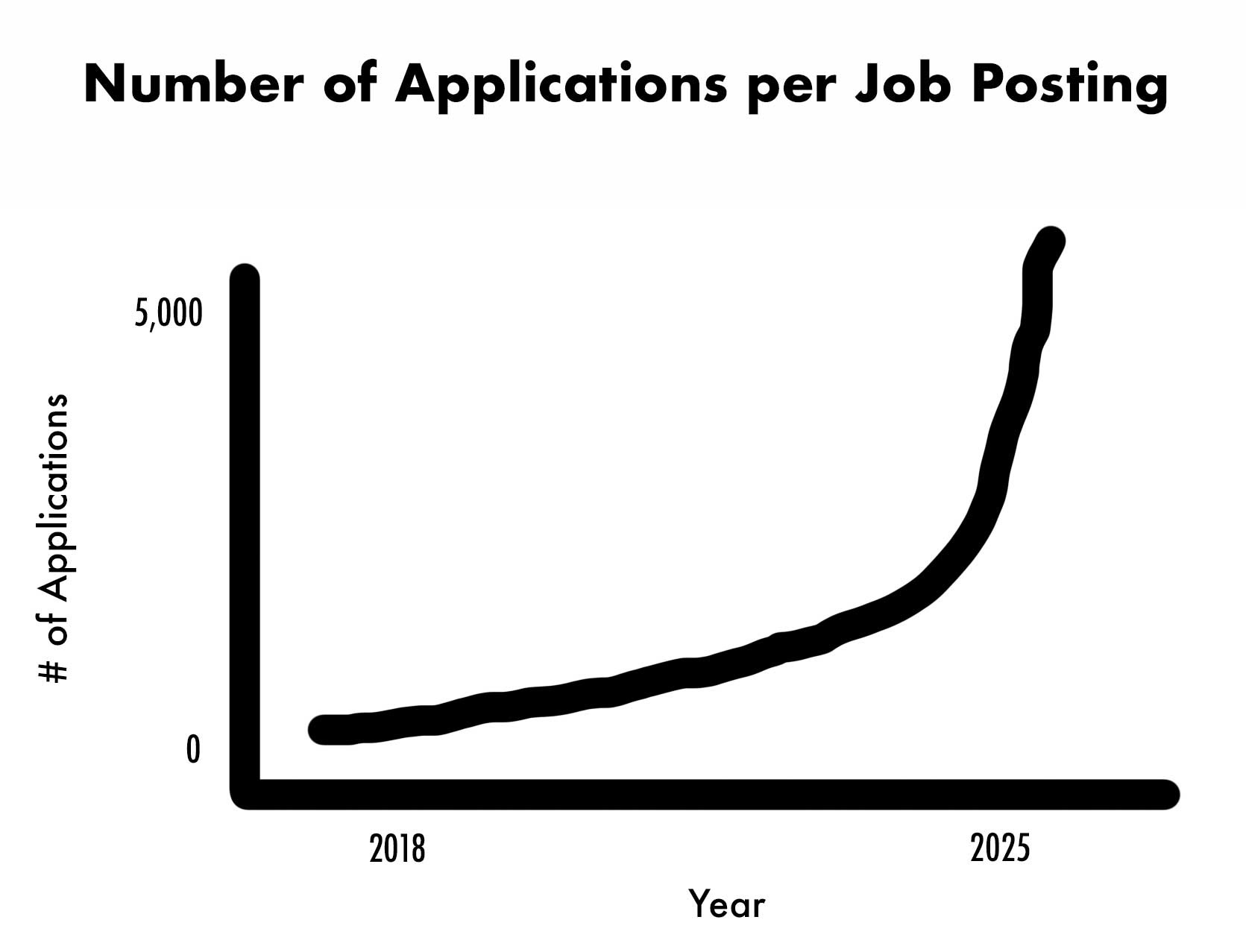
Sure, maybe the economy is getting weaker. And maybe AI (or at least the excuse of AI) is slowing hiring, leading to more people on the market. But the big reason for the hockey stick applicant growth is much simpler - AI-generated job applications:
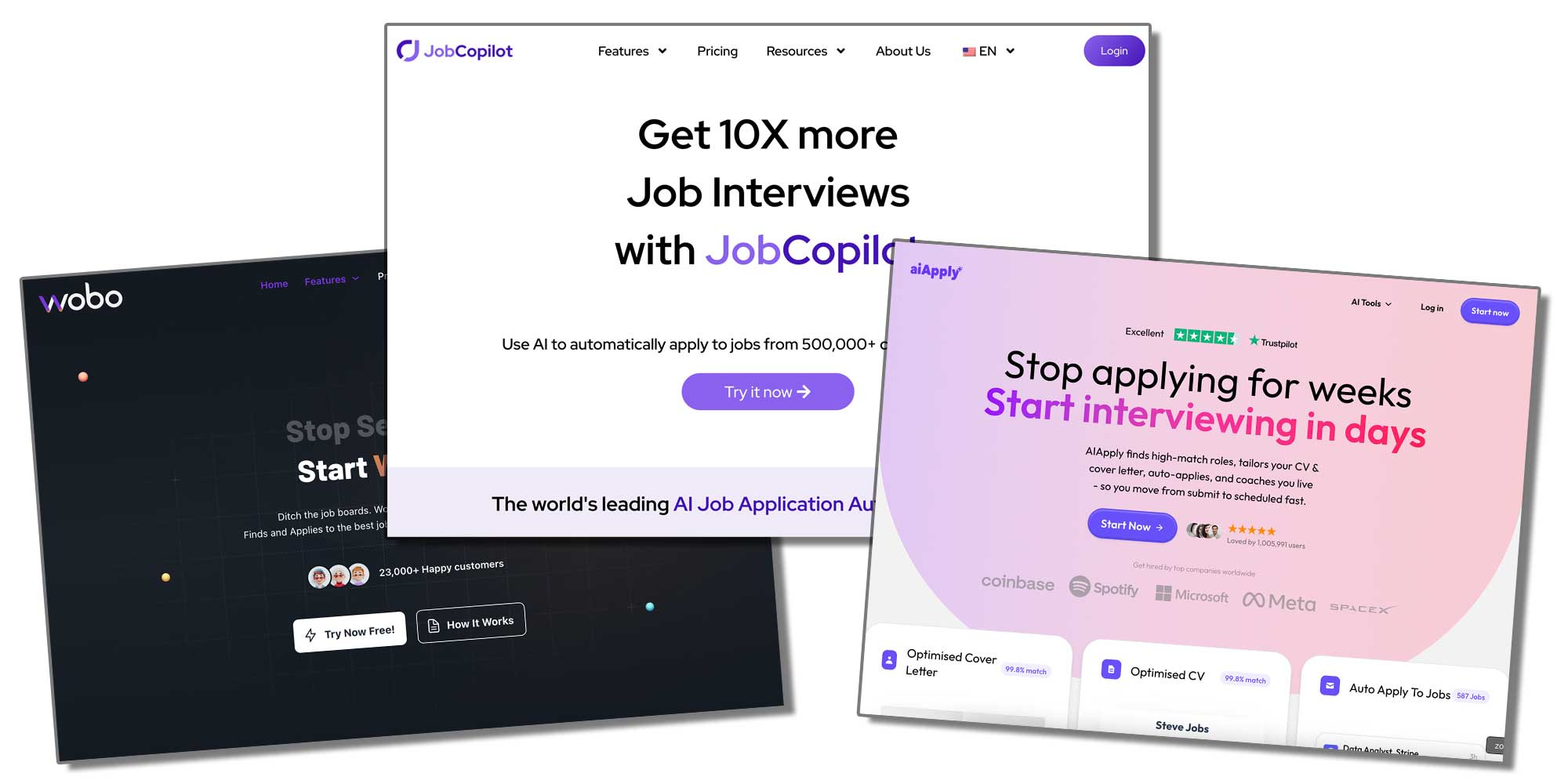
These new AI-based tools can bulk-apply to jobs, but the diabolical part is that they can automatically rewrite the applicant’s resume and cover letter to exactly match every individual job listing. No matter what obscure or specific skill the job requests, the applicant will magically have 5 years of experience in it, even if they worked at a totally unrelated company.
Note: I’m not calling out any specific tools nor suggesting that they are bad actors. Whatever limits the commercial tools may implement, Github is full of homegrown implementations. There’s no putting this genie back in the bottle.
So if I post a nonsensical job opening looking for a Java engineer who can deploy an iPhone app using Rust to power my Visual Basic website, sure enough I’ll get thousands of cover letters dripping with enthusiasm for building Java-based Rust VB websites - and even better, each candidate will have 5 years of experience doing exactly that at [insert past unrelated role]!
I don’t blame real candidates for trying to get an advantage in an in-humane job market. But the problem is that the fraudsters also have these AI tools, and they are deploying them at unlimited scale. In just the last few months, it has developed into an AI arms race where both the fake applicants and the hiring companies are trying to out-slop each other with increasing stupid AI tools and the slop has jammed up the works.
Imagine you are the hiring manager. What exactly are you going to do with hundreds of new resumes appearing every hour, all exactly written to the spec of your job posting? You are going to fight AI with AI, so to speak. It’s the only possible option. You dump all your applicants in a soup of ChatGPT wrappers to try to suss out which people might conceivably be worth interviewing. But the signal you have is filled with AI slop, so garbage in, garbage out.
And if somehow you manage to pull out a list of plausible candidates from that slop pile using AI, here’s what happens in those interviews:
Fraud: The person on the call is clearly not the person that applied. It is just a totally different person (usually in a different country than claimed).
Staged interviews: These AI tools can also feed the candidate answers during an online interview. They listen to the video call in real time, look up the answers with an LLM, and prompt the candidate with what to say or type. (Spoiler: it’s obvious to the interviewer)
Fake credentials: You finally get to talk to a real person, but of course they don’t actually know any of the things they said they knew when an LLM wrote their cover letter.
Notice that I didn’t list ‘4. A real, qualified applicant’. Those people are getting swamped out by the piles of AI trash. When we used to get 100 applicants for a role, we’d sort through them to find the 5 most qualified candidates, interview them, and hire someone great. But when you get 5,000 candidates that all look great on paper, you never find the 5 best candidates. The fraudsters outnumber real people by 10x. It’s hopeless.
The inevitable result is that companies (at least those without FAANG-level resources) are starting to ignore inbound job applications entirely. Right now, people are getting hired mostly from employee referrals or candidates sourced internally or through recruiters. LinkedIn job postings are a little better since they are tied to profiles, which at least reduces fraud somewhat.
Experienced software engineers with a long track record and a good network are in a better position. They can put the word out to their network and still land a good role (again, as a referral). But people applying for entry level roles are in a bad spot. I don’t even know how someone gets their first job anymore. Internships maybe? On-campus recruiting if they are lucky enough to go to a top school? I’d love to hear from actual people about what is working to get hired in software in late 2025.