I recently decided to get back on Twitter (or X, as the Zs call it), and asked the Twitterverse what I should write about. Developer Relations legend Tim Berglund responded with:

Tim Berglund@tlberglund
@meghanpgill I mean, to me, sales ops is arcane magick (the "K" matters here), and I'm impressed by anybody who can do it. But Mongo really blazed a DevRel trail in 2010, before anybody was using the term. You were a huge part of that.
7:20 PM · Mar 13, 2026 · 19 Views
1 Reply · 1 Like
While the latter half of my 15 year stint at MongoDB was running sales operations, I got my start as a generalist, largely focused on marketing and developer relations. You could say I was the “first GTM hire” but people didn’t really use the term “GTM” for sales and marketing back in 2010. And it was such a small team (less than 10 people when I joined) that we all kind of did a bit of everything. More on that later when we talk about conferences and events.
While it’s kind of Tim to say that I had a hand in blazing the DevRel trail, I often think that I get too much credit for the early success. It really started with the product.
Dwight and Eliot made an early decision that became the basis for the company’s success: they made MongoDB open source.
Another term that didn’t exist back in 2010 was product-led growth (PLG), the idea of building your business with a product that delights customers and can be accessed without the clunky interface of a sales rep. In the years before MongoDB launched a cloud product, open source was the equivalent of a freemium model.
Downloading the software was free and completely frictionless – we didn’t even require any information from developers to download it. (The fact that downloads weren’t gated behind an email form would be cause for much consternation among the sales team, who complained that they didn’t have visibility into the people using the software. A problem that I was later faced with while running sales operations.)
At the heart of the viral adoption of MongoDB was the simplicity of the product. When I spoke to developers during many long days of booth duty at events like PyCon or JavaWorld, they spoke enthusiastically about how intuitive MongoDB was. Organizing data in tables and rows was complex, and didn’t map to the way that they wrote code. Storing data in JSON documents felt natural.
(Few people know it, but the leaf in the MongoDB logo embodied that intuitive user experience. Dwight gave the designer instructions that he wanted something that felt “natural.”)
The first-time experience was critical. Not only did it need to be easy to get up and running, but if you needed help, Eliot would typically respond to questions on the user forum in less than 15 minutes. “We can’t give people a good experience,” I remember Dwight saying, “it needs to be amazing, so that they remember and tell their friends about it.”
This product experience is the foundation for the early success of MongoDB. Making developers feel like they were part of a movement, not just users of a tool, simply added fuel to the fire.
I took direction from Dwight. Even though he was CEO, he spent most of his time coding, and he understood developers.
I was struck by Dwight’s comment about giving people an amazing experience. When I saw community members answering questions on the forums, posting on social media, or writing about MongoDB, I would reach out to thank them. Soon I was mailing MongoDB coffee mugs all over the world.
We made a list of developer events, conferences, and meetups, and started reaching out to organizers to get a MongoDB engineer on the agenda. Soon the small team of engineers (remember we were less than 10 people at this point) were getting pulled into events so much that it was eating away at their programming time. I quickly started tapping that list of MongoDB enthusiasts I had mailed mugs to, offering to sponsor them to attend a conference and speak about MongoDB. Honestly, what now seems like a brilliant hack was born out of necessity: the engineers were frustrated that events were eating into their coding time, and I was caught between Dwight’s desire to be everywhere and a team that just wanted to code. But this approach ultimately made the community an extension of the team.
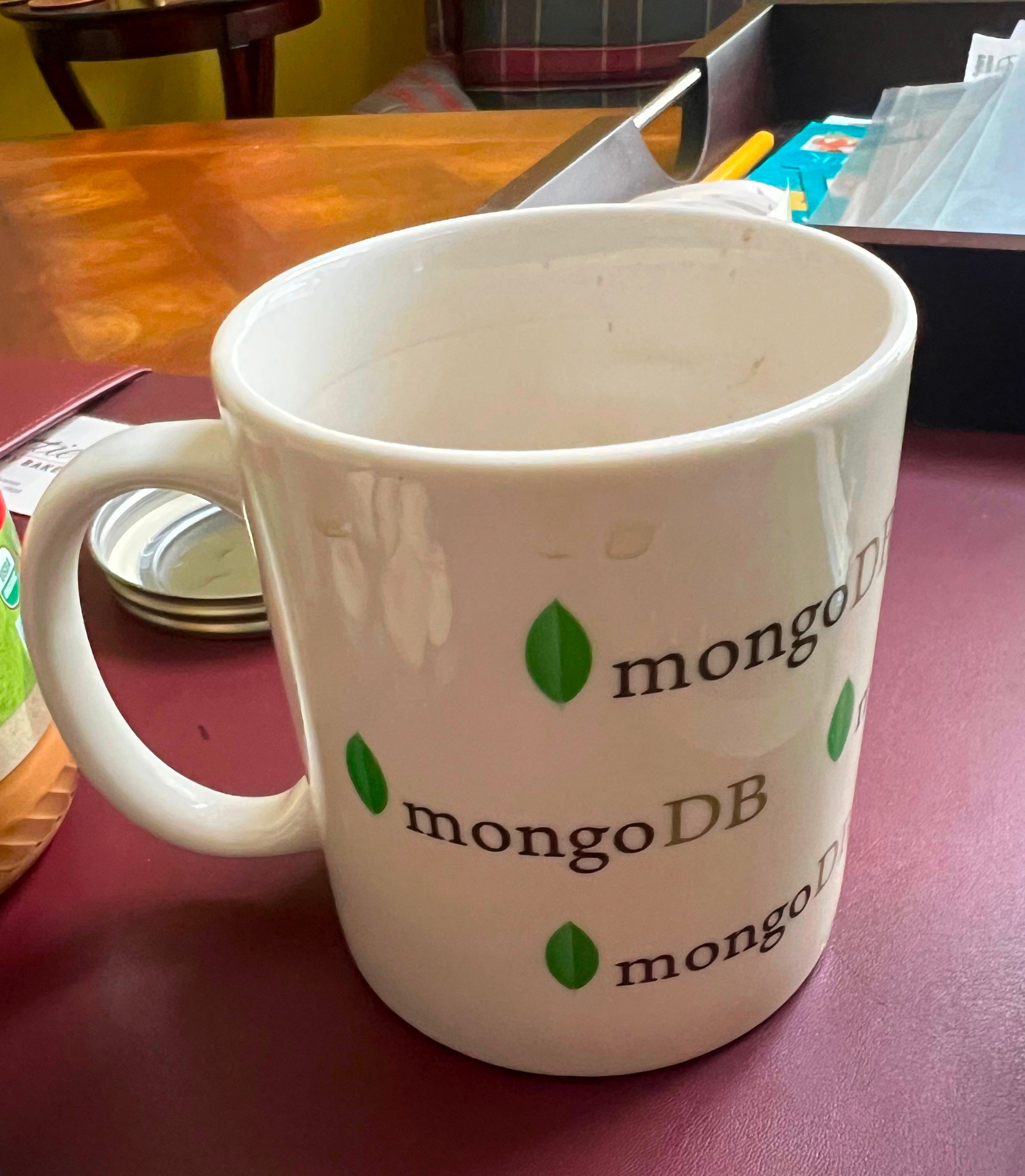
That quickly evolved into us running full-day events dedicated to MongoDB. They weren’t sales pitches, but rather technical sessions from both MongoDB engineers and community members. Soon we were running events almost every month. These have since evolved into MongoDB’s .local event series.
As I write this, I am struck by the fact that connecting with people one-to-one (sending them a coffee mug) and in-person (at meetups and conferences) were such old-school, low-tech ways of building momentum. Yet they were critical to the early adoption and enthusiasm.
The one-to-one approach was critical, but it couldn’t scale. We needed a way to bring the same sense of welcome and momentum to developers we’d never meet in person.
I can’t take credit for the next major marketing innovation, which was MongoDB University. My friend Andrew joined the company with the mission of launching massive open online courses (MOOCs) that could teach thousands of developers around the world.
Developers were thrilled to post their certificate of completion of the first course, M101 MongoDB for Developers, on LinkedIn and Twitter. This small piece of recognition became a source of pride for those that took the first course. And those social media posts fed the virtuous cycle, driving more virality and momentum around the product.
BTW, the last time I checked, over a million people have taken an online course on MongoDB.
There was a lot of other stuff too. Stickers mailed to university students. Answering a post on our free support forum at midnight. Posting the logo of every company using MongoDB on the docs. None of it looked like “marketing” in the traditional sense.
I think that’s the point. The early success of MongoDB wasn’t a campaign. It wasn’t a launch moment or a viral video… though the infamous “MongoDB is Webscale” video certainly helped 🙂 It was thousands of small interactions. That accumulated into a community, and the community became the engine.
(MongoDB would get a lot of flak on Hacker News for the MongoDB is Webscale video, with many developers assuming that we made the video as a marketing stunt. Another fun fact: I still to this day have no idea who made the video, but rest assured it wasn’t anyone who worked at MongoDB. )
The playbook, if you can call it that: make the product so good it sells itself, then treat every person who shows up for it like they’re part of something. The rest tends to follow.