For my own transportation, I do not drive a car.
I get around my city by walking, biking, and taking public transit.
Here’s why.
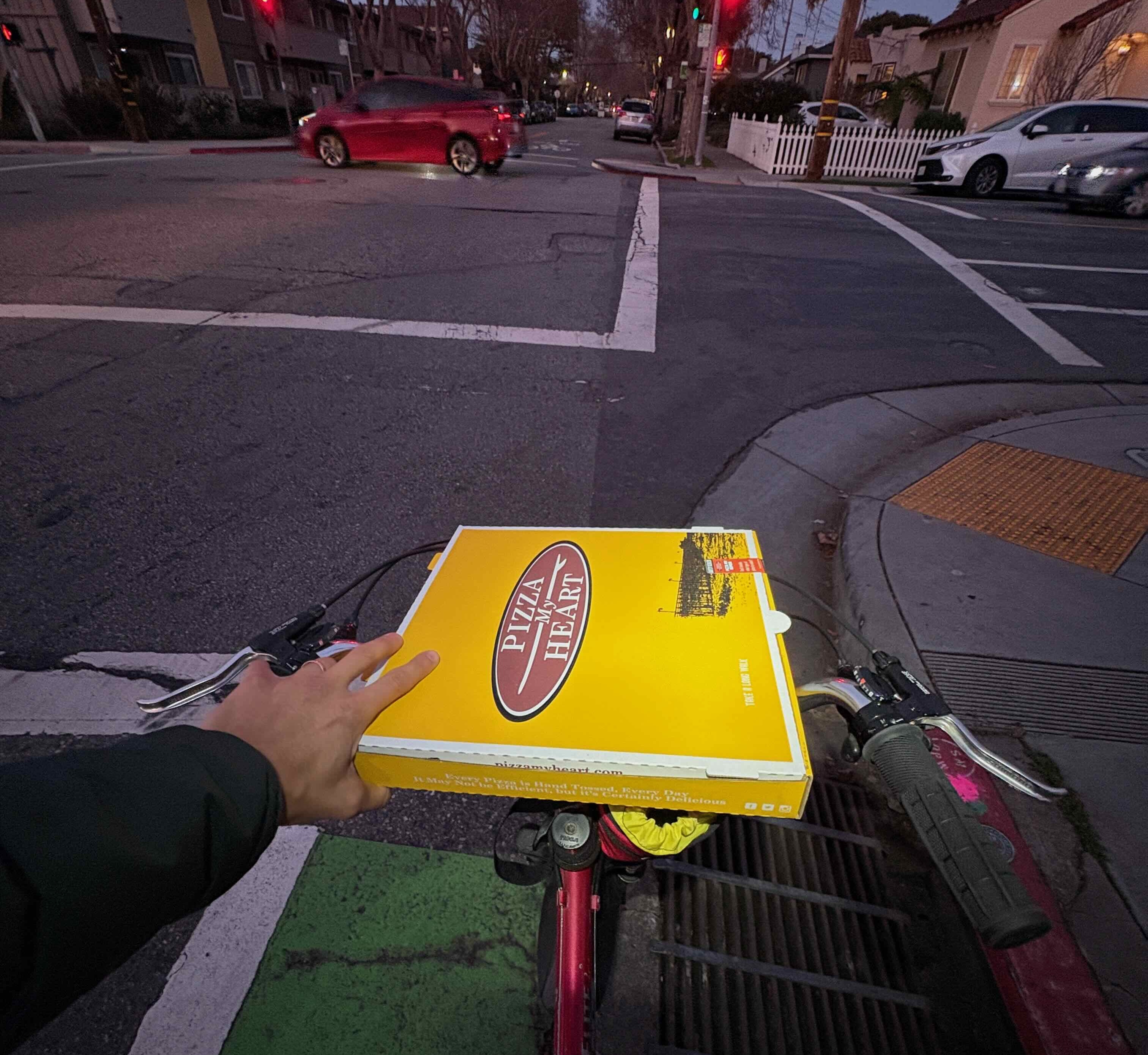
The opportunity cost
My household can financially afford a car and all its attached costs. Most of my neighbors can too. My story isn’t a story about financial necessity.
It’s a story about what car ownership actually costs you–in money but more importantly in distress, time and mental overhead.
The AAA puts average annual car ownership at over $12,000 per year. That’s real money I (and I imagine others) would rather commit elsewhere (savings, housing budget, healthier food, childcare services).
But the subtler costs of driving come from the physical and mental distress it causes you.
The physical health damage is largely caused by time spent driving eliminating available time for exercising. I completely negate this by walking and biking in my transportation journeys every day.
The mental distress is more difficult to quantify, but it is very real.
I personally have had both a family member and a close friend die by car.
77% of American drivers will be in at least one crash in their lifetime and 22–32% of crash survivors develop PTSD. That makes car crashes one of the largest sources of trauma-related psychological distress in the US.
Driving imposes a sizeable cognitive tax that comes with owning a vehicle: seeking parking, scheduling/procuring maintenance, renewing registration, dealing with insurance claims, getting smog checks, remembering to move the car on street cleaning day. None of these things are catastrophic but they are just a persistent low-grade drain on your attention.
I ride a Yuba Mundo cargo bike that carries more groceries than a sedan trunk. For longer trips as a family, Caltrain or the SamTrans bus works.
The financial comparisons are staggering, and my household banks those savings.
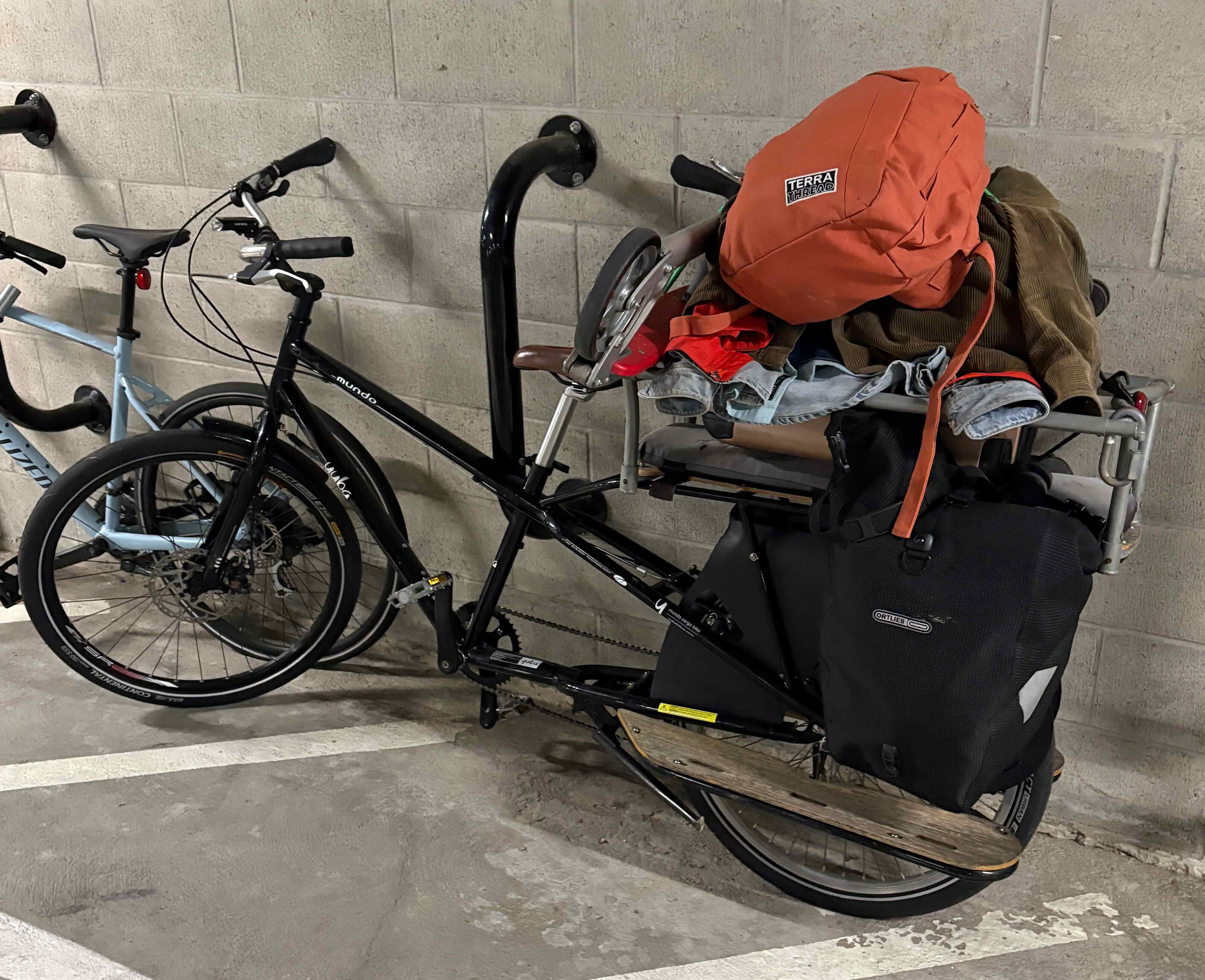
Who else does not drive?
There’s a second reason I don’t drive and it’s the most important:
I want to know what my community looks like to someone who cannot afford a car.
Can a person without a car in my community get groceries safely? Get their kid to school? Access a bank, a government office, a doctor?
The answer to that question is one of the most honest measures of a community’s social health.
A city that has made full participation in (economically, culturally, politically) contingent on car ownership is an exclusionary city.
It is a city that has decided that some residents matter more than others through infrastructure choices.
I don’t not-drive to prove a political point. I do it to feel whether the streets, the transit, the bike infrastructure are actually functional for someone without a car, and to notice when they are not.
Most of the time in San Mateo they are adequate. Sometimes they are even good! Occasionally they’re genuinely hostile. I want to keep knowing which is which.
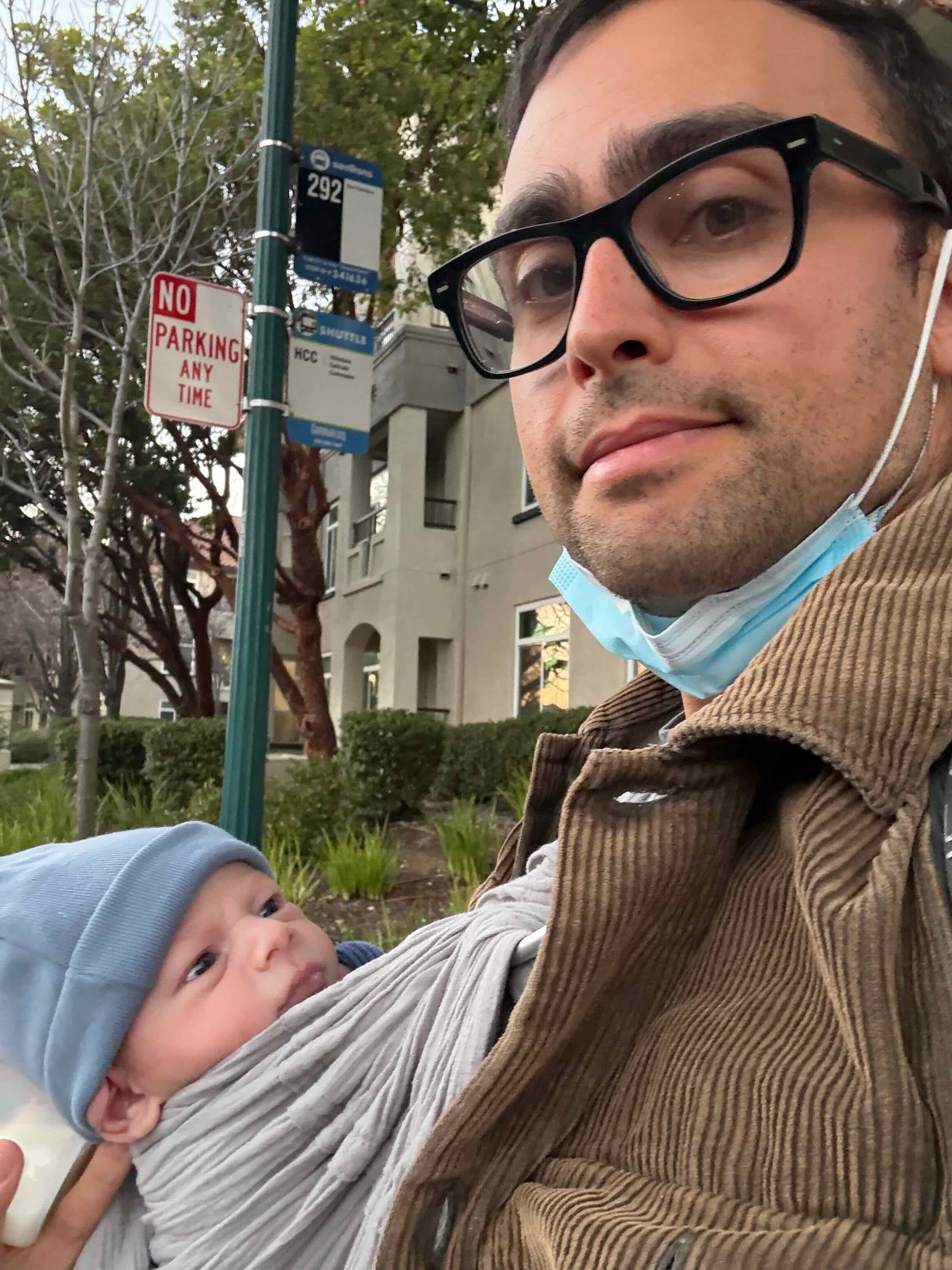
And as an added benefit on top, I truly meet new friends through avoiding driving. I know the dog walkers, bus drivers on my regular routes, and I recognize fellow riders who I wait with together at bus stops.
I can demonstrate to my son what being a member of a community means.
What it actually costs me
Honestly, it costs me a whole lot less than most people assume to go car-free.
An e-bike extends your range and carrying capacity dramatically. Hills disappear. Trips that would be a slog on a regular bike across town with a full load of groceries, or with a kid on the back become unremarkable.
Your mental map of what’s reachable expands considerably once you have one.
The biggest difficulties are weather and daylight. San Mateo is mild by most standards, but rain still means raingear and a potential change of clothes.
Winter’s short days mean more trips happen in the dark which is fine with good bike lights, but it shapes when I run errands and how I think about timing.
I adjust my schedule around daylight in the winter in a way that I don’t in the summer.
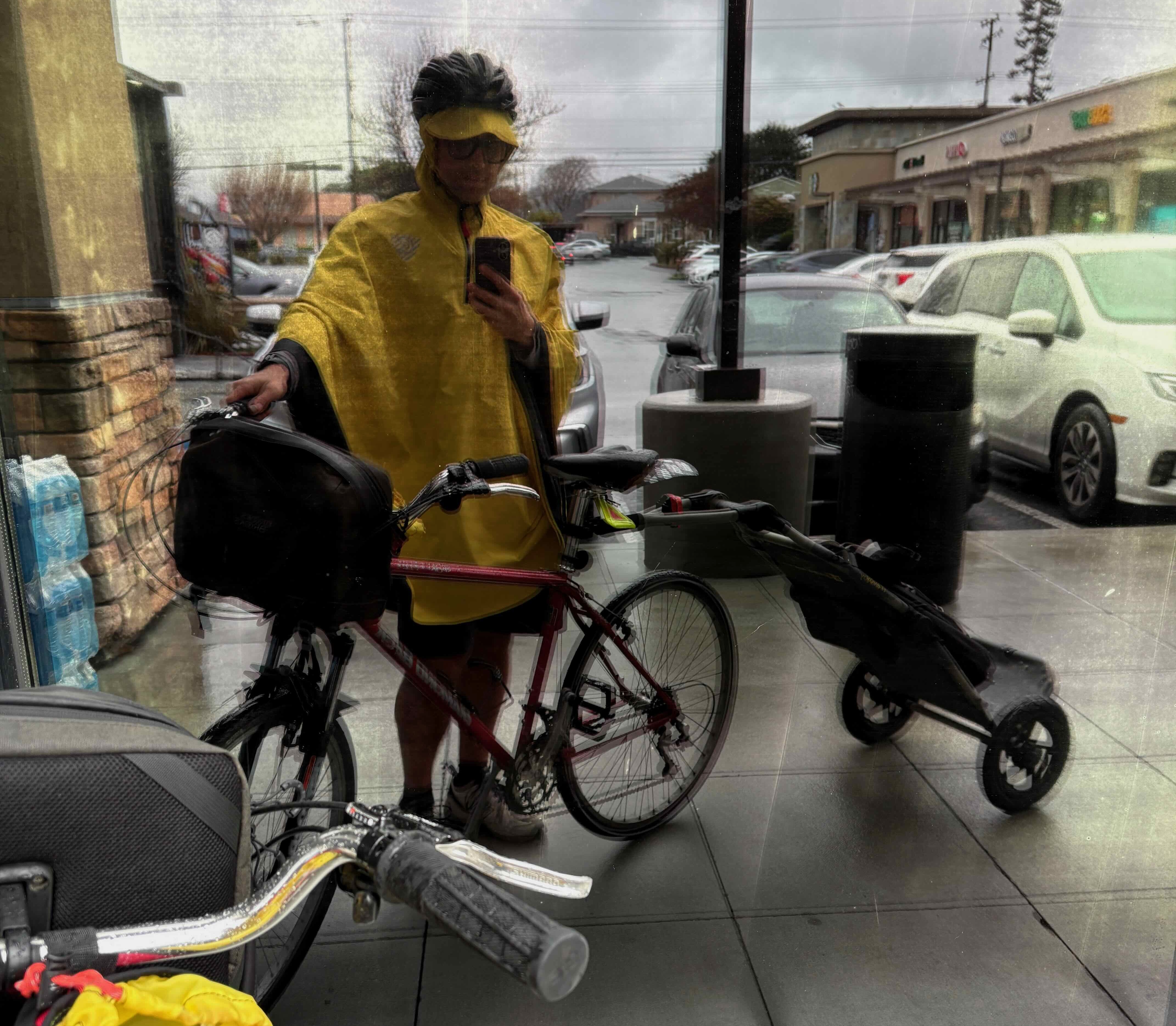
The case I care more about
When you drive you leave your neighborhood.
Not physically but experientially. You experience your neighborhood as a series of obstacles between you and parking. Stoplights. Pedestrians crossing. Narrow streets.
When you walk and bike, you are in your neighborhood. You notice the new restaurant that opened. You meet your neighbor. Your child learns social and skills of independence. You feel the weather, you hear the birds, and you exist in the place you actually live.
This is the entire difference between “living” somewhere and “sleeping” somewhere.
Ivan Illich called this the “remoteness” that speed creates–a framing I’ve written about before. Beyond a certain speed of travel, you are no longer inhabiting space.
I have a new baby. I want him to grow up knowing his neighborhood–the coffee shop owner, the librarian, the bus driver. Doing this requires slowness. It requires being present in the same places repeatedly at a human pace.
Driving takes that away from us all.
Driving is the privilege
We have it backwards when we say “going car-free is a privilege.”
Driving is the privilege.
American roads, parking minimums, free street storage for private vehicles, highways bisecting neighborhoods–these are massive public subsidies, built and maintained at collective expense, that primarily benefit people who can afford to drive. The person who can’t afford a car doesn’t opt out of a neutral system. They’re excluded from one that was engineered around everyone else.
When I don’t drive, I’m not enjoying some luxurious, exotic lifestyle. I am just refusing to depend on infrastructure that was built by displacing people poorer than me.
The question worth asking is not “can I afford not to drive?”
It’s: “what kind of community am I building by driving through it?”
· bicycles, transit, walking, commuting, economics