If there were a dictator of the internet who intentionally set out to destroy your ability to get accurate information, the result would look a lot like what’s already on your screen.
But why?
I mentioned in this newsletter a couple of weeks ago that I’ve been studying economics to find more rigorous frameworks to describe why “creative destruction” has been better at destroying than recreating the news industry. The decline of original news by traditional media has not nearly been offset by the rise of newer media, mostly to the detriment of our democratic societies. The loss of local media in particular is associated with greater loneliness, lower awareness of public officials, and more corruption. It’s like an invisible tax levied on our communities that we pay civically, cognitively and sometimes even literally, in the form of higher local bond prices due to more wasteful government spending. Increasingly, this invisible tax is being silently levied by Big Tech.
These economic tools are helping me round out the story I have to tell about why things go wrong and how they could be made better.
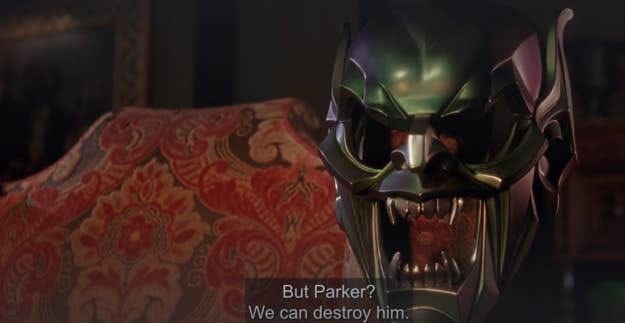
(Alas, the post where I talked about re-learning calculus led at least a dozen of my readers to instantly unsubscribe. My managerial economics textbook indicates that if I want this newsletter to grow and not shrink, a marginal analysis would show I should write about something else. Unfortunately my English and journalism degrees are still in charge of my writing and, like the Green Goblin mask in “Spider-Man,” keep whispering that I should follow my muse.)
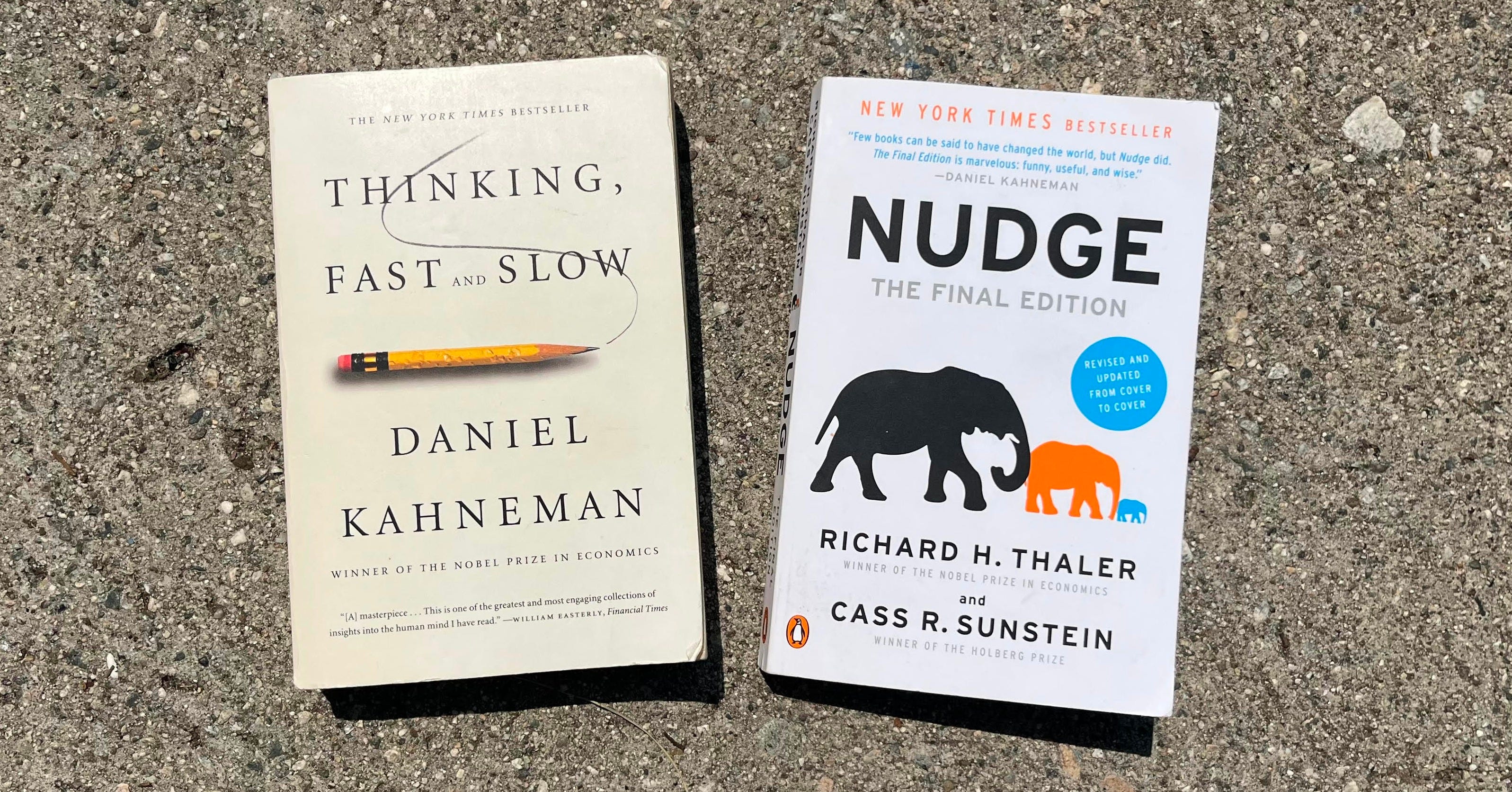
Over the last couple of weeks, I went on a detour to bone up on the subfield of behavioral economics, starting with a couple of its seminal books, Daniel Kahneman’s “Thinking, Fast and Slow” and Richard Thaler and Cass Sunstein’s “Nudge” (the 2021 “final” edition). Kahneman and Thaler won Nobel prizes in Economics for their psychological work, which demonstrated that the story told about human nature in mainstream neoclassical economics is basically false.
A basic premise of modern behavioral economics would go like this: People aren’t omnipotent utility-maximizers who always buy the best product obtainable at the best cost. People are people, and our brains make us perceive or do weird stuff that is not always aligned with statistical reality or our own best interests. (I always eat too much candy even though I know it’s bad for me, and I have crystal-clear self-awareness about this even at the precise moment I reach for the Hot Tamales at CVS.) But “irrational” is not a good description for predictable behavior. What’s truly irrational is not seeing it coming. A lot of the stuff we do can be explained by the quite ordinary cognitive shortcuts we take when coping with complex environments: such as the mostly terrible way we use the internet, which is mostly terribly using us.
This type of story about the psychological fragility of the news consumer will not be new to the veteran of media theory. We’ve been onto this game for more than a century, since Walter Lippmann’s 1922 “Public Opinion.” The book was a devastating portrait of the limitations of human psychology in comprehending the complexity of modern society, which readers like John Dewey correctly understood to be an indictment of a foundational mythology of self-government. Lippmann thought actually-existing modern democracy needed paternalistic experts to function properly. Dewey thought trust needed to remain with the little guy. (Nicholas Carr recently wrote an excellent account of this debate here.)
The future of news in the 20th century belonged to Walter Lippmann’s democratic paternalism. The winner-take-all nature of advertising markets, the artificial scarcity of broadcast spectrum space, and the forbidding industrial moats associated with the costs of news production and distribution, gave rise to the era of 20th century mass media, which still anchors our perception of what “media” is today. Huge newsrooms, huge audiences and huge profits concentrated control in hands of a small number of experts and businesspeople over what the public read, saw and heard.
Press criticism in the mass media era was important and interesting to read, because the experience of news consumption was a common one that could be studied, analyzed, criticized. If someone was harming society, you knew their name and what they were doing, which meant they were easy to blame — and even shameable. The mass media and its weaknesses (a deference to power, its bias toward affluent audiences, its of-the-times bigotry, its fondness for inflammatory but statistically insignificant crime stories) were legible and, by being legible, were confrontable.
The centralization of media production thus also concentrated power in the hands of journalists, who developed a strong craft mentality with anticommercial (or economically “irrational”) norms that lead to things like joining a union or a self-governed membership organization with independent codes of journalistic ethics, like the Society of Professional Journalists or Investigative Reporters and Editors. It wasn’t just that journalists had a romantic guild mentality about the importance of pursuing truth: It was that the centralization of industrial power gave journalists the means to exert a Galbrathian countervailing influence on their employers. Media owners might refer to this internal conflict as an “agency problem,” which is a fancy term for complaining about authoritarian workplaces that aren’t fully totalitarian.
Much of what people liked about 20th century mass media — mostly accurate public-interest news, delivered by skilled craftspeople on the front page and the top of the hour, where it was harder to ignore — was a shotgun marriage of journalistic norms with economic opportunity. Many of these norms remain in place today, perhaps even in defiance of low expectations. Most of this year’s Pulitzer Prize winners were commercial media organizations managing fiduciary duties to pursue profit with newsrooms that leveraged complex divisions of labor to pursue labor-intensive and probably loss-leading news projects that, to my eye, look a little lighter on AI wizardry in 2026 than industry innovator rhetoric would prefer to see. This year’s honorees even includes great newspaper villain Alden Global Capital, which won one Pulitzer Prize this year and was finalist for another.
A centennial update of Walter Lippmann’s “Public Opinion” for democratic media in 2026 would probably come to the same conclusion about the limits of human cognition under modern society, whose complexity is increasing at a logarithmic pace. The new part would be the displacement of the paternalistic expert class that Lippmann thought would be needed to manage this complexity.
The needs of your average media consumer, wherever imperfectly met by big news outlets, are now confronted with an embarrassment of options that seek to fill every marketplace desire imaginable, thanks to technological innovations driving content production and distribution costs to zero.
The dollar cost of encountering content has also fallen toward zero thanks to ad-supported platforms and massively subsidized AI agents. But the mental “decision costs” of finding accurate information have been driven skyward for consumers wandering a swamp of mostly terrible choices. The top-of-the-hour paternalism of 20th century mass media has been traded in for the 21st century paternalism of slop-slinging algorithms indifferent to the accuracy of the product or the compensation of journalists whose work feeds the entire ecosystem, usually without credit. What was once legible about media consumption has become increasingly illegible, depreciating our old tools of analysis and confrontation.
In one of those tremendous ironies provided everywhere by capitalism, I most frequently see the old criticism of mass media profit-seeking online when someone at an alternative platform is practicing some good-ol’-fashioned product differentiation. “You’ll never see THIS story in the legacy media!” Often you can, but shit is hard to find these days, and the energy required to believe a media stereotype (stereotypes frequently being true) is vastly lower than paying the cognitive tax of looking elsewhere for a longer/slower/duller version of content that’s already right in front of you.
Kahneman describes this as a cognitive fight between System 1, our brain’s automatic system, and System 2, our reflective system. And System 2 is very lazy. Algorithmically delivered media is perfectly turned to the biases of your System 1, and why not? Like a true scientist, the platform has been carefully gathering data to better predict what you’ll actually do next. It’s the experts and the advocates who wish that citizens had a surplus of civic impulses that, sometimes, we don’t. Whatever else you can say about it as a form of government, democracy is a lot of work.
The mass media era is fully and completely dead, and people have recently stopped using terms like “mainstream media.” Now there’s a bewildering eddy of bigger media and littler media and no Habermasian “public sphere” whatsoever. Bari Weiss’ right-wing makeover of CBS News is apparently more interesting to read about than to watch: The network’s dwindling audiences are probably switching to the nation’s now-number-one streaming channel, YouTube.
When I go out and chat with people, I have no idea what kind of media they’re consuming, if any at all. Some people just ask AI: OpenAI reported in February that ChatGPT is getting about a million prompts a week for local news. Others randomly encounter news when TikTok passes a news creator at them. They have to describe the videos to me. I deleted the app and have lately been preferring to take my news via print as if I were a million years old and the past 15 years of media innovation I lived and worked through and helped foment never happened. Ironically, by weaning myself off a longtime digital news addiction (apart from a couple mostly national apps), I’m probably far closer to the modal consumer news experience than when I was a Los Angeles Times reporter, which is to say: News is not something a lot of people are actively seeking out. “News finds you nowadays,” a survey respondent told the Pew Research Center.
We are all part of the counterpublic now. And a counterpublic tends to distrust whoever’s in charge. There’s a counterpublic occupying the White House as we speak, and it’s notable for the time it spends looking for someone else to blame for what’s going on.
I work on things like news subsides to support the supply side of news production. But in environments of overwhelming choice (like ours for digital media), Richard Thaler and Cass Sunstein call for “libertarian paternalism” to help overwhelmed people make better consumer decisions. This repulsive term has the quality of being honest in that intentionally combines two unlikable words to describe a solution to the conundrum of how you guide flawed humans toward outcomes they might be happier with without depriving them of free choice.
Thaler and Sunstein’s preferred tool of libertarian paternalism is the “nudge” — intentional little features of “choice architecture” (how you structure people’s decisions) that gently guide people toward better outcomes. One of the most powerful nudges is a default, which is actually a major feature of traditional media, which would give prominent places to stories on the front page or in the newscast not because it might necessarily be the most engaging story of the day, but because it might be the most civically important. Our internet has mostly abandoned the principle of nudging people at important news.
Let’s take artificial intelligence’s structural hostility to journalism. A recent study by Aengus Bridgman and Taylor Owen of the Centre for Media, Technology and Democracy in Canada showed that ChatGPT, Gemini, Claude, and Grok had been scraping Canadian news outlets (including paywalled stories — plunder!!), because the contents of those outlets’ work would appear in the AI bots’ responses. This news content was appearing unattributed. However, the bots would usually list attribution after being prompted — meaning that the data was in the AI model, it just wasn’t offering it up without extra user exertion. And users usually don’t like extra exertion. This is bad design that only harms news providers and consumers, especially given AI’s well known weakness of providing inaccurate, made-up outputs in addition to just ripping off news outlets and undermining their revenue models, which are based in some form or another on aggregating audience attention. The rapacious and uncompensated AI scraping of the open web is having the perverse effect of incentivizing more high-quality journalism to get gated behind paywalls where bots can get more easily blocked, ultimately driving up the costs of quality journalism to everyone on a social level.
Social media, too, could choose to feature quality news outlets as “defaults” or provide subtle “nudges” on content that prompt users to donate or subscribe to the news outlets providing high quality news videos on platforms like Instagram, which don’t pay for themselves. (I am worried about the rise of the “too-good Instagram news video” — I’m glad news outlets are becoming fluent in visual media, but I don’t know if they’ve gotten fluent in getting revenue from it.) Integration with donation or subscription tools could be made practically frictionless. Or hey, maybe sharing a better cut of advertising revenue. Doing so would, if anything, provide even stronger incentive for news outlets to keep providing high-quality visual content to platforms like Instagram at no actual cost to Instagram itself, which might make people feel better about Instagram (which is currently getting sued for creating an overly addictive product, mostly through evil nudges). Mostly, however, the platforms seem to find this a hassle or too controversial, if they even care about media at all: you’re probably just not innovating hard enough. Two things that are true is that more and more people are relying on creator economy journalists to provide them information, and that many of those creator economy journalists are doing it while going broke.
Google itself, the granddaddy of search, was once the greatest “nudger” of all toward media via its powerful “News” tab and other search features, which was its one redeeming feature in exchange for having illegally monopolized both the search and digital advertising marketplaces. But Google’s growing reliance on AI summaries for search seems to be contributing, at least in part, to a decline in the rivers of referral traffic it once provided to news outlets. New research of the impact of AI on news consumption via search indicates that it’s the smallest outlets (who benefit most from search discoverability) seeming to suffer the worst:
You probably couldn’t create a more anti-news internet if you tried (and some people seem to have tried). There are lots of things that have gone wrong for the news media in the 21st century, but the feature they have in common is the destruction of incentives to produce accurate information. Addressing these problems doesn’t require one fix but many — not just for the news outlets and journalists on the supply side, but to help out the exhausted, burned out, confused consumers on the demand side, who are getting drowned in content sludge.
Our digital economy has levied a gigantic cognitive tax on news consumers trying to find accurate information. The cost is just too much to bear.