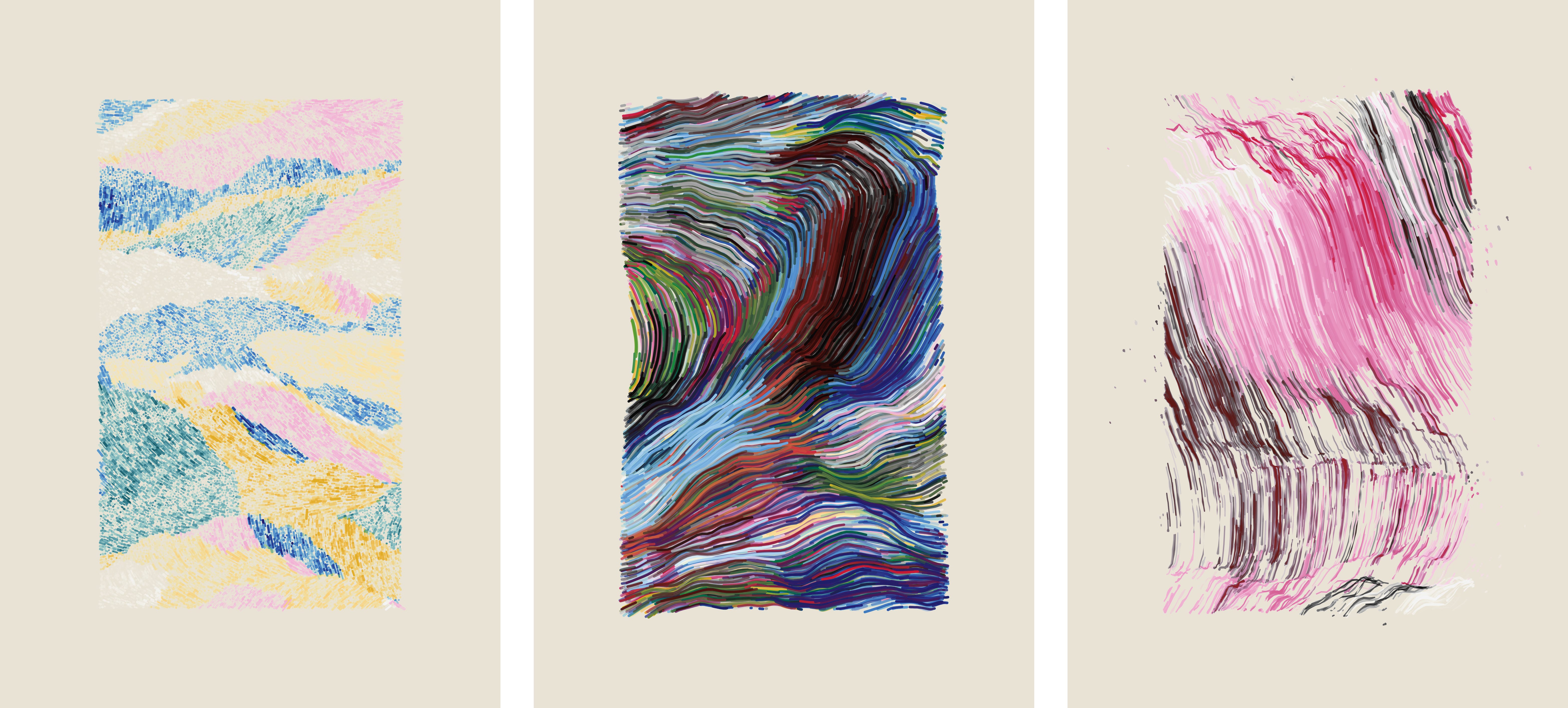
Tomorrow I’m releasing Serac, a generative art collection with Avant Arte and the Victoria & Albert Museum. The work is being released as a unique silkscreen print and a digital collection of the same name. A very talented artist and good friend of mine, William Mapan, is also releasing his own project tomorrow in this same partnership. A portion of proceeds from these sales will be donated to the V&A as a fundraising drive.
You can purchase Serac on Avant Arte and Verse, November 24, 2 PM GMT (48 hours only).
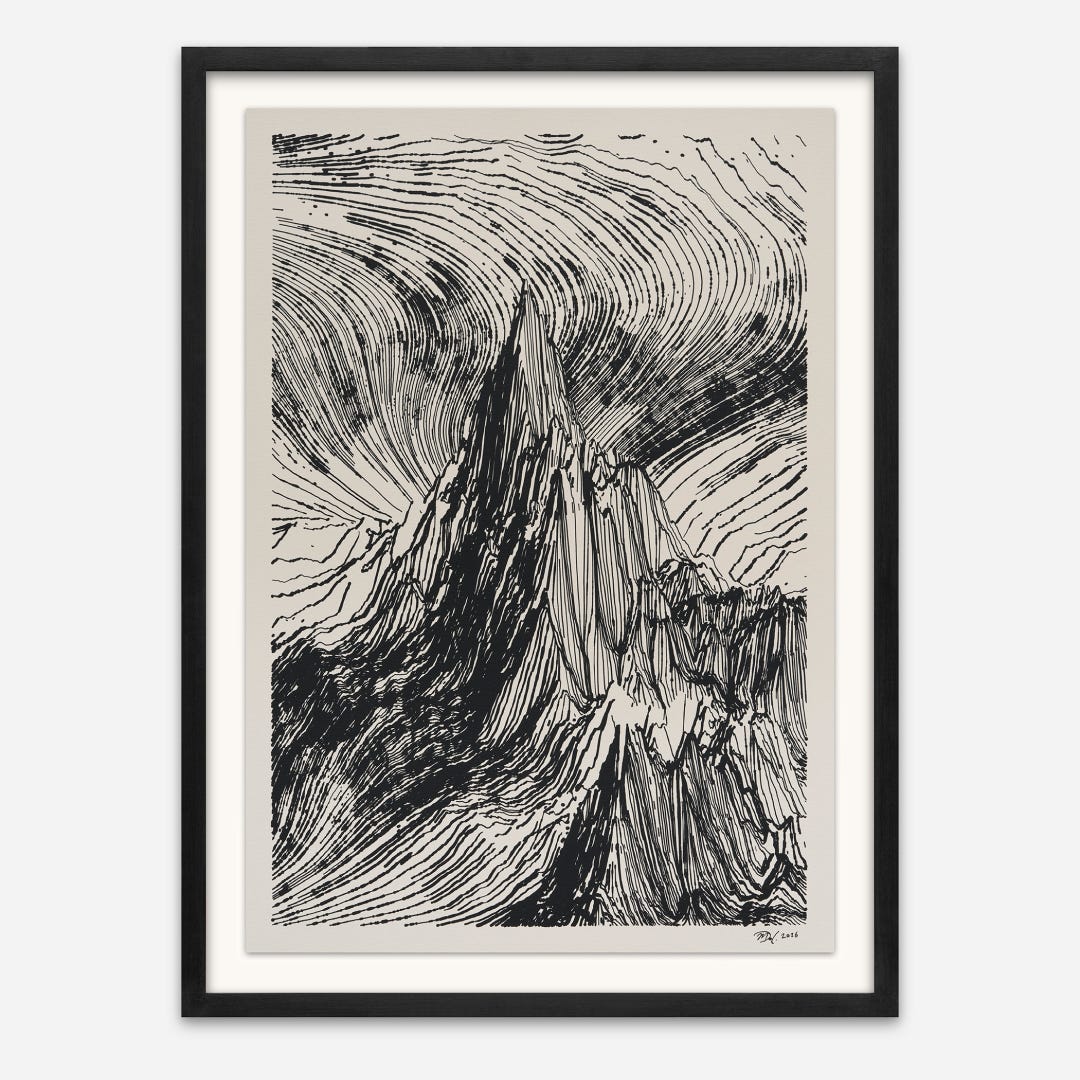
The project is one I’ve been gradually chipping away at for over two years now, building on some of the same code and techniques present in Subscapes and Meridian. Notably, constraining myself to simple 2D strokes, and exploring how their repeated application on a procedural terrain can evoke themes of vastness, sublime, and infinity. The title, Serac, is named after the massive columns of ice that can form in glacial landscapes.
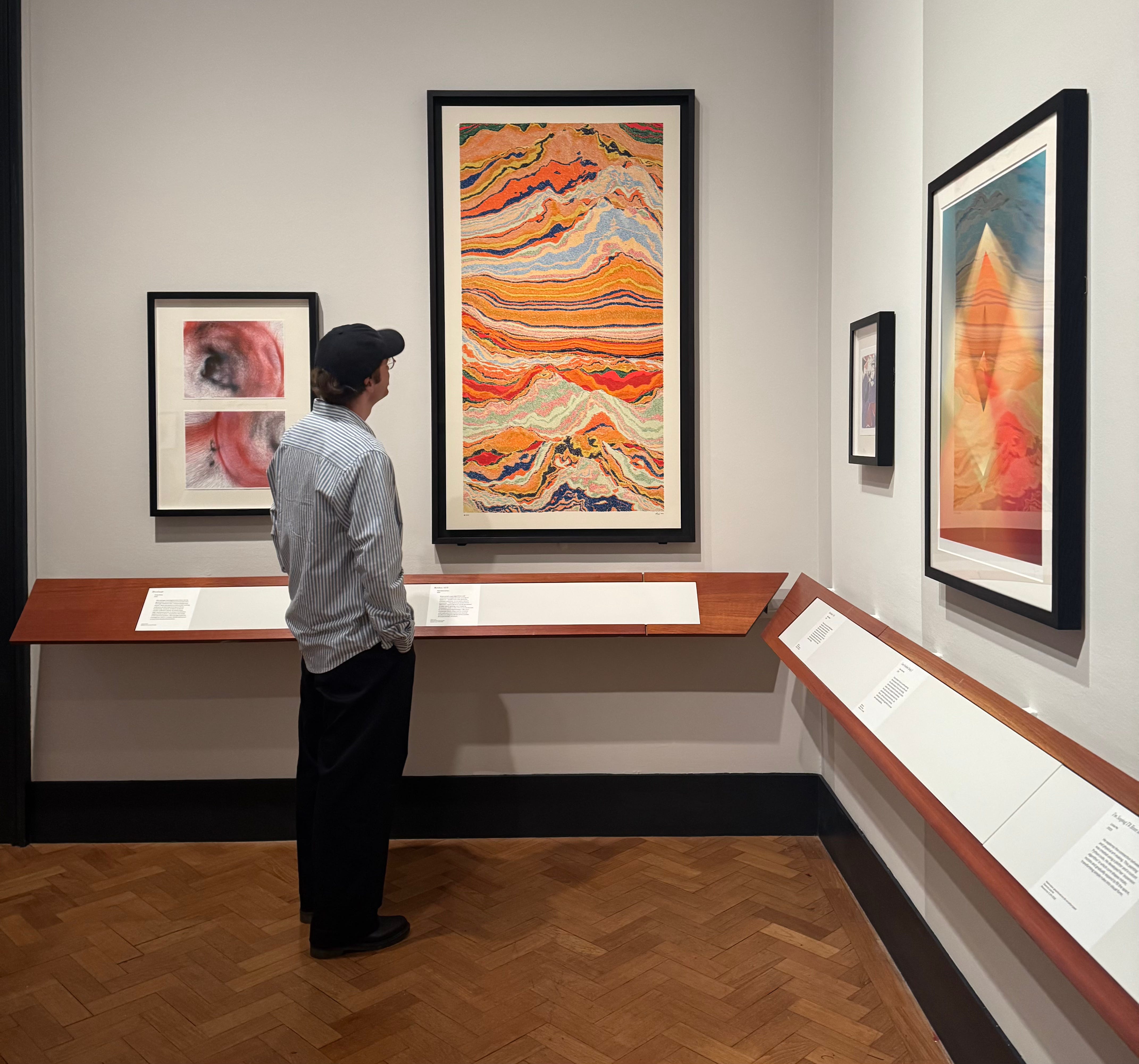
This year also marks a significant milestone in my art practice, and Serac can perhaps be seen as a book-end to this. Meridian was released in 2021, and since then I’ve been in discussion with the V&A about it getting acquired. I’m extremely pleased that two works, #870 and #686, have now officially entered the permanent collection of the museum. One of these is now on display in the museum until May 2027, in the exhibition Degrees of Disruption: Vera Molnár and Generative Art, curated by Melanie Lenz. This display, and also the acquisition of contemporary generative works like Meridian, took many years of her effort, and it’s wonderful to see the museum continuing to embrace digital and generative art.
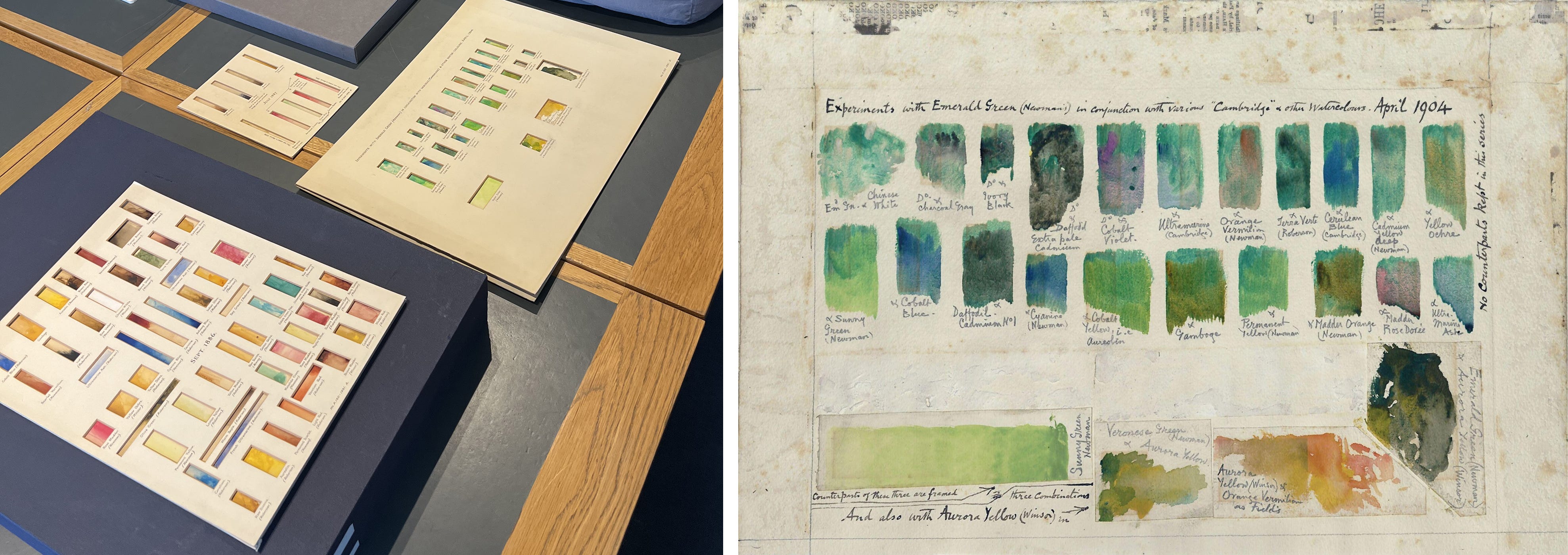
Early in our collaboration, the V&A invited William and me to the museum to see some works from the archives, selecting a few pieces that might interest us specifically. For those unaware, the V&A has one of the foremost collections of early computer art in the world, including works by Vera Molnár, Manfred Mohr, Harold Cohen, and many others. The selection for us was varied: paintings, pen plotter drawings, screen prints, books, and pigment samples, across all decades and genres. Many of the works were delicate, and not regularly exhibited out of concern for conservation. I was particularly captivated seeing the work of Colette & Charles Bangert, who used code, algorithms, and mechanical plotters in the late 1960s to produce drawings that evoked a sense of landforms and nature.
The Bangerts grew up in the American Midwest, and the influence of grasses, fields, and the varied landscapes outside their Kansas home can be felt in their artworks. I can relate to their desire to simulate and evoke the natural world, although perhaps my own Canadian roots draw me to other subjects – mountains, glaciers, and vast vistas.
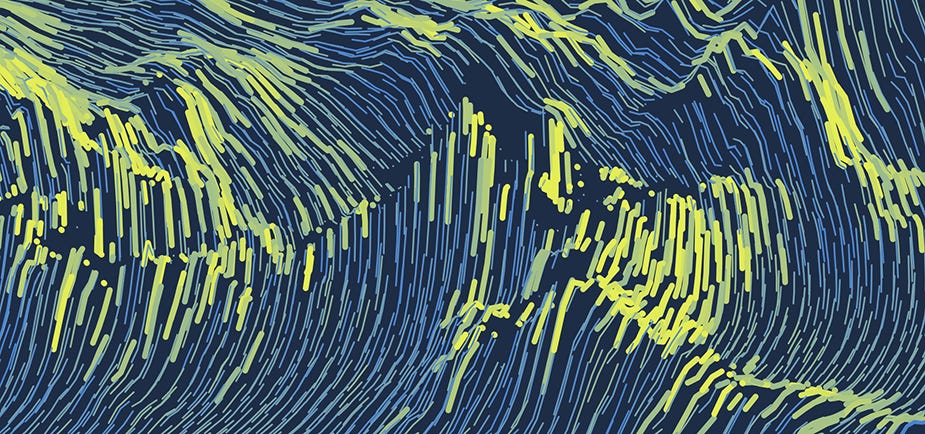
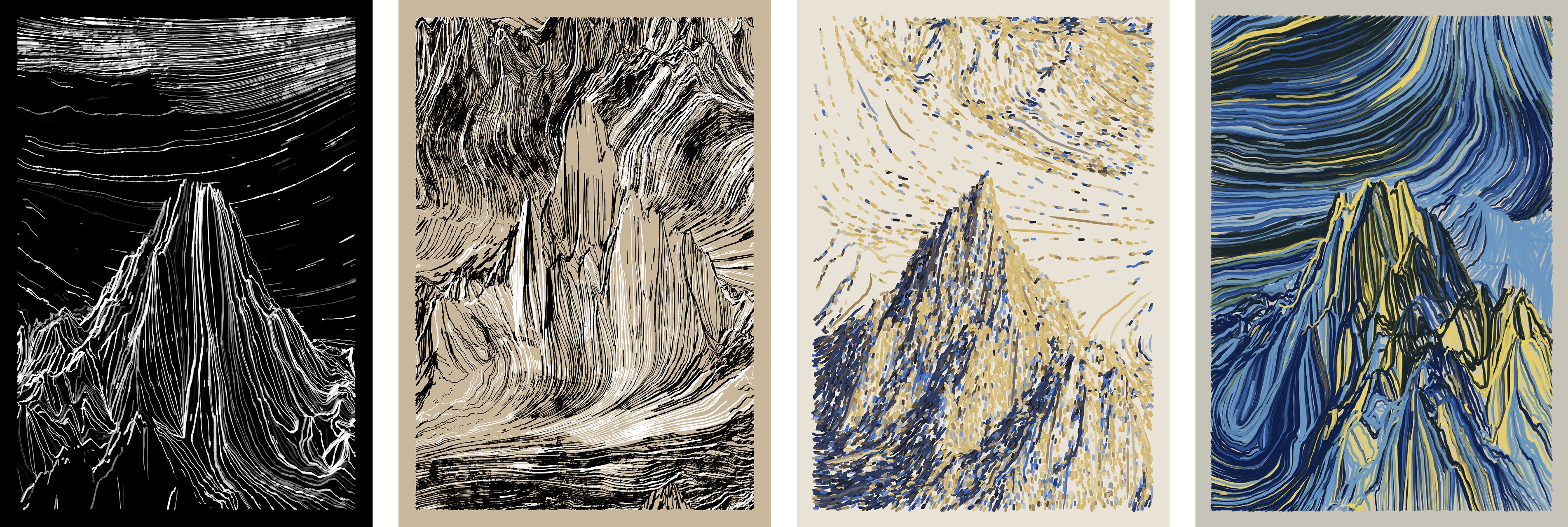
In addition to the Serac silkscreen print (pictured earlier, more details here), the project also includes a generative digital collection by the same name. I’ve curated a large finite set of works from this algorithm, in an array of styles, parameters, and colour palettes, and also built a small site allowing you to browse and filter all the outputs:
The digital collection will be released on Verse, where the final mint count and selection will depend on collector curation. I hope to still make use of the unclaimed outputs at some point in the future, such as displaying the full breadth of the algorithm within an exhibition or book.
The composition is based on layered noise functions, much like in Meridian. This could be seen as similar to a landscape artist painting the same mountain year after year: this mathematical and infinite terrain has become a comfortable subject, and yet I keep finding surprises in how it can be algorithmically drawn. In this project, I’ve brought some of the peaks into focus, making them a focal point of the composition.
Painterly strokes are then traced along the gradients (slope) of this 3D terrain, moving up to the peaks, and down to basins. As the strokes reach the basins, their heading transforms into a more gradual flow field. Although the output is vector, I make use of a pixel-based depth buffer for hidden line removal, to occlude lines as they fall behind hills and mountains.
More than a decade ago, I blogged about my research into drawing thick lines on the web (Drawing Lines is Hard, 2015). Rendering lines and curves in software seems to be a continual interest of mine, and something I come back to often. As part of my current PhD research, I recently published Windfoil, a pre-print describing a new approach to vector graphics.
In Serac, the centrelines traced along the landscape are expanded into thick shapes, giving them the feeling of paint or pen strokes. This allows me to vary line thickness along a path (simulating variable pressure), emit custom end caps (such as using a superellipse end cap rather than a circular end cap), and jitter the exact placement of the expanded curves.
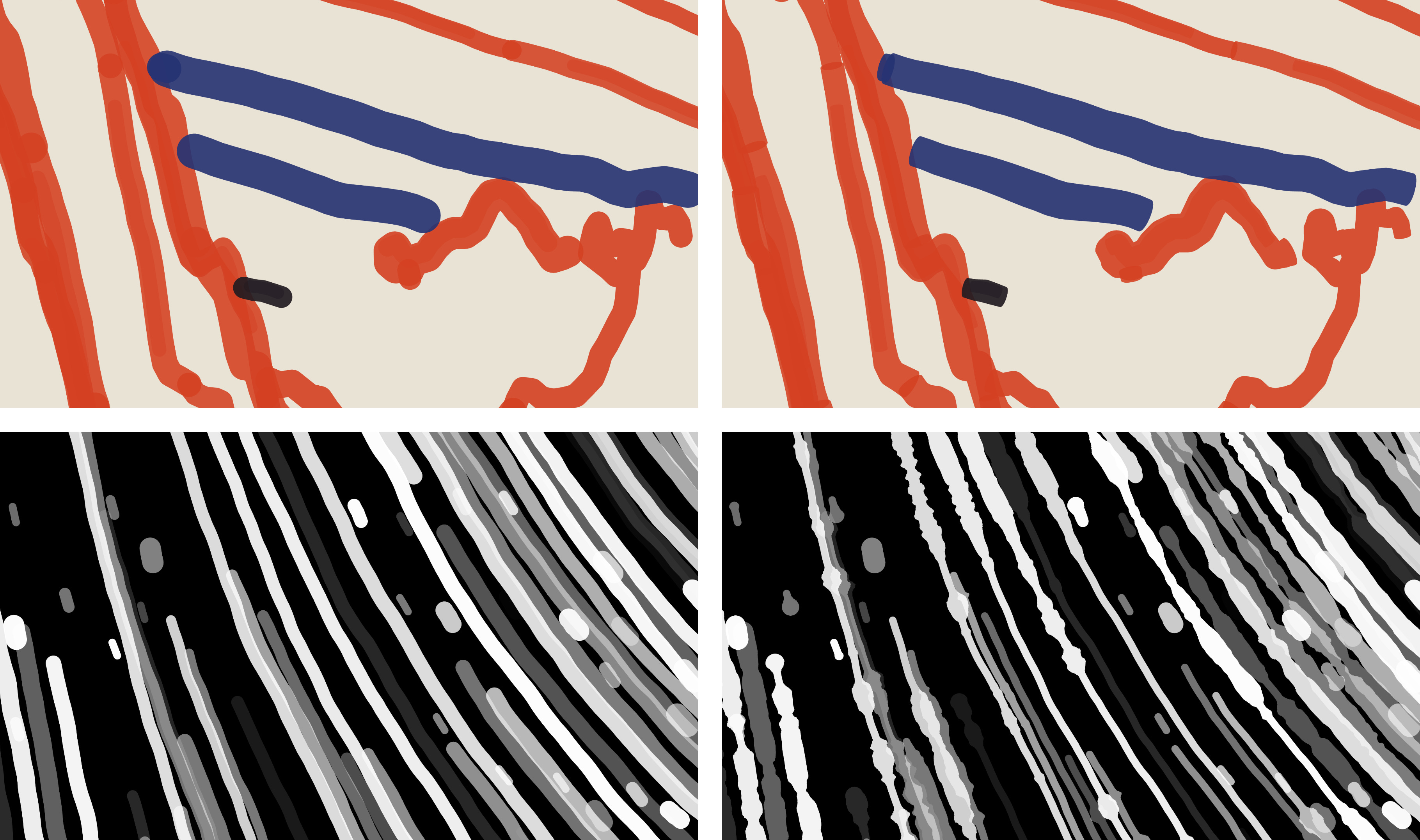
To produce the screenprint with Avant Arte and Make-Ready, I needed a way to convert these mathematical shapes from my code into a 2D image. It felt fitting to leverage some of my open source software tools that I’ve been building for years (windfoil + PNG encoder + color) to produce an exact, high resolution 16-bit print image – which is likely more accurate than what I could have achieved with a traditional workflow such as Photoshop and a SVG file.
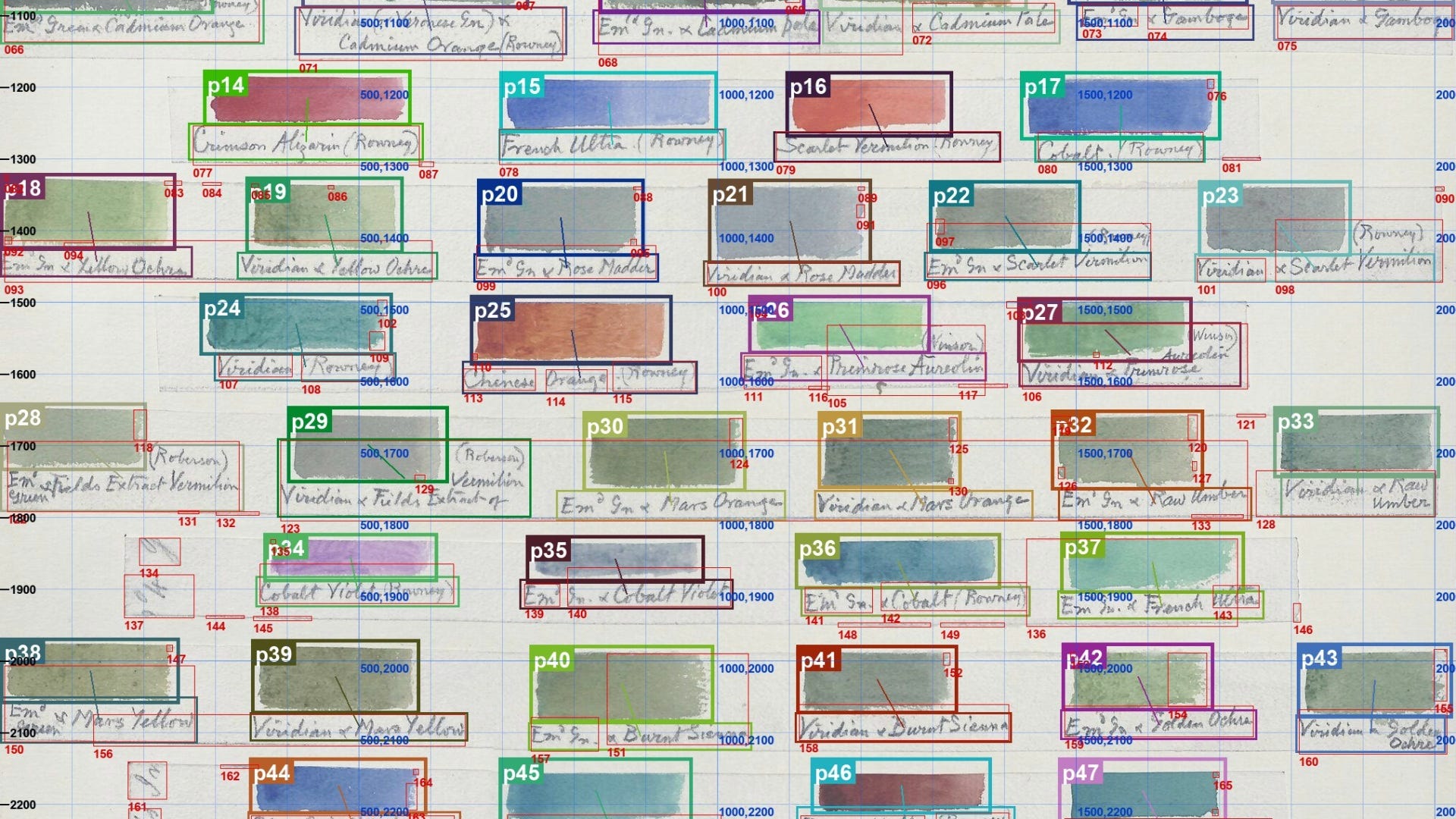
Another interesting aspect of the project has been its use of colour, and some of the tooling I built using agentic workflows. Some of the palettes are directly inspired by my visit to the V&A archives, which featured several watercolour pigment specimens by Arthur Hopkins from the late 1800s to the early 1900s. These were experiments by the artist to test light-fastness and the visual characteristics of different pigments. What struck me was that, while many of these colours had faded from light exposure over the years, when viewed altogether in a group, they seemed to shine as a chromatic palette. I also enjoyed seeing the text and notes in these, as the artist obviously had a keen interest in the study of colour.
Today, one of the most striking changes to my development process is the ability to harness agents and large language models (LLMs). I used these in a variety of interesting ways throughout the process: for example, I gave an agent the task of analysing scanned drawings from my pen plotter and fitting a superellipse to the end caps of a line drawn with a real marker, in order to more accurately model marks on paper.
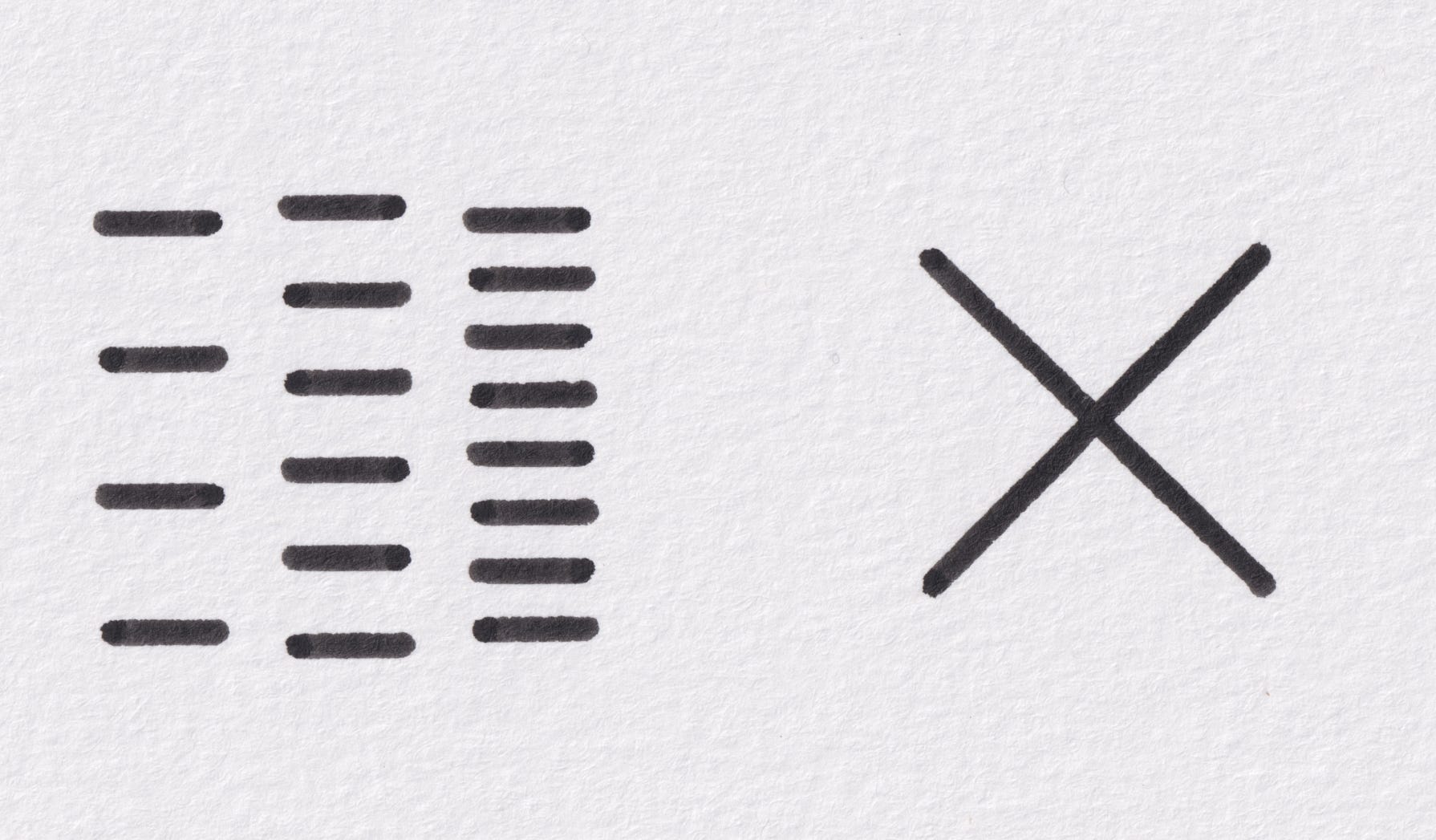
Another example is using Claude Code to build internal tools, such as GUIs for manipulating palettes and colour schemes:
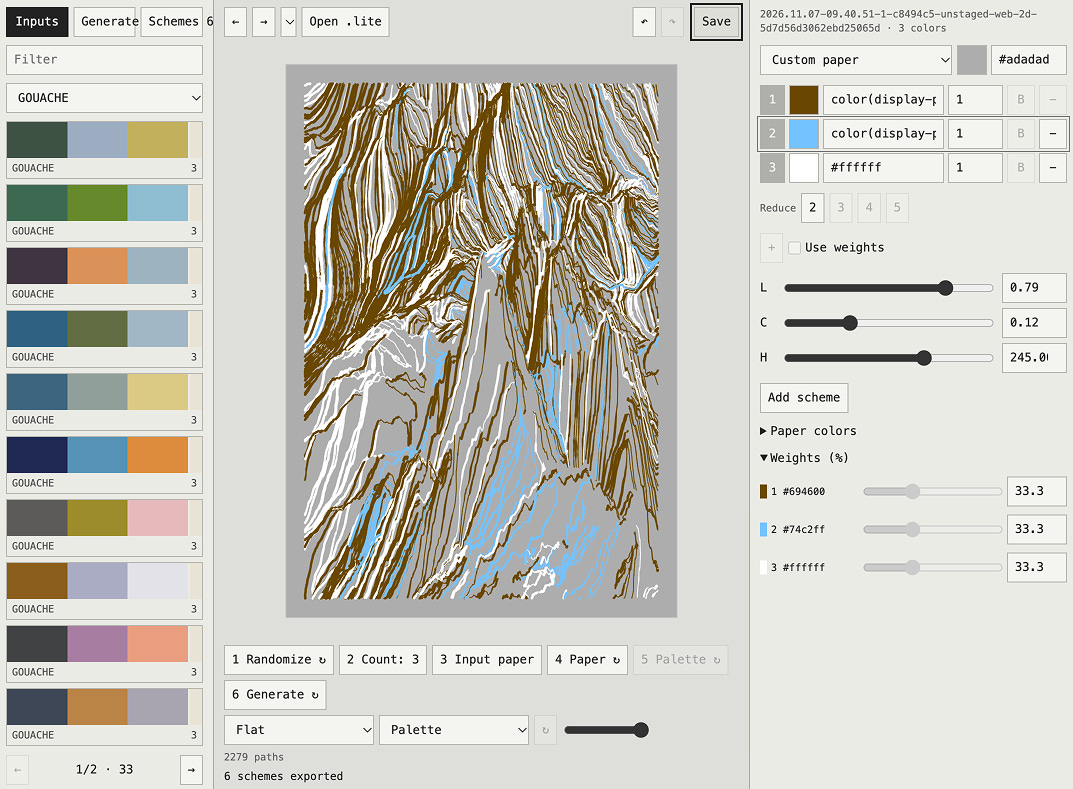
These tools are rough, not exactly user-friendly, but I’ve found them invaluable for rapid prototyping and creative experimentation. I am consistently blown away with the capabilities of today’s AI models, and suspect this project marks a transition period within my own practice. I started making this work prior to the boom of LLM agents, and finished it just on the cusp of massive changes in software development, mathematics, and many other fields.