Here is a trivia question: which continent suffers the most heat-related deaths per capita? By a wide margin, the dubious prize goes to… Europe. In the summer of 2022 alone, more than 61,000 Europeans died as a result of the heat.
Europe is again crushed by a record-breaking heat wave, and we can safely predict that thousands of people will die this week.
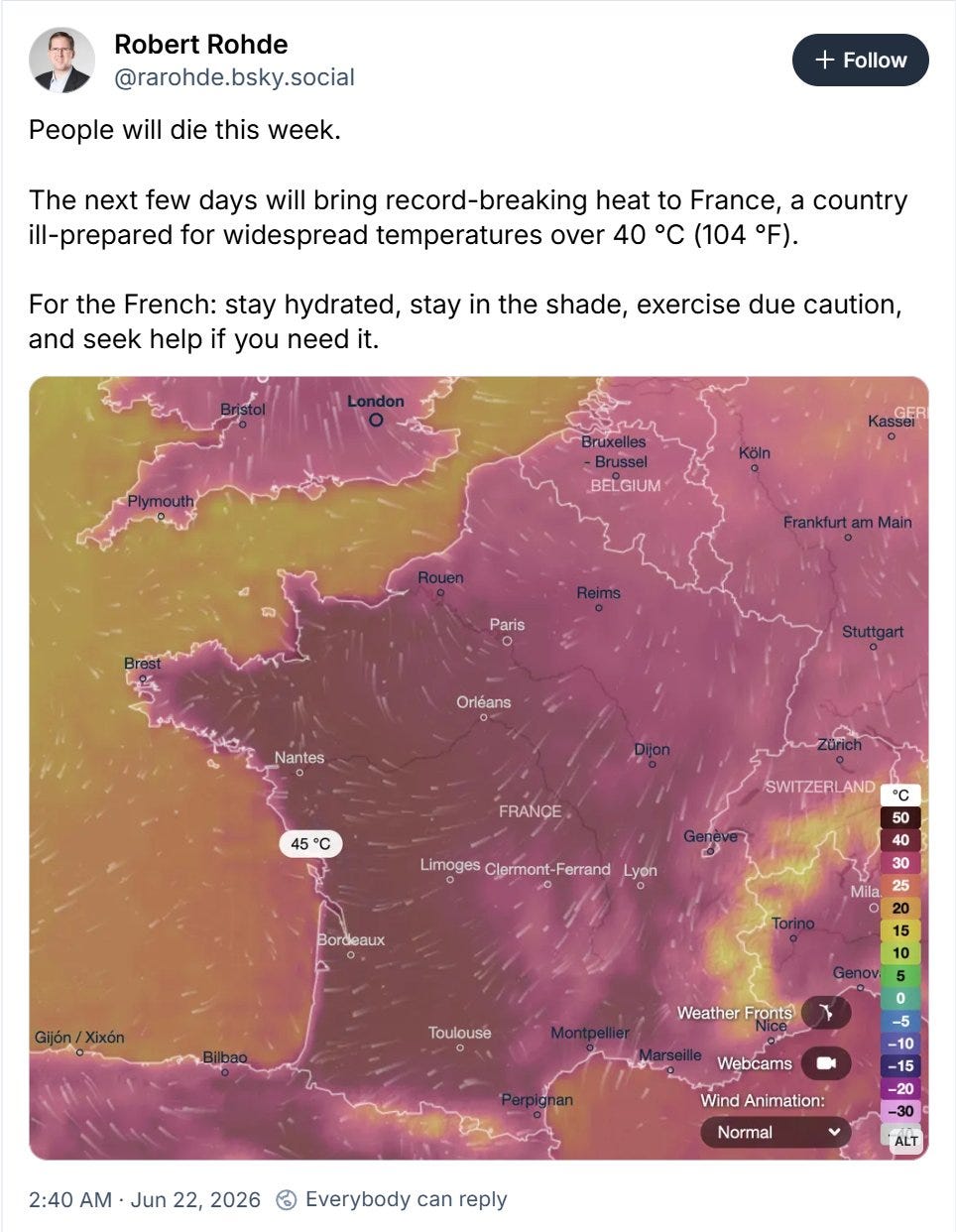
In case you feel geographically confused: no, the equator does not run through Brussels. Thanks to its northern latitude, Europe in fact endures fewer heat days than almost any other inhabited region on Earth. How, then, can it hold the record for heat mortality?
Here’s the distribution of heat days:
And here the distribution of heat-related excess deaths:
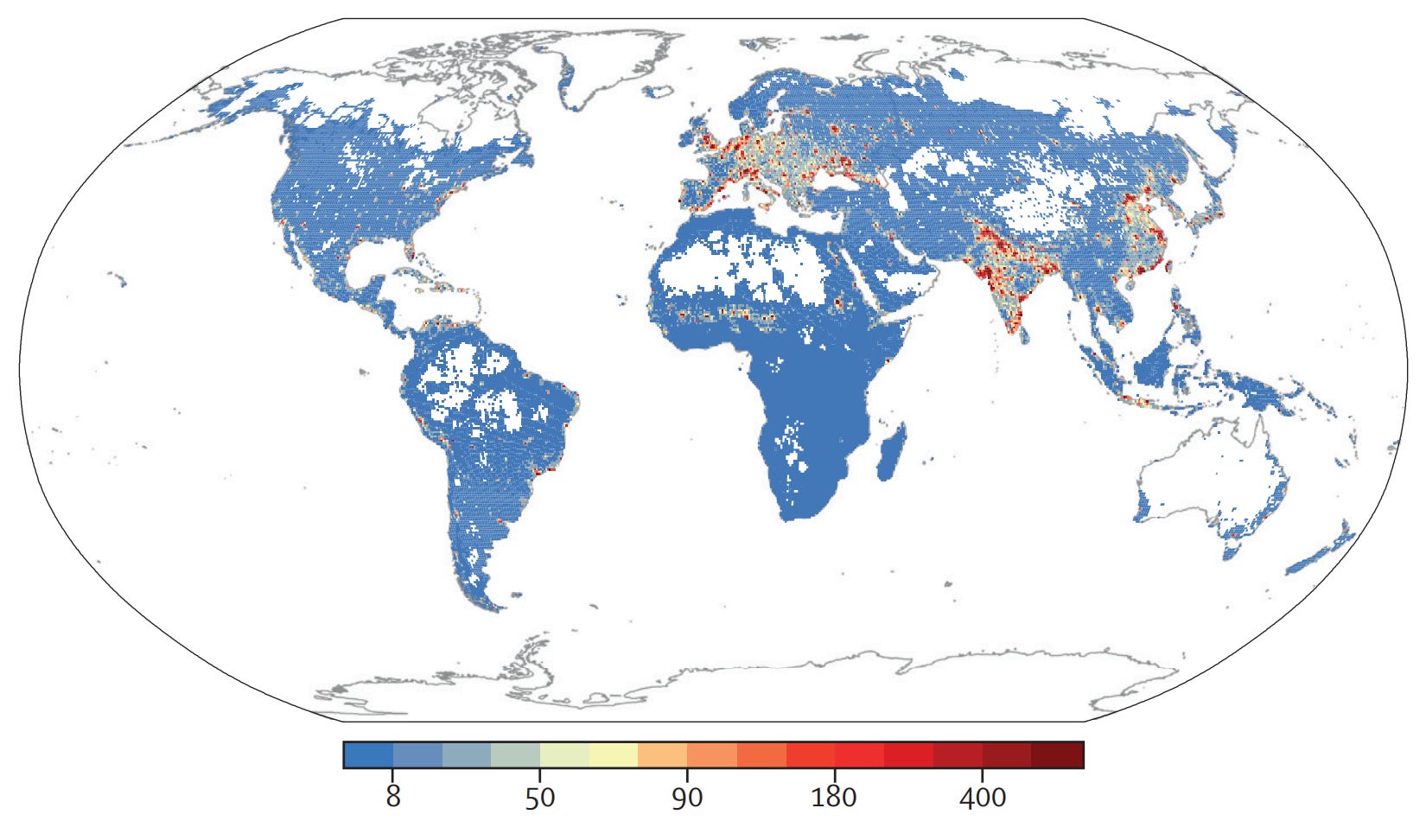
Part of the story is of course demographic. Europe has one of the oldest populations in the world, and the elderly are far more vulnerable to high temperatures. But age explains only a sliver of the gap. The United States is greying too, and Japan is older still than both—yet the risk of dying from heat in either country is dramatically lower.
The real explanation comes down to two letters Europe stubbornly refuses to learn: A/C. Across the continent, only about a fifth of homes have air conditioning, against nearly 90 percent in the United States and more than 90 percent in Japan (See this excellent post by Kevin Kohler from Machinocene, from which I’m borrowing liberally throughout this piece. Follow him!)
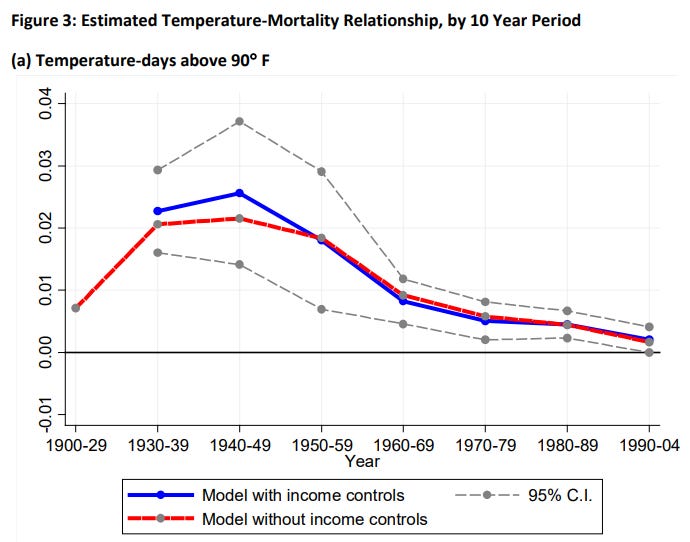
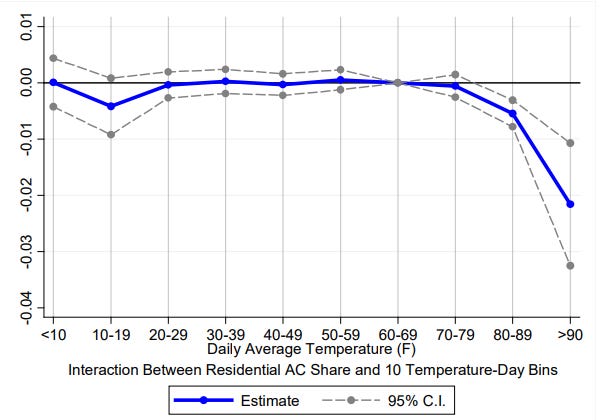
Anyone who doubts the causal link should consult the historical record. The economist Alan Barreca has shown that the risk of death on extremely hot days in the United States fell by roughly 75 percent over the twentieth century—a decline that happened in lockstep with the mass adoption of air conditioning after 1960. In his words: “the adoption of residential air conditioning explains essentially the entire decline in the temperature-mortality relationship.”
Here’s the historical trend in the relationship between extreme heat and mortality in the U.S.:
And the direct impact of residential A/C on that heat-mortality relationship:
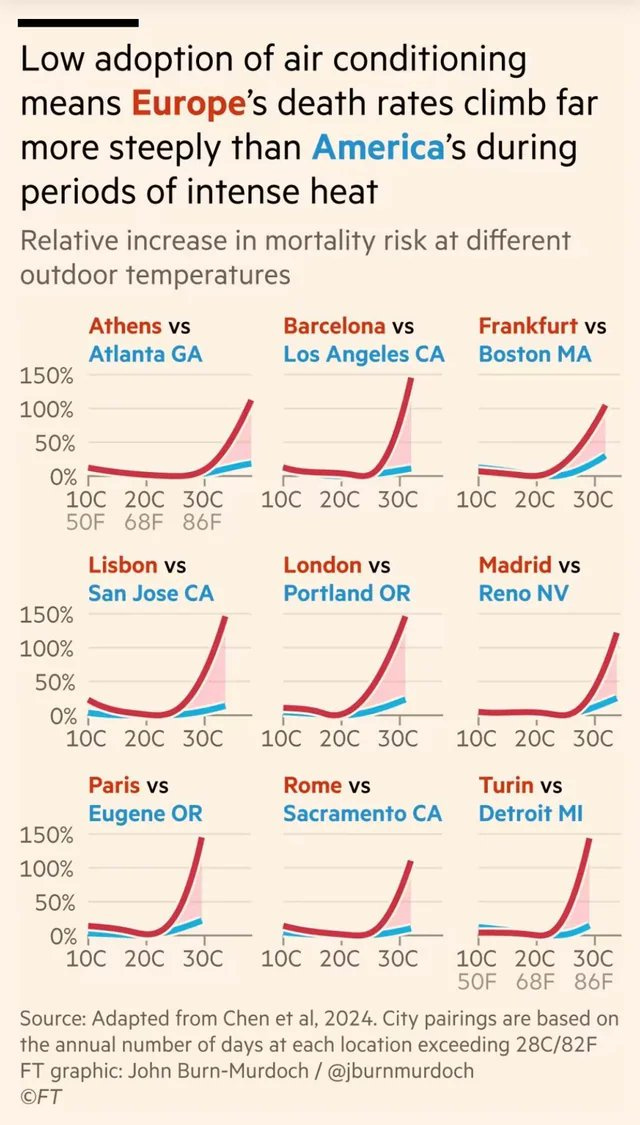
In Texas, where summer temperatures routinely climb past 40°C (104°F), your odds of dying from extreme heat are barely higher than on any ordinary day. In Paris or Amsterdam, by contrast, where the authorities declare heat emergencies at a balmy 27°C (81°F), they are far higher.
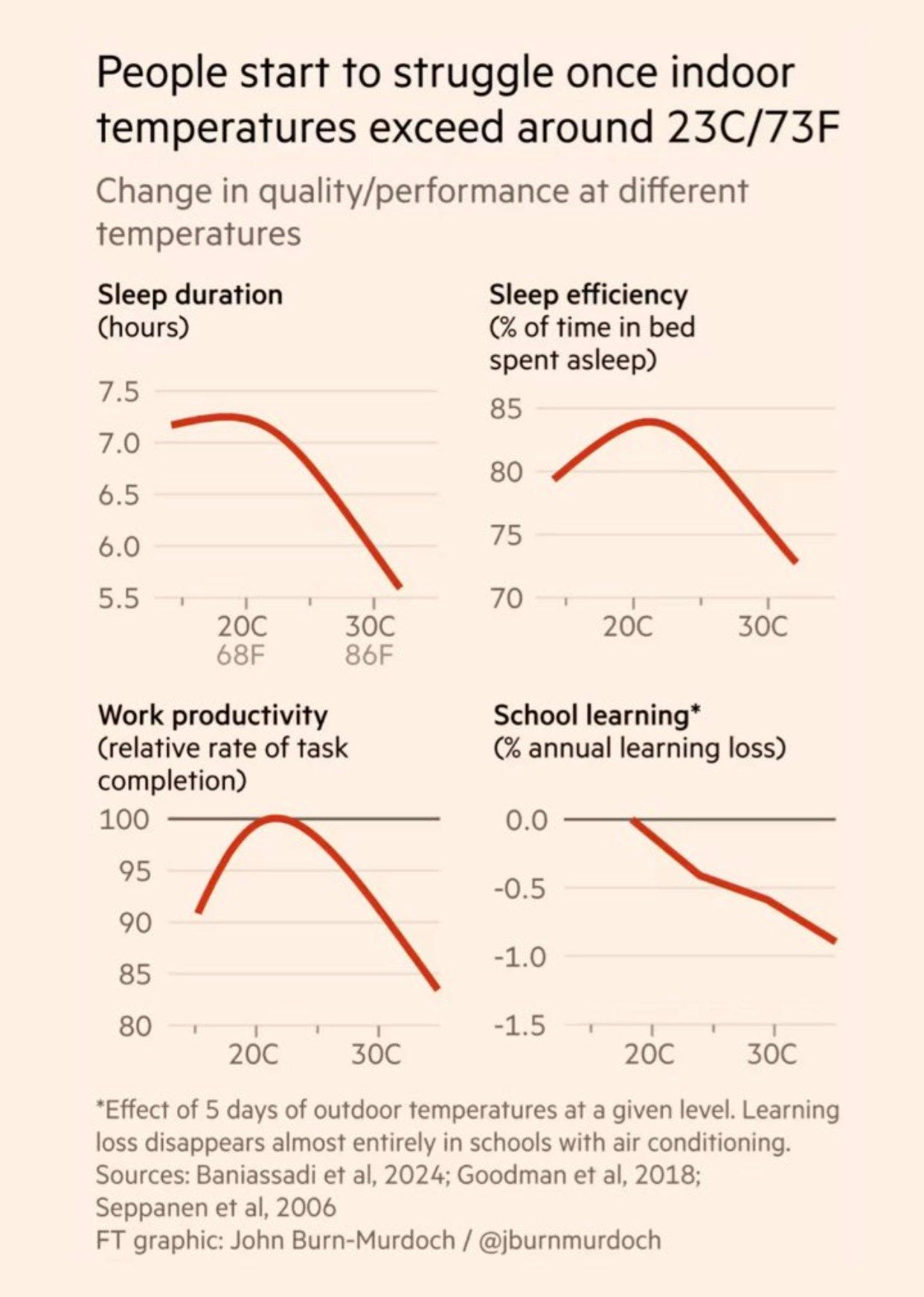
Nor does heat affect only the old. For every degree above 25°C (77°F), our cognitive performance declines by around two percent. And if synapses suffer, so does economic activity. At 30°C, office performance drops by almost 9 percent. Lee Kuan Yew, the architect of modern Singapore, was once asked to name the secret of his tropical city-state’s economic miracle. His answer consisted of the same two letters, A/C, which he hailed as one of the signal inventions of history. By keeping the heat outside, Singapore could stay productive all year round.

So why does Europe recoil from a technology which the rest of the developed world (and even large parts of the developing world) take for granted? Part of the answer is historical and cultural. Northern Europe in particular, with its cool climate and mild seasonal swings, had little need for cooling until a few decades ago. But that excuse no longer cuts much ice. The deeper cause is an ideological “less is more” sensibility, more potent in Europe than anywhere else, which frames artificial cooling as a decadent indulgence—something for profligate Yankees with oversized SUVs and backyard pools.

That this instinct is especially rampant among European progressives is even more puzzling. Leftists of old such as Karl Marx and Sylvia Pankhurst dreamed of universal abundance and denounced the scarcity mindset; they wanted the masses to share in the comforts once reserved for the rich, not to ration them in the name of nature or virtue. Today’s green gospel of restraint quietly inverts that aspiration, with comfort itself becoming suspect.
In practice, Europeans of all ages are told to suck it up and sweat it out. France would sooner close its schools in a heat wave than fit them with devices that demonstrably improve concentration and learning. In the Swiss canton of Geneva, installing an air conditioner requires an exceptional permit demonstrating “real need” (such as a doctor’s certificate). During the recent energy crisis, Spain and Italy barred public buildings from cooling below 27°C—hot enough to dull your cognitive powers by 5 percent. In the midst of the current deadly heat wave, my own city of Ghent is officially advising people to “avoid air-conditioners”.

The resistance is baked into European regulation. In many countries a conventional air conditioner lowers your building’s energy rating. The result is entirely predictable: owners and landlords decline to install units, or rip out the ones they have. Those left without built-in cooling fall back on drafty, inefficient portables that can scarcely make a dent in the temperature. I own one myself—a wheezing box with a fat hose shoved through a rickety fabric covering the window. It is the thermodynamic equivalent of mopping the floor with the tap running, but that’s simply the direction in which Europe’s regulations have nudged me.
The A/C aversion has even penetrated into the commanding heights of European officialdom. In its public guidance on heat, the World Health Organization mentions air conditioning only in passing and conditionally (“Well, if you must use air conditioning…”). In its statement on the 175,000 heat deaths annually in the WHO’s European region, it says nothing about artificial cooling at all. Instead, citizens are advised to draw the curtains and drink enough water, as though it were still 1955. A 200-page WHO report on heat prevention grants air conditioning a single grudging page, immediately followed by two and a half pages about its “drawbacks.”
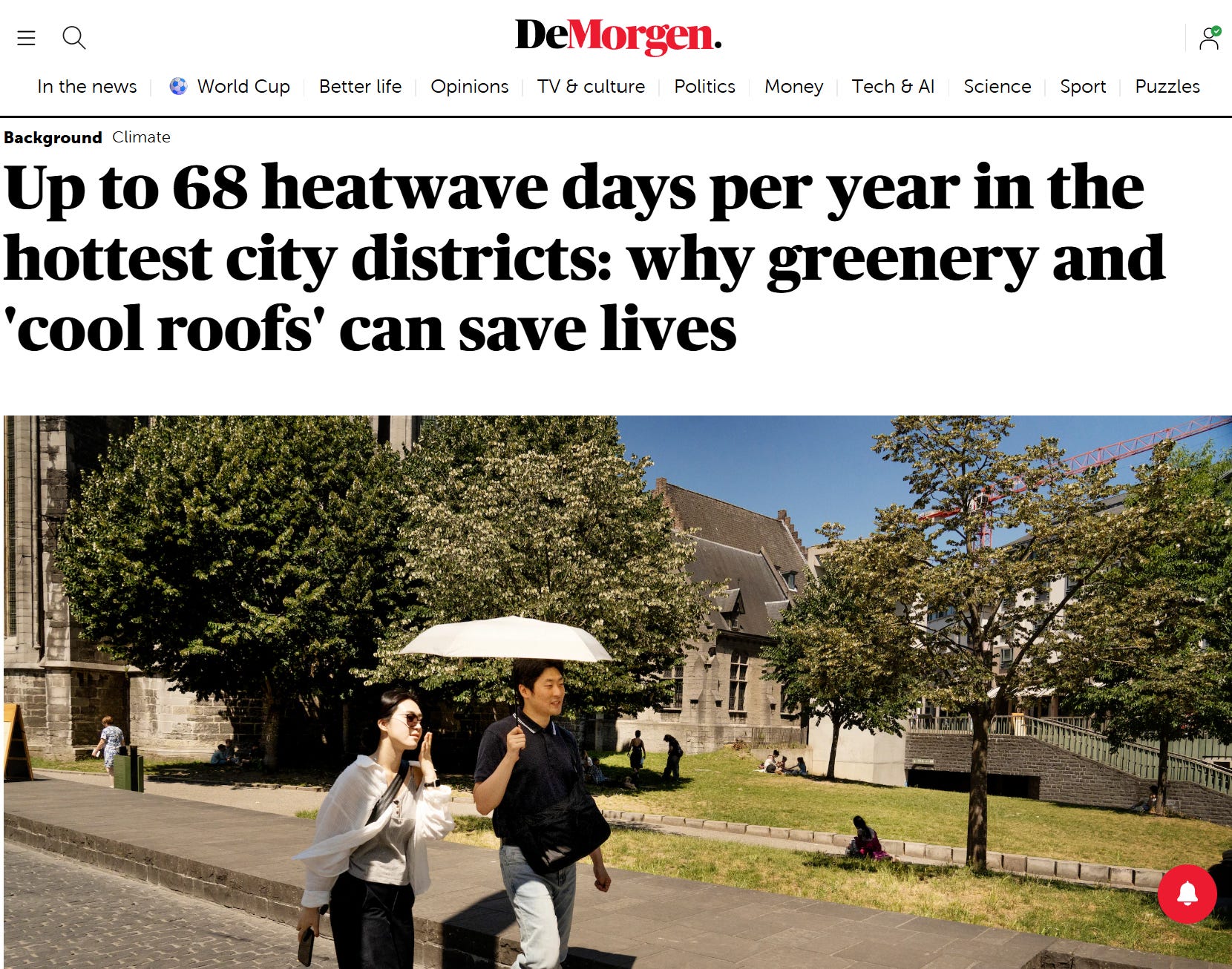
Journalists and academics are little better. One lengthy feature on heat deaths in a Belgian newspaper found room for speculative climate projections about heat days out to 2100, and for half-measures like white roofs and planting trees, but not one mention of the life-saving technology that Lee Kuan Yew celebrated.
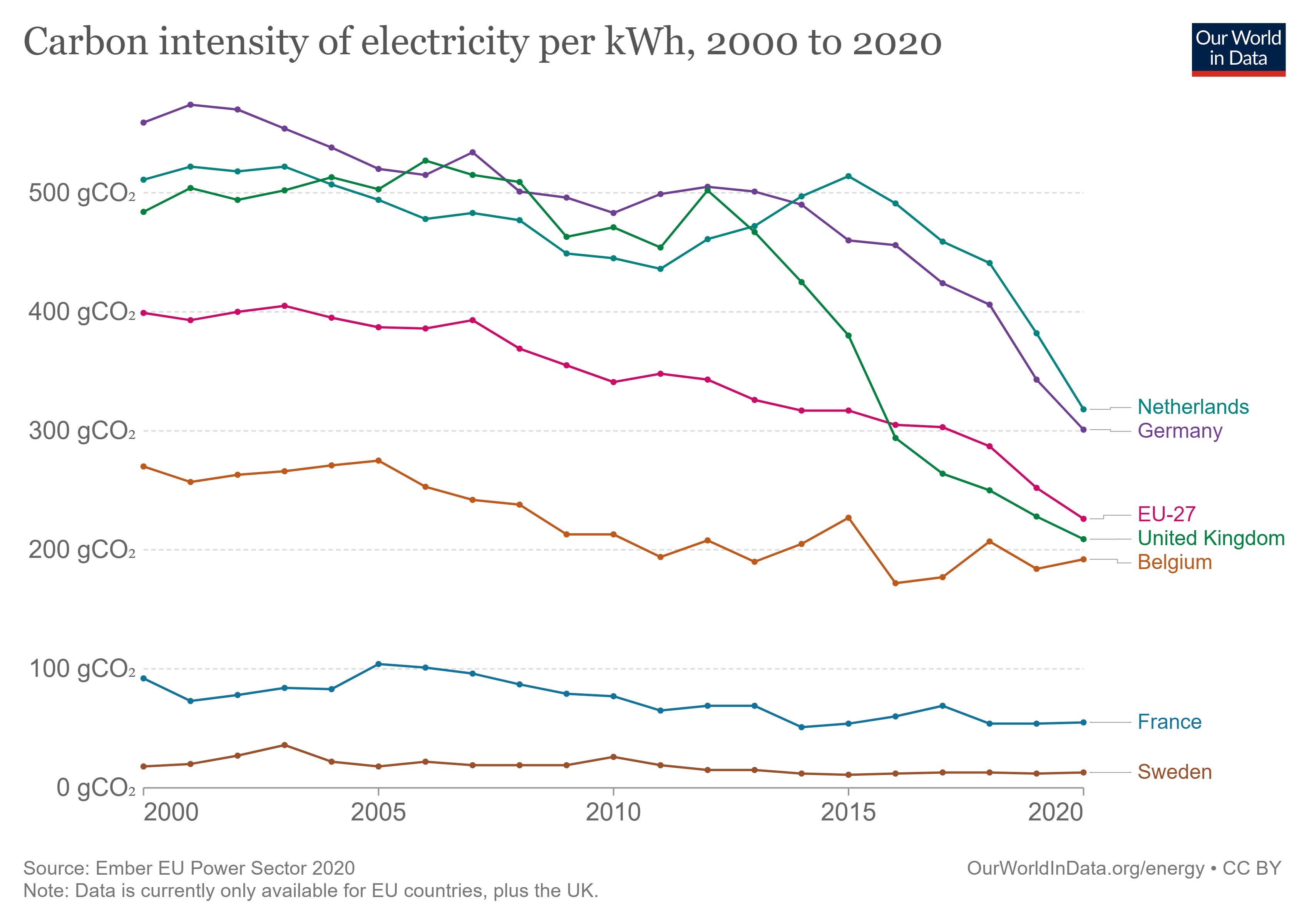
This is a technophobia that costs lives, as the data scientist Hannah Ritchie observes in her book Not the End of the World. In 2020 and 2021, Western governments spent billions protecting the elderly from COVID death. Why, then, is the same vulnerable group denied a cool room in a heat wave? The reflexive objection—carbon emissions—does not survive contact with the numbers. As wealthy economies decarbonise their electricity grids, they have already begun to decouple growth from emissions. Consider that the average European burns far more carbon to stay warm in winter than to stay cool in summer—yet no politician would dream of capping the winter thermostat at 15°C, or of denouncing central heating as a decadent luxury for the soft. As Leigh Phillips wrote: “Apart from its relatively novelty, A/C is morally no different from clothing and fire.”
And yet, despite the moral asymmetry, even heating does not wholly escape the moralists, as cringeworthy rituals like the Dutch “Warm Sweater Day” attest.


The common thread is a lite-version of the degrowth creed: the conviction that energy use is a kind of sin that we should atone for and reduce as much as possible. Until the 1960s, politicians and utilities promised an age of energy “too cheap to meter.” Now Shell, Engie, and EDF buy advertising space to urge customers to consume less of their own product, peddling slogans such as “the cleanest energy is the energy not consumed.” How strange it is for a private company to coach its customers to buy less of what it sells—a commercial squeamishness that makes sense only in the light of the European doctrine of secular penance.

The practical fixes for deadly heat are straightforward: do what the Americans are doing. Reform the energy ratings so they stop penalising air conditioners. Streamline the permits for built-in cooling. Retrofit every care home and hospital ward. Open publicly accessible cooling centres. And accelerate the build-out of clean, reliable electricity—because a Frenchman relaxing in a spacious air-conditioned villa, drawing on nuclear power, still emits less carbon than a frugal German drawing from a coal-fired grid. Grid management beats self-flagellation.
In response to my Quillette piece, one woman had this shocking story to tell about her experience of giving birth in a German hospital:
I’ve been scarred mentally and physically from sweating bedridden after a C-section in a German hospital without AC during a heat wave. And I was extremely fit and strong. I can’t even imagine what it’s like for the truly sick and disabled this entire week. It’s torture. And it’s crazy that the people supposedly in charge of the vulnerable are the ones most opposed to A/C for ideological reasons.

Porkchop Express@Porkchop_EXP
@clairlemon @mboudry He made a very good point about Covid - we shut everything down and sacrificed years of young people’s lives to protect the vulnerable elderly, but the same elderly are suddenly denided protection when it comes to heat. I’ve been scarred mentally and physically from sweating
11:14 AM · Jun 24, 2026 · 2.55K Views
2 Replies · 15 Likes
The harder task for Europeans is the mental switch: to stop treating energy as something to atone for. Energy is the master resource, the thing that buys us nearly every other good. The whole of human history is the story of harnessing ever more energy to improve our lives and to hold the lethal forces of nature at bay. To despise energy is to bite the hand that feeds you.
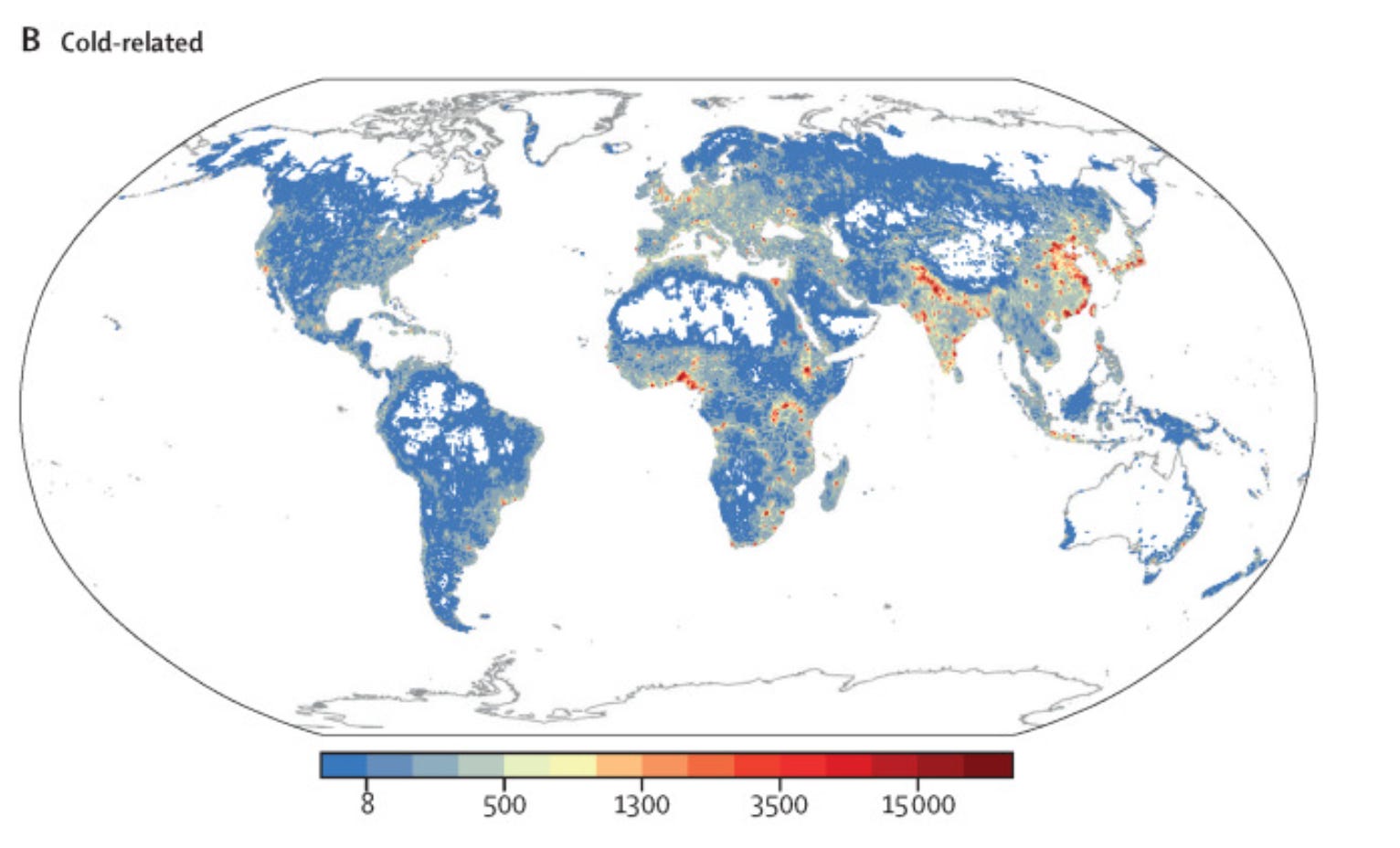
Which brings me to one last trivia question: which continent suffers the most cold-related deaths? It’s neither Europe nor North America, but Africa. Prosperity is what allows us to adapt—to heat and cold alike—and adaptation is what stands between us and an inhospitable nature.
This post is adapted from an opinion piece in the Dutch newspaper Volkskrant, as well as an English translation in Quillette.
Bonus: while the rest of us are melting in the summer heat, my cat Winston Purrchill remains impeccably dressed in his tuxedo, suave as ever.