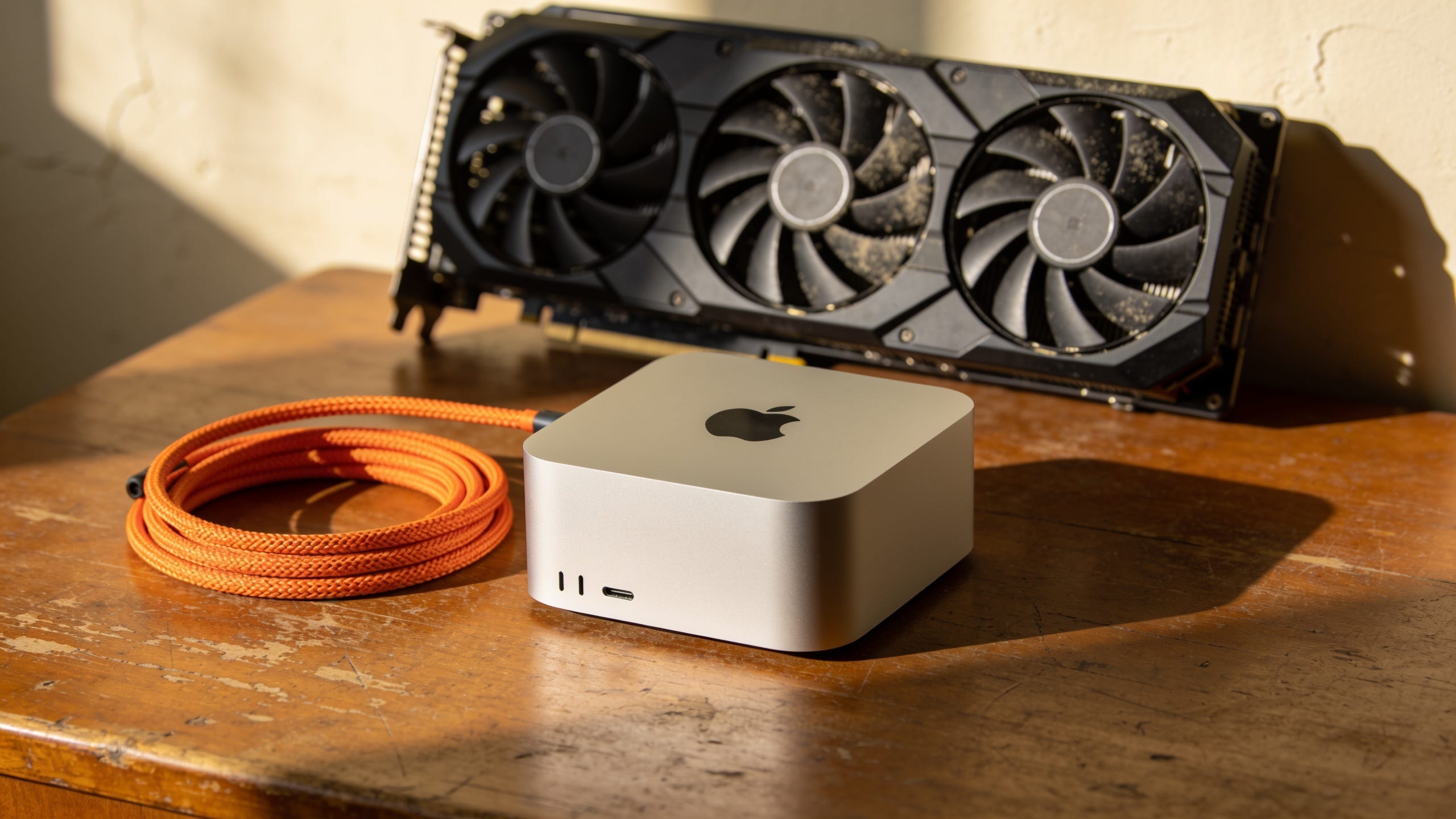
I want this on the record, with a date on it: July 17, 2026. Apple is the number one, undisputed king of AI right now, and almost nobody knows it. NVIDIA is a dead man walking.
I’ve been beating this drum in private for months — in group chats, on calls, to anyone who’d sit still long enough. Every few weeks another headline lands that makes me look a little more like a prophet, and I’m tired of watching my own take show up in other people’s think pieces six months from now. So I’m writing it down. This is an opinion piece. It’s my opinion. It also happens to be correct, and I’m going to show you the receipts.
Here’s how the world currently keeps score in AI: who has the best frontier model, and who sells the chips that train it. By that scoreboard, NVIDIA is untouchable. First company in history to cross a $5 trillion market cap. Revenue up 85% year over year. Jensen Huang on stage in a leather jacket telling everyone there’s “no chance our GPUs end up idle.” The entire S&P 500 is basically a leveraged bet on that sentence being true.
But that scoreboard measures the training race. And the training race is not where this ends. It never was.
The endgame of AI is not four companies renting you intelligence by the token from a datacenter in Virginia. The endgame is intelligence as a commodity — models good enough for 95% of everything, free to download, running on hardware you own, answering to nobody. Every historical technology wave ends the same way: the mainframe becomes the PC, the timeshare becomes the laptop, the cloud becomes the edge. The only people who ever argue otherwise are the people selling mainframes.
Therefore the right question isn’t “who has the best model?” It’s “when the models become free, whose hardware do they run on?”
That question has exactly one answer, and it isn’t Jensen’s.
Let me just recite what happened in open-weight AI over the last five months, because the cadence is the story.
February: Alibaba ships Qwen 3.5, a 397-billion-parameter mixture-of-experts model, weights on the internet. April: DeepSeek drops V4 — 1.6 trillion parameters, MIT-licensed, topping open leaderboards at 80.6% on SWE-bench Verified — and Moonshot ships Kimi K2.6 the same week. June: MiniMax releases M3 with a million-token context window; Moonshot follows with K2.7-Code; and Zhipu releases GLM-5.2 — roughly 750 billion parameters, a million tokens of context, MIT license, no strings — a model that trades blows with closed frontier systems on real coding benchmarks.
And then this week — literally yesterday, July 16 — Moonshot announced Kimi K3: a ~2.8-trillion-parameter model that, per early leaderboard numbers, sits third in the world behind only Anthropic’s and OpenAI’s best closed models. Weights promised public by July 27. Bloomberg’s headline was about China “closing the gap with US rivals.” That’s the polite version. The impolite version is that the gap between “the best model money can buy” and “the best model you can download for free” is now measured in single-digit benchmark points and shrinking every few weeks.
Those are just this week’s models. That’s the part people keep failing to metabolize. This isn’t one lucky release — it’s a cadence. A near-frontier open-weight model now drops roughly every three to six weeks, each one MIT-licensed or close to it, each one better than the last. You cannot moat against a cadence. By the time you’ve priced one release into your worldview, two more have shipped.
So the frontier is commoditizing in real time. Which forces the question the entire market is refusing to ask out loud: where do free frontier models actually run?
Here’s the dirty secret of trillion-parameter models: they’re not compute-bound, they’re memory-bound. A mixture-of-experts model like Kimi or GLM only activates a few dozen billion parameters per token — the compute is almost pedestrian. But the whole model has to sit in fast memory, all trillion-plus parameters of it, waiting. The bottleneck isn’t FLOPs. It’s bytes.
NVIDIA’s answer to “bytes” is VRAM, and VRAM is where their consumer story collapses. The biggest card NVIDIA will sell you — the RTX Pro 6000 Blackwell, the crown jewel of their workstation line — has 96GB. That’s it. That’s the ceiling. A 4-bit quant of GLM-5.2 alone is ~467GB. The card physically cannot hold one modern open-weight frontier model. Not slowly. Not at all.

Apple’s answer is unified memory — one giant pool of fast RAM shared by CPU and GPU, at 819GB/s of bandwidth on the M3 Ultra. Apple shipped a Mac Studio you could configure with 512GB of it, for about $9,500, drawing a couple hundred watts at the wall. And the software caught up fast: MLX, Apple’s machine-learning framework built specifically for that architecture, plus a community that quantizes every major release within days of the weights dropping.
The receipts are public. DeepSeek’s 671-billion-parameter V3 runs at 20+ tokens per second on a single 512GB Mac Studio. Kimi K2 Thinking — a trillion-parameter model — runs at ~15 tokens per second on two of them. GLM-5.2, one of this summer’s frontier-class releases, fits on one box at 4-bit. A machine that plugs into a normal wall outlet, makes less noise than your refrigerator, and runs a model that would have been the best AI on Earth eighteen months ago — with the door closed and the internet cable unplugged.
There is no NVIDIA product that does this. Not at any price you or I will ever pay. To match 512GB of model-addressable memory with NVIDIA workstation cards, you’d need five to six RTX Pro 6000s. Hold that thought, because the math is about to get ugly.
Let’s price the two roads honestly, because I don’t need to exaggerate anything — the honest numbers are damning enough.
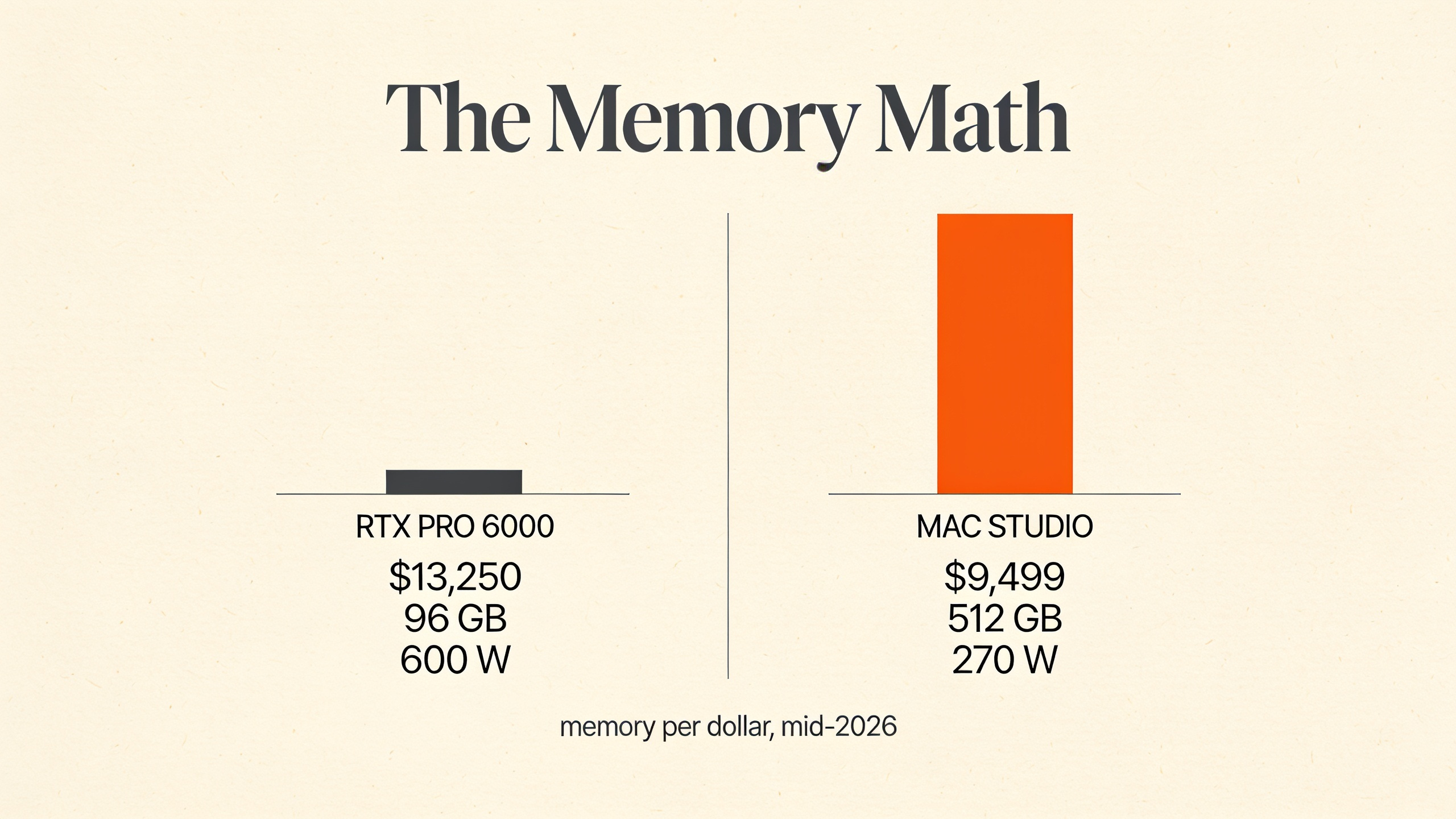
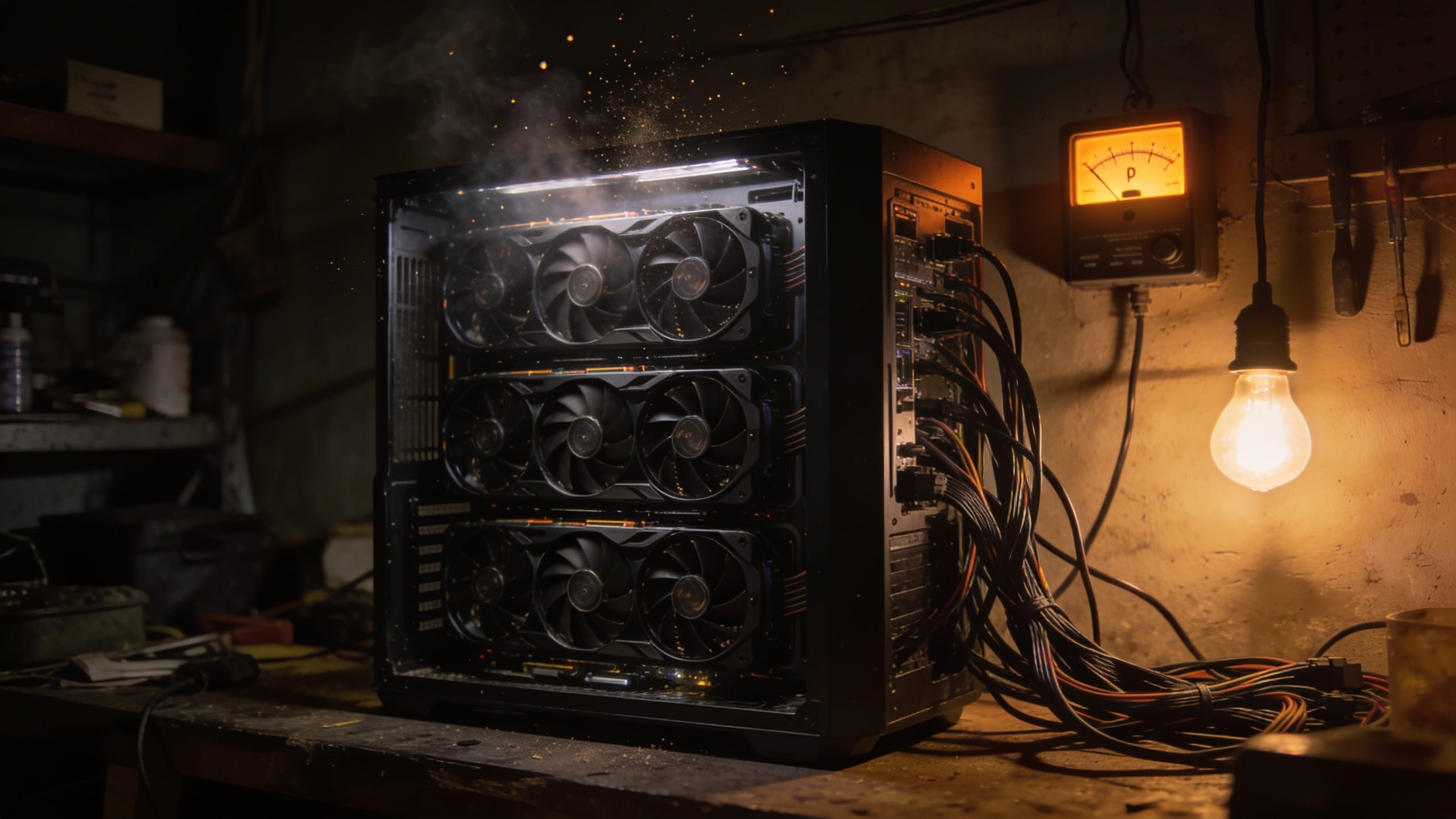
The NVIDIA road. The RTX Pro 6000 Blackwell launched at $8,565 in March 2025. NVIDIA’s own marketplace now lists it at $13,250 — a 55% price hike in sixteen months, driven by the GDDR7 memory shortage. For your thirteen grand you get 96GB and a 600-watt card. To match one 2025 Mac Studio’s memory you need five or six of them: call it $60,000–75,000 built into a workstation, pulling close to three kilowatts under load — a space heater that requires you to think about your home’s electrical circuits. Running that rig around the clock costs on the order of $360–400 a month in electricity at average US rates, and if you live somewhere with California power prices and count the air conditioning fighting three kilowatts of heat, you’re brushing four figures a month. The machine costs you a car, then bills you rent.
The Apple road. The 512GB Mac Studio: about $9,500. Total. It sips roughly 200–270 watts under sustained inference — call it $25–35 a month running around the clock. One-tenth the energy of the GPU rig that matches its memory. No 240-volt circuit. No server room. It sits on a desk and looks like a large deck of cards.
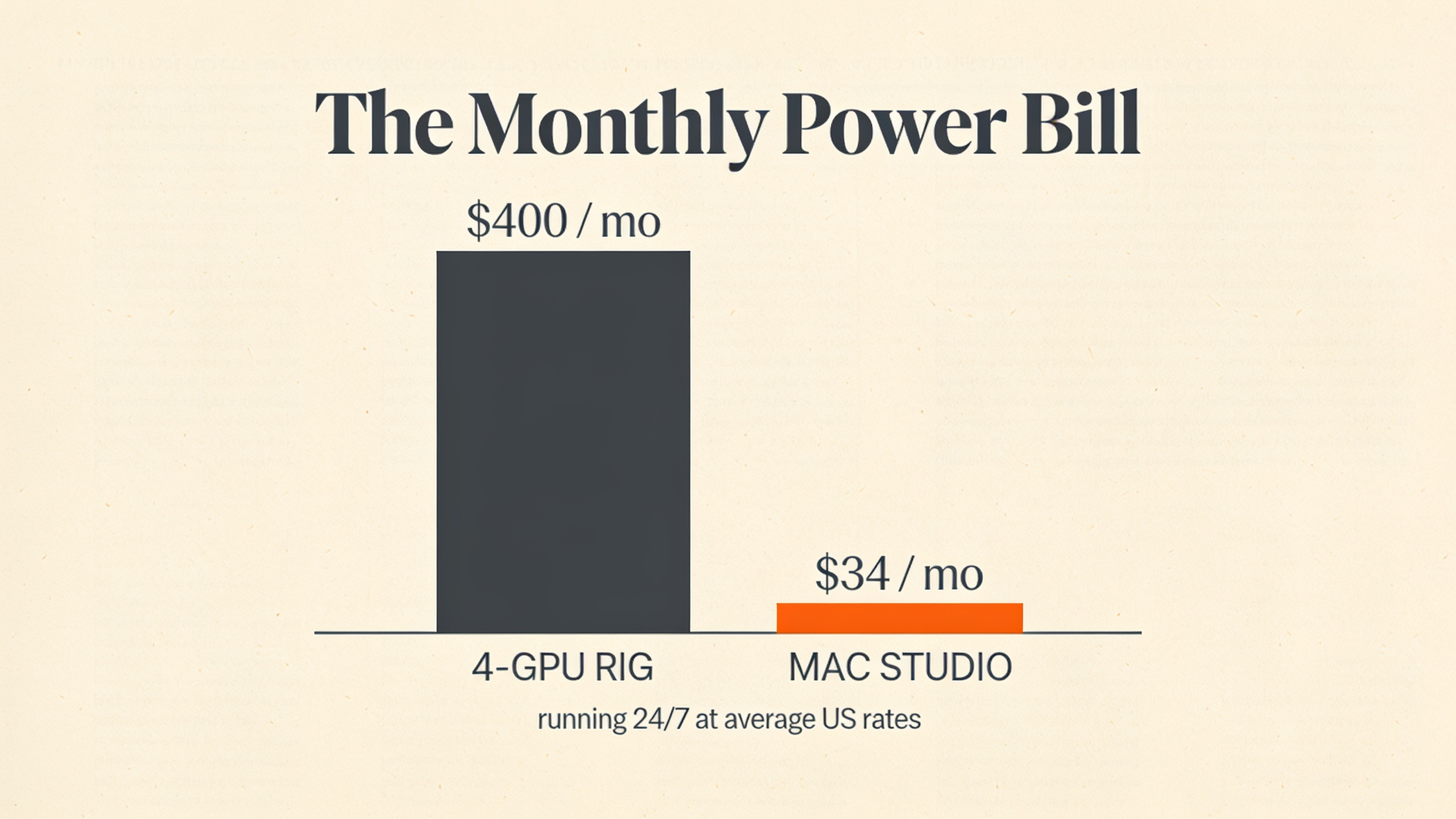
Same memory capacity. One-sixth the price. One-tenth the power. That’s not a spec-sheet quibble — that’s two different civilizations. And people are starting to notice: right now the demand curve still says “everybody wants a GPU from Jensen,” but that changes fast once buyers see the total cost of ownership. Hardware that costs 6x as much and bills you monthly doesn’t stay beloved. It becomes toxic.
And before someone emails me: yes, I know you can’t buy the 512GB Studio today — I’ll get to that in a minute, because it makes my case stronger, not weaker.
“Fine,” says the NVIDIA guy, “but you can chain GPUs together.” Can you, though? Here’s a detail almost nobody outside the hardware forums has clocked: NVIDIA removed NVLink from its workstation cards. The RTX Pro 6000 Blackwell — thirteen thousand dollars — cannot high-speed-link to its neighbor at all. Multi-GPU on NVIDIA’s flagship workstation card means shouting across the PCIe bus like everyone else. Real NVLink lives exclusively in the server room now, inside HGX trays that start in the hundreds of thousands of dollars, plus InfiniBand switches, plus optics, plus a networking engineer.
Apple’s interconnect story is a $69 Thunderbolt 5 cable. Third-party ones are $25.
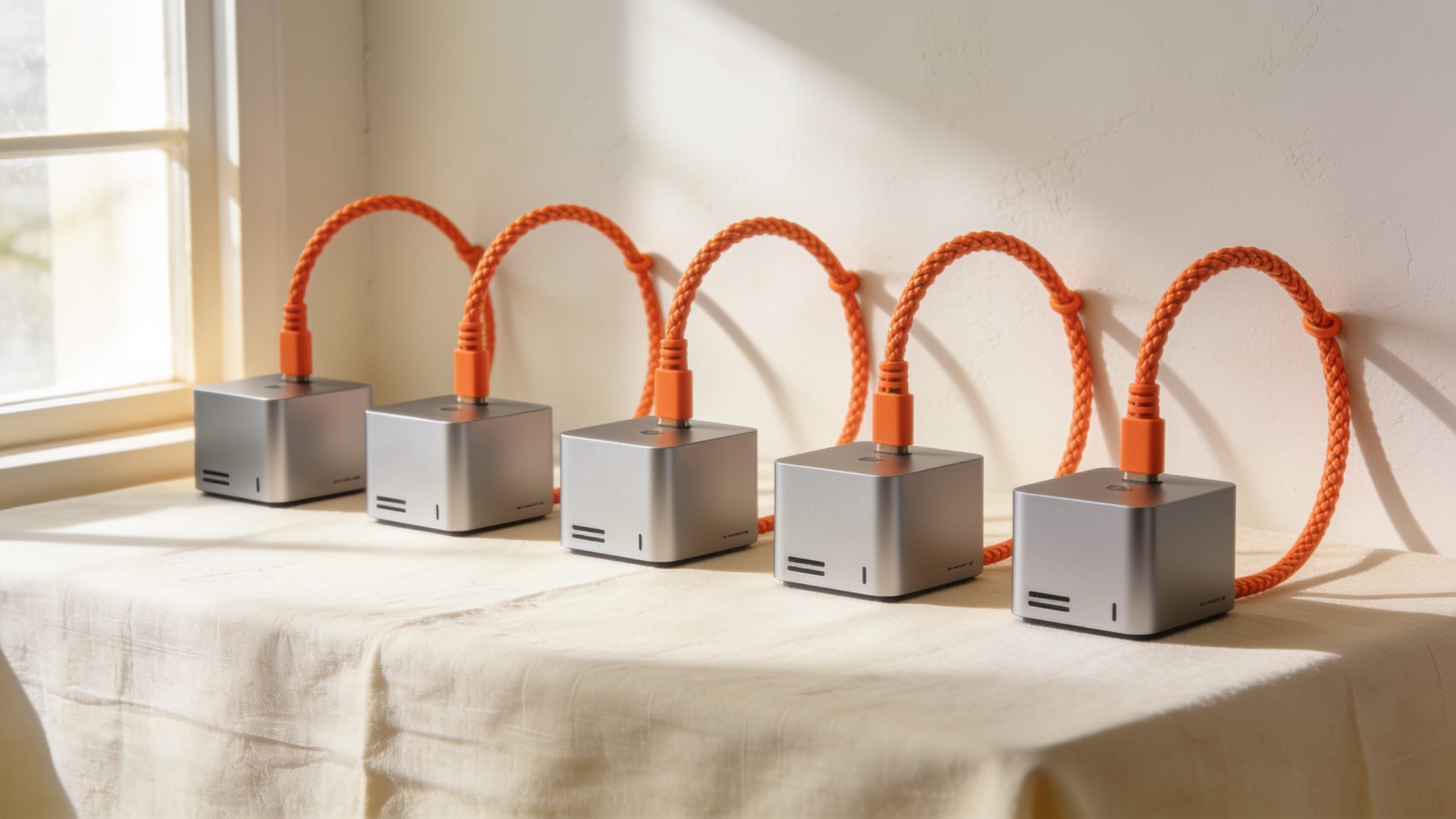
And it’s not a toy. MLX has native distributed inference. EXO’s 1.0 release shipped RDMA over Thunderbolt 5 — direct memory access between Macs, cutting inter-machine latency from 300 microseconds to 3. People are chaining Mac Studios on desks and running models that don’t fit in any single machine on Earth. A four-Mac cluster — roughly $40K, connected by cables that cost less than dinner — runs Kimi K2 Thinking, a trillion-parameter frontier-class model, at 25 tokens per second with 120,000 tokens of context. When Kimi K3’s weights land on July 27 at a projected ~650GB–1TB quantized, no single consumer box on the planet will hold it. A few tethered Mac Studios will.
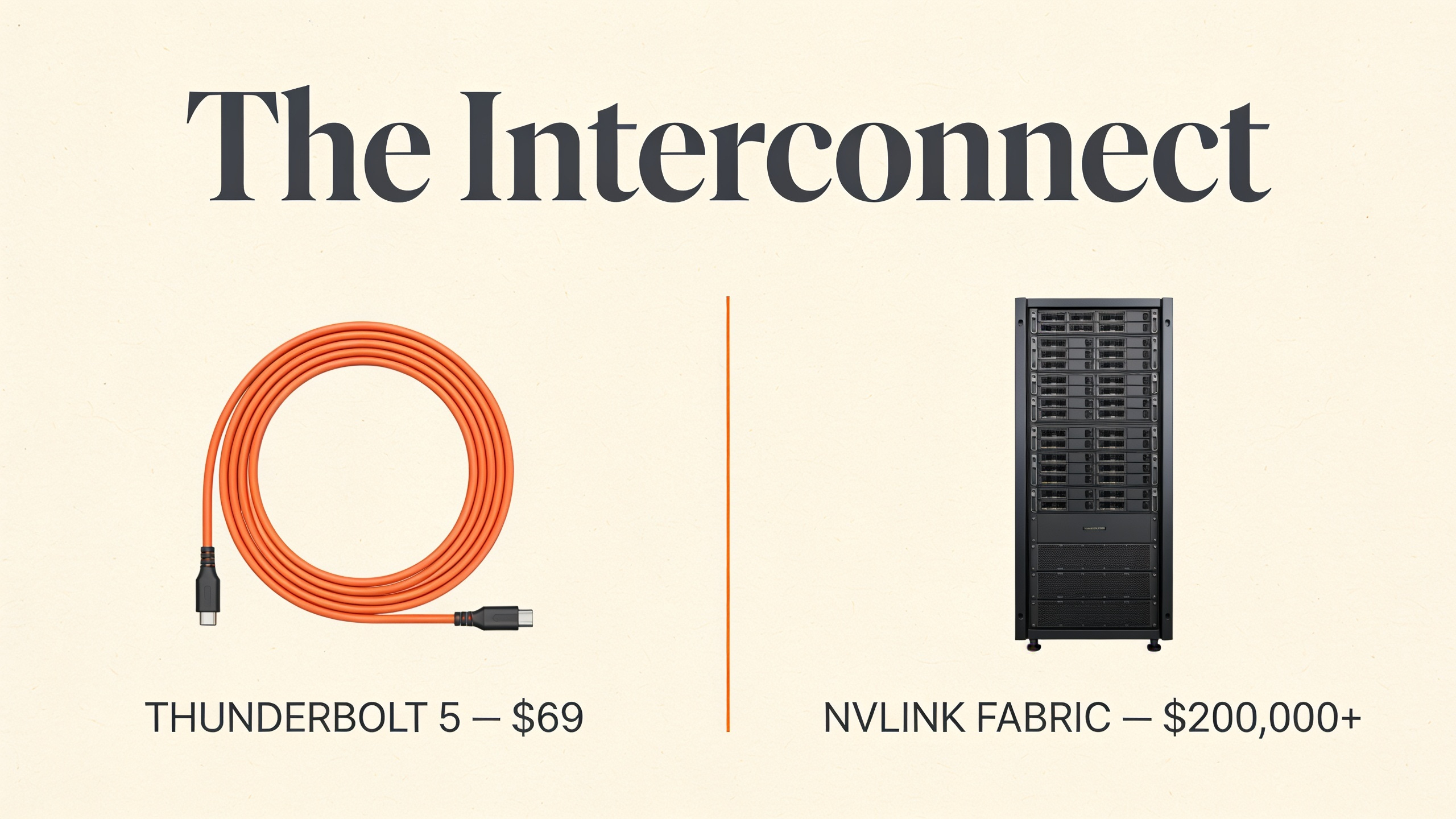
Sit with that comparison. On one side: a $40,000 stack of consumer computers connected by phone-charger cables, running a near-frontier model in someone’s home office. On the other: the same class of workload requiring a small datacenter, an interconnect fabric that costs more than a house, and a power contract.
Which of those scales down to a million ordinary businesses? Which one scales down to you?
Now zoom out, because this is where it stops being a hardware review and starts being a market call.
NVIDIA’s $5 trillion valuation is not a bet on GPUs. It’s a bet on a world — a world where intelligence is permanently centralized, where every AI query on Earth routes through a hyperscale datacenter, forever, and where the four biggest tech companies therefore have no choice but to hand Jensen $600 billion a year in perpetuity. That’s the “AI factory” story. Everything hangs on it.
Look at the actual numbers underneath it. The big five hyperscalers have guided to $635–690 billion in combined 2026 capex. Capex is growing 46% faster than the revenue it’s supposed to generate — a wider gap than the telecom bubble of 2001, and I’d remind you how that one resolved. Moody’s counted another ~$662 billion in signed data-center leases that haven’t even commenced yet, sitting off balance sheets. Amazon’s free cash flow is projected to go negative this year. Fewer than 40% of enterprises have scaled AI past the pilot stage. And in June, B200 rental prices fell 31% in three weeks — the clearest possible signal that compute supply is outrunning workload demand. NVIDIA’s stock dropped 18% from its May peak while posting record earnings. When record earnings can’t hold the price, the market isn’t pricing earnings anymore. It’s pricing the story. And the story has a leak.
Because every trend line in this post points the same direction: the models are free, the memory-fat hardware is consumer-priced, and the inference — the actual work of AI, the billions of daily queries that the datacenter build-out is supposed to serve — is learning to happen at home. Every query that runs on a Mac in Cleveland is a query that never touches a hyperscale GPU. It doesn’t take all of them moving local to break the model. It takes the margin. Overbuilt infrastructure priced for infinite demand plus demand that quietly walks out the door — that’s not a correction, that’s a repricing.
If Apple has its way, hyperscaling as the default architecture of AI is dead. Not dead like it disappears — dead like the mainframe: still humming in the basement for training runs and big enterprise, while the actual life of computing happens somewhere else.
First: the memory war, and Apple’s Chinese endgame. Here’s the fact that sounds like it hurts my thesis and actually completes it. The global DRAM shortage got so brutal — AI datacenters ate the supply; contract prices up 50–170% — that Apple pulled the 512GB and 256GB Mac Studio configs this spring. Today the M3 Ultra tops out at 96GB. Meanwhile the same shortage jacked NVIDIA’s flagship card price 55%. The entire AI hardware war has collapsed into a war over memory supply. So what is Apple doing about it? They’re qualifying DRAM from CXMT — ChangXin Memory Technologies, China’s biggest memory maker, whose chips come in 10–30% below what Apple pays today — and they’ve been lobbying Washington since May for approval to use them, Pentagon blacklist and all. That’s not a company retreating from big memory. That’s a company securing its own artillery supply before the next offensive. The M5 Ultra Mac Studio is expected within months, with internal testing rumored up to 768GB of unified memory. Apple didn’t leave the big-memory business. It went to go get more bullets.
Second: nobody trusts the centralized bet anymore. The uncertainty hanging over US frontier AI — regulatory whiplash, export rules reversing every quarter, the circular-financing questions around the biggest labs, an entire market debating “bubble or not” in public — is exactly the environment where enterprises and governments start wanting AI they possess instead of AI they rent. An MIT study found 95% of enterprise AI pilots produce zero ROI. You know what changes that calculus? Not a bigger API bill. A one-time $10K box that runs an MIT-licensed model on your own data behind your own firewall, where the cost of experimenting rounds to your electric bill.
Third: the machine the feds famously can’t crack. Apple is the company that told the FBI no in open court and made it stick — the Bureau had to pay over $1.3 million for a third-party exploit to open one iPhone. A decade later, forensic vendors’ own leaked docs show current iPhones sitting in the “in research” column, which is industry-speak for “we can’t get in.” Now extend that reputation to AI. A local model on Apple hardware means your prompts, your documents, your company’s institutional brain — none of it ever crosses a wire. There is no server to subpoena, no logs to leak, no retention policy to trust.
The most private inference in the world is the query that never leaves your house.
For medicine, law, finance, government — for anyone whose data is their business — that’s not a feature. That’s the product.
I’m not going to pretend Jensen Huang is dumb. He’s the greatest hardware salesman alive and NVIDIA will mint money on training clusters for years. Training stays in the datacenter, CUDA remains a real moat with researchers, and the labs will keep buying Blackwell by the acre. Fine. All of that can be true while the thesis holds, because training is the cost center and inference is the volume market. Being the king of training while inference goes local is being the king of a shrinking share of a market you used to own outright.
What I’ll say is that Jensen is overconfident, and his overconfidence has a specific shape: he needs you to believe demand for centralized compute is infinite, at the precise moment his biggest customers’ capex math is going sideways and rental prices for his newest chips are falling double digits in a month. “There’s no chance our GPUs end up idle” is not analysis. It’s a guy whose entire valuation depends on GPUs not ending up idle, telling you they won’t.
But here’s my favorite piece of evidence, the tell I’d point to if I could only pick one: watch what NVIDIA sells now. The DGX Spark — Jensen’s new “personal AI supercomputer” for your desk — is a small quiet box with 128GB of unified memory shared between CPU and GPU. Sound familiar? It’s a Mac Studio. NVIDIA, the company whose entire empire is built on discrete GPUs with discrete VRAM in centralized racks, is now shipping Apple’s architecture, at Apple’s form factor, aimed at Apple’s use case — and even Jensen has started musing that “an AI supercomputer could become common in the home,” name-checking Apple’s M-series as laying the groundwork. The king of the datacenter is hedging into my thesis with his own product line. When your opponent starts copying your homework mid-argument, the argument is over.
So let me say it one more time, cleanly, so it’s easy to quote later.
The models went free, and they’re getting better every three weeks. The only consumer hardware civilization that can hold them is Apple’s — cheaper per byte of model memory by multiples, cheaper to feed by an order of magnitude, clusterable with a $69 cable, private by architecture, and about to get a lot bigger on memory if the CXMT play lands. The hyperscale build-out that justifies NVIDIA’s $5 trillion assumes none of this matters. It matters. It’s the whole game.
Apple is the king of AI, and nobody knows it yet. NVIDIA is a dead man walking — not because the products are bad, but because the future its price requires is quietly failing to arrive.
Timestamp · 07.17.2026
I said it here, in writing, so that when your feed fills up with this exact take wearing someone else’s byline, you’ll know where it came from.
I’ll keep beating the drum as the writing on the wall gets bigger — the K3 weights drop on the 27th, the M5 Ultra is coming, and the CXMT decision is pending, so there will be plenty to say. Subscribe and you’ll get each “I told you so” the day it becomes true.