If you live in the Americas, you’re likely used to the occasional escape to the countryside. Whether it’s camping, visiting a fishing resort, or whether you live in a rural region, you can relax surrounded by landscapes untouched by human hand. Except that there are no such landscapes.
It’s hard now to express the seismic shift that Alfred W. Crosby’s 1986 book Ecological Imperialism had on me. I’d grown up in rural Canada and how I experienced the prairie ecosystem was second-nature. Reading this book was like having a bomb go off in my perceptual system—imagine that you’ve suddenly forgotten what a building is, and then walk into one for what seems like the first time. The term we use for this experience in Foresight is strangemaking. Few books I’ve read have transformed the comfortable and familiar into something strange and mesmerizing as this one did.
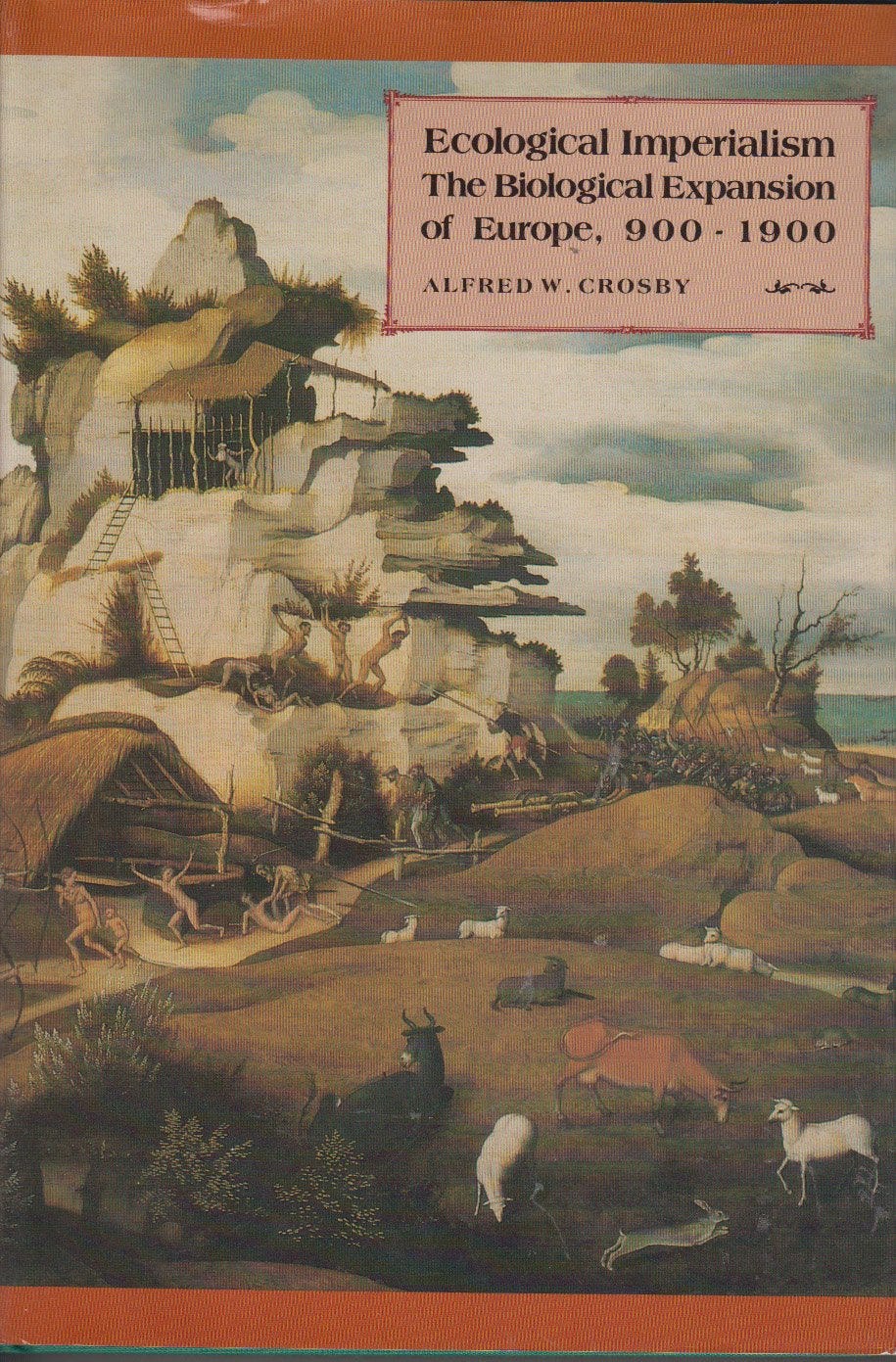
The full title of Crosby’s book is Ecological Imperialism: The Biological Expansion of Europe, 900-1900. Crosby has a simple premise that he backs up with a lot of evidence: that the European conquest of the New World was not accomplished by human beings. Indeed, the Americas were unconquerable through military force or the technologies available to Europeans. Europeans were not ‘superior’ in any way to the civilizations of the New World. The Vikings tried to gain a foothold in Newfoundland, and failed miserably. It’s usually assumed that their supply chains were long and unreliable, and that the settlers ran into hostile locals who wiped them out. And we smugly assume that since the Vikings lacked guns and other proto-industrial technologies, they just weren’t up to the job. But it’s a lot more complicated than that. In fact, they failed because they brought only themselves to Canada. European human beings alone—no matter how many they imported—just could not survive in America, much less conquer it. They needed help, and it took centuries for them to find it.
If it wasn’t European humans that conquered the Americas, then what was it? According to Crosby, it was the European ecosystem. Only when the Portuguese, Spaniards, and English started importing their own animals, plants, and microbes were they able to settle and survive. And they themselves did very little ‘conquering.’ Before 1492, the population of the Americas was around 100 million people. By the time European settlement started, only about seven million were left. The rest had been killed by European plagues in a mass-dying that makes Europe’s experience of the Black Death look like a mild cold in comparison. The new arrivals never encountered the pre-Columbian civilizations of the New World; the people they met were post-apocalyptic survivors eking out a living in the ruins. That they were still complete societies, and not some sort of Mad Max diaspora of isolated survivors, is a testament to the resilience and sophistication of the cultures they descended from.
That human side of the conquest is explored magnificently by Charles C. Mann in his books 1491 and 1493. Both are part of my library. But Ecological Imperalism has a slightly different focus—and it’s that focus on the whole ecosystem that makes this book so staggering.