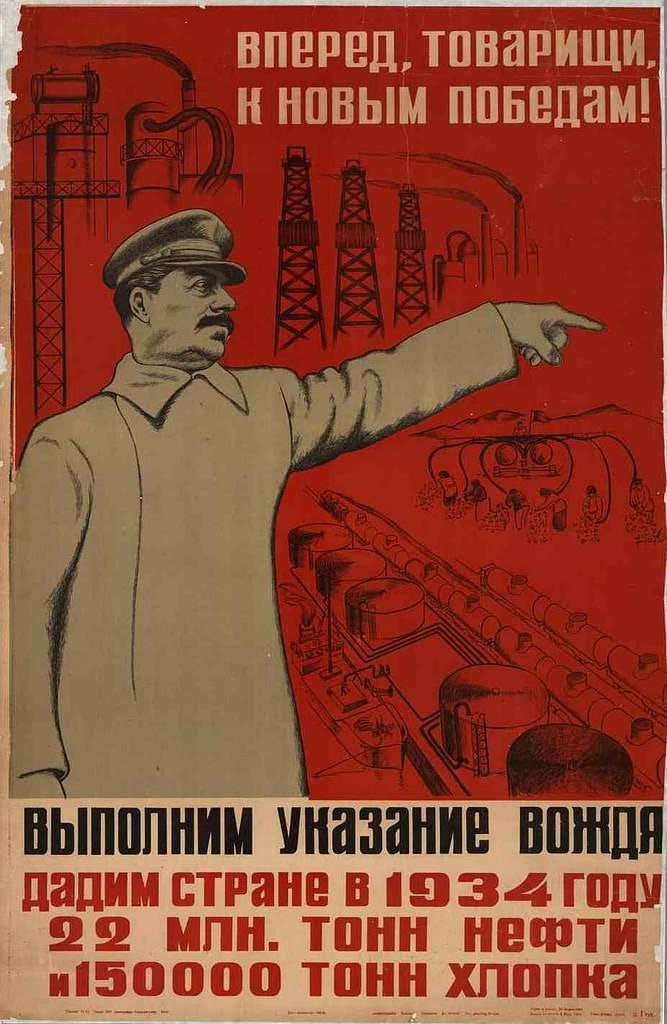
The spring of 1953 was hopeful in Prague. Stalin, the merciless overlord of the lands east of the Iron Curtain, was dead, dying the same way that he lived1. His Czechoslovak lackey, Klement Gottwald, proved so loyal that he, too, died just two weeks later, following his master to wherever the Comintern crew go when their time is up. The new President, Antonín Zápotocký, was no liberal, but transitions of power usually come with a period of insecurity and the grip of the regime on the population weakened considerably. No one knew which way the future Soviet leadership would go.
Nevertheless, there was another disaster in the making, which would hit the Czechoslovak population soon. This time, an economic one.
Prior to the Communist takeover of 1948, the Czech lands were one of the most industrially developed regions of Europe. Slovakia, inherited from the agricultural Hungarian Kingdom in 1918, had a lot of catching up to do, but with massive investments underway, it was showing promising signs of development. After the war, even the most remote Slovak villages were connected to the grid, and new industrial projects proliferated.
As early as 1945, the still-sort-of-democratic government, where the Communists held only a third of all ministries2, started nationalizing various sectors of the national economy, such as coal mining and production of steel. Heavy industry was of special ideological importance to the Communists, as its workers formed the backbone of the Party, including its armed wing - the People’s Militias.
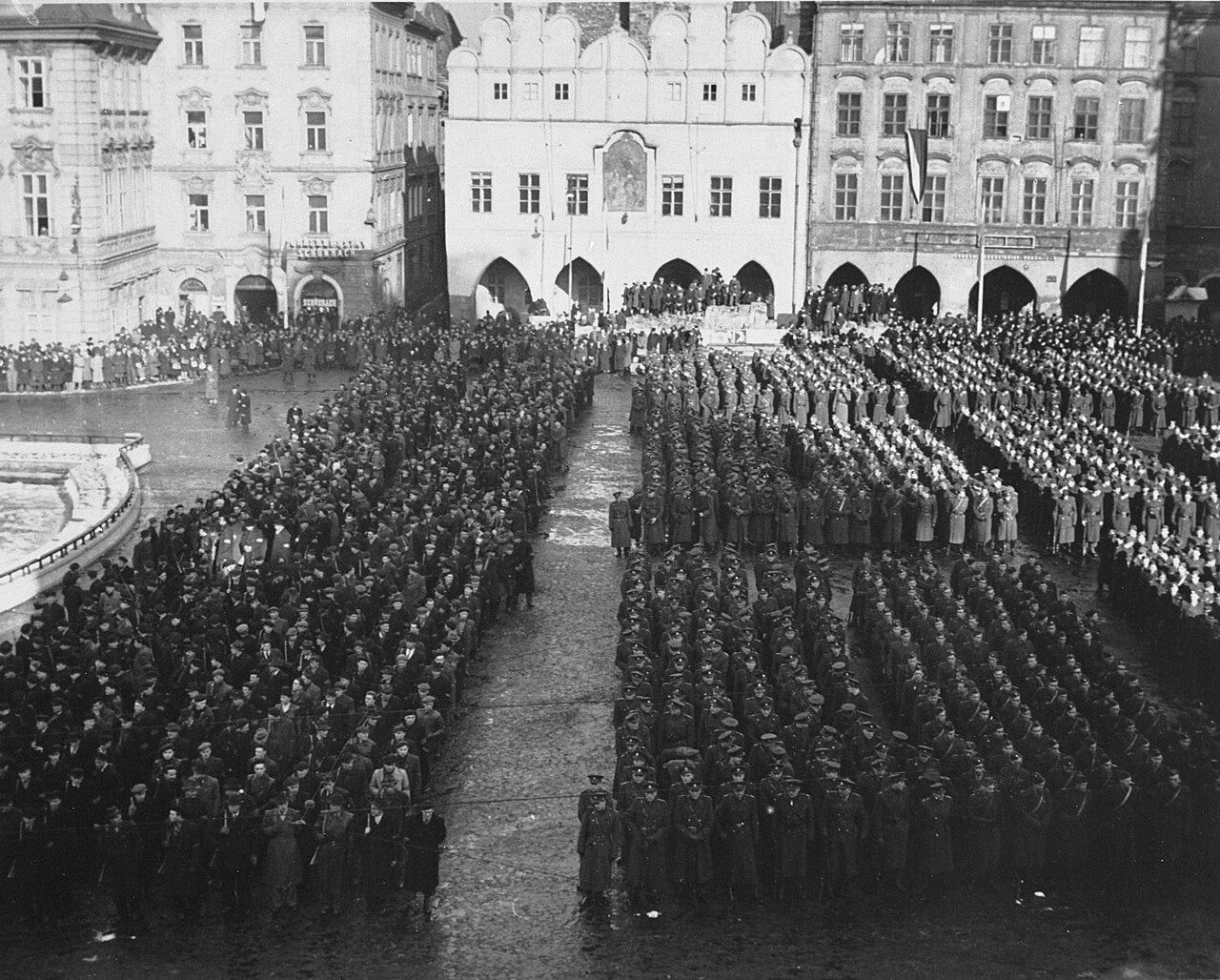

There was a certain religious feel to all the exalted poems and pictures and movies that the Communist artists produced about steelworks and mines; people definitely seem to have a need to worship something. But there also was a Machiavellian intent underneath. Steel is needed to produce weapons, and when the Communists finally took full power in February 1948, the Czechoslovak armaments industry went into overdrive, supplying all the armies of the Eastern Bloc with new weapons and ammo. Stalin expected a war with the Western powers soon, and his armies needed to be ready for their future conquests in Western Europe.
This, of course, was done at the cost of domestic consumer production, and often on credit. By the time of Stalin’s death, the structure of the Czechoslovak economy was very unhealthy; lots of guns, nowhere near enough butter (or clothes, or shoes), too much paper money, but little to buy. Combined with the relentless ideological drive of the regime to expropriate private businesses, the economy of Czechoslovakia was on the brink of a collapse.
This malaise could not be papered over. Eight years after the war, too many food articles were still rationed and the people were beginning to notice. Although the “workers and peasants” were told that their country was now inexorably developing towards an earthly paradise, the content of their dinner plates hardly reflected that promise.
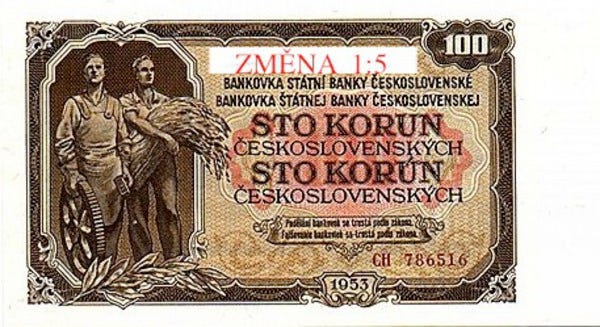
There were enough trained economists in the Party to be aware of the impending doom, and the regime decided to act. New banknotes were secretly printed in the USSR (in order to prevent any rumors from spreading), and, on June 1, 1953, the extant Czechoslovak currency was replaced by a new one.
In any normal currency reform, old money is exchanged for new money using a certain fixed ratio, but the Communist reform was an ideologically underpinned reform, and thus the rules were extremely imbalanced. Only a small amount of money per person was exchanged in a somewhat fair way. Anything over the limit was subject to very biased rules. State-owned businesses were treated leniently; private businesses - those that still existed after five years of Stalinism - were robbed blind. Bad rates were applied to private savings over a certain fairly modest amount. People who had more than a few monthly salaries saved were considered to be “the bourgeoisie” and one of the aims of this reform was to deprive “the bourgeoisie” of any purchasing power. In practice, anyone who diligently saved money for their old age was brutally screwed.
All in all, the former cash volume of 52 billion Czechoslovak crowns shrank to a mere 1.4 billion immediately afterwards (expanding to 3.8 billion by the end of the year), while the consumer prices were recalculated at best 1:5 or worse. Purchasing power of an average worker went down considerably. Few robberies in history were so brazen and so extensive as this infamous currency reform.
Even though the new currency was printed abroad in order to minimize any information leaks, many people were involved in the preparations and complete secrecy could not be achieved. Rumors about an impending devaluation of money spread in late May, even though few had any reliable details (and reality proved worse than the expectations). The President denied the rumors publicly3 just days before the reform went through.
Once the cat was out of the bag, there were riots, which, interestingly, were mostly started and led by industrial workers; the most famous one took place in Plzeň, where the workers took over the town hall and threw sacred busts of Stalin and Gottwald out of its windows. This was probably the first moment when the Party had to acknowledge that its internal interests diverged from those of the common folk in whose name it ruled.
The riots were suppressed by force; the resulting distrust could not be. Many of the people who saw the sodden wads of now-worthless cash floating in rivers4 would never trust the totalitarian system again. The same power that promised - at least theoretically - to give them almost everything, proved beyond any doubt that it could also take everything away.
The extent of AI use in this article: 16 mistakes and bad formulations corrected, 2 pictures recommended. No editing.