Dear Terence,
let me start with my sincere appreciation towards your work and results. There is a lot to admire about you and your devotion to both mathematics as a science and mathematics as an art of beauty to share with others. I also like your spirit in general; most of the time, you are a positive, inspiring person. I wonder if this letter will ever reach you. I am a (non-practising) mathematician by training too, although an intellectual lightweight compared to someone like you, these days mostly plying my trade as a software developer, together with some writing for human readers.
I feel the need to comment on your latest blog entry, because I believe that my perspective can be new to you and many others. Let me point out the exact sentence that struck me.
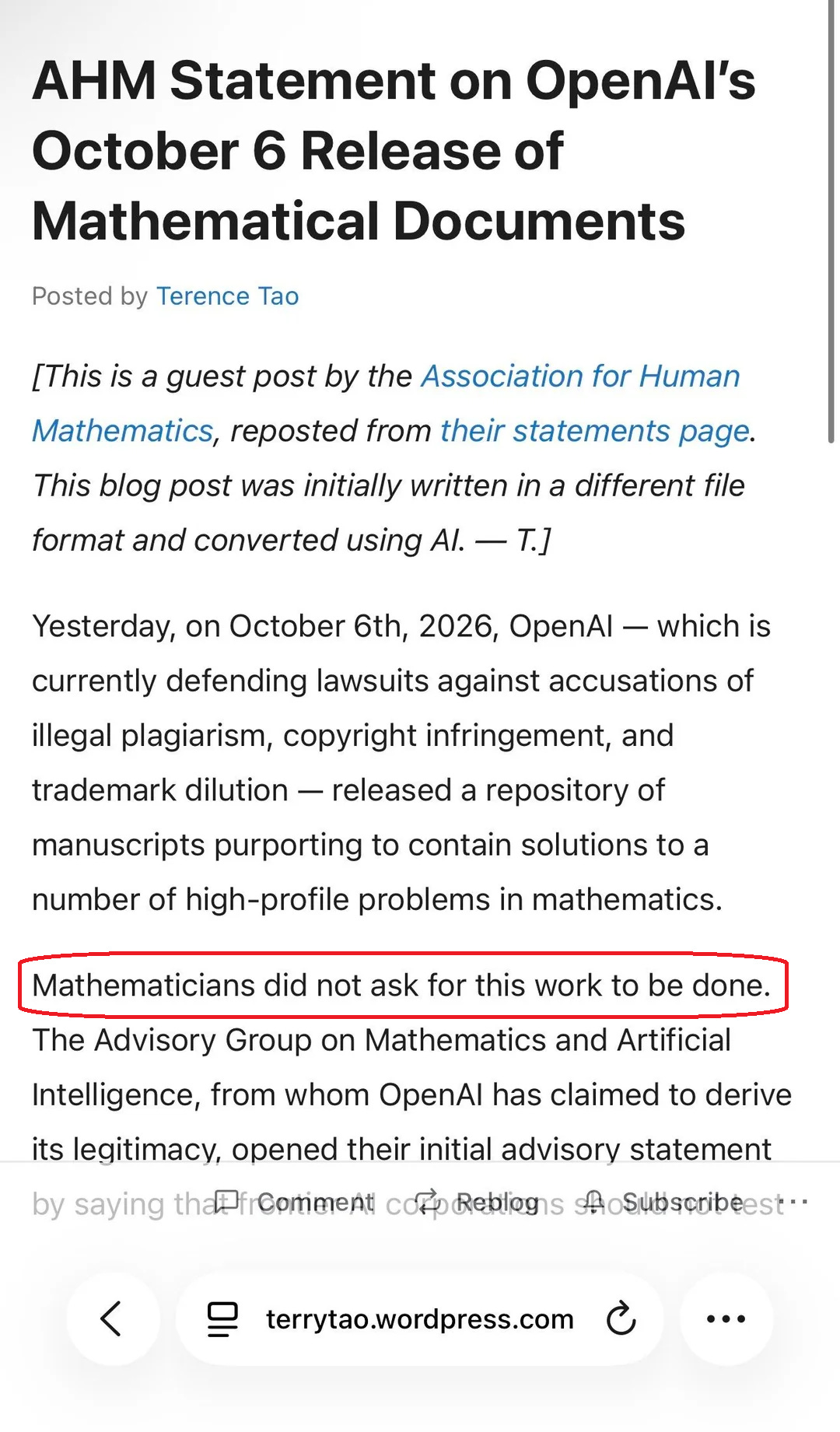
This sounds like the Anger stage of Elisabeth Kübler-Ross’s five stages of grief. The next one will be Bargaining.
Dear Terence, no one asks for their industry to be disrupted. It just happens one day, due to some process that ultimately proves impossible to contain. I saw this with my own eyes as a teenager, in every detail, because I grew up in a city full of heavy industry, where production of steel and mining of black coal underpinned everything else. And I saw it all collapse and transform into a rust belt region within a single generation.
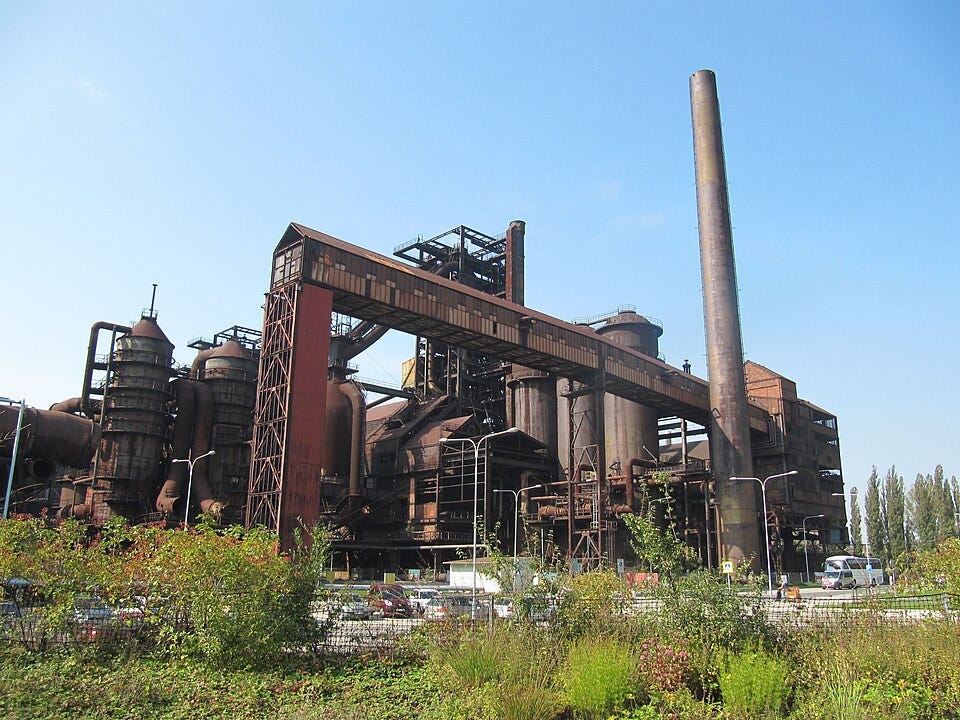

The point is that few really cared about the blue collars caught in that cataclysmic process. The cultural elite in the rich cities - the artists, the politicians, the academics like you - none of them simply noticed. They were the invisible people, living in some faraway regions, and they had to go through their entire Elisabeth Kübler-Ross process without even having a blog to make their thoughts known. There were social programs to help them, but approximately zero high-level attention.
I am not looking for schadenfreude, but if most of the blue collars ultimately adapted and survived, you academics will too. You are in a much better position than them, possessing really good brains, wielding a loud voice and also having nontrivial political connections. The one thing that you may be lacking is mental preparedness for such situation, which caught you unaware and thus looks worse than it actually is.
The elite white collars aren’t really used to their work being disrupted and outsourced, and they often feel that after two decades of education, their jobs should be safe until retirement. This is how it used to be, before we taught silicon how to think. But the same job security once extended to weavers and coopers, until we taught steam how to perform useful work, and they were people too.
Writing from now-mostly-deindustrialised Ostrava, I can say that there were some positives to the process. The local economy diversified and the environment improved. Fish now live in city rivers that used to foam with poison when I was a kid, and the winter snow is no longer black from soot.
I wonder if the same may happen to academia. It is not a happy place today. It is full of petty internal struggles and far more interested in ideological conformity than it should be. If the forces of AI poke some windows into the Ivory Tower, the end result may actually be “more fresh air”, even though some of the long-term inhabitants may find this sudden exposure to the outside world unbearable.
(Yeah, I am an optimist, I know.)
Anyway, good luck, Terence, but you won’t be able to stop this on a global scale. The best you can hope for is a temporary delay, for a few months maybe. As the AI models spread and become more affordable to run locally, people will use them on every math problem they can lay their hands on, and won’t ask the professional mathematical community for its approval.
It might make more sense to actively prepare for the inevitable now. Back in the Ostrava of the 1990s, those miners and steelworkers who did, mostly managed to stick the landing and emerge from the turmoil reasonably well. The others, usually less so.
The extent of AI use in this article: 22 grammatical errors/bad formulations fixed. No editing.