In my never-ending series on how biases shape the behaviour of all people, even the ones we commonly dehumanise as greedy bastards (aka bankers), professional liars (aka politicians and lawyers), and narcissists (aka CEOs), I want to turn my attention to Nazis.
Leonardo Bursztyn and his colleagues looked at the performance of more than 5,000 German fighter pilots in World War II and their efforts to gain the Knight’s Cross. As you might imagine, the German Air Force during the Nazi years was a rather hierarchical organisation where status mattered a lot. Winning a medal signalled to your fellow fighter pilots that you were part of an elite. And that was worth a lot in a country that was based on elitist theories of civilisation.
So, if you were successful as a fighter pilot, you eventually may have had enough victories in dogfights that you came close to winning a medal. The Knight’s Cross of the Iron Cross was introduced in 1939 as the highest medal active soldiers could win at the start of World War II. Initially, pilots had to shoot down 20 enemy planes to be eligible for the Knight’s Cross.
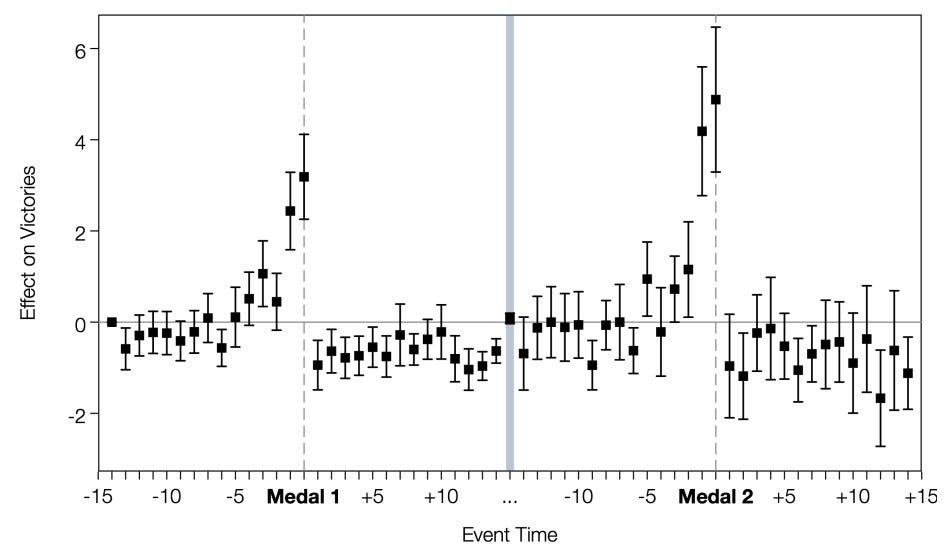
In 1940, the Knight’s Cross of the Iron Cross with Oak Leaves was introduced to incentivise those who had already won the original Knight’s Cross to do even more. The chart below shows the efforts of German fighter pilots to gain victories in dogfights as they approach the threshold to win a medal. It is clear that pilots increase their efforts through flying more sorties or engaging in more dogfights as they come closer to winning a medal. Incentives matter, as the economists say…
Efforts increase as pilots come closer to winning a medal
Source: Bursztyn et al. (2026)
The Nazi regime noticed that this kind of incentive scheme motivated pilots to put in more effort and sought to keep them on a steady treadmill to get better and better. To do that, they created more medals as the war progressed that were positioned above the existing Iron Crosses.
The problem with this incentive structure was that it gradually devalued the existing medals since they were no longer the top medals available to soldiers. Plus, if there is a higher medal introduced, the requirements to gain a lower medal have to be adjusted downwards in order to ‘make room’ for the new top medal. The result is that the standards gradually erode, and less able pilots are starting to win Iron Crosses.
New elite medals gradually devalue existing medals
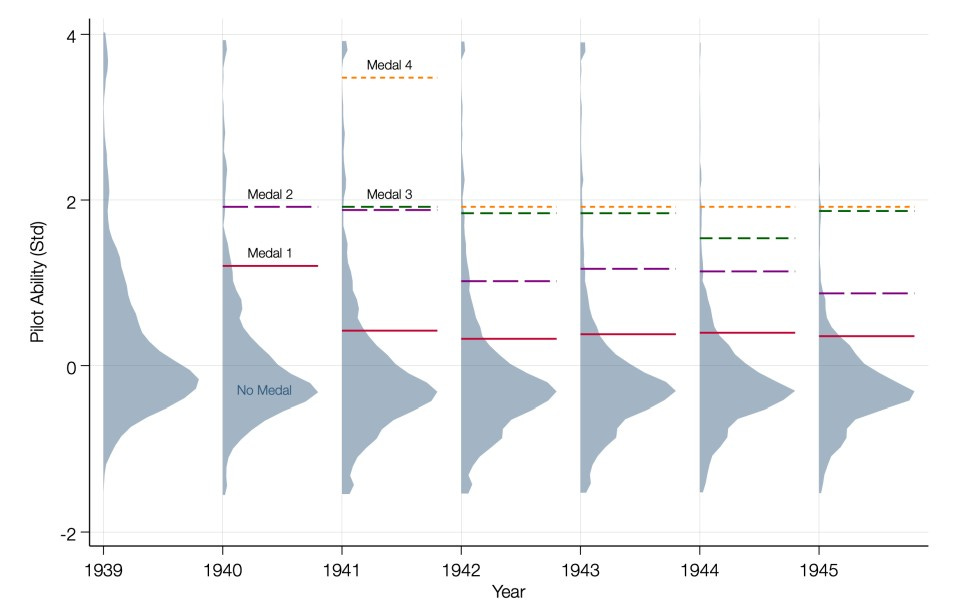
Source: Bursztyn et al. (2026). Note: Horizontal lines indicate median pilot ability to win the medal over time.
Of course, the same is happening today, when companies introduce employee incentive schemes. Employees will increase their efforts when they come closer to winning a bonus and then relax again. But if you want to keep people on the treadmill, you have to introduce ever-new, higher goals to motivate elite performance. But by doing that, you devalue existing incentive schemes and make them less of an incentive to improve performance.