Millions of poor Europeans 100 years ago migrated to the Americas. Soon enough, many more people across the world will be forced to migrate because of technological unemployment, climate change and war. But where can they go?
I argue here that unregulated automation poses the greatest danger for explosive population movements, followed by climate change and war. Towards the end of the article, I will mention whether realistic solutions to this are within reach.
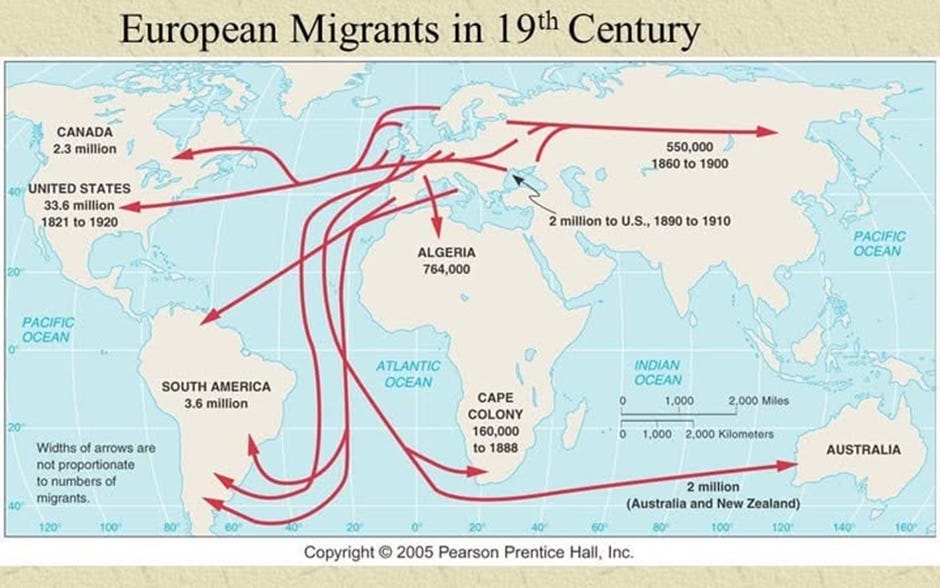
After 1800, economic changes plus advancements in medicine and agriculture led to a demographic boom in Europe. The ever-increasing numbers simply could not be contained by the continent at that time.
Indeed, while Europe was a demographic periphery throughout much of history, by the early 1900s it rose to account for 25% of the world population. As Kamil Galeev points out, it was not wrong to call Europe 100 years ago Vagina Gentium (the Womb of Humanity). The continent nowadays makes up a little under 10% of the world population–while some decry this as a demographic decline, it is more that we can’t expect tiny Europe to be a demographic powerhouse forever.
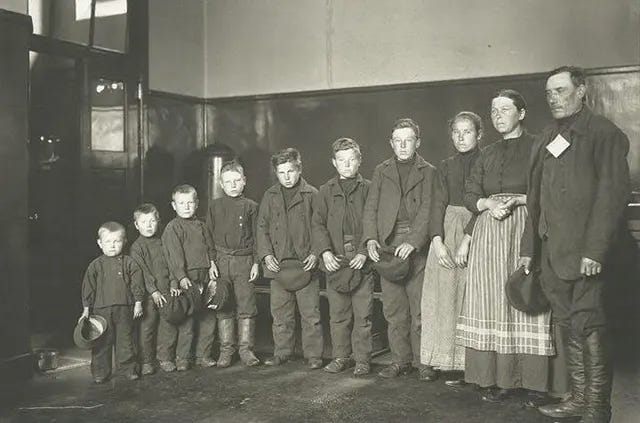
This huge increase in the European population was not ‘natural’; rather, as mentioned earlier, advancements in medicine made it so that 50% of children would no longer die before reaching adulthood. New crops, especially the potato, made it possible to feed more people. But that could only go so far: indeed, this demographic explosion was ‘solved’ by large waves of emigration to the Americas and Oceania.
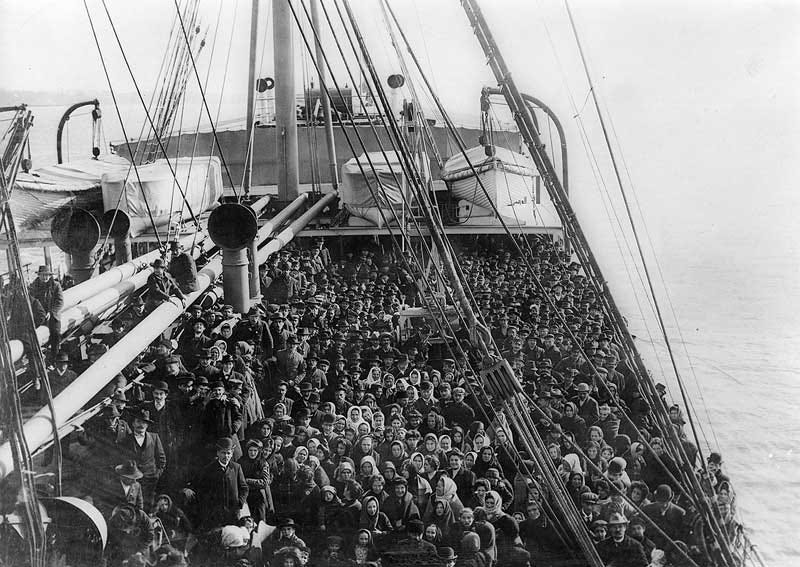
The numbers are staggering. Between 1820 and 1930, more than 6 million Germans and 5 million Italians crossed the Atlantic to the USA. In total, there would be over 30 million Europeans migrating to the US. Millions more Italians, Spaniards, Portuguese and other Europeans went to Latin America. Around 700 thousand French colonists moved to Algeria!
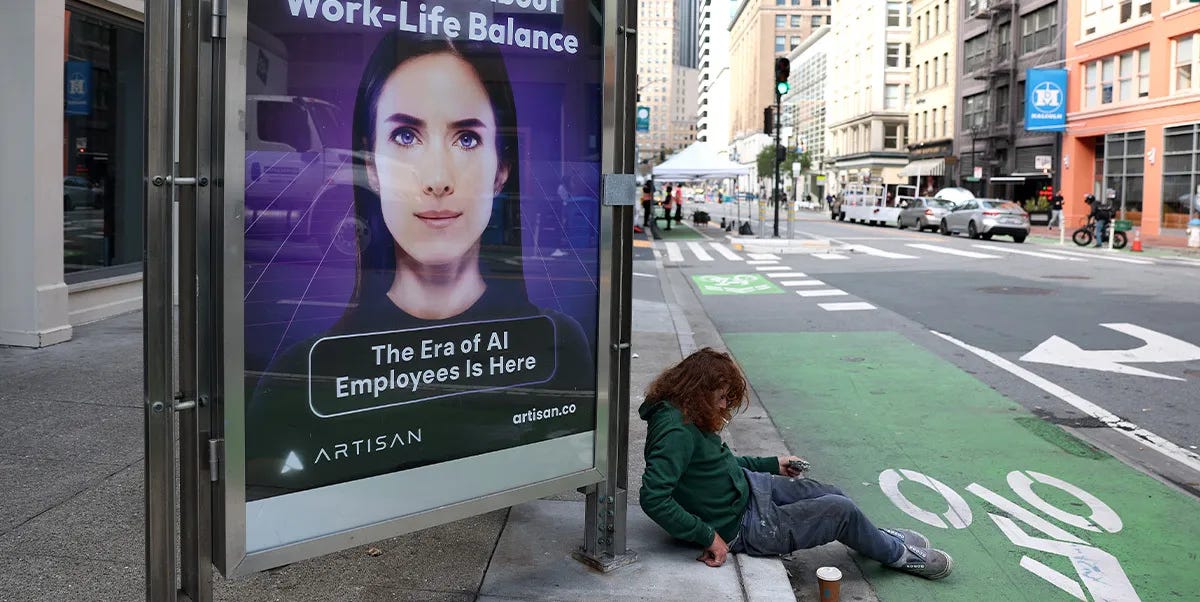
What we now face is a rapid collapse of the current employment model: we do not just fear but already expect massive lay-offs as soon as 2030. In other words, this is the real Great Replacement–of workers by AI and robots.
Our tech overlords are already betting on that: Dara Khosrowshahi of Uber recently said that ‘’No job is safe [from AI]. AI will be able to replace the work that 70 to 80% of humans can do over the next 10 years. 10 years is not a lot of time for society to adjust to that kind of impact.’’ Similarly, Uber’s 9.4 million drivers and couriers can expect to be replaced by self-driving cars or drones within 15 to 20 years. He then mentioned some vague idea about the company creating jobs for humans too. Other big names in tech echo this world-view, with Elon Musk for example, recently babbling something about AI making work and money ‘optional’ and eliminating poverty.
But perhaps even more serious the news from robotics. China, for example, plans to solve its demographic decline not by importing immigrants but with tech, basically replacing workers with robots, that will continue delivering the manufacturing goods the country is known for today. Fast-food chains are also changing, with a few fully automated joints already opened in the US, Italy or China.

The change does not have to look like Star Wars robots walking on the street. Rather, it is enough to automate ever more tasks. Indeed, many jobs (like those in fast food) are so dull and physically taxing for humans that robots should indeed do them. The issue, of course, is that most people will have no place in the economy and hence no income, no way to survive. What do you do when there are no more buyers for the only thing you can sell (labour)?
If automation will not obliterate the job market as soon as predicted, mass migration might just as well be caused by more familiar issues: climate change and war. Which one will strike first? Choose your bets!
The Middle East, India and Southern Europe already face problems with water, and this is only predicted to increase. The Arab World alone numbers 450 million people, with all countries in the area already experiencing or expected to see severe problems with water. From Gaza to Ukraine, water infrastructure is already being sabotaged in wars, but the Middle East is especially endangered by this—countries like Egypt, Pakistan, Iraq depend almost fully on 1 or 2 rivers! Water wars are knocking at the door.
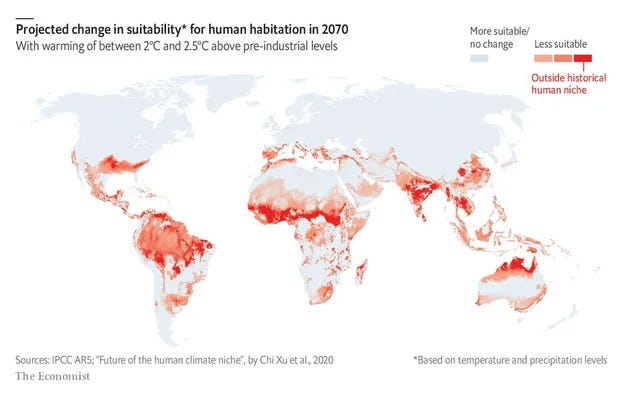
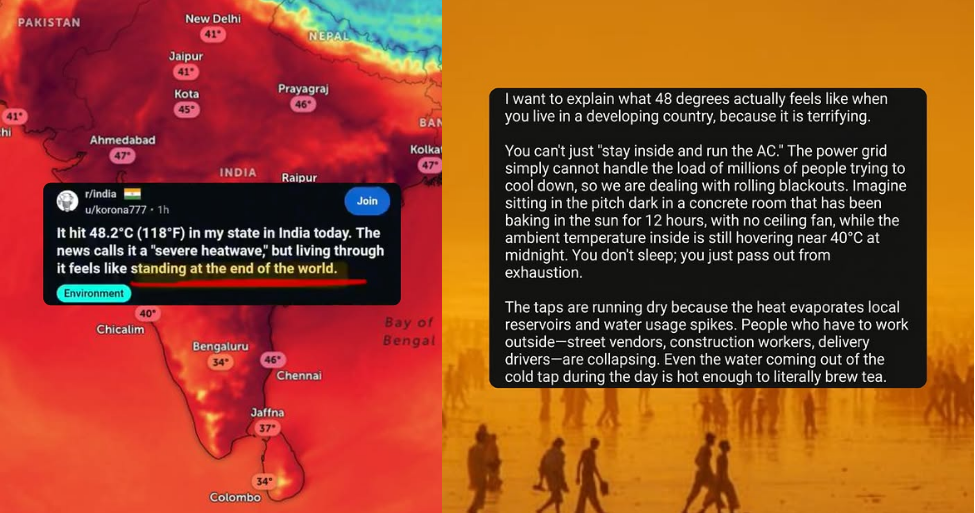
And even in the unlikely scenario where we manage to share resources without wars, the climate has already become more and more unpredictable, with the summer of 2026 already sending shocks across the world. Just look at European news nowadays where France is melting at 44°C in June!
Tropical countries are projected to suffer the most from climate change. As it happens, the bulk of the human population lives also happens to live just there. We are talking about countries like Nigeria, India or even Mexico. Humans can learn to adapt to harsh weather, but the question is whether we have enough time to do that.
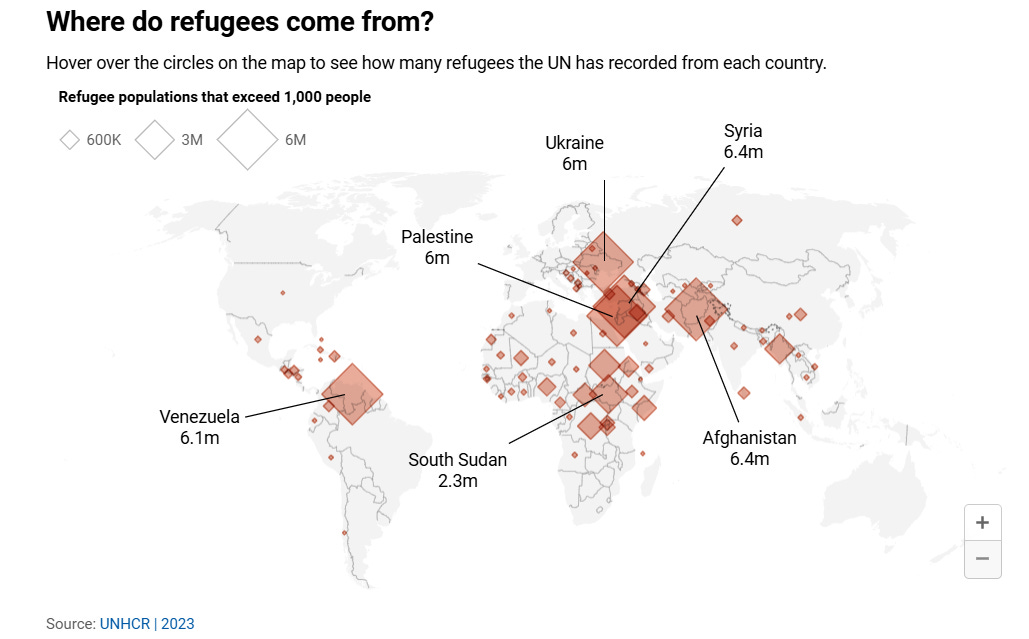
One more point about war: the issue is not that a nuclear showdown will wipe out humanity—indeed, we don’t have enough weapons for that. Rather, the issue is more ‘boring’ and mundane: as people like Putin and Trump show, the age of large scale-war is back, and this means millions of refugees fleeing conflict. About 120 million people are displaced as we speak, over 40 million of whom are refugees in other countries.
As with so many other things, some countries might actually benefit from climate change or even war. Russia, for example, will see large swaths of Siberia become better suited for human life—there might come a time when more people will be so desperate that they’ll even want to move to that country. But the political situation as a whole is not promising. Just see how the Syrian refugee crisis has left a profound mark on European politics, for example.
Wars are a wildcard—we cannot predict whether they will be started, but if they do, the increasing numbers of refugees will find they are not welcomed. Most refugees don’t make it to rich countries, instead, it is the already poor countries that have to take refugees in.
We now see a similar issue regarding immigrates—they are less and less welcomed. No matter if you think this is the result of hateful politics or that there have been too many newcomers, the trend is clear: immigrants are less and less welcomed in countries that traditionally had open doors. As mentioned earlier, countries like China or Japan that weren’t really immigrant-friendly to begin with will rather have robots replace workers than take in foreigners.
Never in history have so many people been literally trapped. And when I say trapped, I mean it: our forager ancestors of the past could just move to a new area when food became scarce (read Suzman); some ancient and medieval farmers still had the option to run to the mountains when invaders ravaged the land or state control became too oppressive (read Scott); 100 years ago, Europeans had the option to flee to the Americas and try to escape the Malthusian trap. But for many of today’s poor or desperate, there is simply nowhere to go!
Some dictatorships are open-air prisons (Eritrea, North Korea) while other peoples are trapped by poverty (which is often caused by neocolonialism… or just regular colonialism if your neighbour is Russia).
No one chooses where they are born. Fewer and fewer of us can choose where to live.
More than half of humanity lives in cities. Which means that in the case of large-scale layoffs, the situation can easily turn catastrophic. Think of early 90s ex-communist countries, but worse. A return to villages and farming sounds like a potential solution, but it can at most be a partial one.
To begin with, too few people own land in the countryside, and if you plan to buy, you better hurry, since the good land is already inhabited or owned by the rich. So, while there are countries (like the US or Brasil) that could easily accommodate more people, most of the land is already owned by someone else. To this, we need to add that most city dwellers have no clue how to farm—indeed, subsistence farming is a skill many in the countryside have also lost.
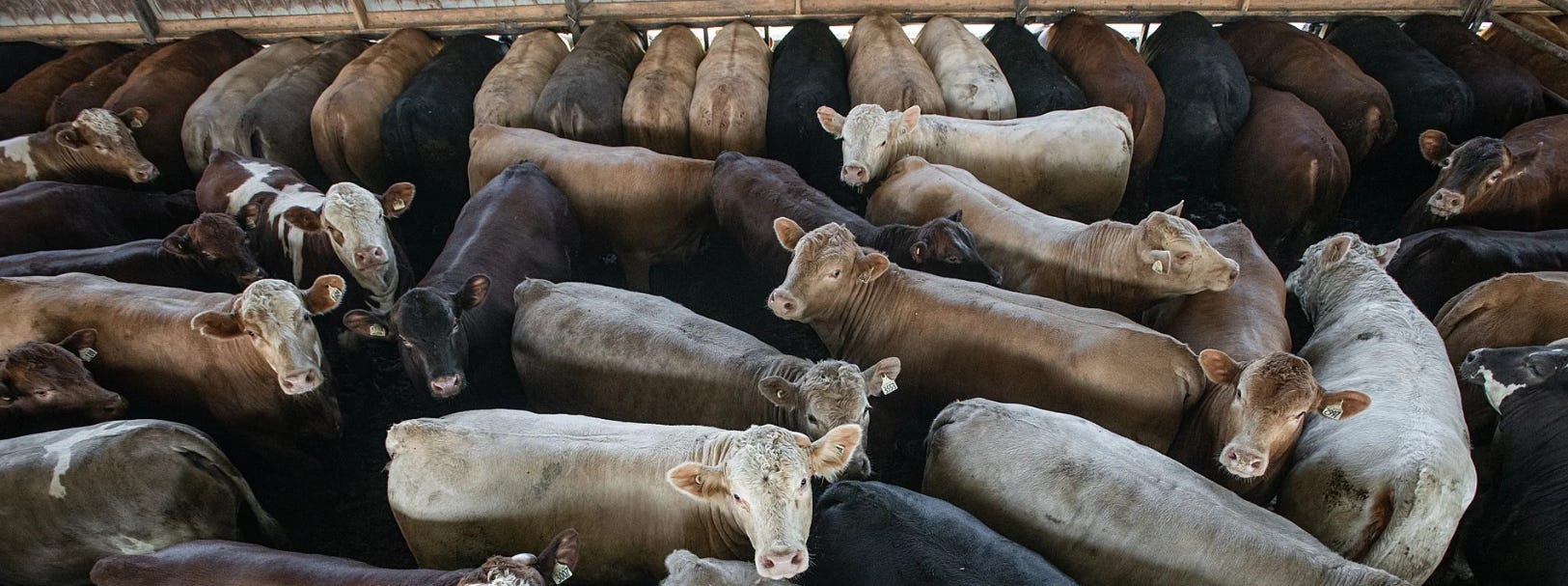
In the ‘best’ case scenario, the rich will allow people to live on their land… for a fee, basically enacting a new sort of feudalism. Perhaps some states will allow the building of new settlements on public lands. Both others just don’t have the land, especially those that are already hit by climate change. And it certainly doesn’t help that a lot of that land is used to grow meat, as vegans are right to point out.
One of the largest migration events in human history is also one that you’ve probably never heard about: the movement of 250 million people from rural China to urban areas between 1979 and 2010. So it is perfectly possible for large masses of people to move between cities and villages. But even in the best conditions, villages will struggle to absorb many city dwellers. And that’s because many people migrated to the city since there was no more place in rural areas to begin with.
An increasing number of economists are calling for a slowdown of the economy—you’ve likely already heard terms like ‘de-growth’ or ‘post-growth economies.’ The point is to build economic systems that are sustainable in the long run. As I’ve argued in my recent book, we already have the technology and resources for everyone to work four hours a day or even less. Check it out—it’s good stuff, if I can say so myself.
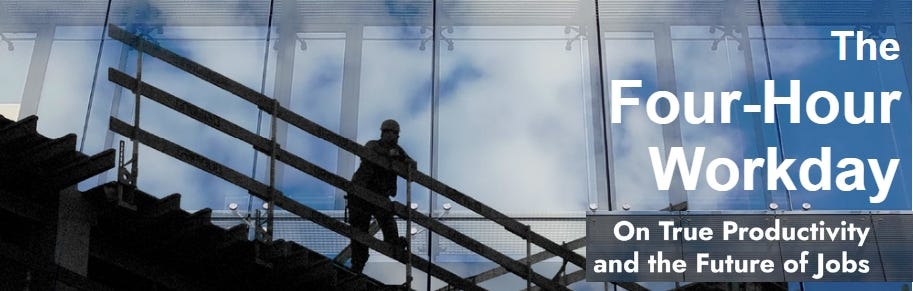

In industrialised countries at the very least, we could easily build a leisure economy, and this can feed two birds with one seed, so to say: it solves the problem of jobs and it can pave the way towards more sustainable societies. This could be done via shorter hours, universal basic income or universal basic services or whatever else works locally.
Almost 80% of people do not feel engaged with their job—i.e., they don’t like and don’t care about what they do; they are not invested in what they do. But they do it because it is the only way to survive. There seems to be no plan—while now most people around the world have to work for poverty wages, we might soon not have even that.
Somewhere between 1.6 and 2 billion people live in slums! That means tight spaces, overcrowded dwellings, often a lack of basic sanitation, and violence outside of state reach. Life happens, with joys and sorrows, in slums too, but often there is little perspective for making it out of the hood and even less of countries controlling the overgrowing slum population. This is something that the current economic model seems to be unable to solve at a global scale. Would the leisure economy fix this? I don’t know, but it could certainly allow us more time to find solutions.
One way out of this predicament is for all of us to come together and agree to have fewer children. An internet factoid has it that the Black Death not only killed roughly one-third of Europe’s population in the 14th century, but it increased the bargaining power of the survivors. The employers were thus forced to increase wages and improve working conditions. Something similar could be achieved with a conscious decision to have fewer children.
But this is a cold, rational and simplistic approach that does not take into account just how messy demographic policy can be. Indeed, for many religious people the mere suggestion of family planning is insulting since procreation is a duty of their faith. It is not that such people are irrational; rather, this is the only rational choice in the context of their model of the world.
We face a similar issue with people from countries where having large families is seen as a patriotic duty. Then you have the bosses like the richest man in the world, who really really wants you to make more workers… sorry, children. And on the progressive side of things too, many voices argue that the issue is not people who have children but rather people who hoard resources and wealth, instead of allowing said wealth to feed the children of tomorrow.
While population growth is diminishing in a lot of places, there is no reason to believe family planning will play a big role in solving the issue discussed here.

Never in the history of the world have so many people been so effectively ‘trapped’ as today. More than half of the world population (about 4.6 billion people) live in cities, which means they own no land and have no knowledge of agriculture. Effectively, they cannot survive unless they work, and they cannot afford to protest for too long, lest they starve.
The rural situation is precarious too: climate change brings new challenges to crops, not to mention how land grabs and big ag are continuously forcing small farmers off their lands. No wonder there is a constant brain drain and youth drain from villages to cities and factories.
Now, it is of course not all doom and gloom. There are people who strongly believe that we are on a good path when it comes to climate change; Russia’s invasion of Ukraine and the US’s special military operation in Iran have proved that modern wars are costly for the attacker too; increasingly the salesmen of AI talk about a post-jobs world, though this last one might be little more than marketing.
Thomas Ligotti once wrote, “There is nothing to do and there is nowhere to go/ There is nothing to be and there is no-one to know.” While all that may be interesting for philosophical contemplation, the ‘nowhere to go’ might soon become true at a scale larger than ever in the history of humanity. There are good reasons for hope, and there are reasons to believe that the worst-case scenarios will be averted. But the possibility of billions of people losing their jobs and having to run away from climate change or war is looming behind the colourful pixels on our phones that help us forget for a while about the precariousness of it all.
I hope you enjoyed reading this little article — any kind of feedback is appreciated. All my articles are free to read, but if you’d like to support me, you could always buy me a coffee… Or check my book :)
Peace.