Learning Chinese is widely sold as the ultimate linguistic challenge. Students are warned that they must rewire their cognitive faculties entirely to grasp an alien logic. But there is a reality that few textbooks admit: The Chinese language has been Europeanized.
Beneath the intimidating surface of the Chinese Characters (汉字, Hanzi), the operating system has been quietly swapped out. If one strips away the characters and the tones, what remains is not the mysterious, ancient syntax of the Tang Dynasty poets. It is a structure that is shockingly familiar.
While linguists technically classify Chinese as an “isolating” language, a century of Western influence has pushed it to adopt “inflection-like” syntactic and rhetorical patterns. Conversely, English has shed much of its historical inflection and behaves as the most analytically simplified European language. As the two have moved toward one another, Modern Chinese can read as English in Hanzi camouflage.
This is an invisible revolution. Most modern Chinese speakers cannot truly comprehend Classical Chinese (文言文, Wenyanwen); the texts of their ancestors are nearly as alien to them as they are to a foreign learner. Modern Mandarin is effectively a creole, a hybrid tongue born from a collision between East and West.
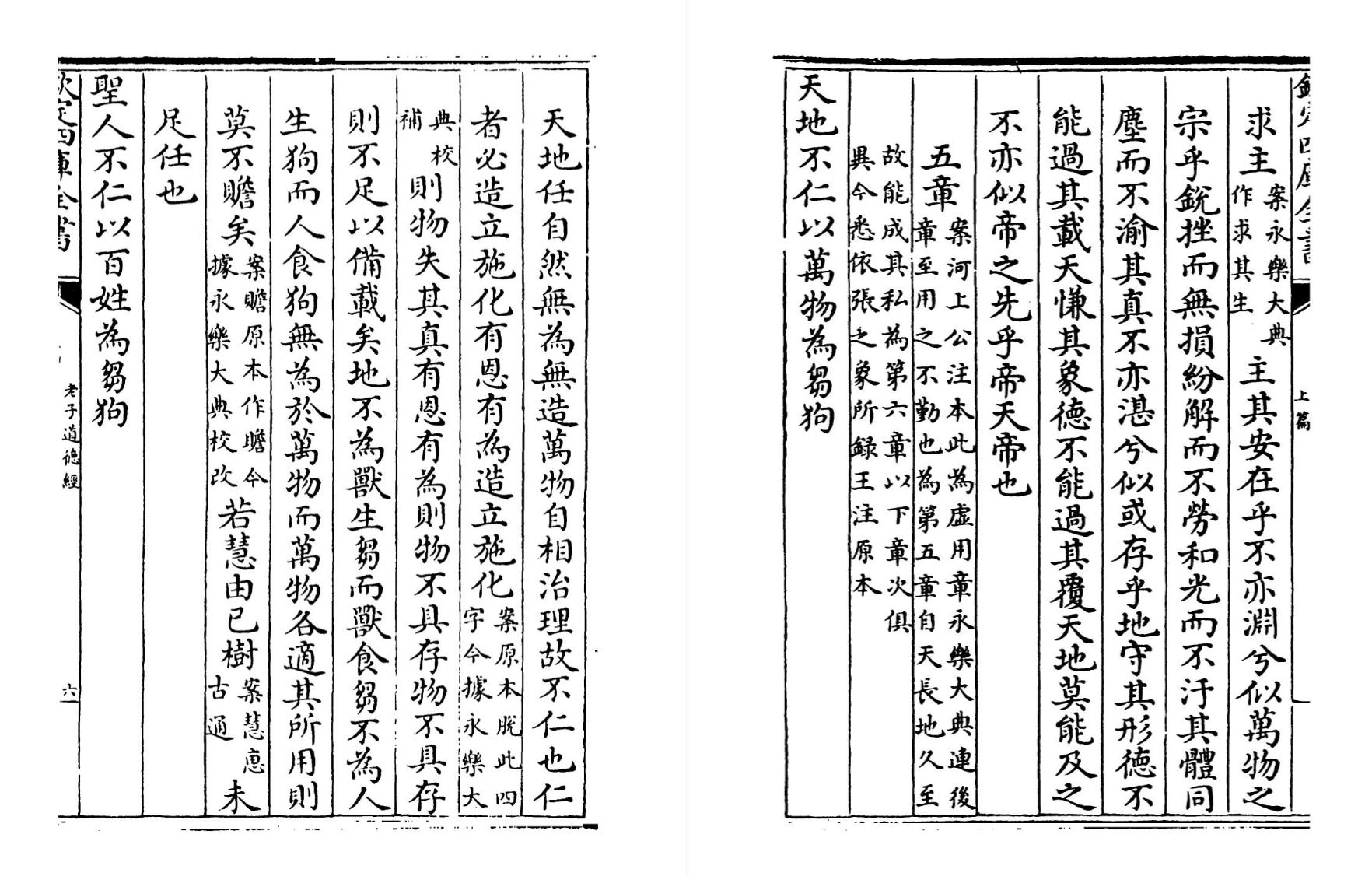
The phenomenon is known among linguists as “Europeanization” (欧化, Ouhua)
Looking at the fundamental architecture of language. Traditional Chinese is a language of parataxis (意合, idea-joining). It is like a traditional landscape painting; elements are placed side by side, and the relationship between them is inferred by context, intuition, and white space. There are few connectors, no strict tenses, and subject-verb agreements are loose.
English, and other Indo-European languages, are languages of hypotaxis (形合, form-joining). They are architectural blueprints. They require conjunctions, prepositions, relative clauses, and tense markers to lock every piece of information into a precise, unshakeable hierarchy.
Over the last hundred years, Chinese has moved from the fluid landscape painting to the rigid blueprint. The Indo-European grammar have been imported and forced into the fluid body of Hanzi.
The linguistic update was installed in two waves. The first came from 19th-century missionaries. To translate the specific theology of The Pilgrim’s Progress (translated by William Chalmers Burns,《天路历程》), they forced the English plural “We” onto the character men (们), injecting mandatory number-specificity where context once sufficed.
The second, and larger, wave came via Japan. During the Meiji Restoration, Japan encoded Western concepts: democracy, science, economy, into Wasei-kango (和制汉语, Japanese-made Chinese words). These “returnee” words were Western souls in Hanzi shells. They flooded back into China, importing not just vocabulary, but the Indo-European logic of abstract nouns and categorization.
Archaic Borrowings with Re-assigned Meanings: Taking existing terms from ancient Chinese classics and assigning them modern Western conceptual definitions. These terms were adopted by Japanese scholars to translate Western ideas during the 19th century and subsequently reintroduced to China through translated literature and returning overseas students.
Society (社会), Economy (经济), Civilization (文明), and Revolution (革命)
Japanese Neologisms / Wasei-kango: The creation of entirely new compounds using the inherent word-forming logic of Chinese characters (Kanji) to serve as direct equivalents for Western technical and academic terminology. Developed primarily during Japan’s Meiji Restoration, these terms were later imported directly into the modern Chinese lexicon as ready-made vocabulary for modernization.
Telephone (电话), Science (科学), Philosophy (哲学), and Aesthetics (美学)
Phono-semantic Transliterations: Selecting Chinese characters based on both their phonetic proximity to the source word and their relevant semantic meaning. These were largely the creative output of Chinese translators during the late Qing Dynasty and the early Republican era.
Club (俱乐部 – jùlèbù, meaning “a place for gathering and joy”) and Utopia (乌托邦 – wūtuōbāng, meaning “a non-existent land”).
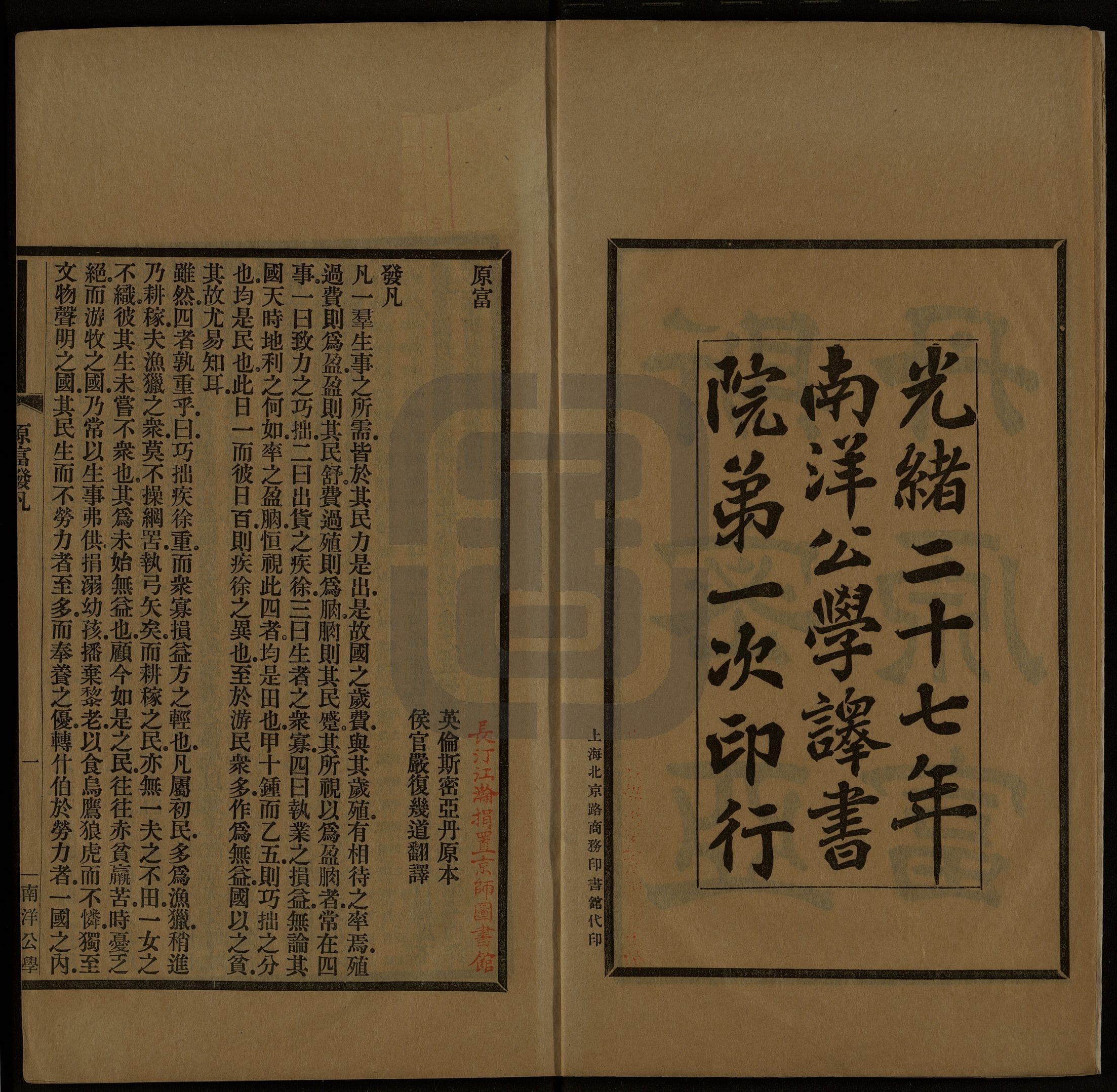
If the missionaries and the Japanese provided the bricks, the intellectuals of the May Fourth Movement in 1919 provided the blueprint. This generation did not just want to change politics; they wanted to rewire the Chinese brain.
On one side was the “Hard Translation” (硬译, Yingyi) of Lu Xun 鲁迅. He argued that Chinese vagueness was a national defect. To fix it, he believed translators should import the complex, convoluted sentence structures of German and English directly—even if it made the Chinese painful to read. His logic was brutal: the pain means it is working. The goal was to physically alter neural pathways, forcing Chinese readers to navigate the rigorous logic of a Western scientist.
But while Lu Xun was importing the hard bones of Western logic, the poet Xu Zhimo 徐志摩 was importing the soft flesh of English Romanticism.
Xu, who had fallen in love with the works of Keats and Shelley while studying at Cambridge, felt that Classical Chinese poetry, with its rigid grid of 5 or 7 characters per line, was too constrictive for modern emotion. He introduced the “New Moon” style, which mimicked the natural, flowing meter of spoken English.
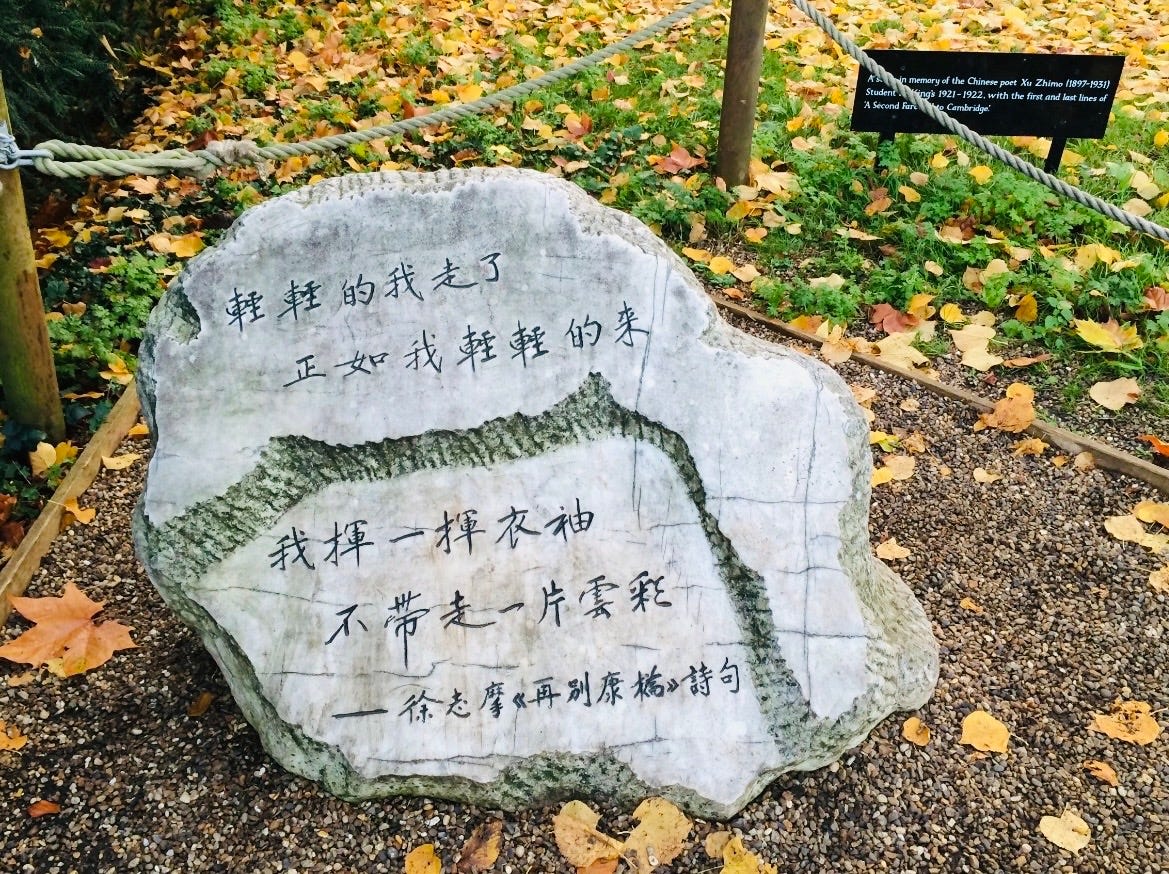
Take his most famous poem, Saying Good-bye to Cambridge Again (再别康桥). In Classical Chinese, a farewell to a river might be compressed into four dense characters: Liu shui, li ren (流水,离人 | Flowing water, departing person). But Xu wrote:
Softly I am leaving,Just as softly as I came;I wave my sleeve,Not taking away a single cloud.
(轻轻的我走了,正如我轻轻的来;我挥一挥衣袖,不带走一片云彩)
Syntactically, this is pure English. The constant use of “I” (Wo) is a modern invention; classical poetry usually omits the subject to create a universal feeling. Xu anchors the poem in the Western ego. He writes “not taking away a single cloud” (Yi pian). In Classical Chinese, the “one piece” is redundant; the noun “cloud” implies the object. Xu forces the Chinese quantifier to act like the English indefinite article “a/an,” creating a rhythm that matches English iambics rather than Chinese tonal patterns.
For More on the Modernization of Chinese Characters

Modern Chinese now rests on several Indo-European pillars that distinguish it from its classical ancestor:
Pseudo-Suffixes: Chinese is traditionally isolating, but Modern Mandarin mimics English morphology.
ize (化 Hua): Modern becomes Modern-ization (Xiandai-hua). Nouns are forced into processes.
ness (性 Xing): Adjectives are turned into abstract entities. Possible becomes Possibility (Keneng-xing).
Explicit Connectors: It mimics the English syntax that demands causal relationships be spelled out.
Traditional Chinese relies on context: “Rain heavy, not go”, “雨大,不去了”.
Modern Chinese demands explicit logic: “Because the rain is heavy, therefore I will not go.””因为雨下得很大,所以我决定不去了。”
Introduction of Subjects and Copulas: The “Subject-Copula-Complement” (SVC) structure inherent in Indo-European languages has exerted a profound influence on Chinese grammar.
Traditional Chinese: adjectives often function directly as predicates and subjects are frequently omitted:
“The flower [is] red.” “花红”
Modern Chinese: the use of formal subjects (dummy subjects) and transform descriptive sentences into copular (judgmental) sentences.
“This flower is red.” “这花是红色的”
The “Bei” Trap: Traditionally, the passive marker Bei (被) was reserved for suffering (arrested, killed). Modern Chinese has adopted the neutral English passive voice: “He was elected class monitor.” “他被选为班长。” The language has adopted the Western “objective stance.”
The Sausage Sentence: English stacks relative clauses. Modern Chinese attempts to shove that complexity into a single pre-noun modifier using de (的), creating bloated, breathless sentences that tax the memory.
The transformation goes deeper than mere vocabulary or sentence length. It touches the very way actions are conceptualized. The result is that Modern Mandarin has become isomorphic to English. It acts as a “wrapper” language. The most obvious symptom is the proliferation of “Empty Verbs.”
English: “We need to make a suggestion.” (Noun-heavy structure).
Modern Mandarin: “我们需要提出一个建议。” (Women xuyao tichu yige jianyi — We need to put forward a suggestion).
The Classical Kernel: “当议。” (Dang yi — Should discuss).
The Classical verb (Yi) is potent and self-contained. The Modern version treats “suggestion” as a noun requiring a dummy verb (”put forward”) to carry it. This is “noun-heavy” bloat, adding tokens not for meaning, but to satisfy a Western grammatical structure.
The critic Yu Kwang-chung (余光中) lamented this “Malicious Europeanization” in his essay The Common and Abnormal States of Chinese (《论中文的常态与变态》). He argued that Modern Chinese has become “lazy” by forgetting how to use its own verbs. instead of “researching” (研究, yanjiu), speakers “conduct research” (进行研究, jinxing yanjiu). Instead of “contributing,” they “make a contribution.” The language is drowning in nouns, supported by weak, crutch-like verbs, creating a bureaucratic sludge that mimics the worst tendencies of English officialdom.
This was a survival strategy. Traditional parataxis is beautiful for poetry but fatal for contract law or computer science. When drafting a constitution or explaining polymer bonds, ambiguity is a defect.
By introducing European syntax, precise conjunctions, abstract nouns, neutral passive voice, gave Chinese the structural integrity to build skyscrapers of logic. It moved the language from a tool for describing experiences to a tool for defining systems. The shock of the West “activated” dormant possibilities within Chinese, forcing it to evolve a thousand years in a single century.
Modern Chinese is a cyborg. It possesses the body of the Han Dynasty, the flesh and bone of characters, but runs on a Western-style neural network.
There is no going back. One cannot uninstall an operating system update that has been running for a hundred years. China did not just translate Western books; it translated the Western mind, disassembled it, and rebuilt it inside the modern tongue.
However, this reveals a divergent path for the learner. If one is drawn to the language not for contracts or commerce, but for the Tang poets, the Song lyricists, or the wisdom of the Tao Te Ching, the best route may not be to master Modern Mandarin at all. It may be to bypass the modern “creole” entirely and engage directly with Classical Chinese (Wenyanwen).
In a profound sense, Classical Chinese escapes the shackles of pronunciation. It is a visual logic, indifferent to the accent of the reader. Whether recited in the clipped tones of modern Mandarin, the rich cadences of Cantonese, or even a synthesized reconstruction of Middle Chinese phonology, the text remains the master. The “English” update never touched it; it remains an independent code, waiting to be read raw.
If my insights brought you a fresh perspective, please consider supporting me by buying me a coffee. Your generosity fuels my writing.