From Minix to the Cloud: Tracing the Enduring Legacy of Andrew S. Tanenbaum
 Andrew S. Tanenbaum
Introduction
In the early 90s, the debates over operating system design—most famously between Linus Torvalds and Andrew Tanenbaum—captured the attention of many in the tech community. While the fiery exchanges are often remembered as a clash of ideologiesbetween monolithic and microkernel approaches, there is also a quieter narrative about influence and legacy that runs beneath the surface.
The Academic Spark
Andrew Tanenbaum’s work, particularly his widely read textbook Operating Systems: Design and Implementation, played an important role in introducing core operating system concepts to a generation of computer scientists.
Linus Torvalds is clear that this book played a pivotal role in his interest in operating systems. The book of course dealt with Tanenbaum's system Minix.
While many of us recall the debates that pitted his Minix ideas against the emerging Linux project, Tanenbaum’s contributions extend far beyond those early discussions. His insistence on rigorous, principled design has seeded ideas that have subtly influenced multiple facets of modern computing and generations of computer scientists.
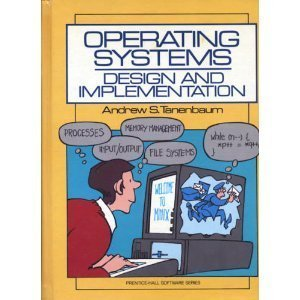 Probably the edition that Linus had (1988)
A Less-Traveled Academic Path
One detail that might easily be overlooked is found on Tanenbaum’s faculty page from 2003. There, among his PhD students, is the name of Werner Vogels. At that time, Vogels was already an experienced researcher in his forties, working on scalable cluster technologies for mission-critical enterprise computing. His thesis, which explored distributed system architectures, was an early investigation into the challenges that would later define cloud computing.
From Thesis to Transformation
In 2004, Werner Vogels joined Amazon. Over the subsequent years, he played a pivotal role in the development of Amazon Web Services (AWS), a platform that has become a cornerstone of modern cloud infrastructure. While the connection between Tanenbaum’s academic mentorship and the innovations at Amazon might seem like a natural progression in hindsight, it is a testament to the enduring influence of foundational ideas. Academic mentorship, it appears, has the power to shape the trajectory of technology in ways that are both subtle and profound.
Reflections on Influence and Legacy
Rather than an unexpected twist, this narrative highlights the natural course of intellectual evolution. The ideas disseminated by Tanenbaum did not aim to directly forge cloud computing; instead, they provided the rigorous framework and critical thinking that allowed visionaries like Vogels to tackle complex challenges. It’s a reminder that the progress we witness in technology is often built on a continuum of mentorship, research, and the persistent pursuit of knowledge.
Conclusion
The story from Minix to the cloud is not one of dramatic revelations but of steady, underlying influence. Tanenbaum’s work helped create a fertile ground from which diverse innovations could grow—from Linux to AWS. For those of us who observe the ebb and flow of technological trends, it is both humbling and enlightening to see how academic rigor and mentorship continue to shape the future in subtle yet enduring ways.
andrew-s-tanenbaum, aws, linus-torvalds, linux, minix, tech, werner-vogels