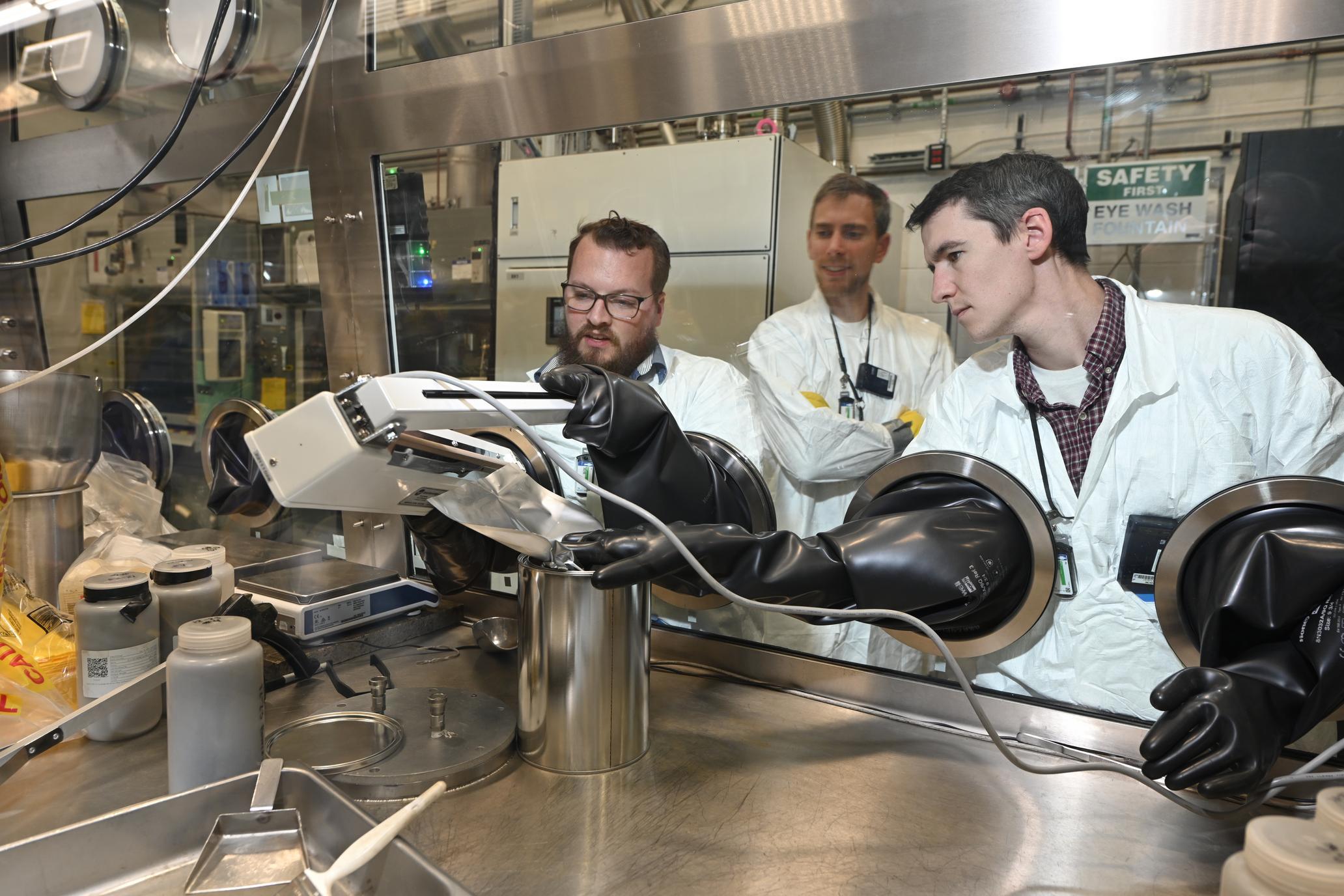
Scientists at the Idaho National Laboratory (INL) have achieved a historic breakthrough in nuclear energy by launching full-scale production of enriched fuel salt for the Molten Chloride Reactor Experiment (MCRE)—the world’s first test of a molten chloride salt fast reactor.
“This is the first time in history that chloride-based molten salt fuel has been produced for a fast reactor,” said Bill Phillips, technical lead for salt synthesis. “It’s a major milestone for American innovation and a clear signal of our national commitment to advanced nuclear energy.”
The MCRE project is a public-private collaboration between Southern Company, TerraPower, CORE POWER, and the U.S. Department of Energy to demonstrate advanced nuclear technologies, and shows promise in the maritime market. It is the first planned reactor experiment to be hosted at the Laboratory for Operation and Testing in the United States (LOTUS) test bed, which DOE’s National Reactor Innovation Center is building at INL. Operations are expected to begin as soon as 2030.
Unlike traditional reactors that use solid fuel rods and water as a coolant, most molten salt reactors rely on liquid fuel—a mixture of salts containing fissile material. This design allows for higher operating temperatures, better fuel efficiency, and enhanced safety. It also opens the door to new applications, including compact nuclear systems for ships and remote installations.

“The Molten Chloride Fast Reactor represents a paradigm shift in the nuclear fuel cycle, and MCRE will directly inform the commercialization of that reactor. Working with world-leading organizations such as INL to successfully synthesize this unique new fuel demonstrates how real progress in Gen IV nuclear is being made together,” said Jeff Latkowski, senior vice president of TerraPower and program director for the Molten Chloride Fast Reactor.
“The implications for the maritime industry are significant,” said Don Wood, senior technical advisor for MCRE. “Molten salt reactors could provide ships with highly efficient, low-maintenance nuclear power, reducing emissions and enabling long-range, uninterrupted travel. The technology could spark the rise of a new nuclear sector—one that is mobile, scalable and globally transformative.
“With substantial private sector investments, including from the maritime industry, and with continued funding support from the DOE, this milestone accelerates completion of the MCRE, unlocking a new era of nuclear propulsion for a revitalized U.S. merchant shipping fleet that can compete head-on with China,” says Mikal Boe, CEO of CORE POWER.
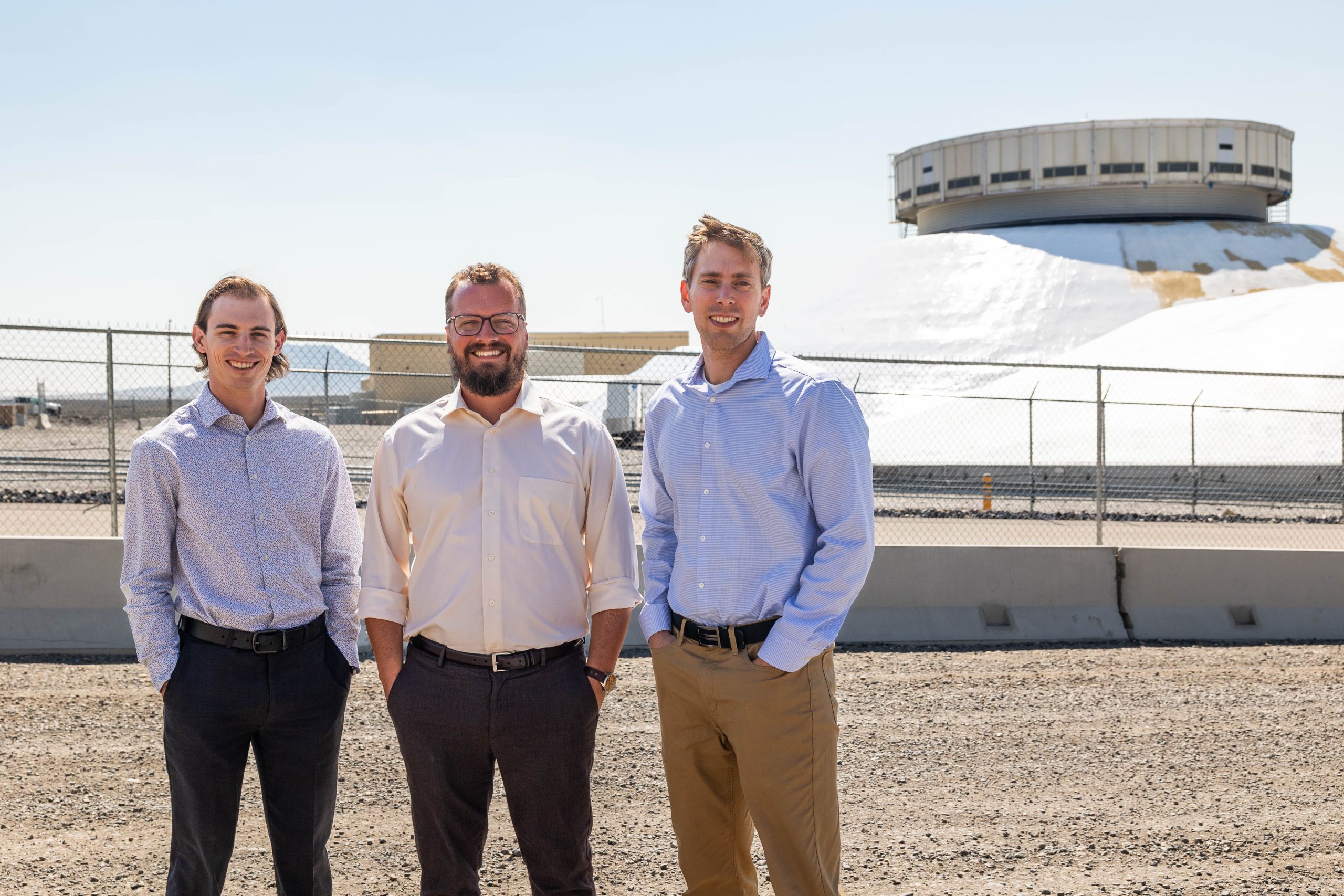
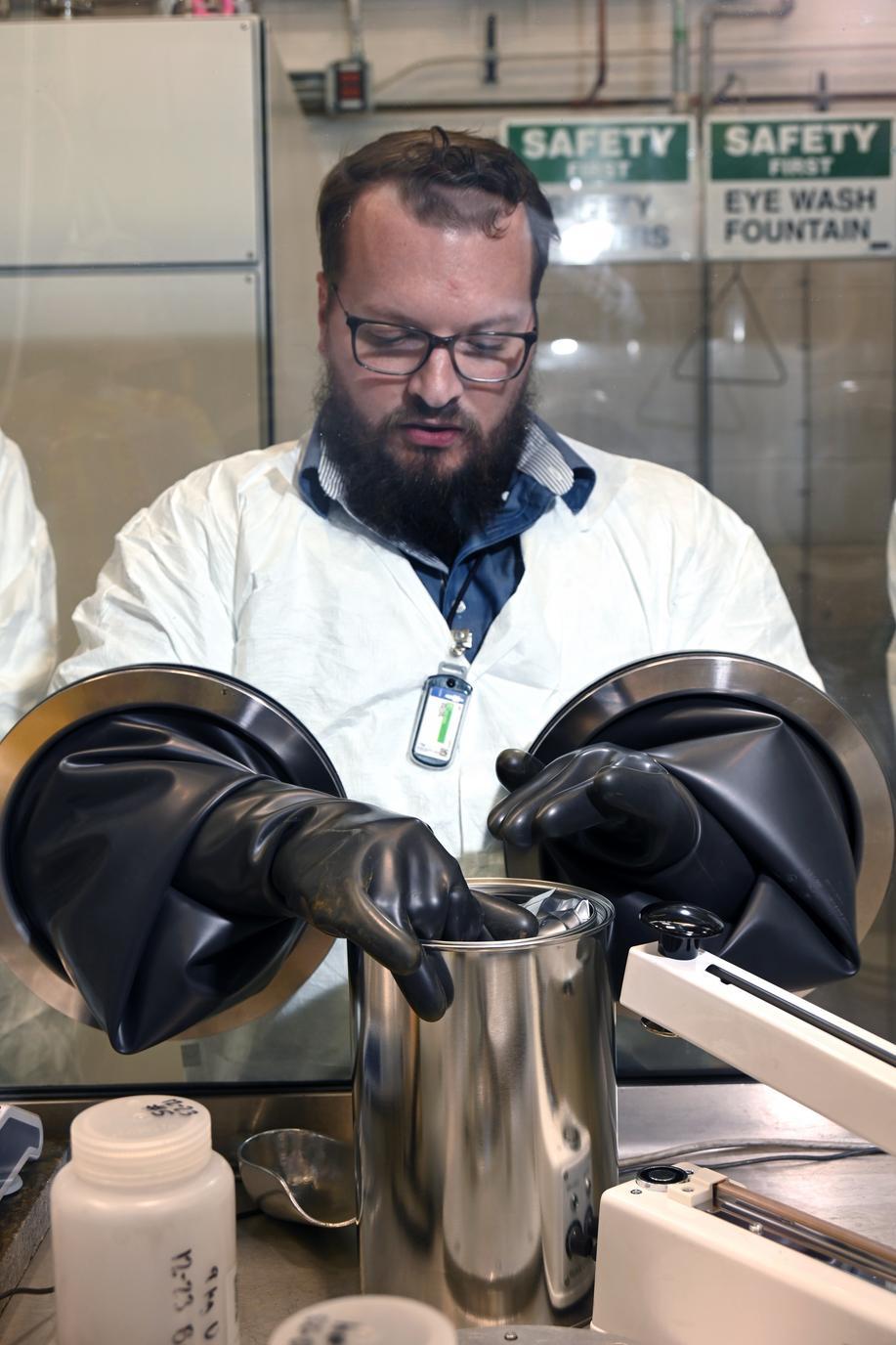
The fuel salt production process began in 2020. INL scientists set out to convert 90% of uranium metal into uranium chloride and produce 18 kilograms of fuel salt per batch—an ambitious target. Early attempts yielded less than the target amount with only an 80% conversion. But in 2024, the team achieved a breakthrough: 95% conversion and full-batch production. They’ve since demonstrated they can produce a batch in as little as one day.
The team delivered the first fuel salt production batch at the end of September and will produce four additional batches by March 2026. This work supports a key national goal to advance nuclear energy, as outlined in a 2025 executive order by President Donald J. Trump.
“Molten chloride reactors are exciting because they offer the best blend of fuel efficiency, safety and long-term sustainability,” said Jacob Yingling, research scientist for fuel salt synthesis.
As the promise of nuclear power, including molten chloride reactors becomes clearer, national policy is stepping up to match the momentum.
“The administration implemented executive orders in May of this year to jumpstart America’s nuclear energy industrial base,” said Jess Gehin, INL’s Associate Laboratory Director for Nuclear Science & Technology. “These changes have had significant impact, enabling the acceleration of this technology and empowering INL in its efforts to spearhead global advancements in molten salt technology.”
As MCRE takes shape, its impact is already being felt across the broader vision for U.S. nuclear leadership.
“This milestone isn’t just about producing fuel—it’s about proving that the U.S. can lead in next-generation nuclear innovation,” said James King, MCRE project director. “We’re building the foundation for a more secure energy future, and MCRE is just the beginning.”