On September 5, 2025, a president who never smelt cordite vowed to restore a “Department of War” and sneered that “Department of Defense” was “woke.” If that’s “wokeism,” read the ledger of those who chose the word Defense—written in mud, blood, and ash.
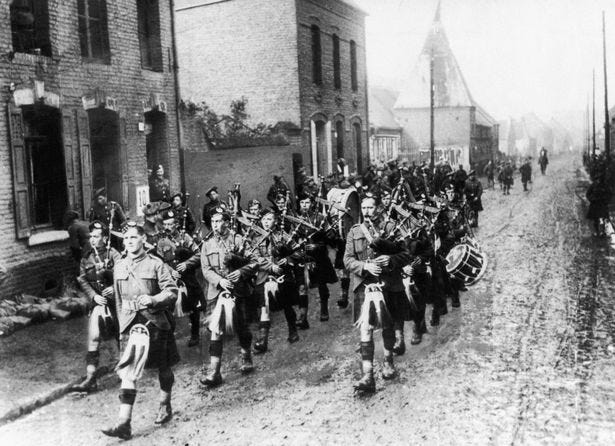
So, you’re born around 1890. The family has seven children, more who died at birth. A strict father, not averse to physical punishment. Horses everywhere, manure, the reek of industrialization, gas lamps. Medicine without antibiotics—only four of you reach adolescence. Fortunately, your father isn’t destitute and gets you into some religious school. They beat you with birch rods there; classmates dunk each other’s heads in cow manure as a joke. The one must toughen up.
As soon as you finish school, you’re drafted and sent to the front. The Great War begins, as they called it then – the same war later called World War I. Ahead lie four years of unrelenting, absolute hell. Stinking trenches, vile food, no sanitation, lice, death from wounds; shells and body parts flying everywhere. A trench slurry of shit and blood up to your knees, chlorine gas attacks, the first air raids, the first tanks on the battlefield. Four years of a horrific meat grinder. You’re relatively lucky. Three times you hit the hospital just before your platoon is erased the next night. The nickname “Lucky Cripple” sticks. You prove yourself, earn promotions, then hit a ceiling for lack of schooling.
Shell-shocked with PTSD, lungs scarred by bouts of pneumonia and minor wounds, you return home. The Spanish flu begins. People are dying like flies—nearly as many perish from the disease as died on the battlefield. Since you know nothing but gun, you go to a military academy. While you study, the world outside changes. The first mass-produced cars, streets switch over to electric light, regular radio broadcasting begins. The Roaring Twenties. Roaring in every sense: the world around you shakes itself apart. Endless protests, communists, nationalists, revolutions. Here and there, outright cutthroats rise to power. The spread of radio—and later the arrival of the first televisions—whips people into a frenzy and leaves them easily led, the masses feverish with a never-ending itch. Clashes, brawls, demonstrations and their brutal dispersals, elections, and re-elections—everything is on a razor’s edge.
The world is engulfed by the Great Depression. A terrifying economic crisis descends—one in four people loses their job. Whole blocks become unheated tenements where people burn trash and furniture in barrels for warmth. Deflation and ruin. Your meager officer’s salary is barely enough to keep you from starving, but at least you have one. Out of this economic abyss, populists come to power. In Germany—the Nazis; in Italy—the Fascists; in Portugal—Salazar. Japan invades China and occupies Manchuria. The press seethes with accounts of Stalin’s atrocities, though no one believes them. The intelligentsia embraces outright communism, the military and politicians veer into nationalism. Sparks hang in the air.
The world smells of powder. The Spanish Civil War looms, and a fascist dictator prevails. Annexation of the Sudetenland in Czechoslovakia; the Anschluss of Austria. World War II begins. Now you’re a senior officer in a forward headquarters sending your own children to their deaths. All three sons are in uniform—right where you stood twenty‑five years ago; an ordinary grunts. Then comes an endless six-year stretch of the most savage, unheard-of, inhuman meat grinder the world has ever seen. The dead count by the millions; civilians are treated as expendable. Hanged, eviscerated, raped, skulls split open—seeing people like that by the roadside has become routine. Burned villages and cities, ruins, fields strewn with corpses, rivers running red with blood.
Europe lies in absolute ruins, the entire planet is ablaze, the oceans turn into a graveyard of flesh and steel. On the home front: ration cards, factories, quotas—everything for the front. As you start to win and liberate the first concentration camps, the world reels beneath your feet. You cannot believe such horror is real. The ashes of children and a sofa built from bones upholstered in human skin will haunt your dreams for the rest of your life. Two of your three sons are killed; your wife dies in 1943 from tuberculosis, but you are not released for the funeral. The war ends with a nuclear mushroom cloud over Japan.
So, here you are, 55 years old, in the fall of 1945. Already a decorated general, a hero of two wars, you are welcomed in rooms where the talk never stops about one question: how do we prevent this again?
The answer boils down to one word: institutions. To keep the world from burning, bind it together. Instead of grinding Germany and Japan into dust, you give them constitutions and money to rebuild. Instead of a high fence and “you owe us” — you offer investments and loans. Alliances, unions, connections spring up all over the world. On the horizon looms the terrifying Red Menace, so you strengthen cooperation, ties, trade. The advent of nuclear weapons changes the equation — now there will be no victors, offense loses its point. Your leadership, having gotten an eyeful of guts and shit along with you, renames its War Department to something more peace-minded: the Department of Defense. For those of your generation who went through all that carnage with you — the men who slogged through one war and sent their sons to another — there is nothing extraordinary about this decision. On the contrary, their weary bones and indelible visions of hell whisper only one thing: we’ve had enough of war.
Only for eighty years later some utter moron — who wasn’t even born when WWII was raging — to label it “wokeism.”
The worst tragedy of our generation is these addled old men born after 1945 — who lived through the most peaceful time in history and never even really held a rifle — decided that war isn’t scary. One ducked out of military service for “bone spurs” in his feet, another avoided Afghanistan by bugging dissidents in East Germany. Having seen no blood or tears, to them war is glamorous, fashionable, youthful — a cure for wrinkles. They have forgotten the lessons of those very “grandpas who fought,” who raised them with their own maimed hands. And so their children now deride their fathers as “woke” whiners as they return to “historical roots.”
O tempora, o mores