Logitech announced Thursday it has taken steps to diversify its manufacturing beyond China to India, where the company has begun assembling personal work solutions products, such as mice.
The Swiss peripherals company’s focus on manufacturing in India highlights its efforts to lessen the impact of the US duties and expand its presence in the world’s fastest-growing major economy.
“It was natural for us, as India is a really big, growing market in both the B2B and B2C channels, to get even closer to our customers and users by establishing manufacturing capabilities. This will give us greater agility, reduce transportation time and help create a local ecosystem,” Delphine Donné, vice president and general manager of Personal Work Solutions at Logitech, told indianexpress.com in an interview.
“We are starting with personal work solutions products, beginning with mice and webcams. But this is a journey, and it is about how we can increase these capabilities with our partners and how quickly we can expand that portfolio,” she added.
The company, which is headquartered in Lausanne, Switzerland, and San Jose, California, has begun assembling its products at a facility in Manesar, an industrial town in Gurugram.
Sree Chenincherry, the company’s chief supply chain operations officer, said Logitech is working with multiple partners but declined to disclose the name of the contract manufacturer involved.
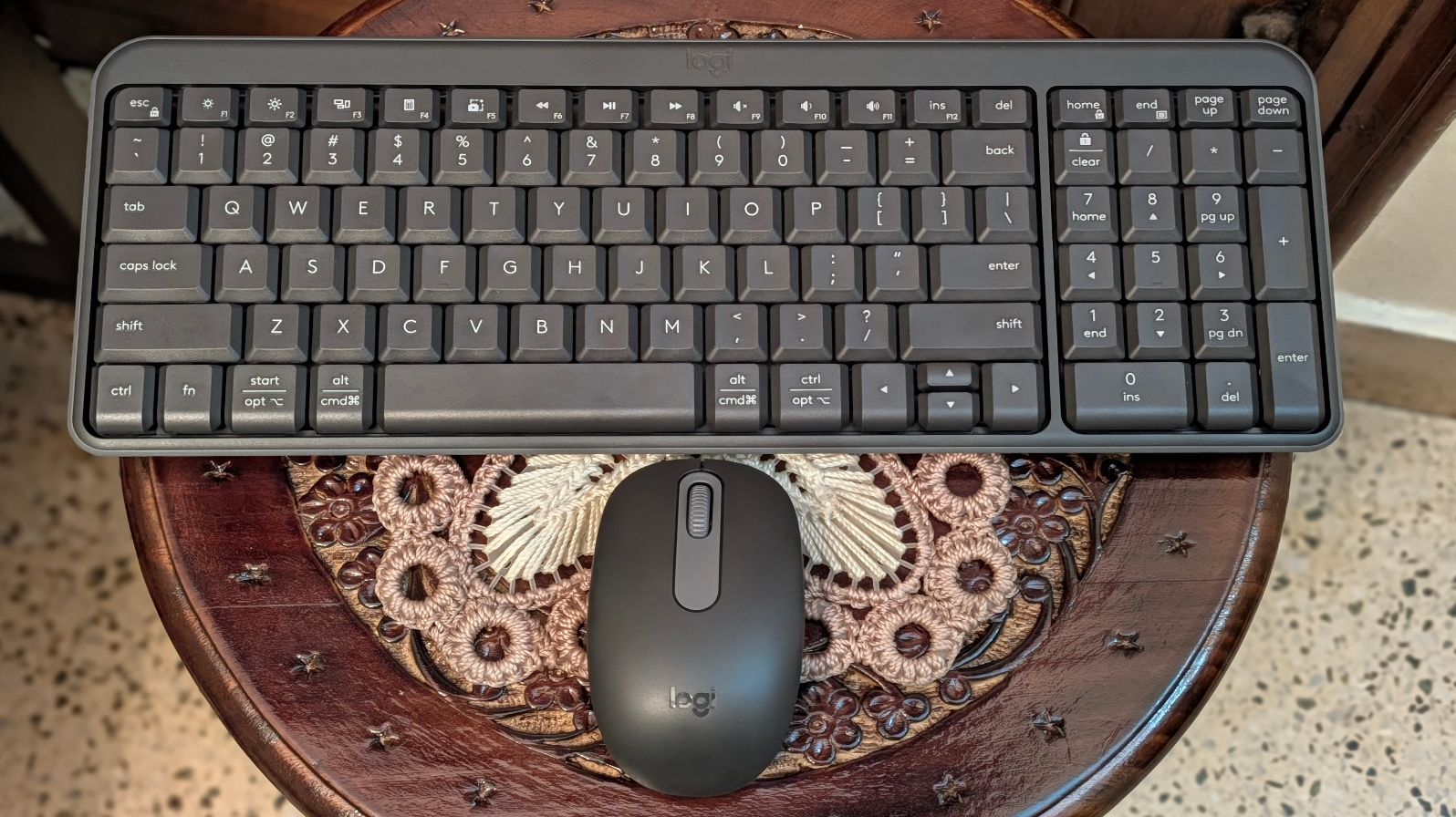 Manufacturing its products in India gives companies like Logitech greater access to the supply chain and, eventually, the market. (Image credit: Anuj Bhatia/Indian Express)
“We have been working on our diversification strategy, and India is our seventh manufacturing footprint. Each country brings different types of capabilities and serves different objectives. In India, we are entering with the objective of serving local consumers much better,” he said.
The US and China remain Logitech’s biggest markets, but the company has been eyeing India for years. The Indian market is unique because Logitech not only manufactures products in the country but also operates an R&D centre in India.
Donné said Logitech’s Chennai R&D centre has grown to more than 500 employees, expanding from its initial focus on quality control to data analytics and software and hardware development.
One step at a time
The move comes as New Delhi seeks to boost domestic manufacturing of high-tech products. India has introduced incentives to encourage local electronics manufacturing. Over the years, the number of high-tech electronics manufacturing facilities has grown to 300 in the country. In fact, India has overtaken China to become the leading source of smartphones sold in the US.
As Donné explained, the initial plan is to focus on product assembly. However, as production ramps up, the company plans to work more closely with local partners to expand its involvement in component manufacturing and other areas.
“The more volume you have, the more you need to control at the manufacturing level. A lot depends on how quickly we can, first, grow our business in India and, second, expand our manufacturing capabilities with a partner,” she said.
“For us, working with these partners is not just about buying from them. It is about developing their capabilities to meet our global standards. This involves a great deal of knowledge transfer and skills development, and it takes a lot of time,” Chenincherry said.
 Delphine Donné, vice president and general manager of Personal Work Solutions (left) at Logitech alongside Sree Chenincherry (right), the company’s chief supply chain operations officer. (Image credit: Logitech)
Meeting global standards
Chenincherry said India has scaled up its manufacturing operations and building capabilities within the manufacturing ecosystem over the years. He also sees the country’s domestic smartphone manufacturing industry and the ecosystem that has developed around it as an opportunity for Logitech to leverage existing capabilities.
For Chenincherry, Logitech ensures its manufacturing partners meet global standards and specifications while accounting for their existing strengths and capabilities. While this process takes time, the goal is to ensure Indian consumers receive products that meet the same quality standards as those sold worldwide.
“These products are not just about features and design; they also involve manufacturing processes, testing procedures, quality controls, and the standards associated with the technology,” he said.
Donné said more than 80 per cent of Logitech’s products are now made using recycled plastic. However, working with these materials requires adjustments to manufacturing and moulding processes, so local partners must build capabilities.
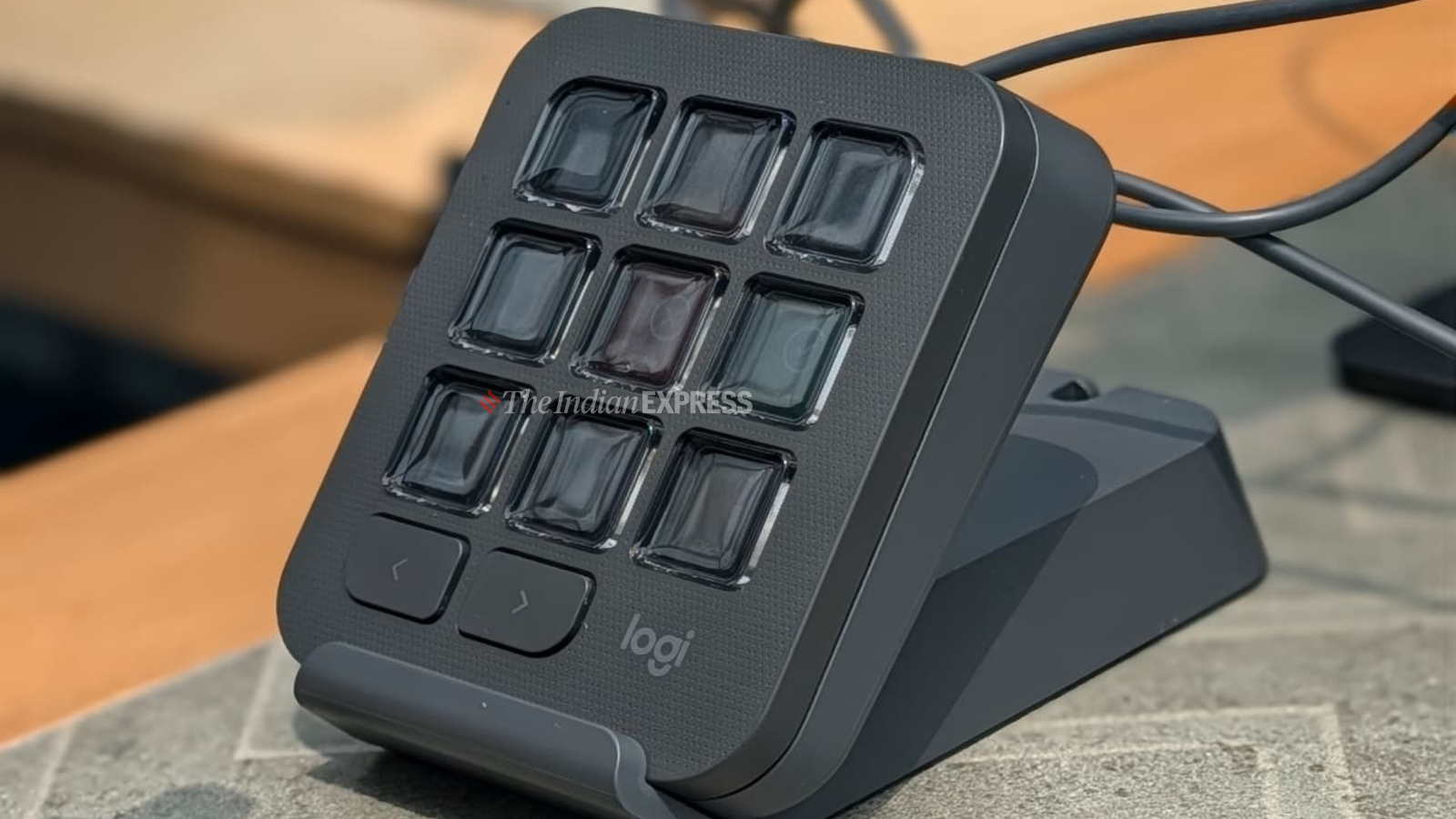 The MX Keypad supports 135 shortcuts on 9 LCD buttons across 15 pages, allowing multi-app AI workflows. (Image credit: Anuj Bhatia/Indian Express)
She added that products manufactured in India must meet the same sustainability and quality standards as those produced elsewhere, requiring extensive testing and quality checks before reaching Indian consumers.
Logitech is best known for its premium keyboards, mice, and other computer and tablet accessories, as well as its video collaboration equipment, including webcams, speakers, and microphones used in remote business meetings. In recent quarters, sales of computer mice and keyboards have increased.
However, hardware makers, including Logitech, have recently been rushing to develop artificial intelligence-centric gadgets. This new sub-category of AI-powered hardware includes devices that allow users to interact with an AI assistant without relying on a smartphone or another screen.