Agree on the Contract
As you work out what the feature must do, the agent writes each obligation into the Contract. On the exhale, you make sure it's complete.
· Impatient Programming
Agentic engineering that actually works for humans.
A method for engineering teams that build with coding agents. It keeps the values of Extreme Programming (XP) and rewrites its twenty-nine rules for a world where typing is nearly free and the hard part is keeping control of the code.
Our industry is kind of like the cartoon character who ran off the cliff and hasn't looked down yet.
Y2K Teams doing "waterfall" spent months on requirements that were already out of date by the time they were tossed "over the wall" to the programmers.
2026 The new BDUF is machine-generated plans that nobody reads. Confluslop. Waterfall development for the TikTok generation.
Y2K Most software in the 90s and 2000s got built with no process at all. It was the age of cowboys.
2026 The new wild west of no-software-process-development is nothing other than vibe coding.
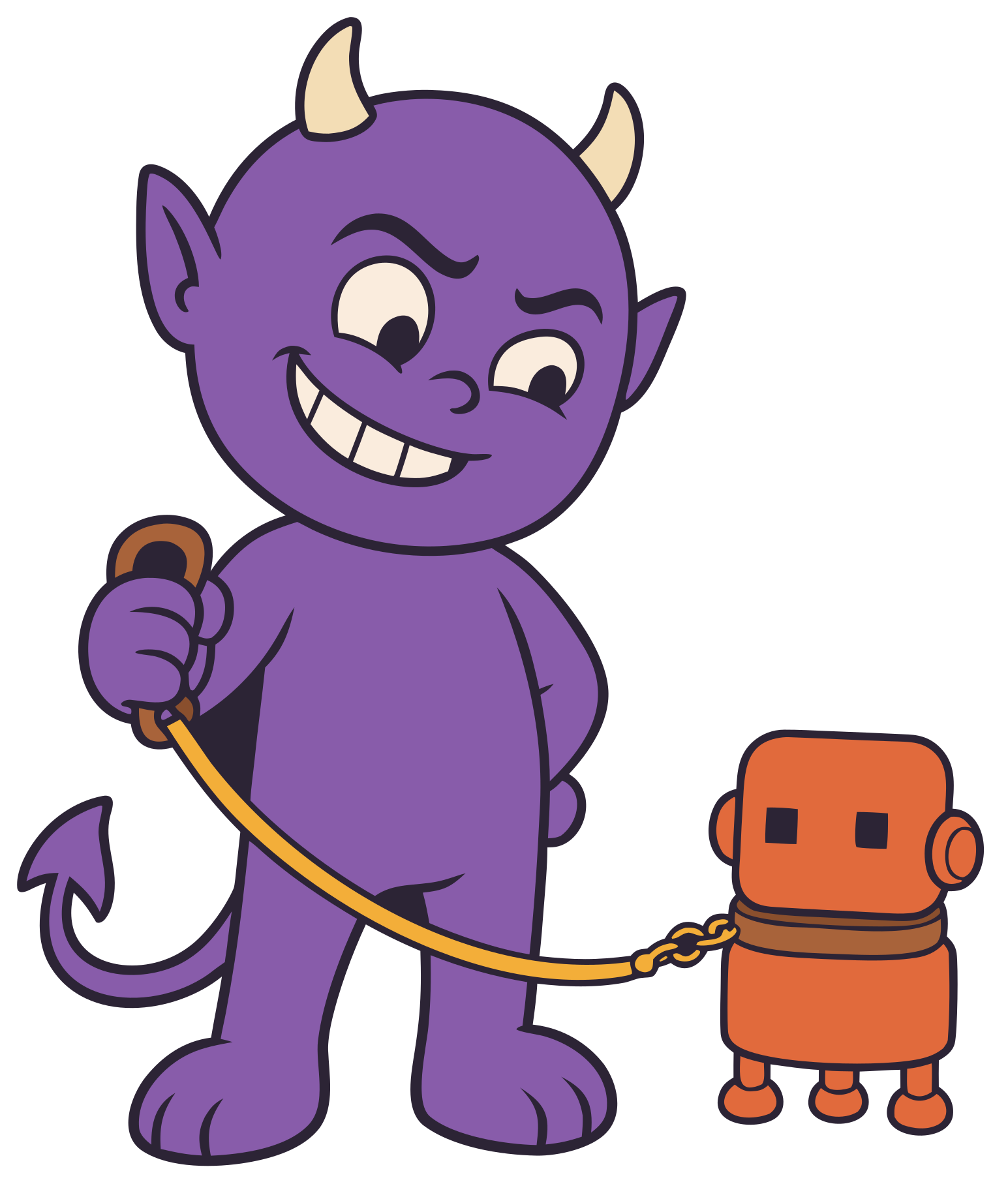
The good news is that despite the confusion everywhere, XP can inspire what comes next. We call it Impatient Programming. IMP for short. Practitioners are Imps, and we keep our clankers on tight leashes.
Six of the twenty-nine rules, each in two sentences.
As you work out what the feature must do, the agent writes each obligation into the Contract. On the exhale, you make sure it's complete.
On the inhale, the agent sprawls until the feature shows what it wants to be. On the exhale, you fold what you learned back into what already exists, in the same PR.
Agents will happily write thousands of automated tests along with your code. Imps run them through a kill matrix using mutation testing, and keep a test only if it catches something no other test catches.
As many pull requests as possible ship on automated checks and adversarial model review. Human attention is saved for the reviews that guard against catastrophic risks.
A guardrail is software, and building one is programming. Think of bowling with kids, when you put the bumpers up so the ball reaches the pins.
IMP has no timeboxed iterations, and the rework happens inside every pull request. Once a week the whole company holds a showcase, and presenters can only show something they've finished.

XP was born on Chrysler's C3 payroll project. IMP was born at ZAR, where Obie is CTO. We give people in places like Pakistan, Bangladesh, and Nigeria access to dollars, debit cards, stocks and gold. We're a financial technology company. People depend on what we build, so it has to be right.
IMP describes how our engineering team already works, rule by rule.
In September 2026 Obie deleted components of Agora, our agent orchestration platform. Claude Code regenerated each one from a written intent, a set of decision records and an executable Contract, without access to the old code.
One obligation in that Contract says an operator's Stop landing mid-reboot wins. Writing it down exposed a bug in production, where a Stop clicked during a Reboot was getting lost. The new obligation went in first, and three examples went red against the unchanged code. Then the code changed to match.
Keeping the codebase pristine at each atomic change is so radical and so appealing.
In 1999 Don Wells put the rules of Extreme Programming on a single web page. Obie went through all twenty-nine and asked the same question of each one. What does it look like when typing is nearly free and you have a team of agents at your side?
The name comes from Larry Wall, one of Obie's earliest programming heroes. In Programming Perl he listed the three great virtues of a programmer: laziness, impatience and hubris.
XP's own values carry over untouched: communication, simplicity, feedback, courage and respect. Underneath them is the heart.
Obie's friend Jerry Weinberg said that no matter how it looks at first, it's always a people problem. We've found that's true, and that the reverse is true too. When we win, it's always because the people involved are amazing individuals.
/primer.md.