Today I'd like to discuss a topic that, unfortunately, most developers overlook—yet mastering it is essential if you want to build a successful online presence. I wasn't aware of its importance a couple of years ago, but I've since learned that understanding SEO fundamentals can make a real difference in your reach. In this piece, I'll walk you through the minimum basics every content creator should know about SEO and how Google works. Think of it as a practical checklist you can apply to every page and piece of content you publish, especially if you're serious about reaching an audience.
TL;DR VERSION
The One Metric That Matters
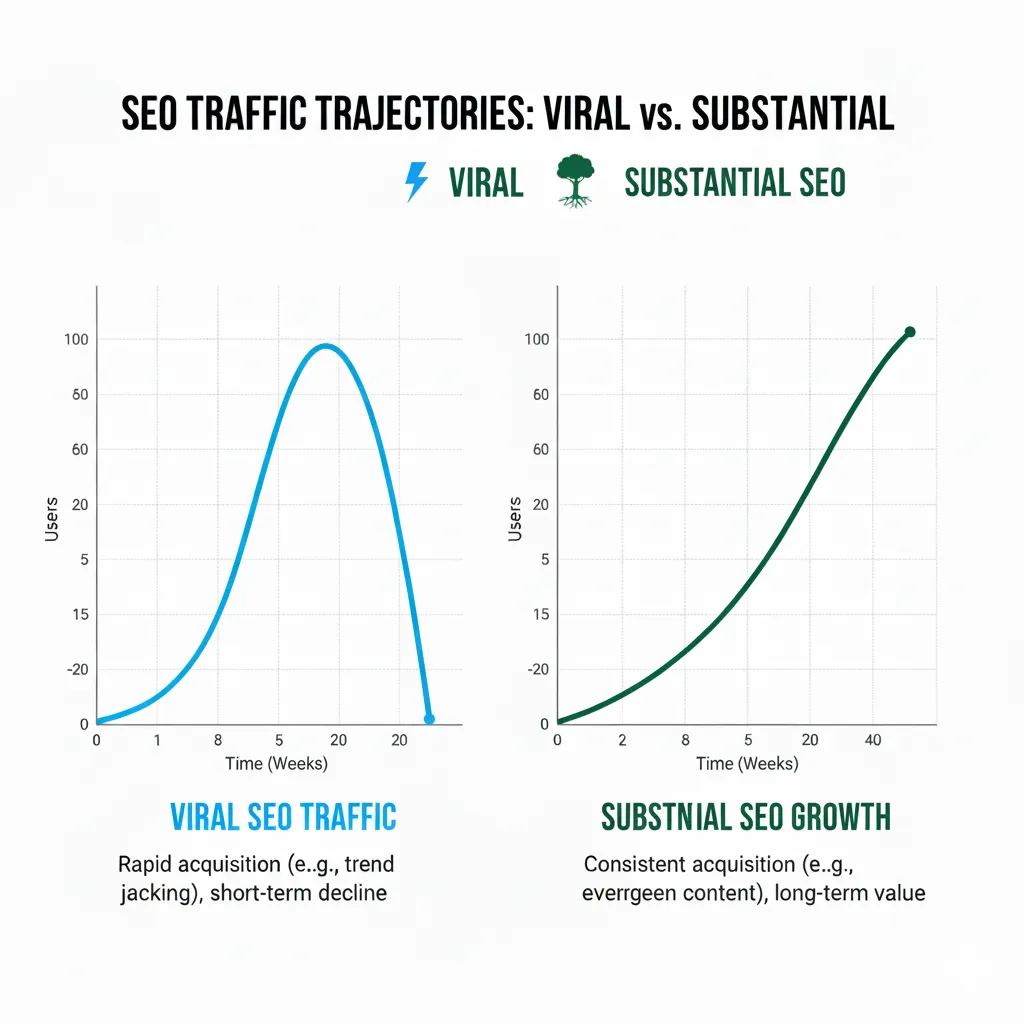
Organic traffic (clicks from Google search results) is the true measure of content success. Viral spikes don't count—what matters is steady, accumulated growth over time. You need to rank in the top 3 search results for your target keywords to get meaningful clicks.
What Doesn't Work
- Viral traffic from Hacker News, Twitter, etc. fades quickly
- One-time spikes provide no long-term value
- Focus on sustainable organic growth instead
The 3 SEO Fundamentals
| Fundamental | What You Need |
|---|---|
| 1. Page Structure | Title tag, H1 heading, meta description, social images |
| 2. Content Focus | One clear idea per page, no mixing topics, no duplication |
| 3. Measurement | Google Search Console to track clicks, keywords, rankings |
Quick Checklist
- ✅ Does your page have a clear title tag (50-60 characters)?
- ✅ Is there a single H1 heading?
- ✅ Do you have a compelling meta description (150-160 characters)?
- ✅ Does one page focus on ONE idea only?
- ✅ Are you tracking performance in Google Search Console?
FULL VERSION
Clicks: The True Measure of Success
At its core, content creation is about sharing your ideas with as many people as possible. But how do you know if your content actually resonates? The answer is surprisingly simple: clicks.
When I say clicks, I'm talking about organic traffic—the number of people who find your blog post in Google's search results and decide to click through. It's the most honest metric of whether your content is genuinely useful. And here's the catch: to get meaningful clicks, you need to rank in the top three results for your target keywords. Without this visibility, your content might be excellent, but it won't reach the people searching for it.
This is why organic traffic matters so much. It tells you whether real people, actively looking for what you have to say, find your content valuable enough to engage with it.
What Actually Works (And What Doesn't)
Let me start by clearing up a common misconception. Going viral—whether on Hacker News, Twitter, or elsewhere—feels great in the moment, but it's not sustainable. That spike in traffic inevitably fades, and Google may even deprioritize or remove your content afterward.
What actually works is the opposite: consistent, accumulated clicks that grow over time. Imagine this trajectory: two clicks from Google this month, four next month, eight the month after. That steady upward trend is what signals real value. Viral moments are noise; accumulated organic growth is signal. Only the latter truly matters for long-term success.
The Three Fundamentals That Drive Results
So how do you achieve that sustainable growth? By focusing on three core fundamentals that Google—and search engines in general—actually care about.
Fundamental 1: Proper Page Structure
Every web page needs a foundation. This means having a clear title tag, an H1 heading, a compelling meta description, and relevant images for social sharing. I won't sugarcoat it: these take time to prepare properly. But they're non-negotiable. Think of them as the skeleton that holds everything together. You can skip other bells and whistles, but these three elements should always be present.
I built a Chrome extension to verify SEO quickly
Fundamental 2: Focused, High-Quality Content
Your second pillar is content quality, and it hinges on focus. Each page should communicate one clear idea. If you're writing about why your product is the best, stick to that. Don't suddenly pivot to company history or tangential topics—save that for separate pages.
The same applies to depth: if you want to explore how to use a tool at the command line, then show code examples, then discuss AI's future, you've written three articles, not one. Keep your intent laser-focused. Your content should be precise, easy to read, and never duplicated across pages. One page, one message.
Fundamental 3: Measure What Matters with Google Search Console
Finally, connect Google Search Console to your site from day one—even if you're just starting out. This free tool is invaluable. Over time, it reveals which pages are actually getting clicks, which keywords you're ranking for, and whether people can find your content. It's real, actionable data on what's working.
Making It Practical
I use a tool that audits all my pages against these requirements—checking for proper titles, descriptions, and H1 tags. It's a simple way to validate that the fundamentals are in place before you even dive into analytics.
How I Apply This Myself
On my own blog, I prioritize two things: crystal-clear content and solid structure. I aim to ensure every page has a strong title, description, meta tags, and relevant images—though I'll admit I'm still working toward perfecting this on every single page. But the intention is clear, and I notice that when the fundamentals are in place, both readers and search engines engage better.
Where to Go From Here
The good news? This isn't complicated. Now that you understand the basics, you're ready to dig deeper into analytics and optimization. And if you hit a roadblock, tools like ChatGPT can help you think through SEO strategy. You're already ahead of most developers. Now go build something great.