I edit a lot of blog posts. My GitHub stats say I’ve reviewed nearly 450 posts over the past 4 years at PostHog and I’ve edited dozens more for friends and Foster beyond that.
Blog posts are a genre of their own. They are not college essays, scientific papers, letters to friends, or books. I’m sure many ideas of what makes good writing carry over from those, but I’m not pretending I know anything about editing in those areas.
Blog post editing is a distinct skill. There has been a lot written about blog posting, but not so much about blog editing. To help you get better at it (and think through how I do it), here’s what I think about when I edit blog posts.
I don’t believe in blogging for the sake of blogging. Writing for the sake of writing is journaling. Simply existing is not enough.
Your post should have some purpose for existing and that means answering these questions before you write anything:
Why should someone read this?
Why this over something else they can read?
What puts you in a unique place to write it?
Your post should be entertaining, informative, or revealing. You should have the authority to write it, or build that authority in the work you’ve done to write the post.
This isn’t to say your reason needs to be validated. I’ve seen many posts with a strong reason to exist do poorly, and posts with weak reasons to exist do well. You can’t predict which of your posts will be popular.
Once you’ve decided a piece should be written, there’s not a lot of editing to do until at least some of it is written. Once written, even an outline, the next step in editing is to check if the structure makes sense.
My biggest bit of structure advice for blog posts is just say your best stuff first. Get to the point.
Many times the best bit of a post is the title. You can write a great post with just a title and almost nothing else.
Violence and the Sacred: College as an incubator of Girardian terror
Speed matters: Why working quickly is more important than it seems
The body of the post backs up the title, but it is the title that sticks with you the entire time.
The best stuff should be up front because the internet is competitive. You are fighting against every other blog, MrBeast, TikTok, Slack, everything. You need to hook people somehow.
Don’t save your best content for the conclusion. If you are writing “lessons learned,” consider just making lessons learned the piece. Weave the lessons and examples together.
Conclusions are not a good place to put information. Realistically, people get bored and drop off. Most people don’t scroll at all. If you really want to tell them something, tell them at the beginning.
The most important part of blog posts is the examples. This is the evidence to show whatever you are saying is true.
Because anyone can write whatever they want, it can be tempting to just write down all your thoughts and opinions and assume others will agree with you, but what’s obvious to you is not obvious to others.
Instead, let the examples guide you. If you don’t have examples for something, it might not even exist. You need to do more research to find out. There have been countless times when I’ve edited a post, pushed for an example, and it hasn’t existed. This weakens not only that point, but the entire post.
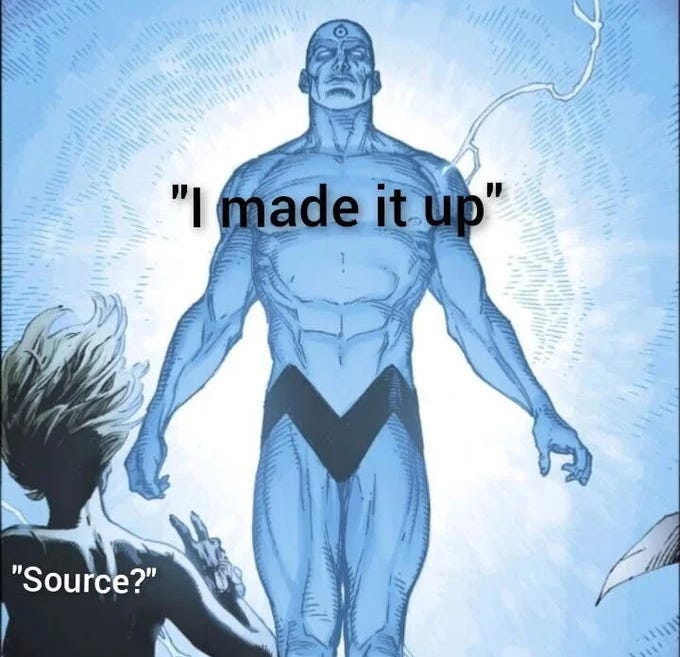
The thing is that examples take a lot of work. They are the research. The good part is that blogging lets you rely on your own experiences as evidence a lot more than other mediums. Examples back up your authority, they are ways for ideas to stick in people’s minds. Readers may not understand a concept, but they can if you give them an example.
When you look at the very best bloggers, what makes them so great is their obsession with examples. The writing of James Clear, Morgan Housel, and Ryan Holiday puts the example at the core of everything they write.
It’s obvious, but blog posts need to make sense. They need to make sense to me as an editor if they are going to make sense for a reader. Despite knowing this, there is always a part of a post that doesn’t make sense (whether it’s my own or others). We writers are just blind to this.
Some common ways blog posts don’t make sense:
The titles, headings, and body need to work together. For example, if the title is “What we’ve learned about X,” the headings should be lessons.
You need to deliver on the promise. A title and intro create expectations and the rest of the body should fulfill these expectations.
Readers get lost. Writing can go too fast. It skips over details that actually matter and suddenly some sentence, paragraph, or section doesn’t make sense. Restructuring or reordering can help with this.
An easy pushback to this is always “but you are just an amateur, an expert reader will understand all of this.” My counter is that, first, posts should be accessible to curious amateurs. This is me in lots of cases. I love reading posts about things I know very little about.
Second, your ideal expert reader doesn’t exist. Most of the time, you know and care much more about the subject than anyone else will. Your expert is also busy, tired, and lazy. Even they can benefit from you improving the coherence of your writing.
A consequence of the internet’s attention deficit is that, whether you like it or not, people will skim your post. Help them do this well. This means:
Have descriptive and interesting headings. Don’t say “Introduction” or “Conclusion.” Look at these as a preview of the whole post.
Texture your writing with lists, bolding, and quotes.
Split walls of text. One or two sentence paragraphs are fine.
Use graphics and memes.
Skimmability helps readers find what’s interesting to them in a piece and dive in further. It also helps them orient themselves in a long piece.
Many of people equate editing with fixing specific words and sentences (line editing), it’s not. Many editors focus on line edits too early, but there’s no point in doing that if the subject, structure, or examples aren’t right.
Once you get these right, my basic line editing approach is just to simplify:
Remove repetition. Posts are usually short enough that you don’t need to repeat yourself. Repeating yourself is boring too. Sometimes this means removing entire sections.
Simplify sentence structure. Use fewer commas. Put your subject closer to the front of the sentence.
Avoid hedging. Blogging is opinionated. Saying “it depends,” “might,” and “sometimes” weaken your writing. You don’t need to say “I think” either, it is implied.
Clarify what “it” is or who “they” are.
Use less jargon, clichés, acronyms, forced humour, and regionalisms.
Write concisely. I built a whole app to do this.
Some amount of this is fine and there are always exceptions to the rule. I don’t try to force some rigid style on all writing. People’s writing tendencies are what make them unique and interesting.
That said, simplification can be a savage process. Writing you’ve spent weeks on gone in a single keystroke. Just remember that this is in service of making what people want to say shine. You sometimes need to cut big chunks to leave only the best bits.