I was recently asked on a podcast what my biggest game-changer was, whether it be a habit, way of thinking, purchase, or change of context. I didn't need to fish around for an answer, since I already know my biggest game-changer: becoming a day person.
By this I mean I operate within daylight hours, getting up early, making good coffee and watching the sunrise with Emma. There’s something grounding about witnessing both the start and the end of the light; it makes me feel in tune with this natural cycle1.
I used to be someone who stayed up late and slept through most of the morning. It's only been the last 5 years that I've consistently gotten out of bed early.
I wake up naturally around 6am, hand grind some coffee while I'm still a bit muzzy and then, once the pour-over is blooming, wake Emma up to watch the sun rise over Cape Town while the air is still crisp and cool, and cars haven't ruined the soundscape and air quality. We sit and enjoy the coffee and view, generally in silence at first then check in with each other, ask about the day, and just enjoy the quality time together.
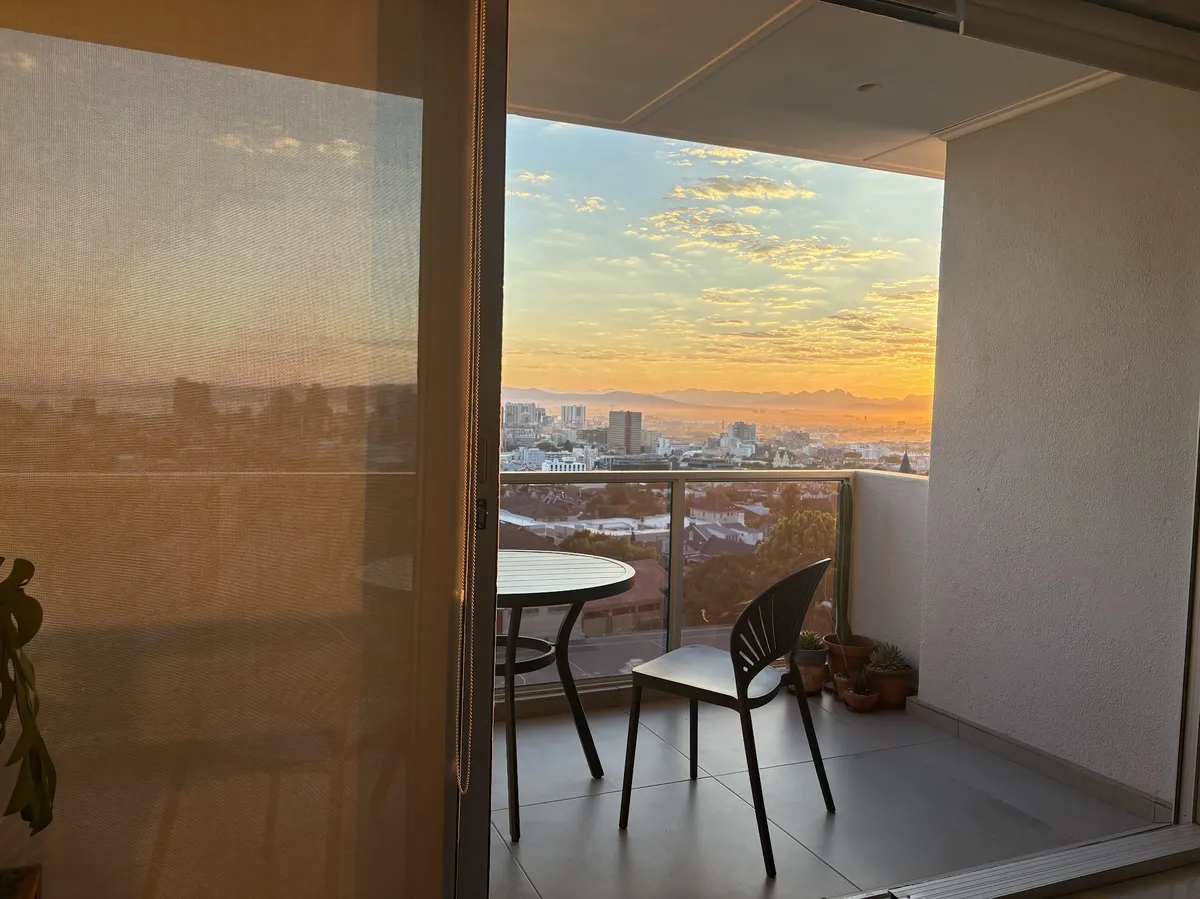
Having the mornings available is delightful since most people aren't awake yet, which makes it feel like a secret, special pocket in which to operate. I like to take my time getting into the day. I don't need to rush and instead have a gentle start, which puts me in a good mood. I think rushing in the morning is one of the more stressful things that I'm happy to leave behind. It takes me about an hour from waking up to leaving for the gym or a trail run—living in Cape Town comes with mountain perks you see.
I like to exercise in the morning because there are fewer commitments and plans that can derail me. The morning belongs to me, and I can do with it as I please. After exercise I shower, make a tasty breakfast, clean the kitchen, then get into work for the morning.
I tend to not open emails until after lunch so that my morning can be used for focussed work, one task at a time, no distractions. After lunch (and usually a nap) I dig into emails, admin, and other tasks that need tending to. This causes the rest of the day to get quite messy and unfocussed, but that's okay because if my morning goes right (and it usually does) then all the important things are already done.
I usually close my laptop around 3 or 4 and enjoy the rest of the afternoon in whichever way I see fit. Conveniently, around 8:30 or 9 I start getting tired since I've been awake for 15 hours already. I don't have any bright overhead lights on in the evenings, and the apartment has a nice warm glow which signals to my body that it's time to start winding down. And because I keep "regular business hours" my mind isn't overactive in the evening (it helps that I'm not on my phone). We're generally in bed by 9:15 and after about half an hour of reading (currently Monstrous Regiment by Terry Pratchett) I'm fast asleep.
This sounds early to some, but the tradeoff is worth it. Generally the activities past 10pm involve watching series or going to a bar, neither of which I'm particularly attached to. I know Europeans like to eat dinner late at night, but luckily that's not the culture here, with South Africans having the earliest bedtimes in the world2.
That isn't to say that I don't stay up late on occasion. I like to socialise over late dinners, go to music festivals, the cinema, and also get dragged to the theatre on occasion. It's just that these are exceptions, with the downside being that even when I'm out until 1am I still wake up naturally at 6. This is what naps are made for.
I'm not suggesting everyone make the switch to being daytime people (I like having them to myself, thank you very much). Experiment and do what feels best for you. This is just something that had an outsized positive impact on me, and I suspect there are many other people who would enjoy mornings if they gave them a proper chance.
--
Opinion: Research about "morning larks and night owls" tends to be a bit muddy and suggests that people can't make the switch due to genetics. In a research setting I'm sure it's pretty difficult to make the switch in X number of weeks, but the research tends to ignore that people make the switch all the time. It also ignores that historically humans have by-and-large been day-time creatures, since artificial lighting (including fire) is a fairly recent invention in evolutionary time, and we have pretty terrible night vision. All of the great apes being diurnal too suggests that we are too.↩