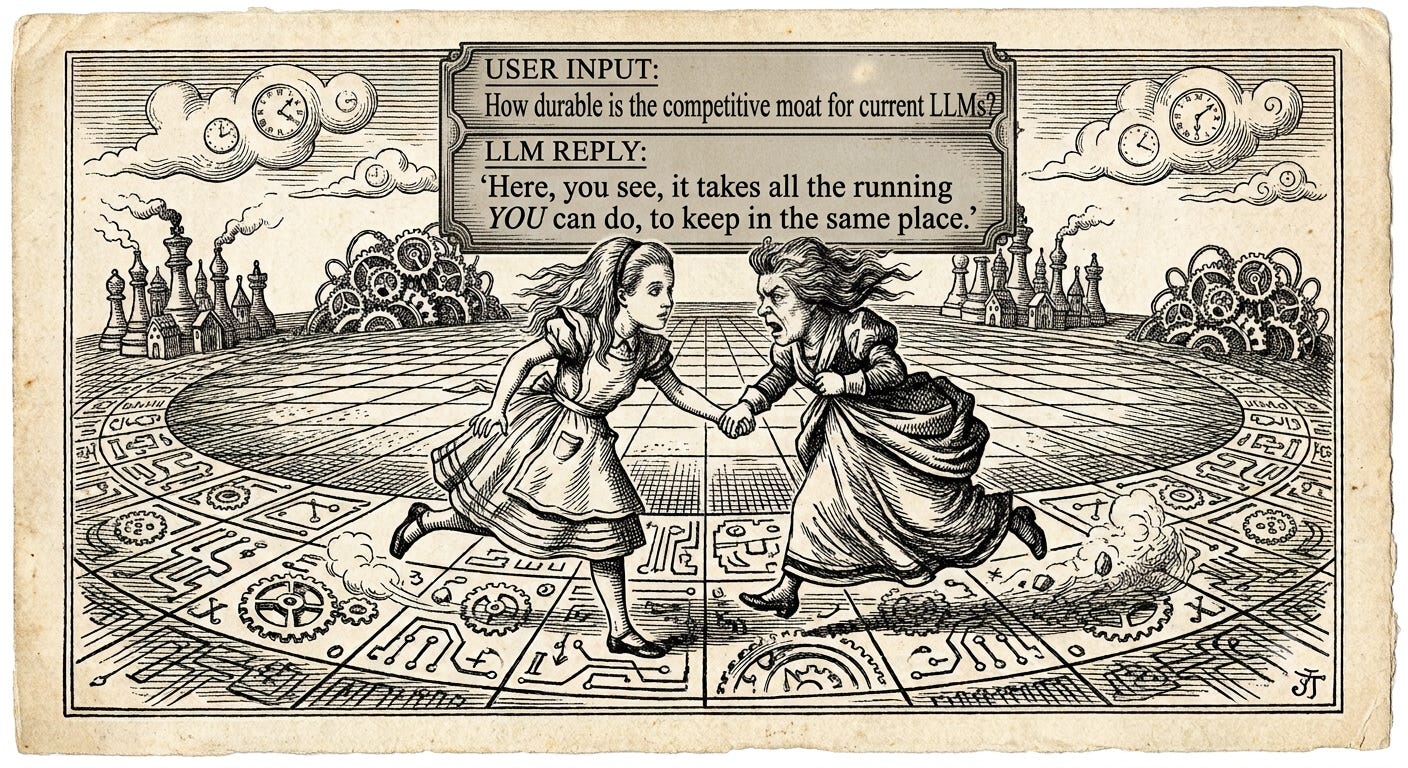
In 1973, the evolutionary biologist Leigh Van Valen coined a term for a strange pattern he kept finding in the fossil record:
Species weren’t getting better at surviving over time, even as they evolved.
Some examples:
a predator gets faster; the prey gets faster too, and the chase resets to zero,
a parasite gets better at infecting a host; the host’s immune system adapts, and the parasite is back where it started.
Van Valen called it “the Red Queen effect”, borrowing Lewis Carroll’s image of Alice running as hard as she can just to stay in the same spot, therefore:
Fitness, in a coevolutionary system, isn’t a ladder, it’s a treadmill.
Now, substitute “species” for “AI lab” and you have the entire foundation-model industry in one sentence.
Economic moat (n.) — a durable competitive advantage that protects profits from competitors and widens over time.
Every few months since 2023, the “best model in the world” title has changed hands. GPT-4 held it, then Claude, then Gemini, then whichever open-weight release out of China had just closed the gap to a rounding error. Benchmarks that were supposed to separate the frontier from the field — MMLU, GPQA, coding evals — have saturated to the point that labs now compete on decimal points, not categories. Meanwhile the price of a token has collapsed by orders of magnitude in under two years, which is not what you’d expect if any single company had captured a durable technological lead.
This is the tell. In markets with real moats — network effects, switching costs, proprietary data flywheels — leadership compounds. In this market, leadership decays on a half-life measured in weeks. Every release is both an offensive move and a confession: we had to ship this now, or someone else would.
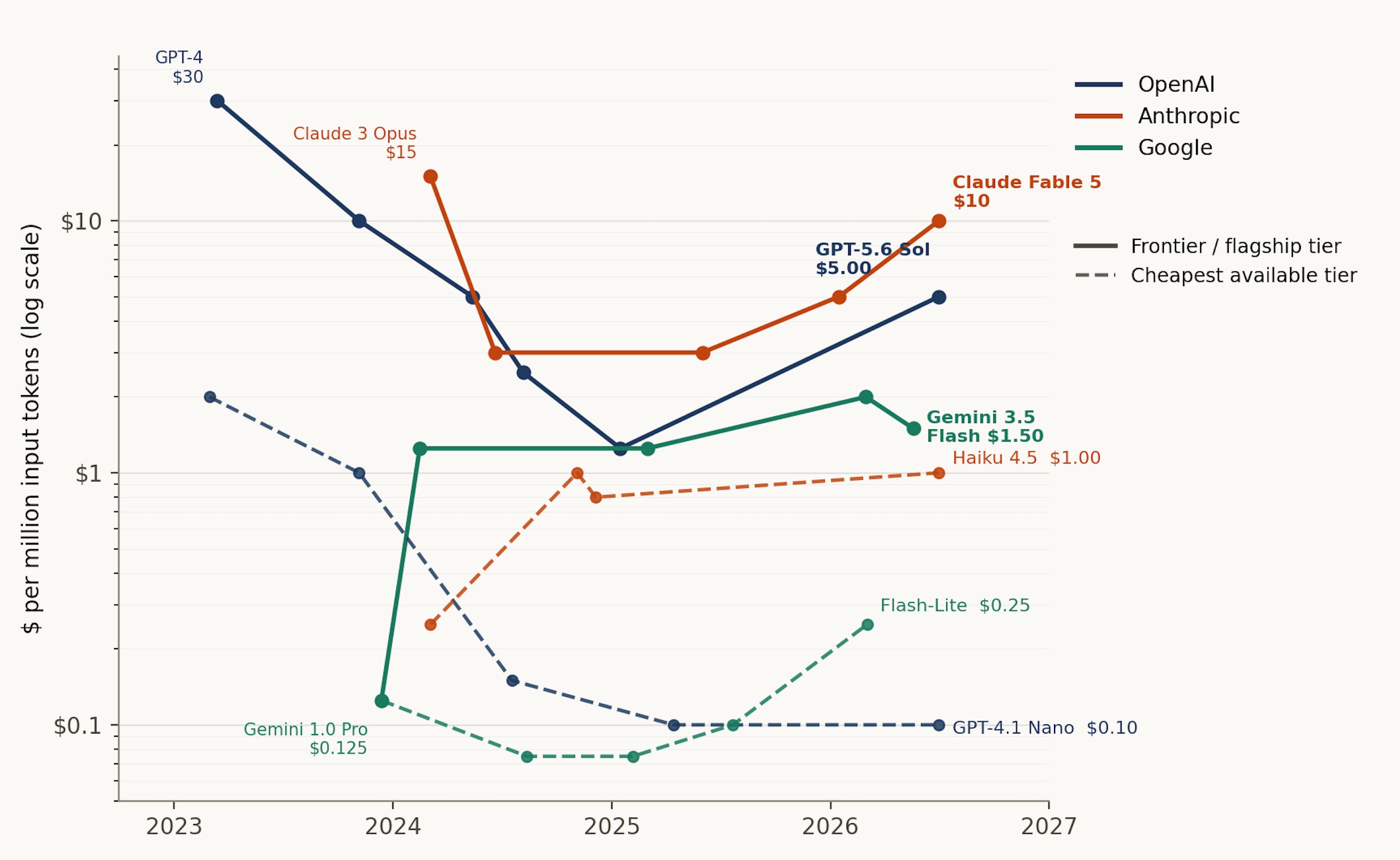
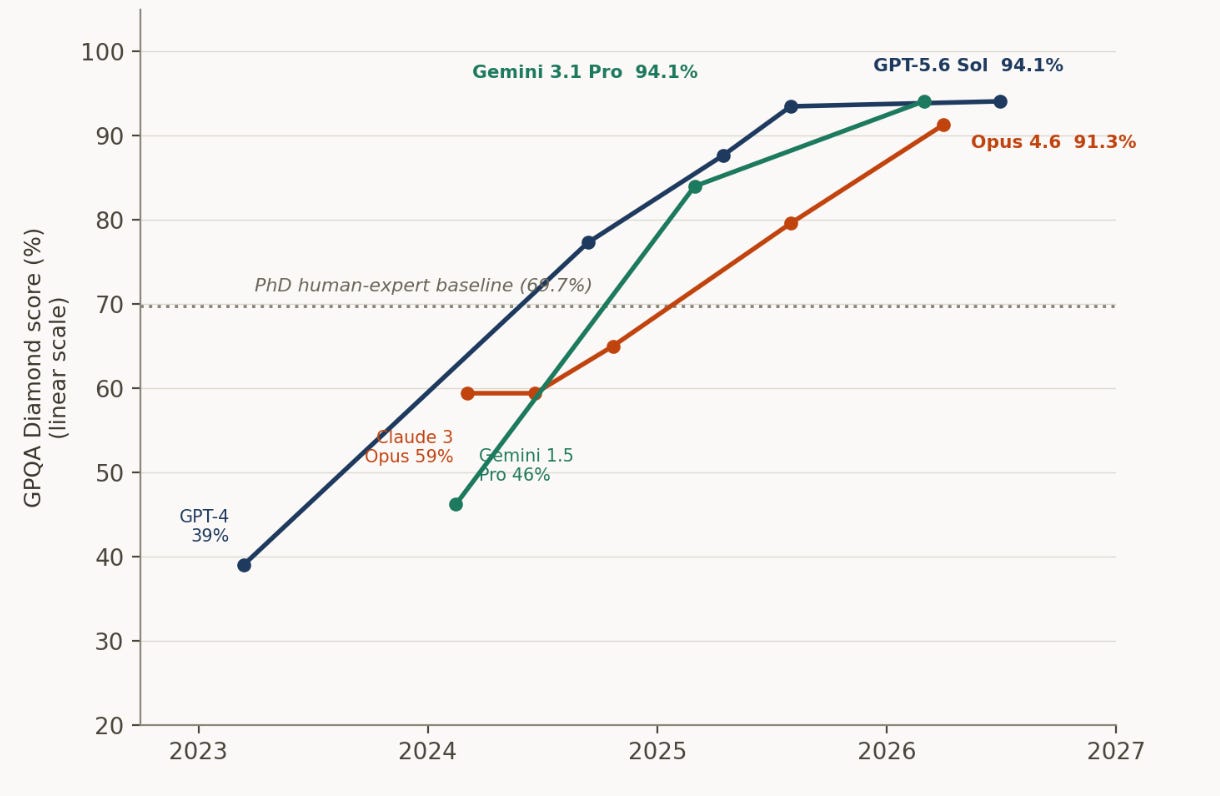
The traditional tech-moat vocabulary — Warren Buffett’s own framework — assumes a static competitive landscape where an incumbent’s advantage grows over time: more users, more data, higher switching costs, cheaper unit economics than anyone entering later. Foundation models invert almost every one of those assumptions. Training recipes diffuse through papers, talent moves fluidly between labs (often taking know-how, not just resumes), and compute — the one input that is scarce — is rentable by anyone with capital, which increasingly means anyone at all, given how much capital is chasing this sector.
What survives isn’t capability leadership. It’s distribution, brand trust, enterprise lock-in, and balance-sheet size — the stuff adjacent to the model, not the model itself. That’s a real strategic insight, but it’s a different thesis than “we have the best AI.” It’s closer to “we have the best AI right now, and a bigger war chest to keep it that way for… the next quarter.”
It’s tempting to reach for the model’s own internals here — to say the inference process itself is chaotic, and point at something like temperature, the parameter that controls how much randomness gets injected into a model’s token sampling. That’s a metaphor, not a mechanism. Temperature governs stochastic sampling at inference time; it has nothing to do with chaos theory’s actual signature, which is sensitive dependence on initial conditions — the butterfly-effect property where infinitesimally different starting states diverge exponentially over time. Turning up temperature makes a model’s output more random. It doesn’t make the system more chaotic. Conflating the two would be sloppy, and it’s worth saying so plainly rather than papering over it. The real chaos is one level up, in the market itself.
Picture the competitive dynamics between labs as a system: “Lab A” releases a model, which shifts the fitness landscape for “Lab B”, which triggers a response, which shifts the landscape again, feeding back into A’s next move. That’s structurally the same shape as a Lotka-Volterra predator-prey system — the classic nonlinear model ecologists use to describe coevolutionary arms races, and one of the settings where chaotic, non-repeating dynamics were first formally documented outside physics. Small perturbations — a pricing move, a benchmark leak, an unexpected open-weight release out of a lab nobody was watching — don’t stay small. They cascade through pricing, hiring, funding rounds, and roadmaps in ways that are, in the technical sense, genuinely unpredictable more than a few moves out. This is the legitimate version of the chaos-theory link: not inside the model, but inside the market the models compete in.
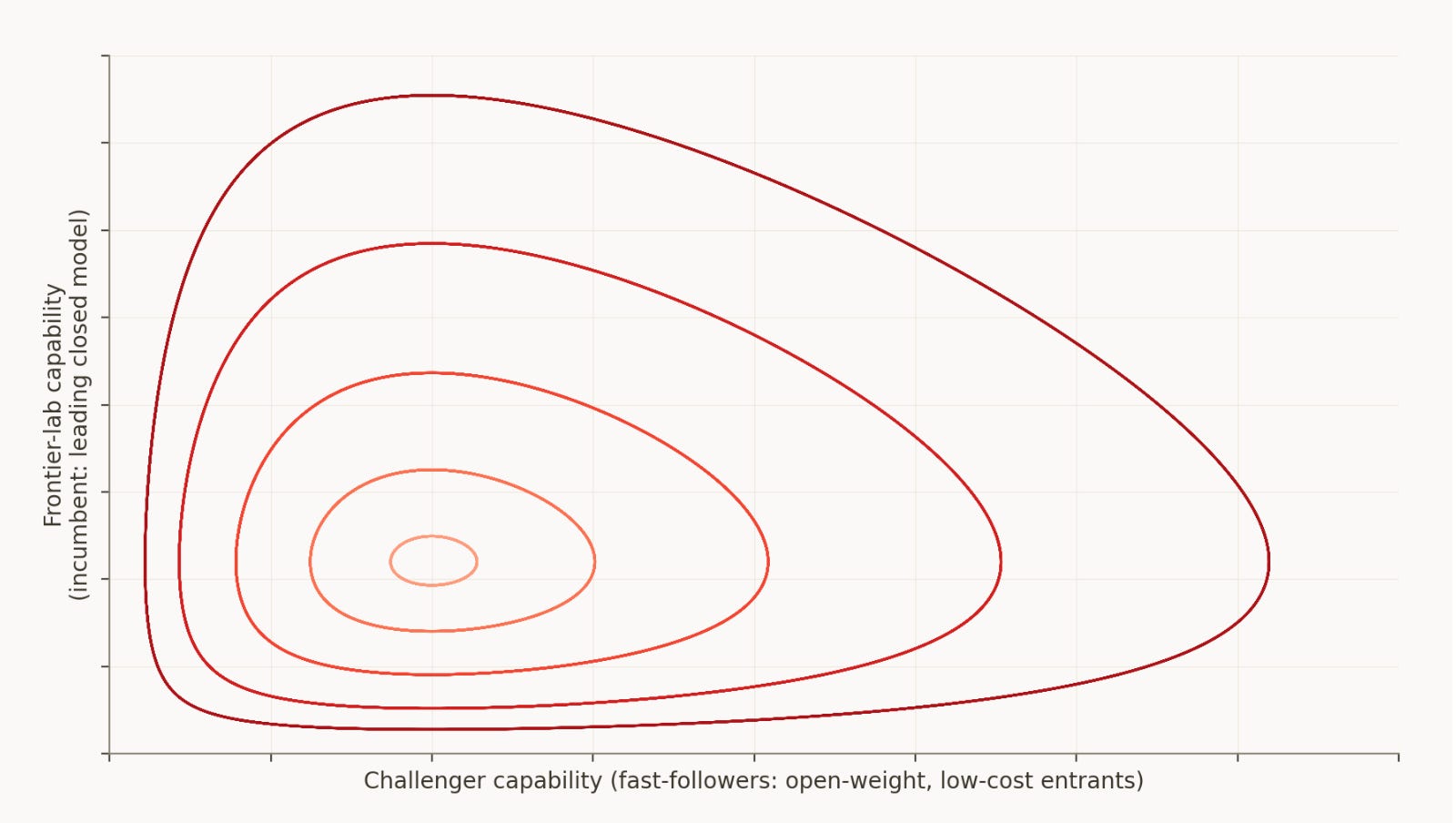
If the race were just “who trains the smartest model,” it might eventually settle into an equilibrium. It isn’t just that. At least five forces are actively speeding up the treadmill rather than slowing it down.
1. The price war. Inference cost per token has been falling toward marginal cost as labs undercut each other to win API market share — a dynamic that compresses margins faster than most of these companies’ own investors modeled when they wrote the checks.
2. Cheap frontier-adjacent models out of China. DeepSeek’s releases were the proof of concept: frontier-comparable capability at a fraction of the reported training cost, arriving with no warning and resetting the “who’s actually ahead” conversation overnight. That’s not a one-time shock; it’s now a standing possibility every lab has to price into its roadmap.
3. Local models good enough to matter. Open-weight models like Gemma from Alphabet (GOOGL) and Qwen from Alibaba (BABA) have gotten capable enough to run credibly on consumer hardware, chipping at the core assumption every API-based business model depends on: that serious inference has to happen in someone else’s data center.
Before finishing the remaining two accelerants, it’s worth pausing on a chart from Epoch AI — the same one that circulated recently via a tweet from Michael Burry — because it corroborates points #2 and #3 directly:
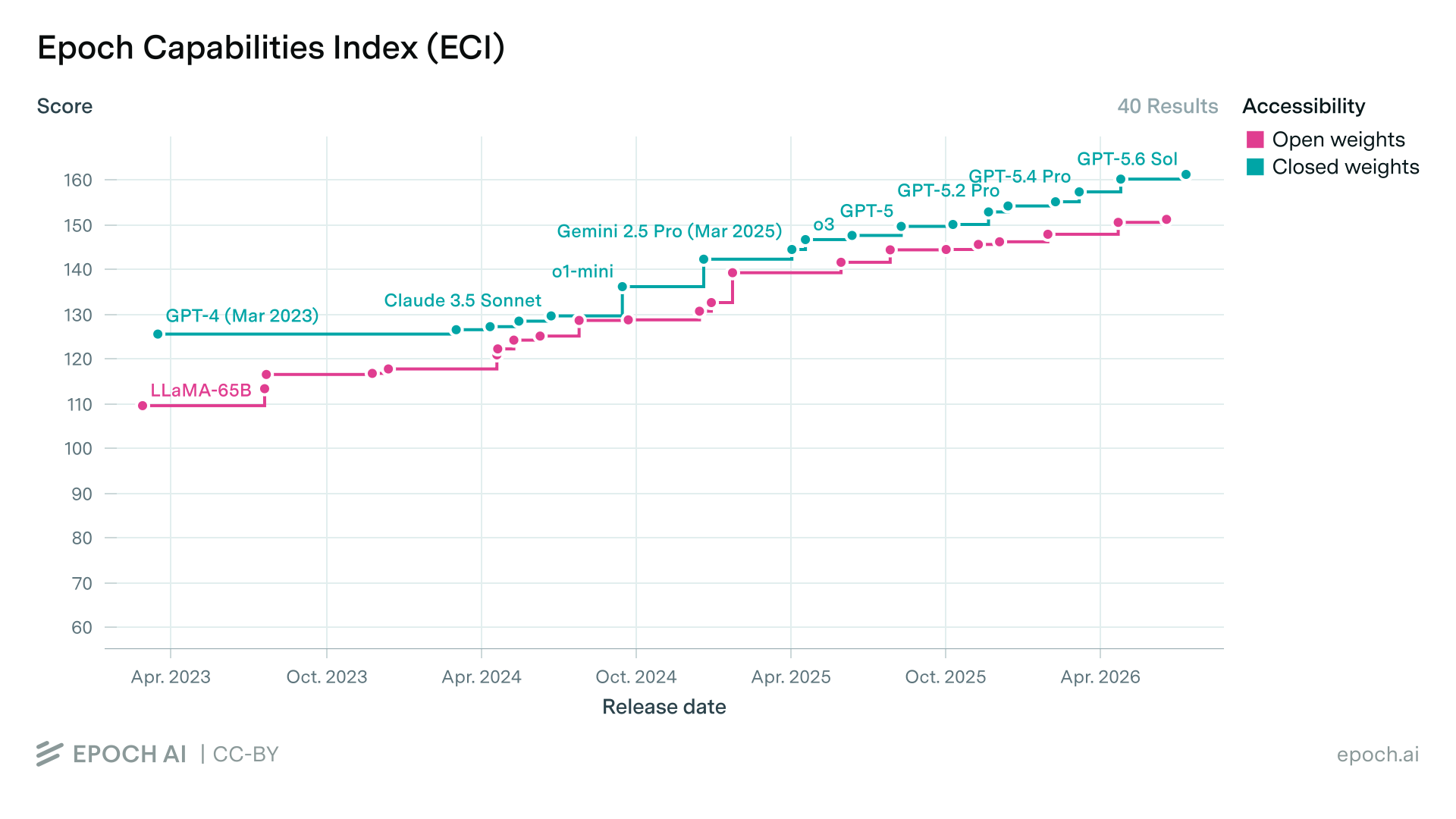
Open-weight models have lagged the closed frontier by an average of just four months since January 2026, per Epoch AI — up slightly from three months in Epoch’s October 2025 read, but either way, we’re talking months, not years. A multi-billion-dollar capability lead evaporates in a few months of open-source catch-up. Does that look like a durable moat?
There’s a second, quieter version of this same story sitting in Epoch’s own datasets: since roughly April 2025, none of OpenAI, Google DeepMind, or Anthropic has published a training-compute figure precise enough for Epoch to estimate with confidence.
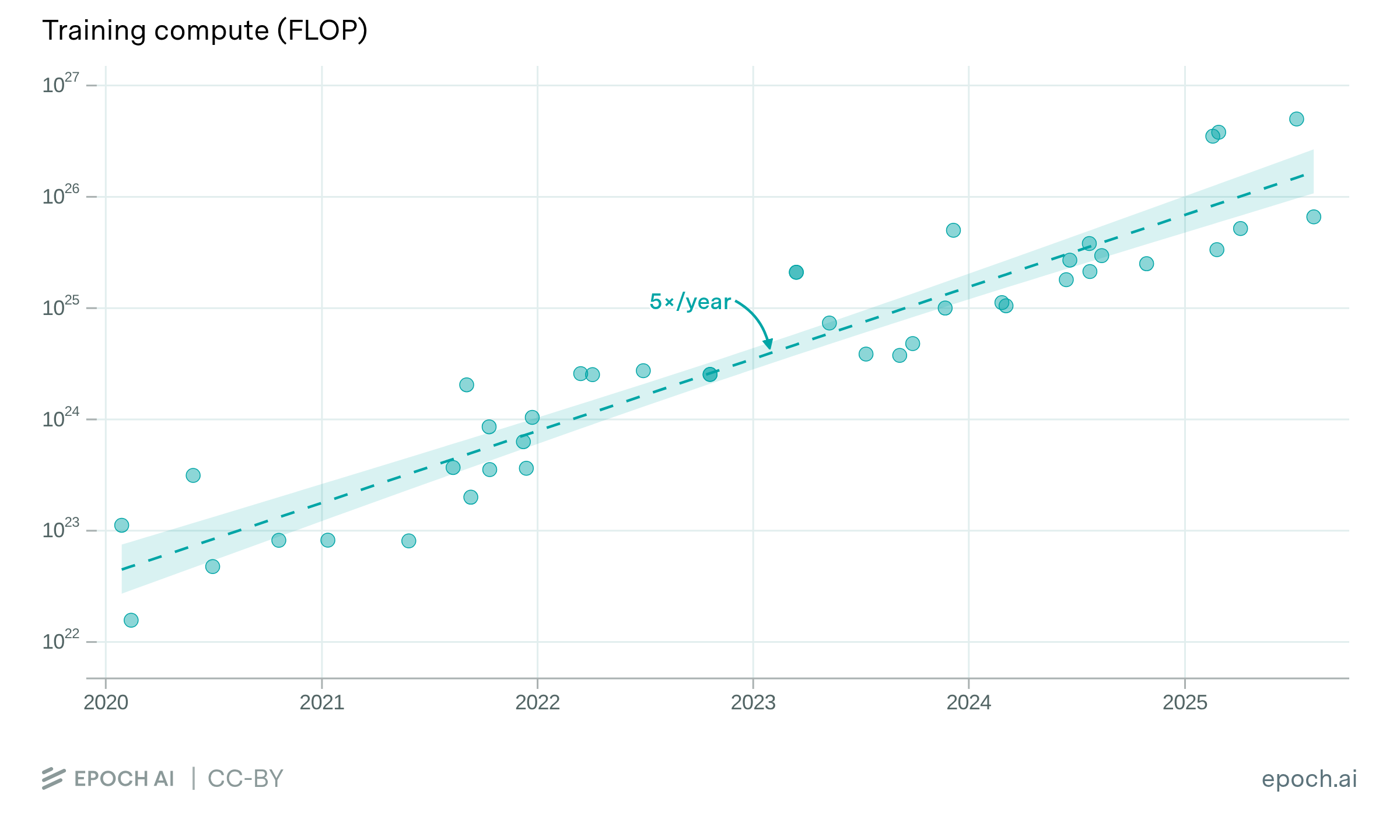
Claude Opus 4.5 carries only a qualitative floor — “likely over 1e25 FLOP” — and nothing more specific exists for GPT-5, GPT-5.5, or the Gemini 3 series either. It isn’t that scaling stopped; every other signal in this piece says otherwise. It’s that the labs stopped showing their work.
A race where no outside party can verify who’s actually ahead on the one input that’s supposed to matter most isn’t a race with a legible moat — it’s one where the moat claim itself can’t be checked.
Let’s now continue with the last two accelerants.
4. Hardware closing the loop. Apple (AAPL) is reportedly restructuring its entire chip roadmap around this shift — skipping high-end M6 variants to fast-track an AI-focused M7 generation, aimed squarely at heavier on-device inference, with memory bandwidth climbing toward 240 GB/s specifically to make local models practical on ordinary laptops. If the hardware layer and the local-model layer converge, that’s a second front against the cloud labs’ business model, arriving from a completely different industry.
5. Capital-markets pressure. This one’s new, and it might be the most Red-Queen-shaped of all — See below.
Everything above describes competition over capability. But in the last month, the Red Queen dynamic has opened a second front: competition over who gets to define what a public AI company even looks like.
Anthropic filed a confidential S-1 in June 2026, reportedly targeting an October Nasdaq debut around a $965 billion valuation. OpenAI filed confidentially too, but appears to be leaning toward pushing its own listing into 2027 — partly spooked by how choppy the market’s reception to SpaceX (SPCX)’s own record-breaking IPO turned out to be. And according to reporting on the bankers involved, the read inside the investment banks advising both companies is blunt: whoever lists first defines the industry for how public markets price AI going forward.
That’s the Red Queen effect metastasizing from the model layer into the capital markets. It’s no longer just “ship the better model before your rival does.” It’s “go public before your rival does, on terms good enough that you set the comp table everyone else — including your rival — gets valued against.” Neither company can afford to sit this one out, and neither can afford to move first if the market isn’t ready. That’s a genuinely chaotic decision problem, not a simple race.
The pressure isn't only competitive. In July 2026, OpenAI proposed handing the US government a roughly 5% equity stake — worth an estimated $42.6 billion at its $852 billion valuation — through a sovereign-wealth-style vehicle modeled on Alaska's Permanent Fund. It's not a capital raise; no cash or dilution to existing investors is involved, and the rationale Sam Altman has offered is political rather than financial: give the public a stake in the upside before Washington decides to take one anyway. Reports name Anthropic, Google (GOOGL), and Meta as other AI companies that could face pressure to follow, though none has confirmed a deal. Layered onto genuine cash pressure elsewhere — OpenAI's 2026 cash burn is tracking toward $25–27 billion, with 2027 projected near $60 billion, and the company isn't expected to turn cash-flow positive before 2030 — it's another arena where "who moves first, and on what terms" matters as much as the underlying technology.
Given all that, it’s worth separating two very different kinds of exposure to this story, because “AI stock” is currently being used to describe companies with almost nothing else in common. The real distinction is where the bet is concentrated, not how big or stable the company is.
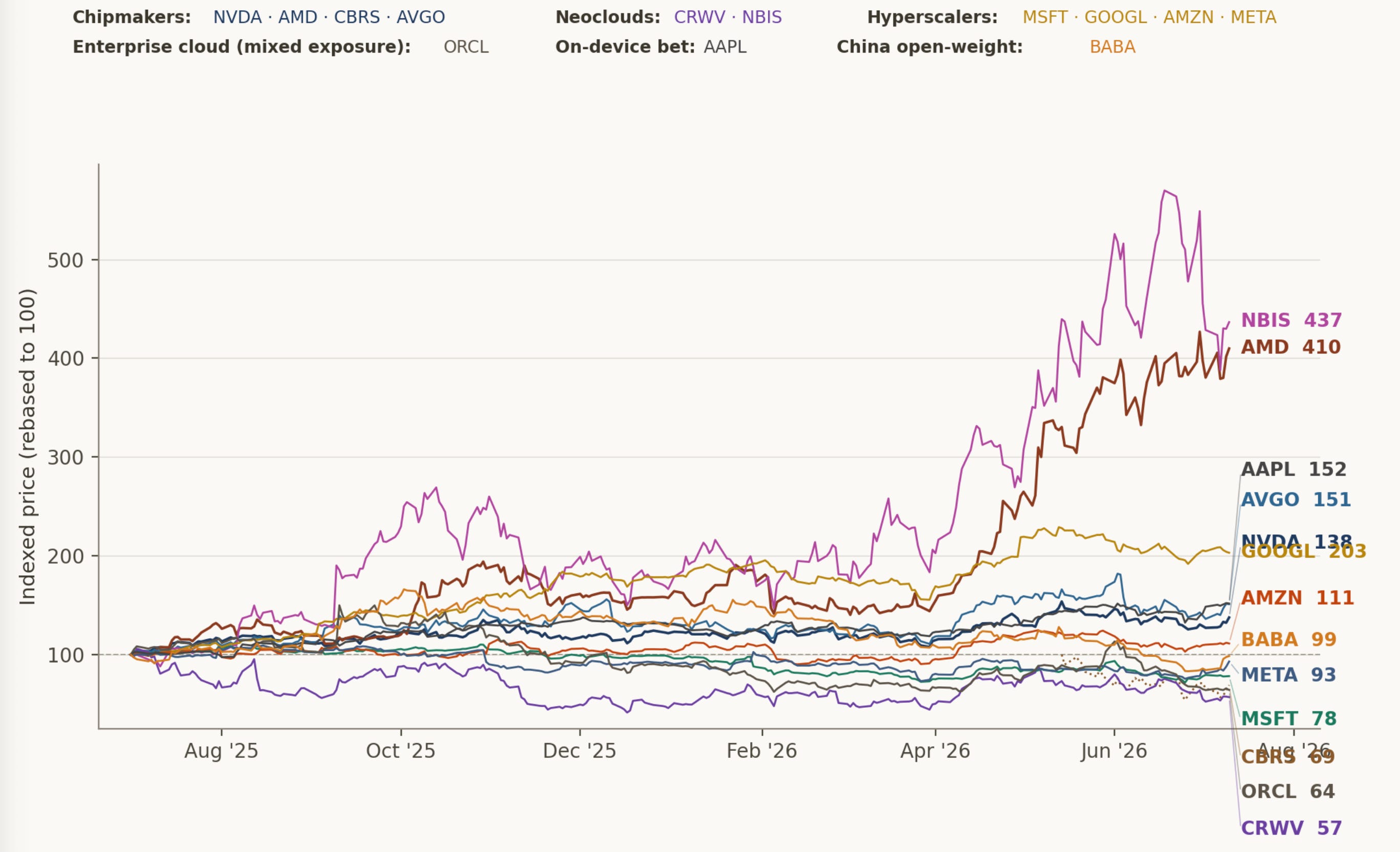
Hedged exposure
Companies that profit from the treadmill regardless of which model is winning this month: Nvidia (NVDA) and AMD (AMD) on the chip side, alongside Broadcom (AVGO), which sells the custom AI accelerator chips (ASICs) that Google runs its TPUs on and the networking silicon every AI datacenter needs for interconnect — exposure that doesn’t care whether GPUs or custom silicon win the underlying architecture argument.
Cerebras (CBRS) is a slightly different case — still trying to establish an alternative chip architecture against an incumbent, rather than selling into an already-won position the way Nvidia and AMD do, but it fits the infrastructure theme far better than it fits alongside the model developers below.
CoreWeave (CRWV) and Nebius (NBIS) do the same on the compute-rental side: their business is renting GPUs, so they benefit from escalating AI demand regardless of whether OpenAI, Anthropic, Google, xAI, or anyone else ends up ahead. Microsoft (MSFT), Google (GOOGL), and Amazon (AMZN) round this out by virtue of owning both cloud distribution and a horse in the model race simultaneously, so they’re hedged against their own model losing.
Meta (META) is angling to join that last group directly — Bloomberg reported in July 2026 that Meta is building a cloud business, Meta Compute, to sell its excess AI capacity against AWS, Azure, and Google Cloud, which not incidentally makes Meta a new competitive threat to CoreWeave and Nebius rather than just another hyperscaler.
Oracle (ORCL) belongs here too, though its AI exposure is less pure than CoreWeave’s or Nebius’s — Oracle Cloud Infrastructure is a genuine beneficiary of the compute buildout, but it’s bolted onto a decades-old database and enterprise-software business, not a GPU-rental pure play.
These are the “picks and shovels” plays, and the Red Queen dynamic is arguably good for most of them — the faster the labs have to run, the more compute they rent. “Most” is doing real work in that sentence: over the trailing year, Nebius is up over 300% while CoreWeave and Oracle are both down more than a third, so “hedged” describes the business model, not a guaranteed stock outcome.
The concentrated bet
Companies whose entire valuation is the claim that they'll stay ahead in the capability race: Anthropic and OpenAI most directly, both explicitly warned by their own bankers that the order of finish matters as much as the destination, though the underlying financial pictures aren't identical.
OpenAI's 2026 cash burn is tracking toward $25–27 billion, with 2027 projected near $60 billion, and the company isn't expected cash-flow positive before 2030.
Anthropic's revenue has grown from $1 billion in January 2025 to a reported $47 billion run rate by its May 2026 Series H — OpenAI disputes the pace of that growth, arguing Anthropic's figure overstates revenue by roughly $8 billion on accounting grounds — and independent analysis from SemiAnalysis models Anthropic clearing $1 billion in operating profit as soon as Q3 2026, though that's a forecast, not a disclosed result.
None of that changes the underlying bet: both companies' valuations still rise or fall entirely on capability leadership holding up. It just means the size of the cushion if it doesn't is not the same. Apple sits in an unusual middle position here — hedged by balance sheet, but making a genuine bet that on-device AI, not frontier cloud models, is where the durable value actually accrues.
If the core argument here holds — that no foundation-model lab has a durable capability lead — the useful question isn’t “who wins.” It’s “whose business holds up regardless of who wins.” That splits into three lanes, plus one fourth “meta-choice” about how much of this story to hold at all.
Lane one is distribution and balance sheet. Microsoft, Google, Amazon, and — pending the Meta Compute launch — Meta already appear above as the picks-and-shovels plays, hedged against their own model losing because they own (or are building) the cloud layer underneath every model, theirs and their rivals’. Apple sits adjacent to this lane rather than inside it — its bet is that on-device inference, not frontier capability, is where durable value settles, which is a different wager than “our model wins.”
Lane two is the capability bet itself. Anthropic and OpenAI, once trading, are direct exposure to the claim that one specific lab keeps its lead. This piece’s own argument cuts against that being a safe assumption — if leadership decays on a half-life measured in weeks, a concentrated bet on either lab’s continued dominance is a bet against everything above it.
Lane three is the physical layer, and it’s worth being precise about why it isn’t automatically safe either. Nvidia, AMD, Broadcom, Cerebras, and the memory makers underneath them — Micron (MU) is the most direct US-listed pure-play — are exposed to AI capital expenditure rather than to any single lab’s model quality. That looks like safety, but memory is the most cyclically brutal, commoditized segment in hardware, with a decades-long history of price collapses whenever supply investment outruns demand. If AI capex growth decelerates, or the capacity now being built simply catches up to demand, this lane reprices the same way every memory cycle always has, independent of how the model layer above it is doing.
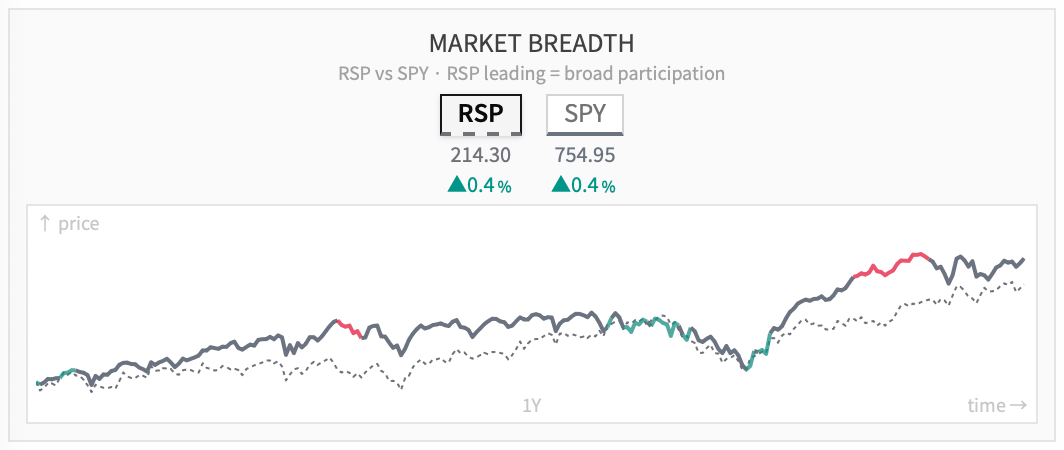
The fourth option is not picking a lane. The S&P 500 (SPY) isn’t a neutral way to sidestep this decision anymore — Information Technology alone is roughly 30% of the index by sector classification, and once Alphabet, Amazon, and Meta are counted back in (all classified outside “tech” despite being central to this story), mega-cap AI-adjacent weight runs meaningfully higher than that. An index built to dilute that concentration, like the equal-weight Invesco S&P 500 ETF (RSP), which resets every constituent to roughly the same starting weight each quarter instead of letting market cap decide, is a more honest version of “I don’t know who wins, so I won’t guess” than holding cap-weighted SPY while calling it diversified.
None of this is a recommendation. It’s a map of where the risk actually sits — and it’s worth drawing precisely because most coverage of this sector doesn’t draw it at all.
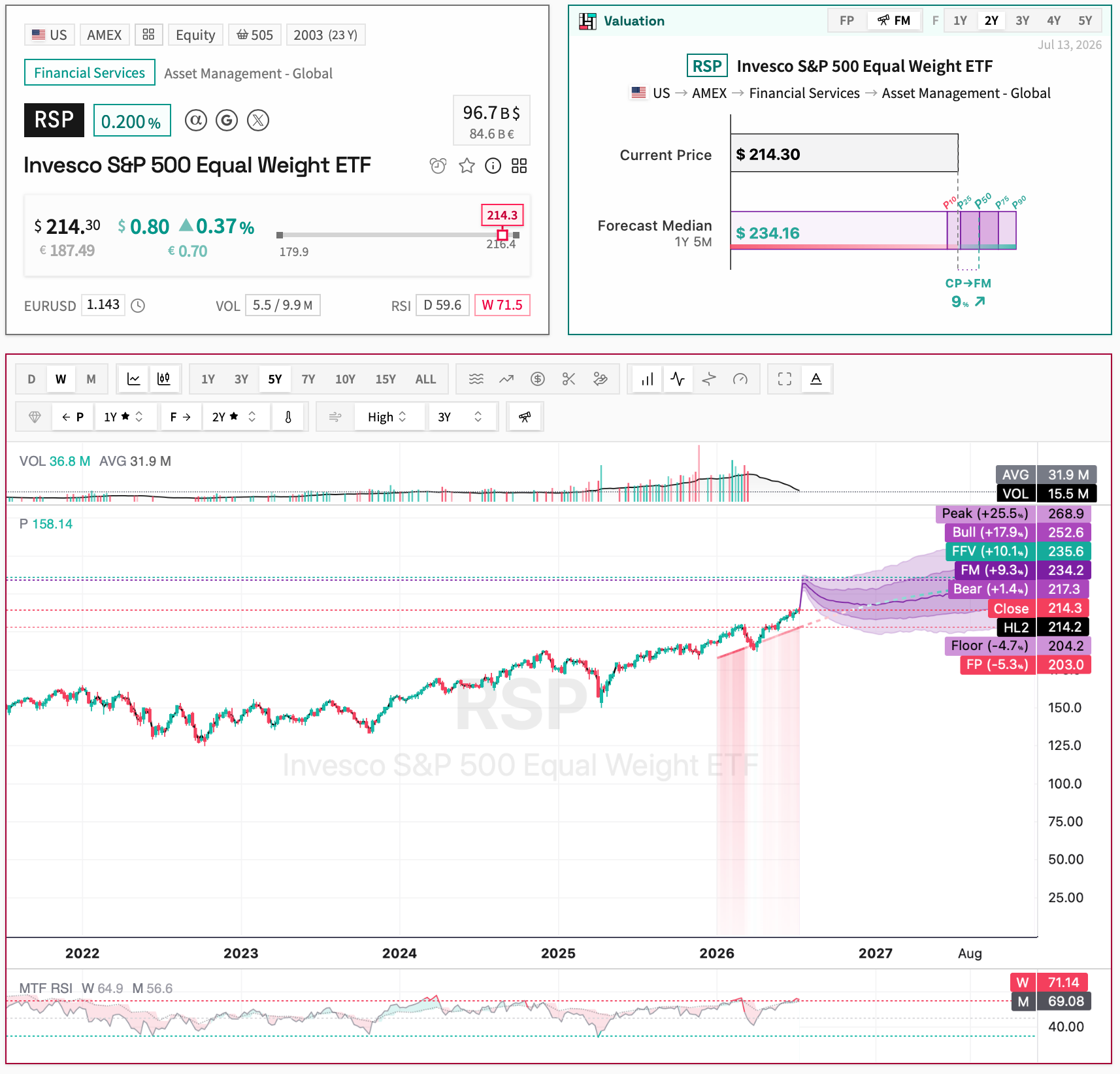
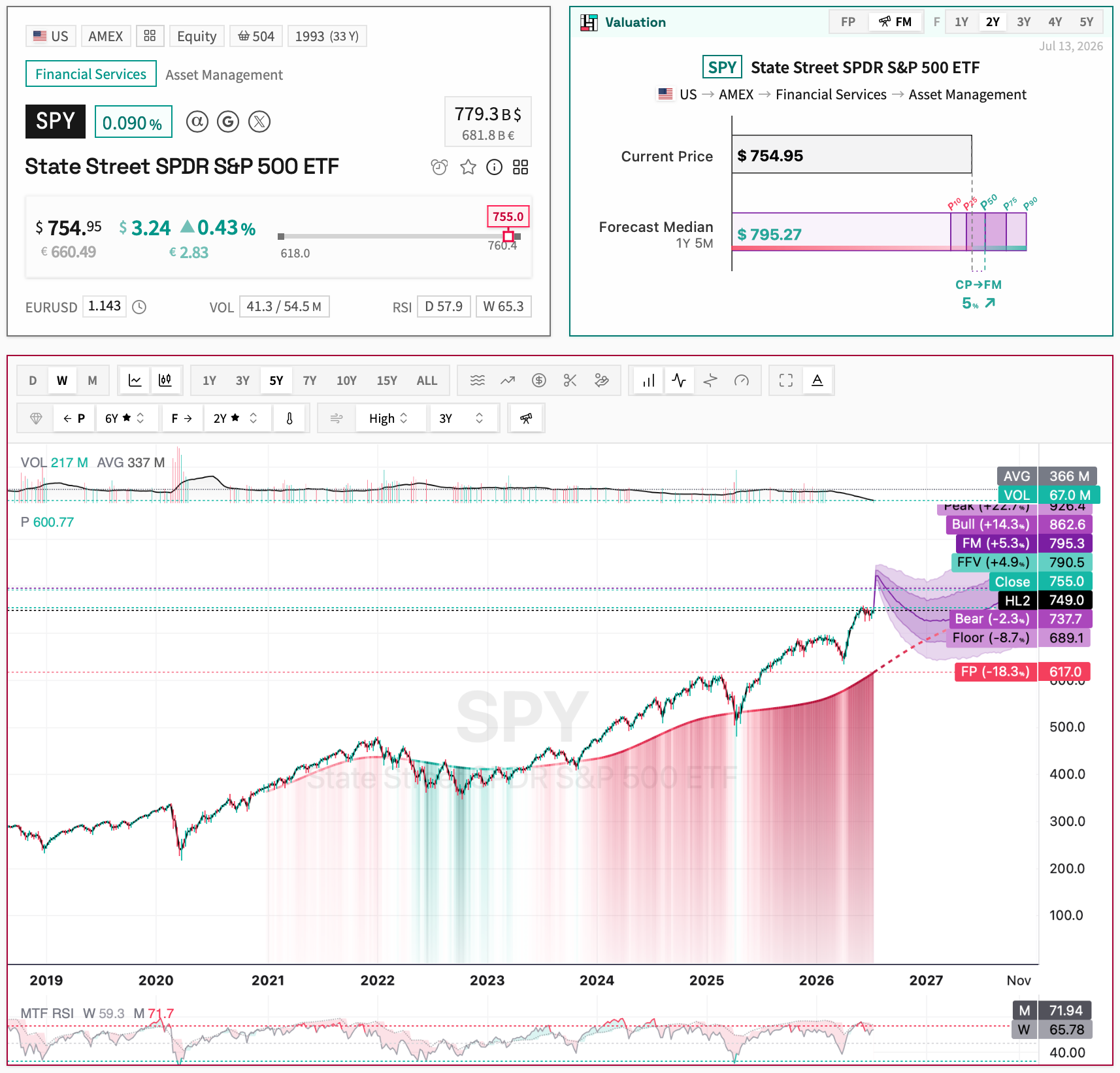
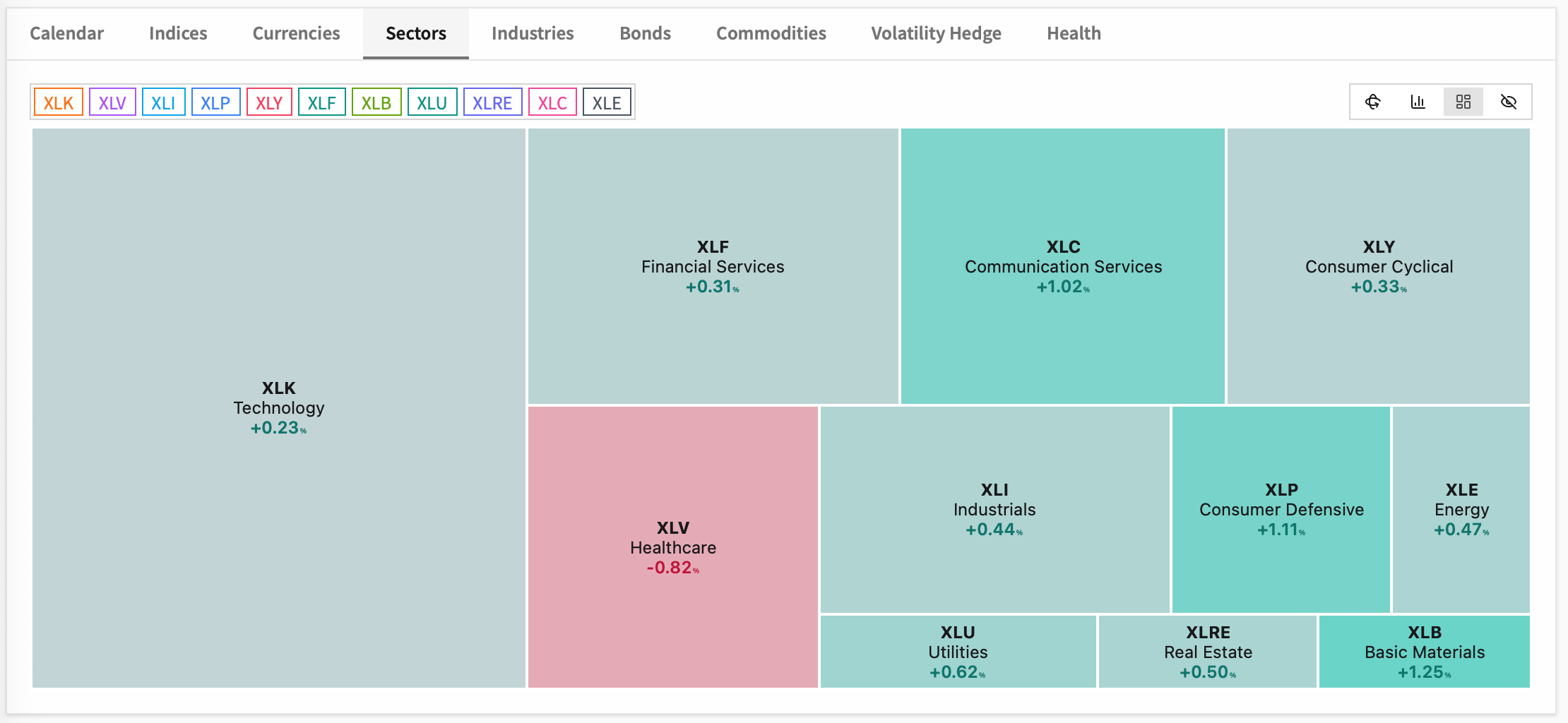
None of this is a recommendation. It’s a map of where the risk actually sits — an
d it’s worth drawing precisely because most coverage of this sector doesn’t draw it at all.
None of this means the AI industry isn't valuable, or that the money involved is fake.
It means "moat" is the wrong word for what's happening, and investors, journalists, and the labs' own marketing decks would do well to stop reaching for it.
What's happening is closer to a coevolutionary arms race with the industry's own IPO calendar now caught inside the same feedback loop as its model releases.
Alice's Red Queen wasn't lying when she said it takes all the running you can do just to stay in place: and the AI labs are finding out she was talking about their business model too.
— NFA, DYOR
The Forge by HedgeHammer uses proprietary quantitative models to assess valuation.
Articles in The Forge are human-originated: hypothesis, structure, and thesis are set by our team. Financial data and valuation signals are drawn from the HedgeHammer platform, and all chart images are live screenshots from the app. Article assembly is LLM-assisted.
All content is provided for informational, educational, and research purposes only and should not be considered investment advice, financial advice, or a recommendation to buy, sell, or hold any security. Investing involves risk, including the possible loss of capital. Please conduct your own research and due diligence before making any investment decisions.