Like all American children, I spent a week of each school year learning to sculpt a largemouth bass out of clay.
I cannot tell you why this was part of the annual curriculum at Perry Elementary School, nor why it started in first grade. At that age, I’m not sure any of my classmates had ever seen a largemouth bass; they may as well have asked us to sculpt a particle collider. I can only tell you the results were predictable. My first bass was a cursed, torturous creature, mostly mouth by volume. It looked like someone had tried to turn a fish inside out and gotten bored halfway through.
Still, I thought I could rescue it with design. The school had given us tempera paint in fluorescent colors, but I was hell-bent on creating something new. I stirred the Day-Glo pinks and greens together and watched them collapse into a muddy brown—the dusty, dull brown of a moose without a skincare regimen. I was delighted. My art teacher wasn’t.
This was when I first learned to think of complexity as an aesthetic burden, a lesson I’d be re-taught in almost every creative field. To let colors (sounds, flavors) shine, conventional wisdom dictated, you had to keep things simple.
The year I shaped my first bass was also the year I sipped my first “suicide”—the slang term for mixing all of the flavors at the soda fountain into a single plastic cup.1 Perhaps you know it by that name, or by another equally disturbing one. Some people call the soda a “kamikaze”; in pockets of the Pacific Northwest, it’s better known as a “graveyard.” The exact etymology is fuzzy—it’s not clear which term came first—but it’s death spirals all the way down.
The terms are also surprisingly old. In my research, I found references to both “suicides” and “graveyards” starting in 1950. In the same year the Detroit Free Press referenced a “graveyard soda,” the Akron Beacon Journal published a note about “suicide sodas” that was ostensibly a trend piece but actually an excuse to publish feet pics.
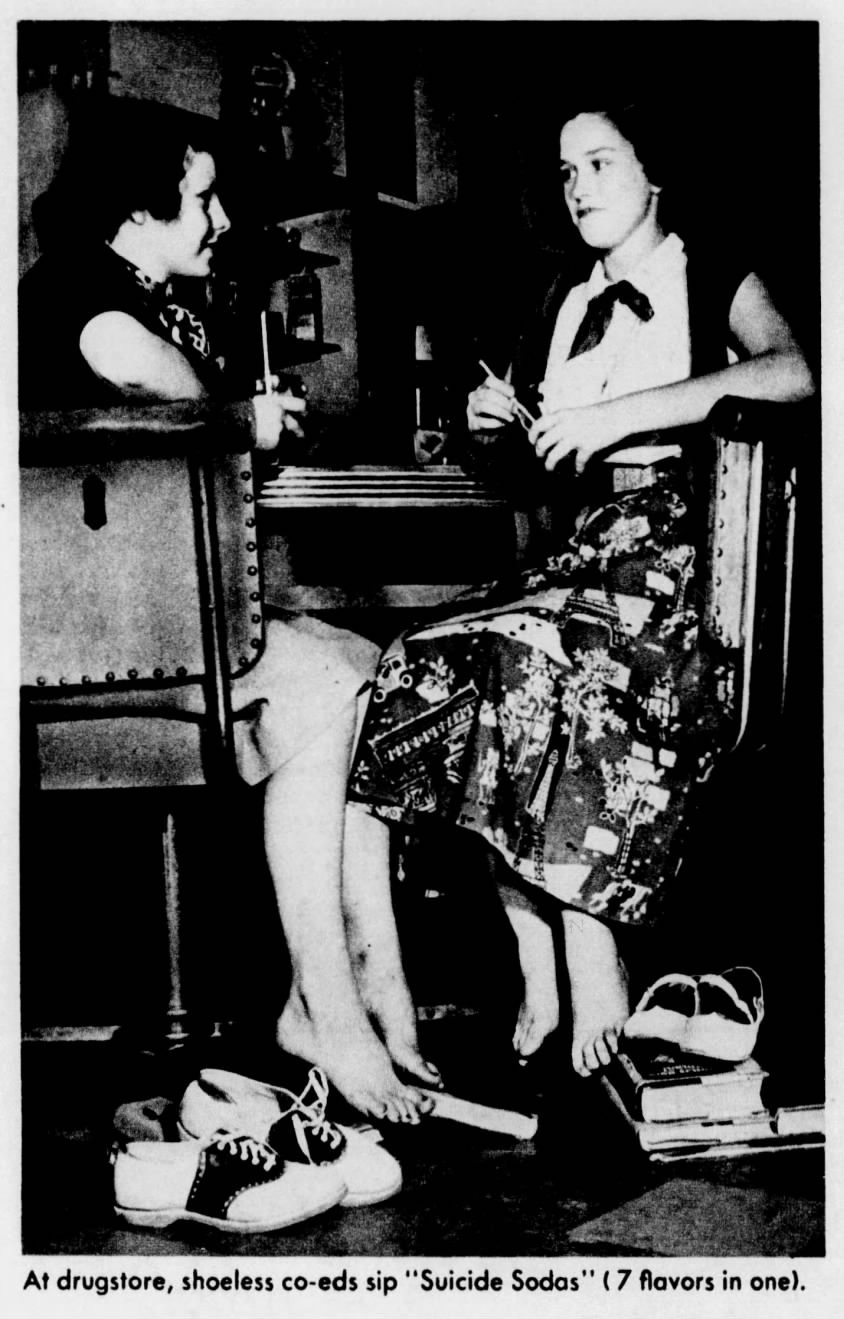
It’s tempting to think of the suicide as a novelty or a gimmick. But I’m not sure kids would still be drinking them 75 years later if that was their only appeal. My memory of childhood suicides—there’s a setup that will get my mother to call—is of a soda that defied the aesthetic principles I was only just starting to absorb. I remember a soda that stayed pleasant and drinkable even as it was tugged in a dozen different directions. I remember a soda that was, if not greater than, at least equal to the sum of its parts.
But like a child sculpting a largemouth bass, I wanted to know what would happen if I added one part too many. So in April, I flew to Atlanta to visit the World of Coca-Cola, an innovative museum where customers pay to see advertisements. The main draw (for me, at least) was Taste It!, a very sticky library of more than 100 different soda flavors. The room was a United Nations Assembly of fountain beverages, from Peru’s bubblegum-adjacent Inca Kola to China’s Fanta Sour Plum, which tastes like Liquid Smoke and cabinet hinges, to Zimbabwe’s Sparletta Sparberry, a surrealist soda designed to showcase the flavor of an imaginary fruit.
But the marquee attraction for irredeemable soda jerks is “Beverly.” Beverly is an aperitif-aping Italian soda that’s become infamous not only for its name but for its flavor, which I would describe with great affection as “carbonated Malört.” You will be unsurprised to hear that I loved Beverly and consumed several glasses of Her before refocusing on my mission: creating the world’s largest, most inclusive suicide.
I quickly ran into a predictable constraint: It is impossible to fit even the merest splashes of 100 different sodas into a single 8-ounce cup. In the end, I needed four cups to collect all my samples. I combined them into a fifth cup by furiously decanting them back and forth like some sort of carnival mixologist.
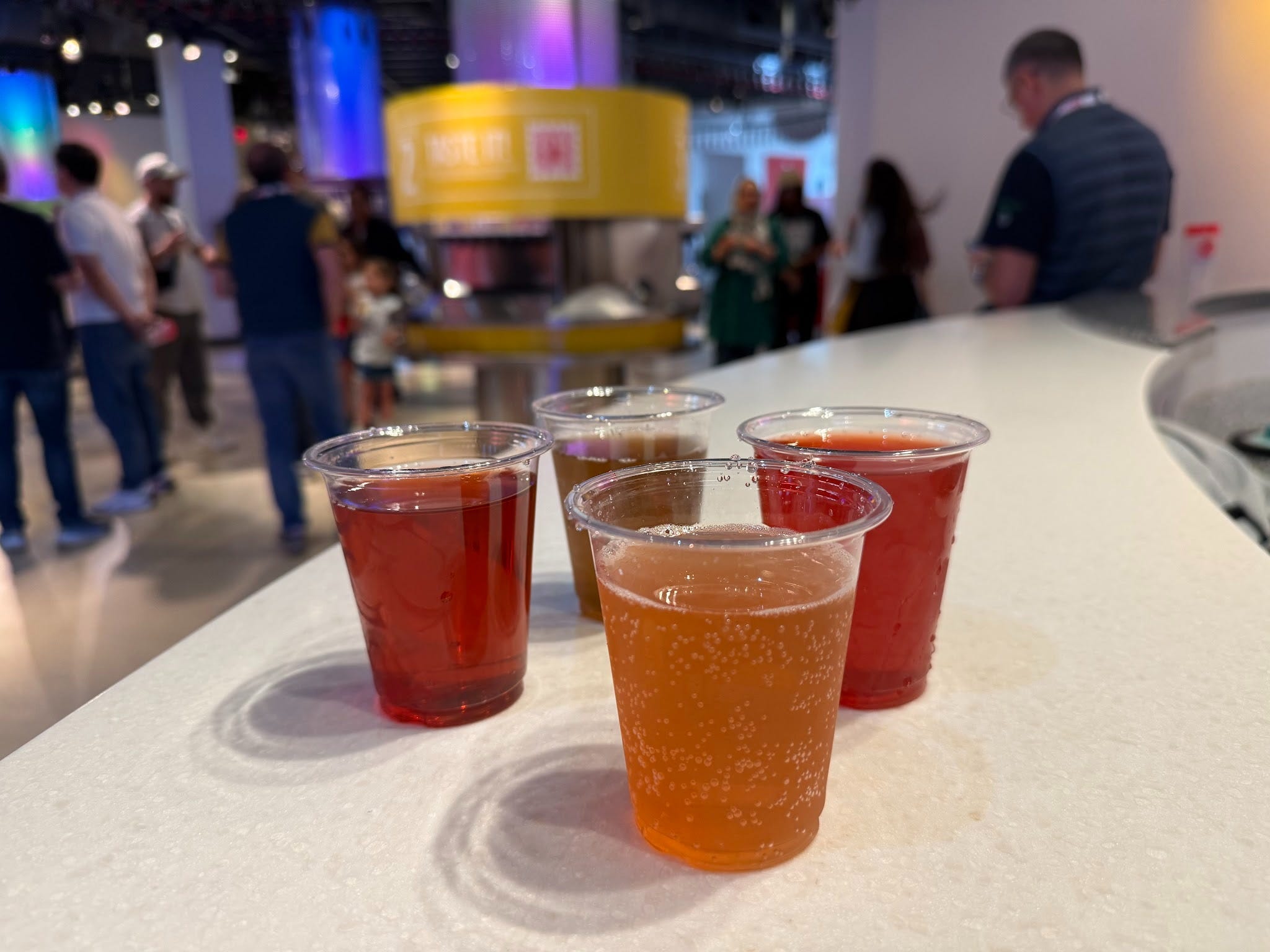
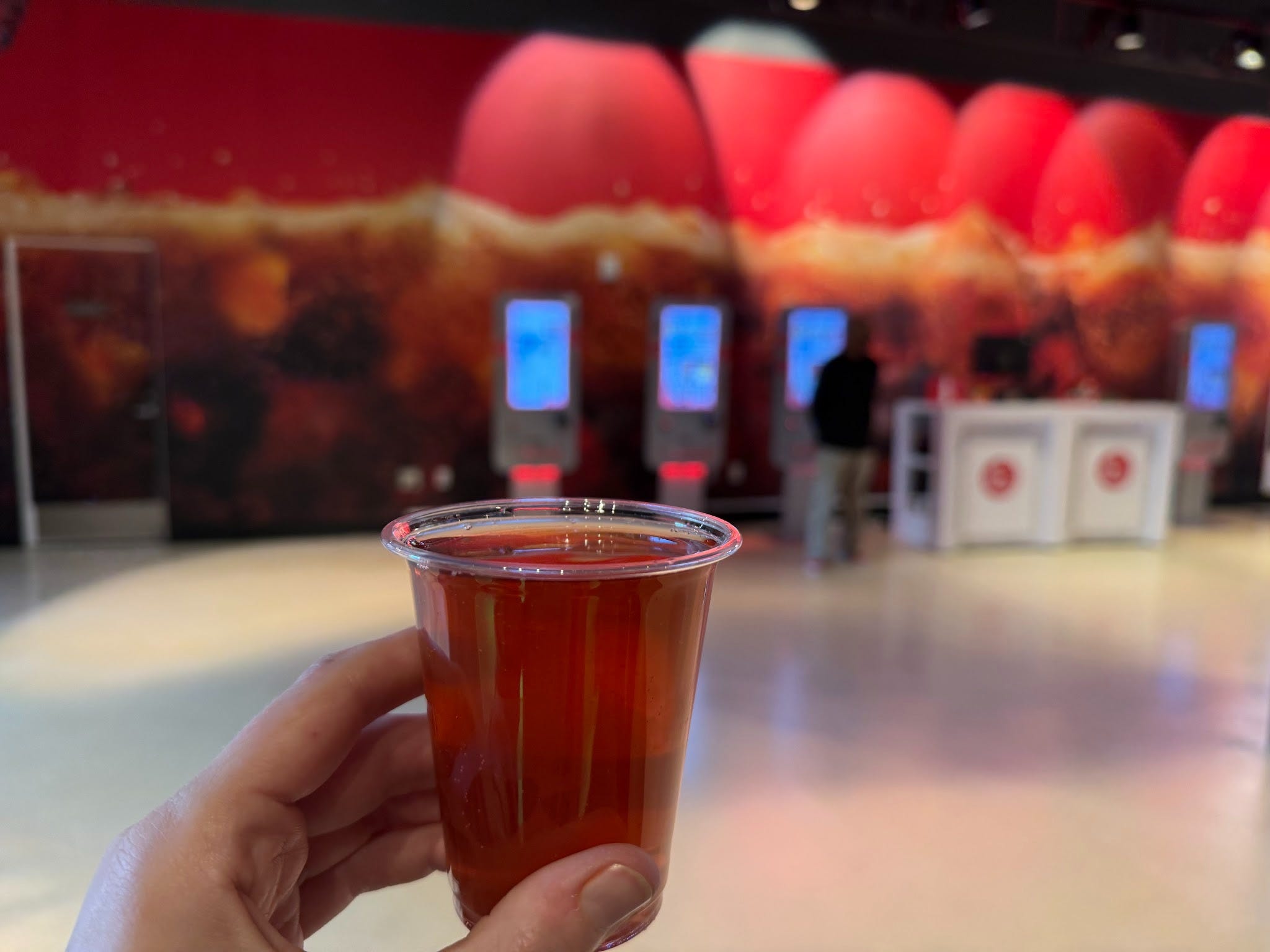
The result was an affront to received wisdom. The ultimate suicide—I’m calling it the “International Incident”—wasn’t muddy. It was complex. It tasted like a lychee cream soda with floral, jasmine-y notes and a surprisingly bitter backbone. There was a little raspberry, a little Beverly, a little plum. I liked it better than most of the sodas in isolation. I liked it better than most sodas.
Even the color was surprising—a deep red, the devil’s hue.2 It seemed implausible that 100 sodas mixed together could yield a vibrant, primary color. I can only assume there is an ancient color memory hidden deep within sugar molecules. The soda yearns to be red.
For reasons that have nothing to do with my soda consumption, I’ve started waking up at 3 AM most days with a mounting feeling of unspecified dread. At first, I tried to fight it by purchasing a soft, lavender-stuffed goose that I could heat in the microwave. But Goosetace didn’t fix the problem, and I have since given up tacking against the feeling. I now spend my too-early mornings reading about dismal subjects like “redshift”—the cosmological color of objects moving away from us as our universe expands. As stars and galaxies hurtle ever farther from Earth, their light stretches out to us in longer, redder wavelengths.3 Redshift is inherently lonely. It’s a visual reminder that the rest of the universe can’t wait to get away.
The International Incident at the World of Coca-Cola introduced me to the opposite of redshift—a ruby-red tint created not by distance, but by proximity. Blending 100 different sodas together is an insane act, but it’s also a hopeful one. Conventional wisdom says it shouldn’t work. It does, anyway.
I suspect my elementary school art teachers may have gotten a few things wrong, though my bass technique is vastly improved. I don’t think complexity is an aesthetic burden any more than I think simplicity is an aesthetic gift. Overdoing it and underdoing it have the same moral weight. And we’ve erred in favor of simplicity and specialization long enough.
It’s time to embrace the sunny side of the suicide: an invitation to a busier, more crowded Age. It is time to embrace chaos—to embrace doing nothing well and a lot of things poorly. It is time to paint the largemouth bass in moose-y neutrals. To grind all the spices together. To name an ice cream flavor “Chris.”4
The rest of the universe is on the lam; the clutter of this world might be all we have to work with. Humanity is a messy, sticky, destructive business, but it’s the only one I want to be in.
Haterade is a free newsletter sustained by angry astrophysicists and prepubescent anglers. The best way to support the newsletter is to share it! If you’d like to help fund the Liz Cook Center for Ceramic Fish Arts, become a paid subscriber (never a perk, always a thrill) or stuff some money in the tip jar here: Venmo | PayPal.