Your Guide to
Heat Pumps
Everything you need to know about the most efficient way to heat and cool your home.
MADE FOR THE HEAT PUMP CURIOUS
Curious about heat pumps? Start here.
Heat pumps can feel overwhelming at first. This guide makes it simple — from how they work to what they actually cost.
▶ What's a Heat Pump? A Simple Animated Explainer · 66K views
Is it right for my home?
What does a heat pump actually cost?
How do I find a contractor I can trust?
What does the installation process look like?
What's the next step?
Is It Right for My Home?
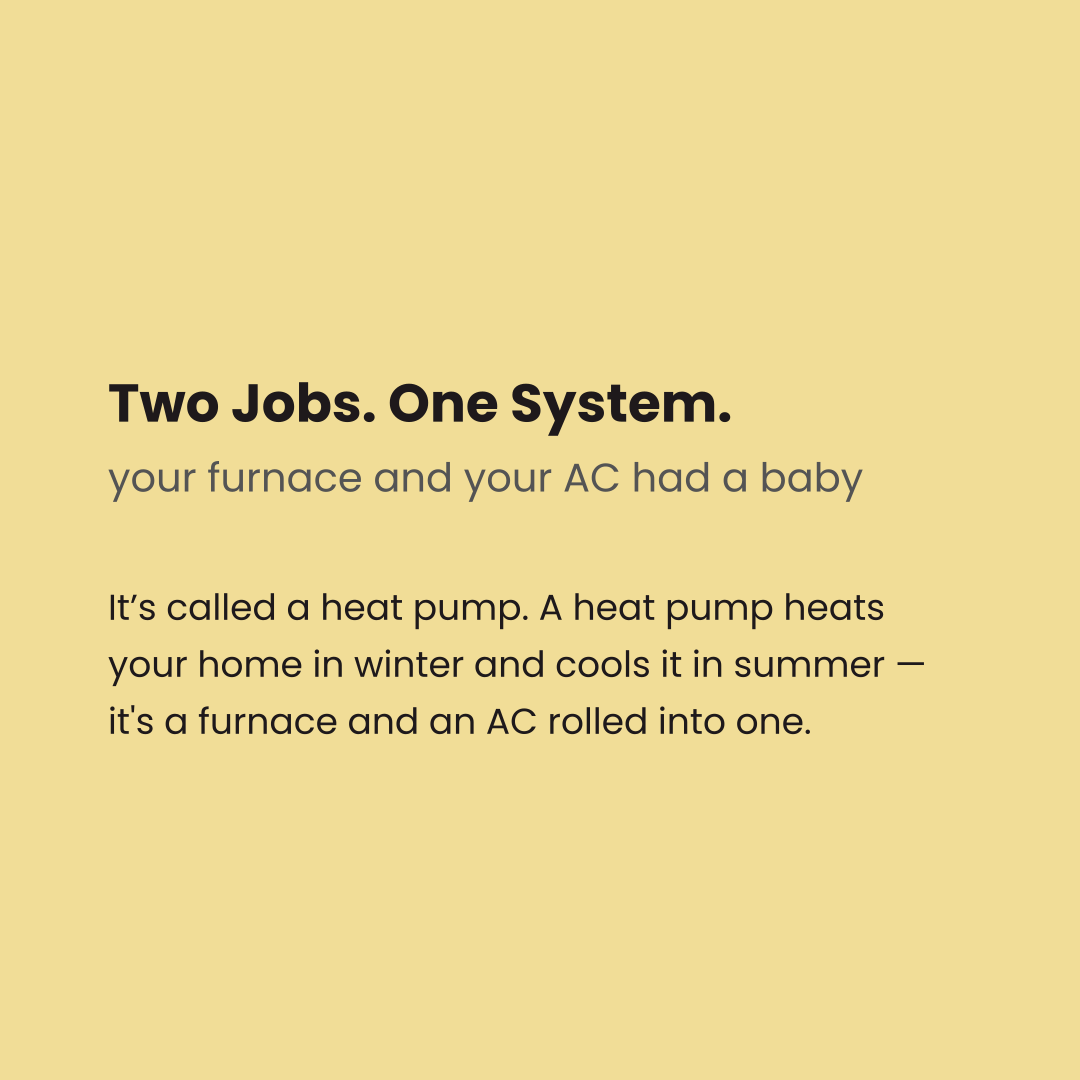
Busting Common Myths
"They don't work in the cold."
"You need a backup furnace."
"Old homes can't use them."
"Rising electricity costs make them expensive."
"You'll need a full electrical panel upgrade to install a heat pump."
"Fix your insulation first, or a heat pump won't work."
"Buy your own heat pump online to save money. Contractors just mark it up."
What Does a Heat Pump Actually Cost?
How Much Should You Expect to Spend?
Your home's starting point
Existing ductwork, electrical panel capacity, and overall home condition can affect how much preparation and additional work is needed before installation.
Your comfort goals
Whole-home heating and cooling, or just specific zones? A single system or multiple? More customized control often means higher upfront costs, but it pays to match the setup to your priorities.
Incentives available to you
State and local rebates can vary widely. Where you live and when you install can make a big difference in your out-of-pocket cost.
The best way to get a clear number is with a quick home assessment. Most homeowners are surprised by how much incentives cover.

How Do I Find a Contractor I Can Trust?
Finding a Contractor
- Ask neighbors, family, and friends
- Check nonprofit/green energy contractor networks & rebate tools
- Check licenses, insurance, certifications
Avoid contractors who:
- Provide a quote based only on square footage
- Don't list out equipment details in quotes
- Share a vague project scope
- Don't do a Manual J load calculation, or use rough guesses for calculations
Your Contractor Should:
- Do Manual J load calculation
- If doing all new ductwork, provide detailed, room-by-room analysis
- Perform or schedule an on-site inspection to assess ducts, electrical, space, and layout firsthand
- Specify models and warranties
- Ask about your priorities and tailor their recommendation accordingly
- Explain trade-offs transparently
- Verify licensing/insurance
Good to know: Don't be surprised if a contractor offers a virtual consultation first. Leading contractors are increasingly using virtual-first assessments to get you a quote faster, then verifying details with an on-site visit.
💬 Real Talk: Don't Get Hung Up on Brand Names
Most HVAC equipment on the market today is pretty high quality. Installation practices have a bigger impact on your system's performance than the brand name on the unit. Read more
💬 Real Talk: Heat Pump Quotes are Notoriously Opaque
Contractors are running a business — and quotes reflect a lot more than parts and labor. Here's what's actually behind the number. Read more
What Does the Installation Process Look Like?
Installation Timeline
Most installs are done in 1-3 days. The more complex the job, the longer it takes. Here's how it typically goes:
Arrival and Walk Through
Day 1
30–60 min
Quick walkthrough of your home, floor protection laid down, equipment unloaded. You're in the loop before anything starts.
Demo and Rough Setup
Day 1
4–6 hrs
Your old system comes out and the new indoor and outdoor units go in. Lines and wiring get run. A good time to work from home or run errands.
Finish Install
Day 2
4–6 hrs
All connections get finalized, refrigerant gets added, and everything gets wired up properly.
Testing, Cleanup, and Handoff
Day 2
30 min
Full system test, thermostat setup, and a quick walkthrough before your contractor leaves. You'll get the manuals and a support number so you're covered.
💡 Ask your contractor upfront: "How many days will my job take?" so you can plan accordingly.
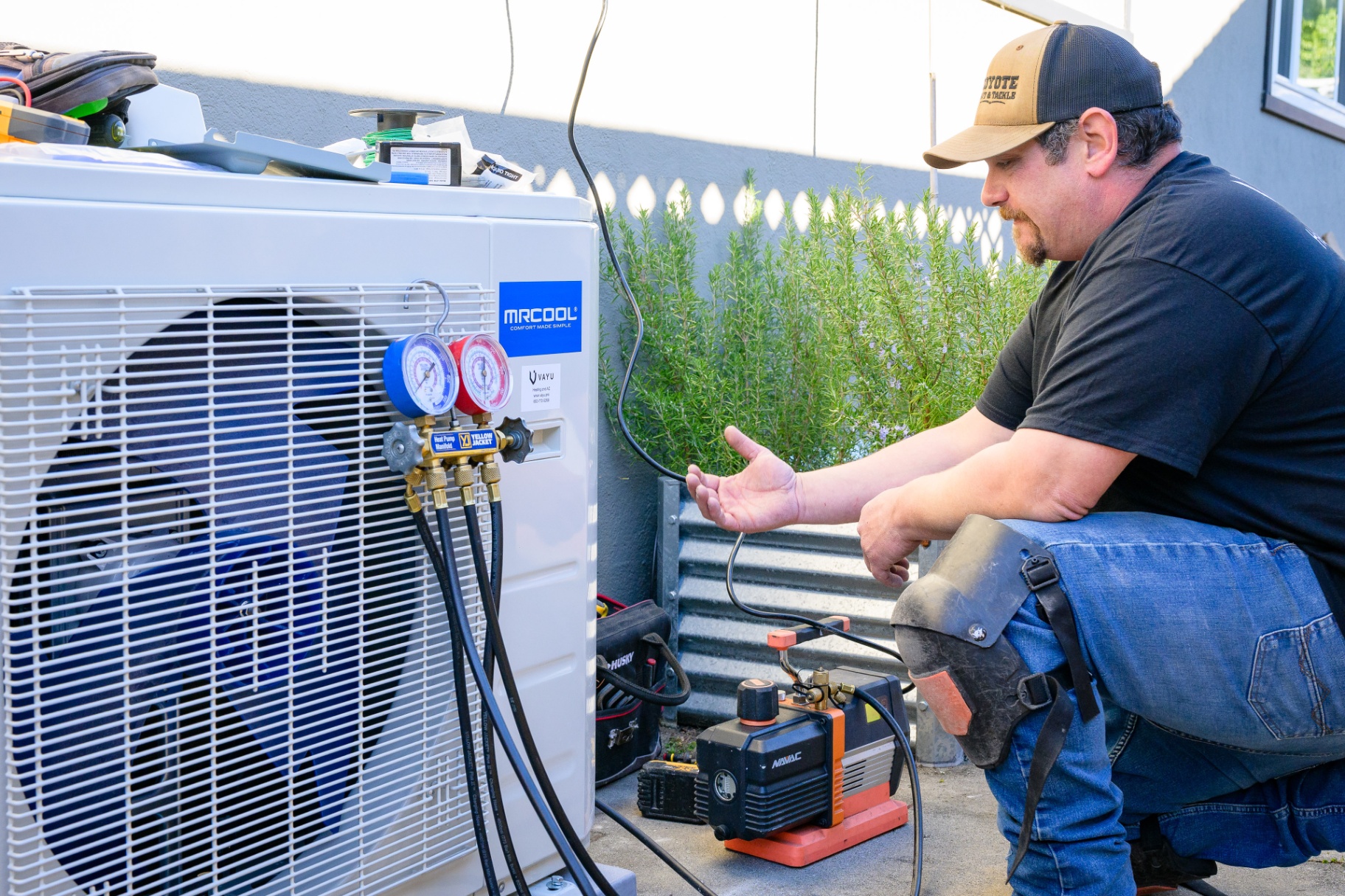
More Than Just Heating and Cooling




Who made this guide?
This guide is built by the team at HeatPumped.org. Our founder, Shreyas, left rocket engineering to fix the HVAC industry because homeowners kept telling him the same thing: "I wanted a heat pump, but the process was a nightmare."
He also runs Vayu, a heat pump installation company in California. We write this stuff because informed homeowners make better decisions — whether they hire us to install one in their home, or not.

What's the Next Step?
🌴 California homeowner? Your neighbors are buying together to get reduced pricing.
Made for the heat pump curious
© 2025