
Start Your GLP-1 Journey
Popular Pages
GLP-1 Resources
Top 10 GLP-1 Resources
GLP-1 Providers
Top 10 GLP-1 Telehealth Providers
GLP-1 Medications
Get almost 70% off name brands

Compare medications
Learn the differences between common medications. Articles are written and reviewed by medical experts.
GLP-1 Medications in the News
Learn more about what's happening and the choices you have based on your condition, lifestyle, and budget.
BMI Calculator
Check your Body Mass Index and understand what your number means for your health. Your BMI (body mass index) is one tool used to screen for weight-related risks and eligibility for GLP-1 medications. Enter your height and weight to calculate your BMI instantly.
Your BMI falls within the healthy range.
If you're looking to maintain your results, optimize energy, or feel more in control of your health, a consultation can help you build a long-term plan tailored to your goals.
Check Eligibility*BMI doesn't directly measure body fat and may not accurately reflect health for people with high muscle mass, pregnant women, children, older adults, certain ethnic groups, or those with medical conditions.
The BMI calculator does not determine eligibility for weight loss treatments. A healthcare provider must evaluate your overall health and history.
BMR Calculator
Basal metabolic rate (BMR) is the amount of energy your body needs at rest to maintain vital functions, such as breathing. It can be a useful starting point for setting weight loss or nutrition goals. Use the tool below to calculate yours.
Your Basal Metabolic Rate
This is the number of calories your body burns at complete rest, just to keep you alive.
Your Daily Calorie Needs
Based on your BMR, here's how many calories you burn at different activity levels:
Estimated Daily Burn (TDEE)
Sedentary 0 cal
Light Activity 0 cal
Moderate 0 cal
Very Active 0 cal
Understanding your metabolism is the first step. A licensed provider can help create a personalized plan that works with your body's unique needs.
Check Eligibility*BMR calculations are estimates based on the Mifflin-St Jeor equation. Individual results may vary based on muscle mass, health conditions, and other factors.
TDEE Calculator
Total daily energy expenditure (TDEE) is the number of calories you burn in a day based on age, activity level, sex, weight, and height. Knowing your TDEE can help you understand how many calories you need to maintain, lose, or gain weight. Find out now.
Maintain your current weight
This TDEE calculator is for informational purposes only and not a substitute for medical advice. Individual needs vary. Consult a healthcare provider before making changes. Eating fewer than 1,200 (women) or 1,500 (men) calories a day is not recommended.
Your Daily Energy Expenditure
This is the total number of calories your body burns each day, including all activities.
Your Calorie Targets
Based on your TDEE, here are your daily calorie targets for different goals:
Daily Calorie Targets
Maintain Weight 0 cal
Lose 1 lb/week 0 cal
Lose 2 lbs/week 0 cal
Knowing your numbers is the first step. A licensed provider can help you create a sustainable plan tailored to your lifestyle and goals.
Check Eligibility*TDEE calculations are estimates. Individual needs vary based on metabolism, body composition, and other factors. Consult a healthcare provider before making significant dietary changes.
Calorie Deficit Calculator
A calorie deficit happens when you consume fewer calories than you burn. It's key to weight loss and can help guide your nutrition strategy. Use the tool below to estimate how many calories you need each day to reach your weight loss goals safely.
Maintain your current weight
Lose one pound per week
----
Cal Daily
Time to reach goal
----
Weeks
This calculator gives a general estimate and is not medical advice. Everyone's body is different. For guidance tailored to your health and goals, speak with a healthcare provider.
Your Maintenance Calories
This is the number of calories you need each day to maintain your current weight.
Your Weight Loss Plan
Based on your inputs, here are your personalized calorie targets:
Your Plan
Maintain Weight 0 cal
Lose 1 lb/week 0 cal
Lose 2 lbs/week 0 cal
Time to reach goal 0 weeks
You have a clear path to your goal. A licensed provider can help you stay on track with a personalized plan and support along the way.
Check Eligibility*Calculations are estimates based on standard formulas. Individual results may vary. Consult a healthcare provider before starting any weight loss program.
Protein calculator for weight loss and muscle gain
This protein calculator estimates how much protein you need each day based on your current weight, activity level, and goals, giving you a clear starting point to help you lose weight or build muscle effectively.
Recommended protein intake
This protein calculator gives a general estimate and is not medical advice. Everyone's body is different. For guidance tailored to your health and goals, speak with a healthcare provider.
Your Daily Protein Target
Based on your weight and activity level, this is how much protein you should aim for each day.
Your Protein Plan
Here's how to break down your protein intake throughout the day:
Daily Breakdown
Daily Target 0 - 0 g
Per Meal (3 meals) 0 - 0 g
Per Meal (4 meals) 0 - 0 g
Per Meal (5 meals) 0 - 0 g
Protein is essential for your goals. A licensed provider can help you build a complete nutrition plan that supports your body and lifestyle.
Check Eligibility*Protein recommendations are estimates based on general guidelines. Individual needs may vary. Consult a healthcare provider for personalized advice.
How GLP-1 drugs work
GLP-1s act like a hormone your body naturally makes to regulate blood sugar and can help support sustained weight loss.
Appetite Control

GLP-1s signal your brain that you're full, reducing cravings and helping you eat less naturally.
Blood Sugar Regulation
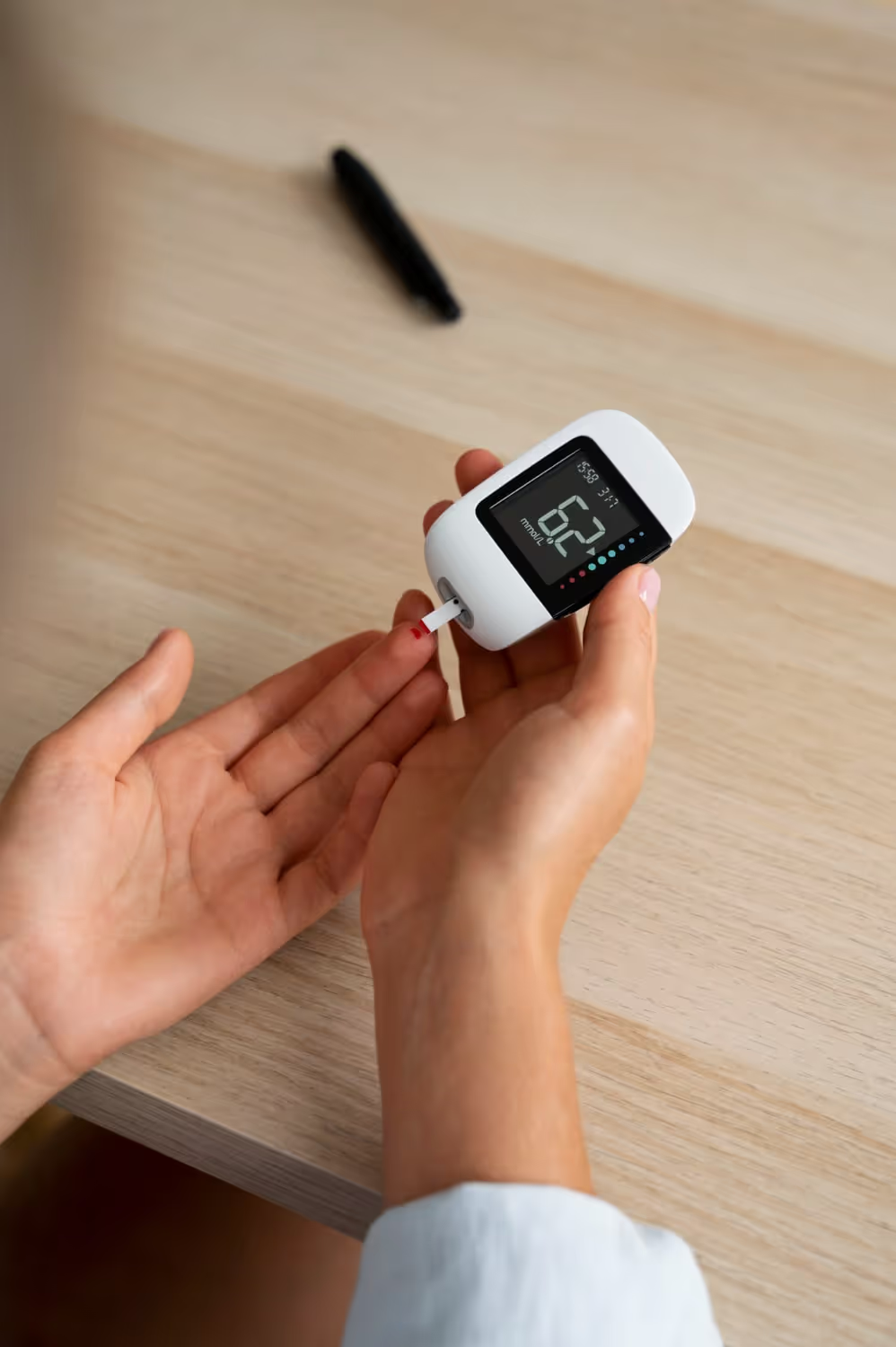
They help your pancreas release insulin when needed and prevent your liver from making excess sugar.
Slower Digestion

GLP-1s slow how quickly food leaves your stomach, keeping you satisfied longer.
Weekly Dosing
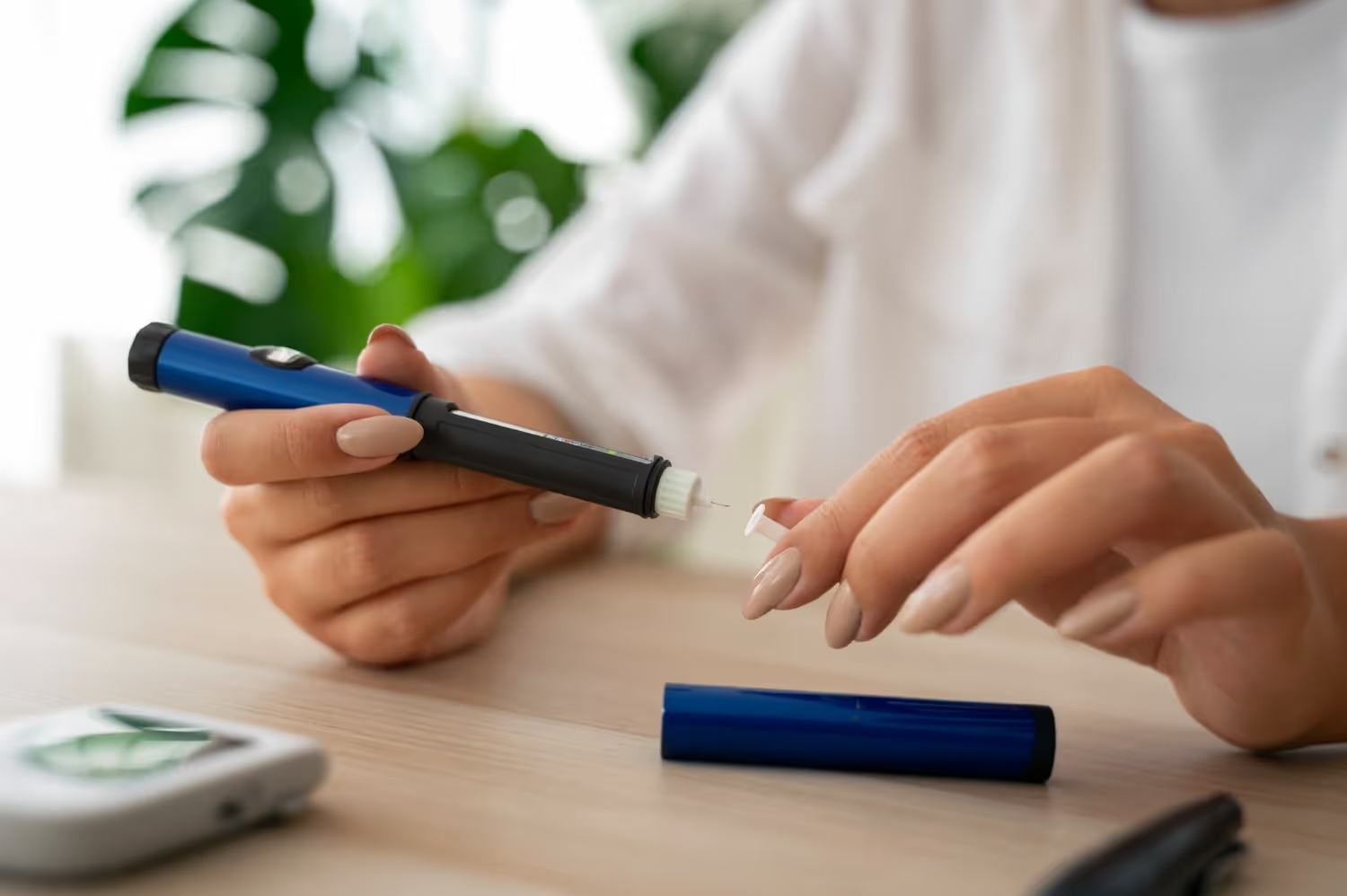
Most GLP-1 medications are injected once weekly for convenient, consistent treatment.
Common Questions We Hear
Are Weight Loss Medications Effective?
“Obesity is a condition that affects more than 40% of our adult population and when factoring in candidacy for medications, such as those with overweight and a weight-related condition, the numbers get even higher,” says Anthony Jay Millard, M.D., a board-certified obesity medicine physician at Northwestern Medicine in Chicago. He notes the need for an “all-hands-on-deck approach” with providers across the healthcare spectrum.
Many providers are familiar with the latest weight-loss medications, but not all individuals are candidates for these medications, says Dr. Millard.
Weight Loss Medications vs. Fat Burning Pills
Weight loss medications and fat burning pills are vastly different. Fat burning pills and other “quick-fix” weight loss supplements are typically sold over the counter and are not regulated in the same way as weight loss medications. Unlike fat burning pills, weight loss medications require a prescription from a healthcare provider and have been studied extensively for their ability to promote weight management when combined with diet and lifestyle changes.
How to Choose the Best Weight Loss Medication for You
“It is critical that patients remember that these medications are not a magic bullet for weight loss and long-term weight management,” notes Dr. Millard. Nutrition, physical activity, stress and sleep are all critical parts of an optimal weight management plan, he explains, noting that the larger social environment plays a role, too.
With weight issues being so complicated, he points out, “if a provider is suggesting that these medications are a quick fix or only needed for short-term use, that would be a red flag that the chronic nature of obesity is not being considered.” If this occurs, he suggests you find a different provider.
Many people stay on weight loss medications for a few months while working on their diet and exercise routines. Others stay on them indefinitely. Regardless of what you decide medication-wise, exercise and nutrition are essential components of any healthy life, and even small changes can make a big difference over time.
Whether you’re interested in trying weight loss medication, mulling over the idea of joining a commercial weight loss plan or are interested in combining the two, your first stop should be your doctor’s office. Your doctor can discuss the pros and cons of starting medication and help choose the best weight loss medication plan for you.
What is a medical weight loss program?
A medical weight loss program takes a scientific approach to weight loss and helps you shed pounds under the supervision of a healthcare professional. Medical weight loss programs also often include prescription medications such as Ozempic (prescribed off-label for weight loss) or Wegovy to ensure long-term success. These new weight loss injections are an integral component in losing and keeping off weight when they’re combined with a healthy diet and exercise.
A comprehensive medical weight loss program typically starts with a healthcare professional reviewing your medical history and asking about weight loss goals. It may also include getting bloodwork done.
After that, a healthcare professional prescribes weight loss medication, if medically appropriate, and monitors your progress in the months to come. All of this can be done through telehealth platforms, without visiting a doctor’s office. Telehealth programs often combine GLP-1 medication with 1:1 personal coaching and ongoing support—all to help you lose weight and keep it off.
What Are The Most Popular Weight Loss Medications?
Ozempic®
Ozempic® is an FDA-approved medication for treating type 2 diabetes. Its active ingredient is semaglutide, a glucagon-like peptide-1 (GLP-1) receptor agonist that acts like the GLP-1 hormone released in the digestive tract when eating. This weight-regulating hormone “signals fullness to the brain, delays stomach emptying and lowers blood sugar,” says Rekha Kumar, chief medical officer at the medically-assisted weight loss program, Found, and practicing endocrinologist in New York City.
The medication is available by prescription only and is used as a weekly injection to help with blood sugar management and help reduce the risk of a heart attack or stroke in people with type 2 diabetes. Since semaglutide has shown effectiveness in reducing body weight for those with overweight or obesity, Ozempic® may also aid in weight loss. However, Ozempic® itself is not FDA approved to treat weight loss alone in patients without a diagnosis of type 2 diabetes.
Wegovy®
Wegovy® is another injectable medication made with semaglutide (the active ingredient in Ozempic®). It’s approved by the FDA for weight management in people with a body mass index or BMI of 27 who have another weight-related condition, such as type 2 diabetes, or those with a BMI of 30 or higher.
Like Ozempic®, Wegovy® is also prescription only and taken once a week.
Saxenda®
Saxenda®, like Ozempic® and Wegovy®, is a GLP-1 receptor agonist, but it’s made with liraglutide (instead of semaglutide). The medication is also prescription-only and FDA-approved for the treatment of obesity in people aged 12 and older who weigh more than 132 pounds or adults with BMI of 30 or higher.
Liraglutide works by helping to decrease appetite and slow the emptying of the stomach, which causes feelings of fullness and leads to lower calorie intake.
Saxenda® is a daily injection, while Ozempic® and Wegovy® are weekly injections.
Get the latest updates about GLP-1
Get the latest updates from GLP-1.com right in your email inbox.
By providing your email address you consent to receiving latest newsletter on your email. Also, you agree with our Terms of Use & Privacy Policy.