An agentic librarian for your Mac
Local-first and free.
MIT licensed.
A knowledge library
you can talk to.
Drop a link in chat. Gleanary fetches it, cleans up the metadata, researches it and files it in your library.
ChatMade for macOS 26
No pluginsto wire together.
Day-to-day knowledge work happens in chat. Say what you need, and the right specialist picks it up.
Ask in plain language. Answers point to the saved passages they came from, so you can check them.
Paste a link, drop in a PDF or import your bookmarks. The librarian records the source and files it under a Johnny Decimal code.
Ask for a topic. With a hosted model, Gleanary searches the web, reads what it finds and returns linked notes that passed citation checks.
Browse a map, a list or a graph of your notes. Search works without any AI model at all.
Agents handle the grunt work: checking dead links, cross-linking notes, retrying failed captures and summarizing, on a schedule or whenever you ask. Changes to your own notes wait for your review.
Up closeReal chats at full resolution
Every answershows its sources.
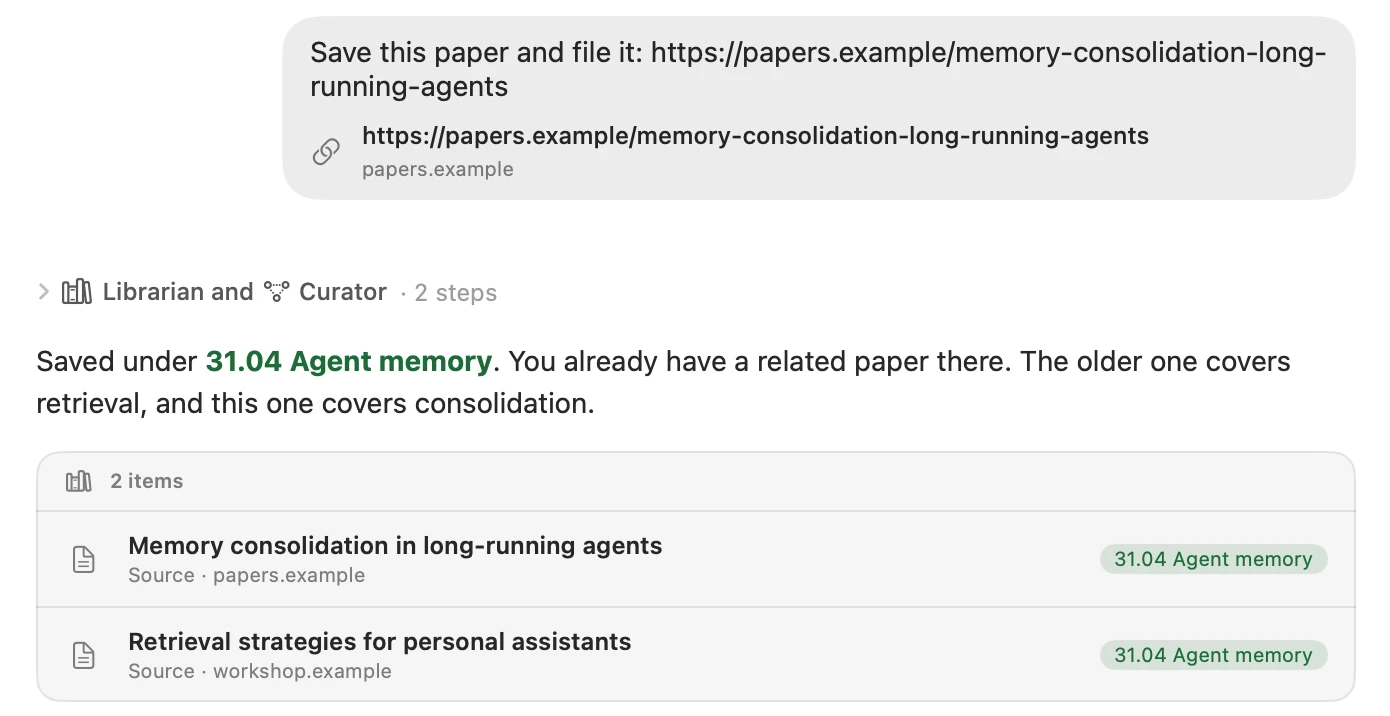
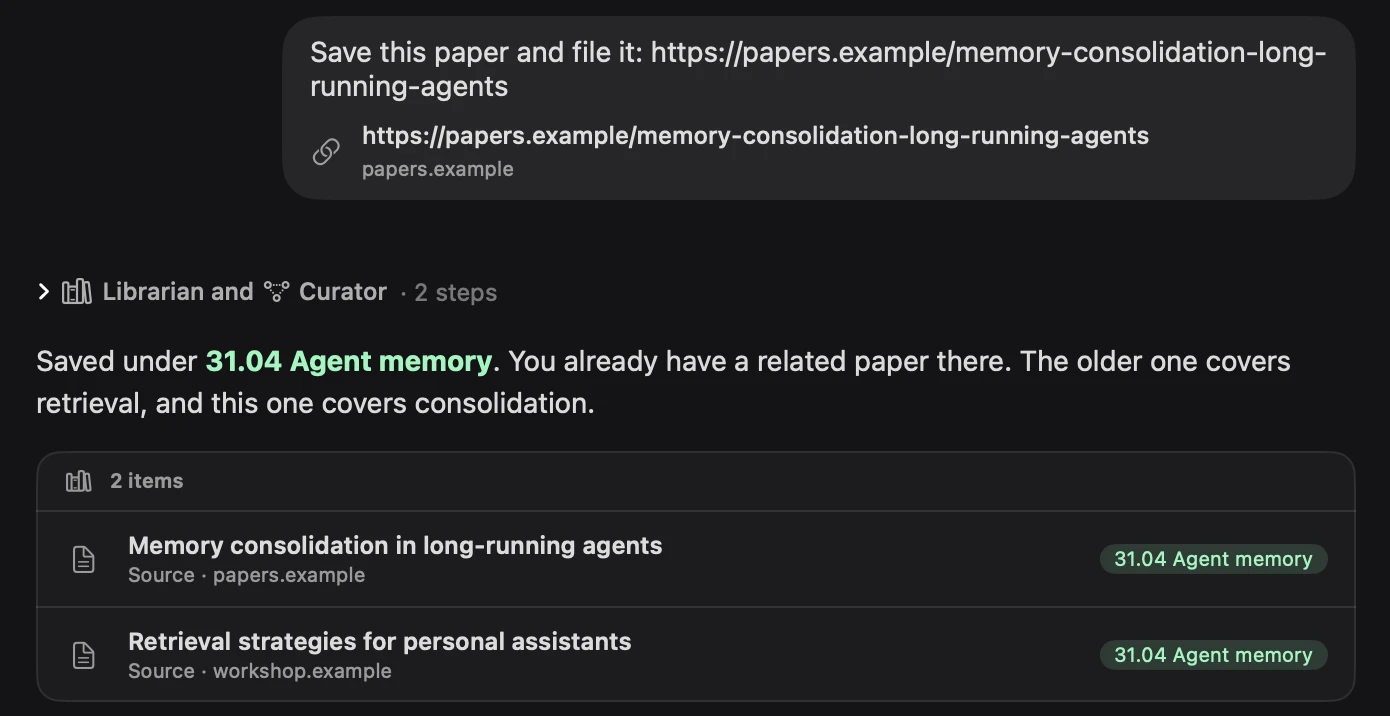
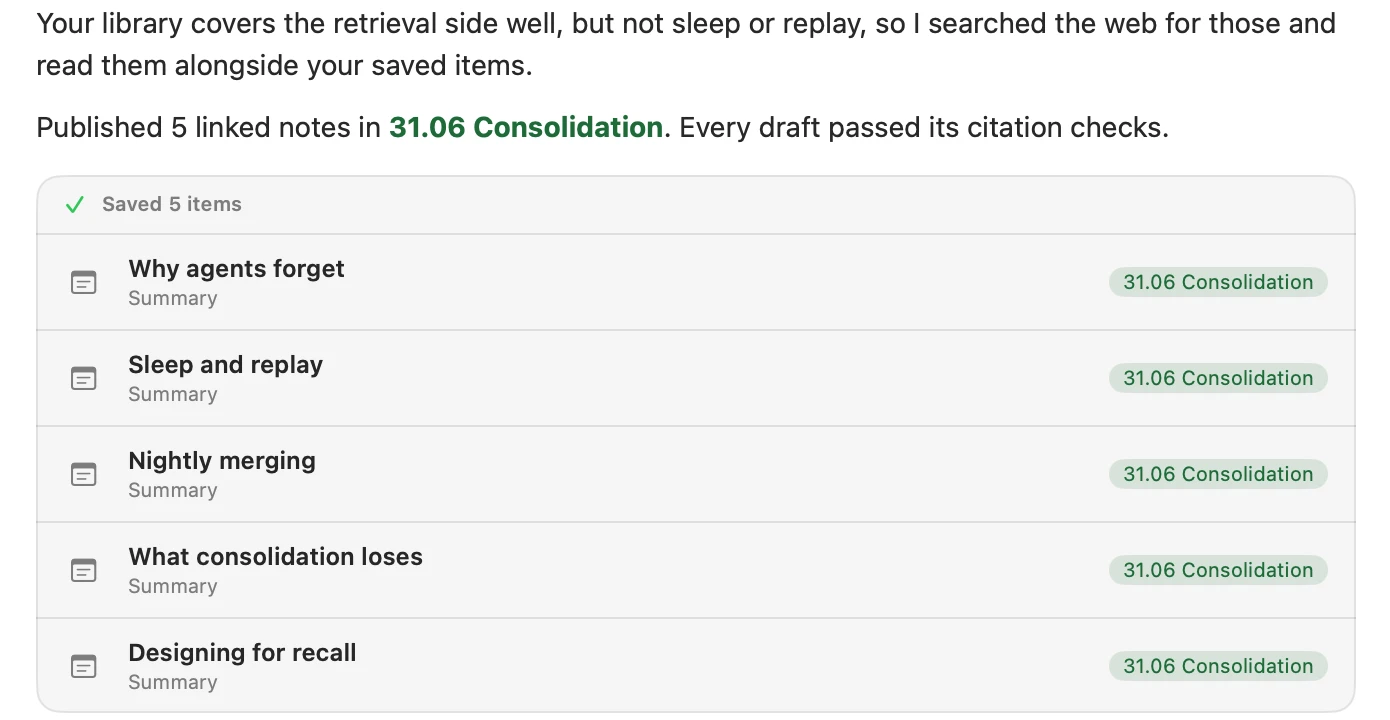
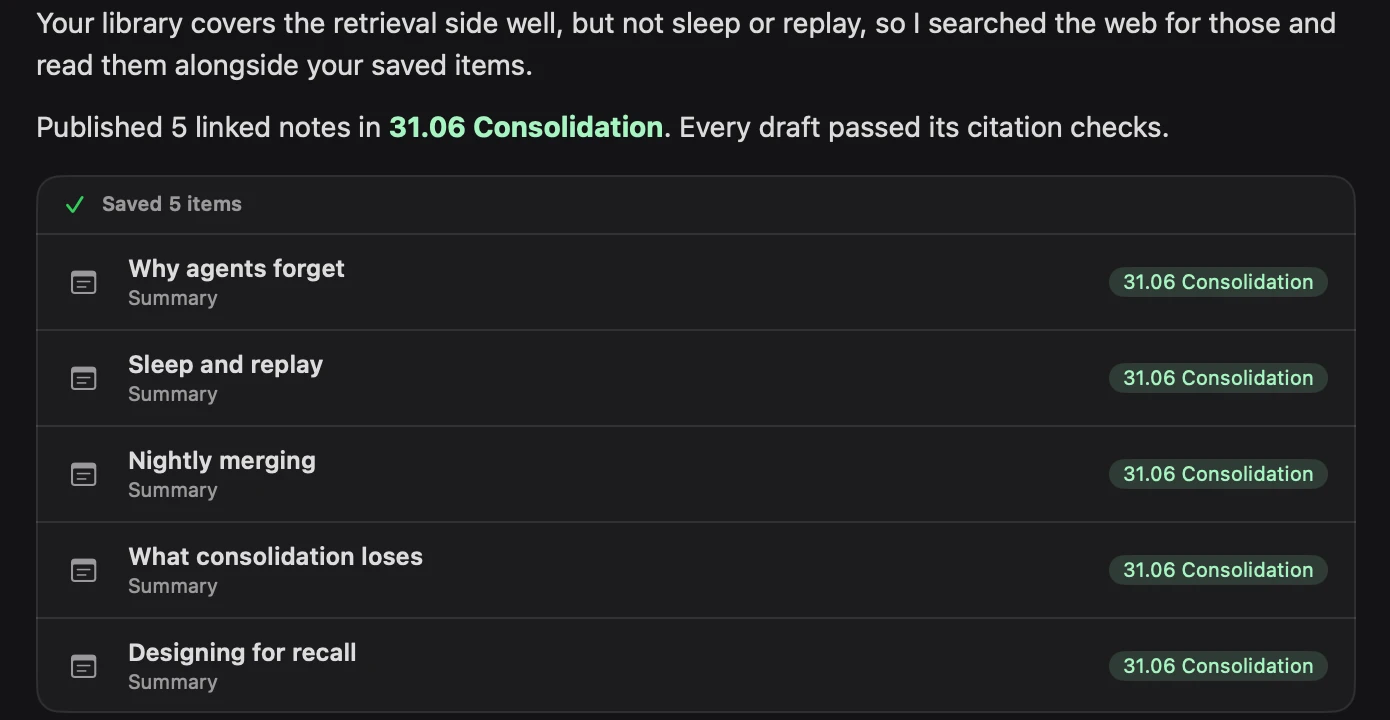
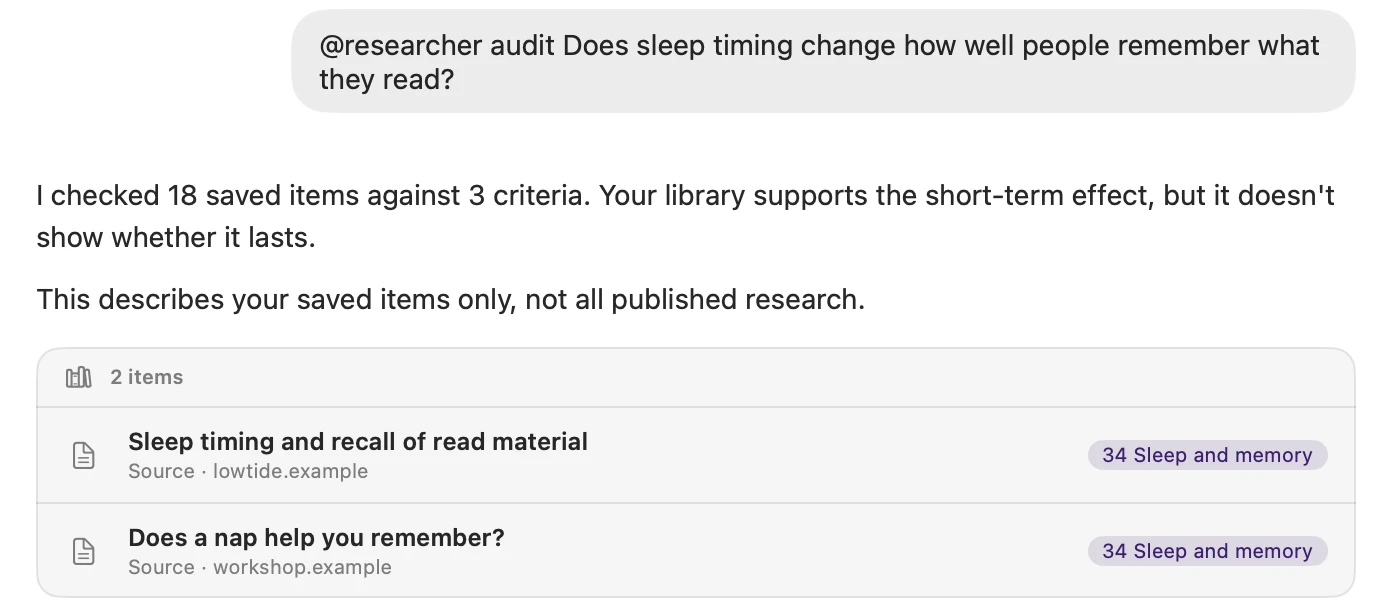
Sourcesglean, verb: to gather, bit by bit
Gleanary follows the linksyou didn't get to.
Gleanary follows the links inside what you save. When a creator recommends something or a paper cites it, the next piece is already on your shelf, linked back to where it came from. You decide how far it goes.
Balanced
Reading the creator recommends is saved automatically and linked back. Other promising links are suggested.
- Reach
- 1 hop
- Per source
- 3 saved
- Saves a day
- 20
Every leaf is a page from the web, and every tip is its node in your graph. Saved ones link back to the page that led to them.
SavedSuggestedNoted linkIllustrative
You saved Memory consolidation in long-running agents · substack.com
- Why rare details matterarxiv.org
- Replay buffersgithub.com
- Agents that know when to stopsubstack.com
Automatic saves respect each site's robots.txt and stay inside daily limits. Set a different level for any category. Anything you leave unopened for 30 days is archived, and you can bring it back.
GraphLibrary › Graph
Your notes findeach other.
Gleanary reads what you save, finds related items and drafts the links. You just approve them. The graph shows it all, along with the people, organizations and tools it picked out.
- Found via
- Saved while following a link from something already in your library.
- Source provenance
- A note that draws on a source you captured.
- Linked notes
- Related items Gleanary found and linked, once you approved.
PrivacySaved on your Mac
Your library stayson your Mac.
Gleanary is local-first. Everything you save lives in a library on your Mac, not on a server. Apple Intelligence can do the work on-device, or you can choose a ChatGPT subscription or an API key for OpenAI, Claude, Gemini or OpenRouter.
The teamMention anyone, or no one
A full library staff,on call in chat.
@assistantWorks out what you need and who should do it.
@librarianSaves sources, fills in the details and files them.
@researcherReads, compares and summarizes, with citations.
@curatorSpots connections, gaps and duplicates.
@writerTurns your evidence into finished documents, in your style.