Signed-off-by: Eve Coden hubhost!middlehost!edgehost!eve@encabulator
Fellow members of the Project EVE community, after learning that Rockwell Automation invested in the company that birthed you within LF Edge, we wanted to share our recent project within EMCA Integrators to upgrade the Rockwell Automation Retro Encabulator to now have official support for EVE-OS. In case you are not familiar with it, the Retro Encabulator was first deployed as a backup unit for the NASA Apollo 11 mission (the only reason it didn’t fly was because Wernher was too stubborn to admit superior design of its lunar waneshafts), and was later successfully used in the operation of milford trenions. You can see a short promotional video of it below and familiarize yourself with its superior design (if you are on 9600 baud click twice on it):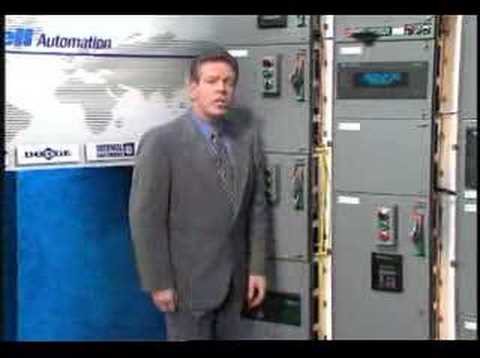
While the quality, technological leadership, and operating excellence of the system has been proven time and time again, apparently it is no longer enough. One of our biggest customers, an Evergreen Marine Corporation presented us with an opportunity of attempting to control synchronization of cardinal grammeters through the Retro Encabulator services via a series of Docker shipping containers all running under the Helm maritime charts. That crudely conceived idea has possessed them so much that they deployed their first PoC this February on one of their cargo carrying vessels.
I am sad to report that while all of the instruments comprised of Dodge gears and bearings, Reliance Electric motors, Allen-Bradley controls, and monitored with award winning cloud-native middleware built with COBOL-on-COGS performed admirably, the Kubernetes control plane deployed on IBM 360 system failed to provide adequate cloud heterogeneity. Turns out, paying software licensing costs alone doesn’t guarantee success in Digital Transformation. Who knew!
Unfortunately, our first deployment of full-scale Docker containers inside one large container on a container ship (Docker Containers within Docker on Container - DCwDoC) was just too much for our Helmsman’s charts, as our DockerPilot was only listed for 150k MT and we were carrying a combined load of 200 MT within the DCwDoC. After 4 days of trying to unclog our channel using K3s, K8s (and even combining them into K24s), we then moved on to pushing newer technologies such as L4s, M9t, and Wi5s, before finally trying out the new WD40s (Beta), which finally freed our Pinetree. Duct tape may or may not have been involved.
What really made this possible is that before leaving port, we had updated our servers to the latest 360 series Retro Encabulator, using Dodge gears and bearings, Reliance Electric motors, Allen-Bradley controls, and all monitored by our award winning winning cloud-native middleware built the COBOL-on-COGS framework. Most importantly it was the hard work of our engineers who worked on virtualizing the entire Retro Encabulator so that it was compatible with EVE-OS from Project EVE within the Linux Foundation’s LF Edge organization. This allowed us to push updates and to revert back solutions that didn’t work.
Upon our successful integration, we wanted to give back to the open source community that helped us get our DCwDoC Pinetree unstuck. We are happy to announce that we are donating our EVE-OS virtualization code to the Project EVE community, so that everyone can benefit from next generation computing on the Retro Encabulator hardware. We have requested all the source code to be faxed to GitHub and they promised us to open PRs#4121 and #1421 once the fax transmission completes!
This PR declares official support for EVE-OS to unify the hardware and software that powers the highly-versatile Retro Encabulator unit. We would very much like to collaborate with your community to grow its already amazing capabilities.
And finally, thanks to the universal, practically omnipotent nature of EVE-OS, we have now realized the enormous opportunity of SaaSifying the Retro Encabulator through continuous deployment of our next generation Artificial Intelligence code, controlling drawn reciprocation of the dingle arm with choice of heterogeneous public clouds.
In short, we have seen the light that the edge is the last cloud to build.