News
🚀 Iris v14 is on the way. The next major version is the largest release in the project's history: the framework rebuilt on Go generics, an application builder the compiler checks, request helpers that validate for you, one central error map, thirty built-in middleware and a book that ships inside the repository. See what is coming in Iris v14 below.
The version you are reading about here, v12, keeps working and keeps getting fixes. v14 arrives on a new import path, so nothing on your side breaks the day it lands.




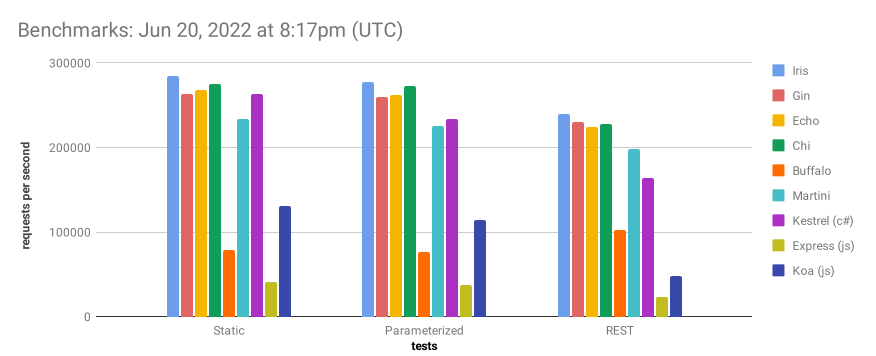
⚡ Iris is a fast, simple yet fully featured and very efficient web framework for Go.
✨ It provides a beautifully expressive and easy to use foundation for your next website or API.
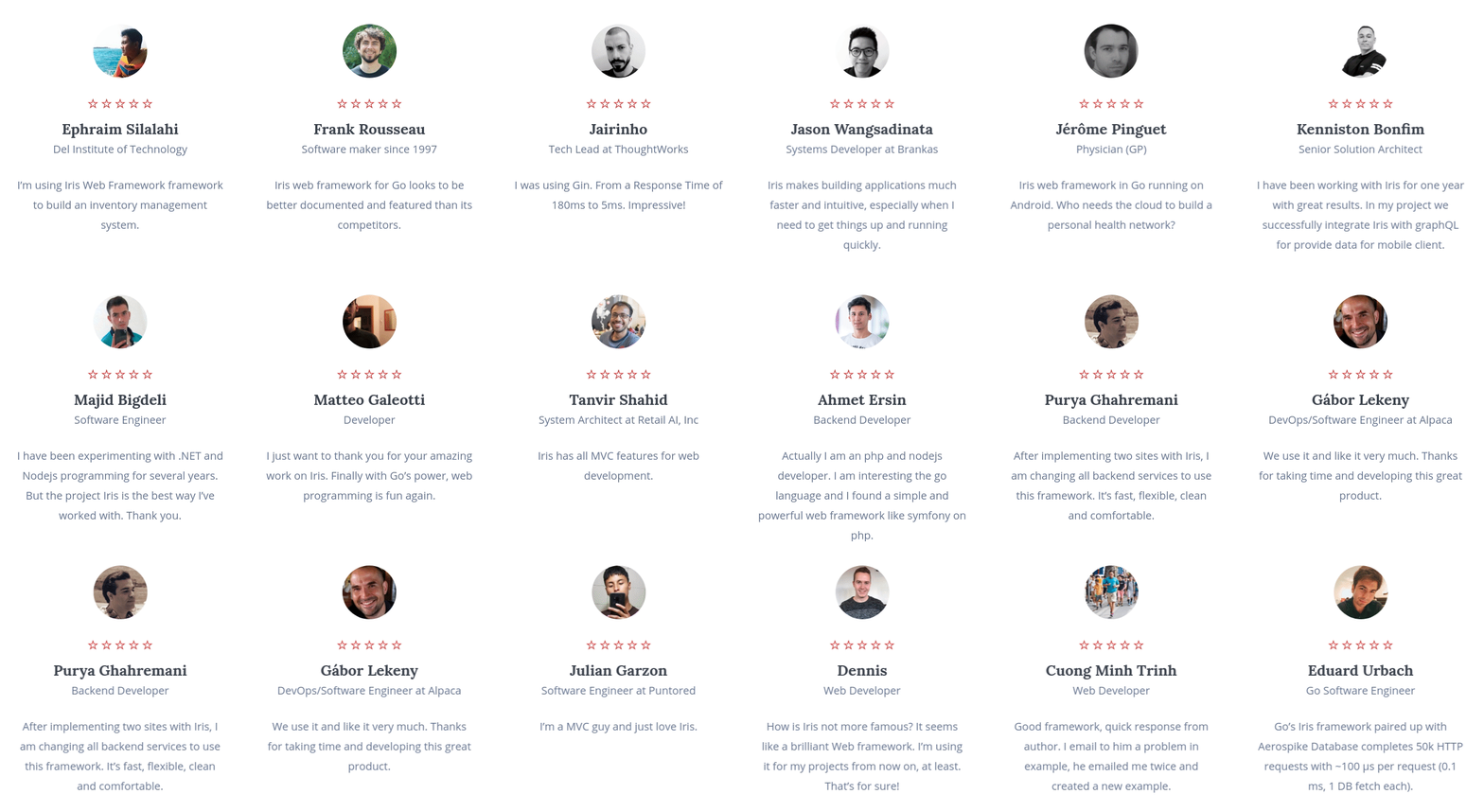
🌟 Learn what others say about Iris and star this open-source project
package main

import "github.com/kataras/iris/v12"

func main() {
  app := iris.New()
  app.Use(iris.Compression)

  app.Get("/", func(ctx iris.Context) {
    ctx.HTML("Hello <strong>%s</strong>!", "World")
  })

  app.Listen(":8080")
}
As one Go developer once said, Iris got you covered all-round and standing strong over the years ⭐
Some of the features Iris offers:
- HTTP/2 (Push, even Embedded data)
- Middleware (Accesslog, Basicauth, CORS, gRPC, Anti-Bot hCaptcha, JWT, MethodOverride, ModRevision, Monitor, PPROF, Ratelimit, Anti-Bot reCaptcha, Recovery, RequestID, Rewrite)
- API Versioning
- Model-View-Controller
- Websockets
- gRPC
- Auto-HTTPS
- Builtin support for ngrok to put your app on the internet, the fastest way
- Unique Router with dynamic path as parameter with standard types like :uuid, :string, :int... and the ability to create your own
- Compression
- View Engines (HTML, Django, Handlebars, Pug/Jade and more)
- Create your own File Server and host your own WebDAV server
- Cache
- Localization (i18n, sitemap)
- Sessions
- Rich Responses (HTML, Text, Markdown, XML, YAML, Binary, JSON, JSONP, Protocol Buffers, MessagePack, Content Negotiation, Streaming, Server-Sent Events and more)
- Response Compression (gzip, deflate, brotli, snappy, s2)
- Rich Requests (Bind URL Query, Headers, Form, Text, XML, YAML, Binary, JSON, Validation, Protocol Buffers, MessagePack and more)
- Dependency Injection (MVC, Handlers, API Routers)
- Testing Suite
- And the most important... you get fast answers and support, from the first day until now
🚀 What is coming in Iris v14
Iris v14 is the largest release in the project's history. It rebuilds the framework on Go generics and changes how an application is put together: less wiring in main, shorter handlers, and one place for the decisions that used to be scattered across every route.
None of it needs your attention today. v12 keeps working, keeps getting fixes, and v14 arrives with a migration guide that covers every renamed and removed API.
The whole application in one compile-checked chain
iris.NewBuilder wires CORS, compression, access logging, the health endpoint, the error map, your services and your API groups in a single expression. The compiler enforces the step order, so an application either builds correctly or does not build at all.
iris.NewBuilder().
    Prefix("/api").
    AllowOrigin("*").
    Compression(true).
    LogRequests(true).
    Health(true, "production", "kataras").
    Errors(errors.NewOptions().
        MapErrors(errors.NotFound, catalog.ErrNotFound)).
    Services(catalog.NewRepository, catalog.NewService).
    API("/products", api.NewProductsAPI).
    Build().
    Listen(":8080")
Handlers stop repeating themselves
Decoding, validation and error rendering move out of the handler body. rest.ReadJSON[T] decodes the request, runs the type's Validate() error when it has one, and writes the 400 itself. The response helpers write the success status, or whatever your central map says that error should return.
func (api *ProductsAPI) create(ctx iris.Context) {
    input, ok := rest.ReadJSON[catalog.ProductInput](ctx)
    if !ok {
        return // 400 already written: malformed JSON or failed Validate.
    }

    id, err := api.svc.Create(ctx, input)
    rest.Created(ctx, id, err) // 201, or the centrally mapped error.
}
rest.OK, rest.NoContent, rest.Count and rest.Paginated cover the rest of the shapes an API returns.
Errors are declared once
The new rest/errors package holds the mapping from your domain errors to HTTP responses. Clients get canonical, machine-readable payloads. Internal messages stay internal. Register a collector and every failure reaches your logger or your database from a single place. An error can render as JSON or as a view, depending on what the client asked for.
Dependency injection everywhere, not only in MVC
Constructors declare what they need and the container provides it: for handlers, for API groups, for controllers. A service that implements Init(ctx context.Context) error runs once inside Build(). Anything closeable is closed at shutdown. The hero package is gone, replaced by dep and rest, which do more in fewer lines. MVC controllers are built on generics.
The packages are where you would expect them
sessions, cache, websocket, i18n, view and versioning became middleware. mvc moved under controller, next to the new fileserver, sitemap and apigraph controllers. apigraph renders your route tree as an interactive D3 graph.
Thirty middleware ship in the box, including new ones: httpcost (time, memory and CPU per request, for performance work or billing), bodylimit, compress, counter, referrer, geolocation, ipaccess and servertiming. View engine implementations moved to iris-contrib/views.
Configuration is a partial literal
iris.Configuration and the With* configurators are replaced by iris.Options. Set the fields you care about and the rest come from the defaults. Bind loads YAML from the SERVER_CONFIG environment variable, then from a file.
app := iris.New(iris.Options{Name: "myapp", LogLevel: "debug"})
Names that say what they do
Reading a request header and setting a response header no longer share a prefix that quietly flips meaning: ctx.Header reads the request, ctx.SetHeader and ctx.ResponseHeader work on the response. Party is now Router. ctx.URLParam is now ctx.Query().Get. Every rename is listed in the migration guide with its replacement, and most are one search and replace.
Secure by default
Session cookies ship with Secure and SameSite=Lax. The request body limit is enforced on every read path. Long-standing bugs went down with the rebuild, among them a rate limiter that recorded limits without ever enforcing them and a Logout call that could take the process with it.
Documentation you can read start to finish
v14 comes with a book of 23 chapters inside the repository, a getting started tutorial that builds a tested REST API in one document, a migration guide for v12 applications, and a live AI wiki generated from the source that answers questions about the codebase.
What it means for your v12 code
The import path becomes github.com/kataras/iris/v14, so v12 and v14 can sit side by side and nothing breaks on release day. Upgrade when it suits you. The migration guide covers the import path, the package moves, every removed API and its replacement, and the behavior changes, with ready commands for the mechanical parts.
There is no public release date yet. Watch releases or follow @iris_framework to hear about it first.
👑 Supporters
With your help, we can improve Open Source web development for everyone!


📖 Learning Iris
Installation
The only requirement is the Go Programming Language.
Create a new project
$ mkdir myapp
$ cd myapp
$ go mod init myapp
$ go get github.com/kataras/iris/v12@latest # or @v12.2.11
Install on existing project
$ cd myapp
$ go get github.com/kataras/iris/v12@latest
Run
$ go mod tidy -compat=1.23 # -compat="1.23" for windows.
$ go run .
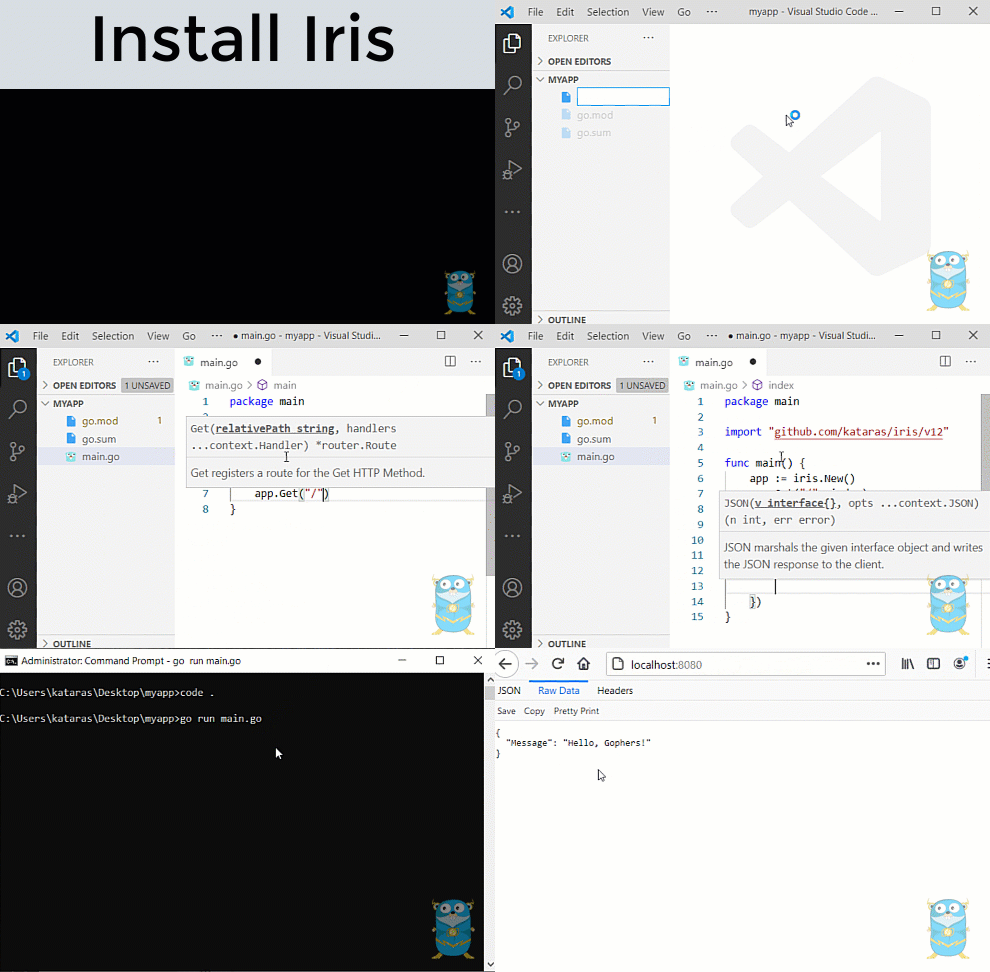
Iris contains extensive and thorough documentation making it easy to get started with the framework.
For a more detailed technical documentation you can head over to our godocs. And for executable code you can always visit the ./_examples repository's subdirectory.
Develop with Plexon AI
Plexon AI is a cross-platform AI coding assistant from Hellenic Development, and it ships with a dedicated Iris skill: a v14 development guide written by the framework's author, with nineteen reference documents covering routing and macros, the context API, the rest helpers, error handling, all thirty middleware, the built-in controllers, the authentication SDK, security hardening, persistence, caching, i18n, observability, performance, testing, deployment, and the v12 to v14 migration.
Install the Software Developer persona and the Iris skill comes with it, alongside the engineering agents it activates. Your assistant then writes Iris code the way the framework is meant to be used, instead of guessing from whatever it picked up in training.
Do you like to read while traveling?



You can request a PDF and online access of the Iris E-Book (New Edition) today and take part in the development of Iris.
🙌 Contributing
We'd love to see your contribution to the Iris Web Framework! For more information about contributing to the Iris project please check the CONTRIBUTING.md file.
🛡 Security Vulnerabilities
If you discover a security vulnerability within Iris, please send an e-mail to iris-go@outlook.com. All security vulnerabilities will be promptly addressed.
📝 License
This project is licensed under the BSD 3-clause license, just like the Go project itself.
The project name "Iris" was inspired by the Greek mythology.