


Read this in other languages.












































































First Contributions
This project aims to simplify and guide the way beginners make their first contribution. If you are looking to make your first contribution, follow the steps below.
If you're not comfortable with command line, here are tutorials using GUI tools.
If you don't have git on your machine, install it.
Fork this repository
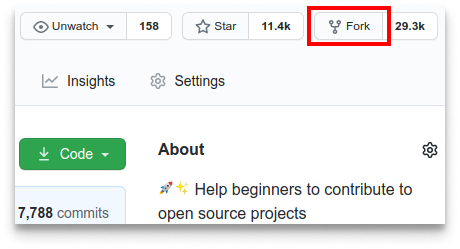
Fork this repository by clicking on the fork button on the top of this page. This will create a copy of this repository in your account.
Clone the repository
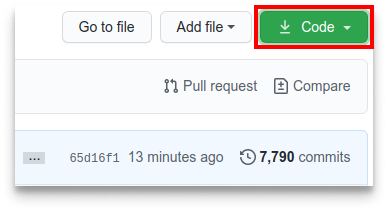
Now clone the forked repository to your machine. Go to your GitHub account, open the forked repository, click on the code button, then on SSH tab and then click the copy url to clipboard icon.
Open a terminal and run the following git command:
git clone "url you just copied"where "url you just copied" (without the quotation marks) is the url to this repository (your fork of this project). See the previous steps to obtain the url.
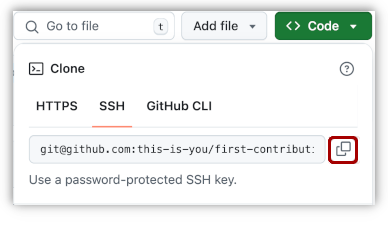
For example:
git clone git@github.com:this-is-you/first-contributions.git
where this-is-you is your GitHub username. Here you're copying the contents of the first-contributions repository on GitHub to your computer.
Create a branch
Change to the repository directory on your computer (if you are not already there):
Now create a branch using the git switch command:
git switch -c your-new-branch-name
For example:
git switch -c add-alonzo-church
If you get any errors using git switch, click here:
If the error message "Git: switch is not a git command. See git –help" appears, it's likely because you're using an older version of git.
In this case, try to use git checkout instead:
git checkout -b your-new-branch-name
Make necessary changes and commit those changes
Now open Contributors.md file in a text editor, add your name to it. Don't add it at the beginning or end of the file. Put it anywhere in between. Now, save the file.
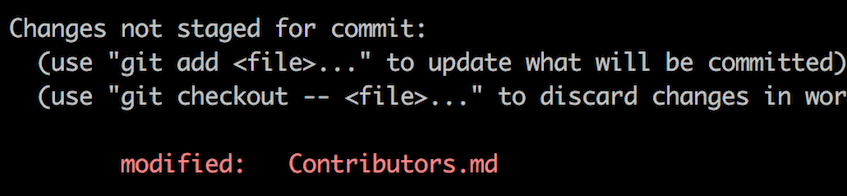
If you go to the project directory and execute the command git status, you'll see there are changes.
Add those changes to the branch you just created using the git add command:
Now commit those changes using the git commit command:
git commit -m "Add your-name to Contributors list"replacing your-name with your name.
Push changes to GitHub
Push your changes using the command git push:
git push -u origin your-branch-name
replacing your-branch-name with the name of the branch you created earlier.
If you get any errors while pushing, click here:
-
Authentication Error
remote: Support for password authentication was removed on August 13, 2021. Please use a personal access token instead.
remote: Please see https://github.blog/2020-12-15-token-authentication-requirements-for-git-operations/ for more information.
fatal: Authentication failed for 'https://github.com/<your-username>/first-contributions.git/'
Go to GitHub's tutorial on generating and configuring an SSH key to your account.
Also, you might want to run 'git remote -v' to check your remote address.
If it looks anything like this:
origin	https://github.com/your-username/your_repo.git (fetch)
origin	https://github.com/your-username/your_repo.git (push)
change it using this command:
git remote set-url origin git@github.com:your-username/your_repo.git
Otherwise you'll still get prompted for username and password and get authentication error.
Submit your changes for review
If you go to your repository on GitHub, you'll see a Compare & pull request button. Click on that button.
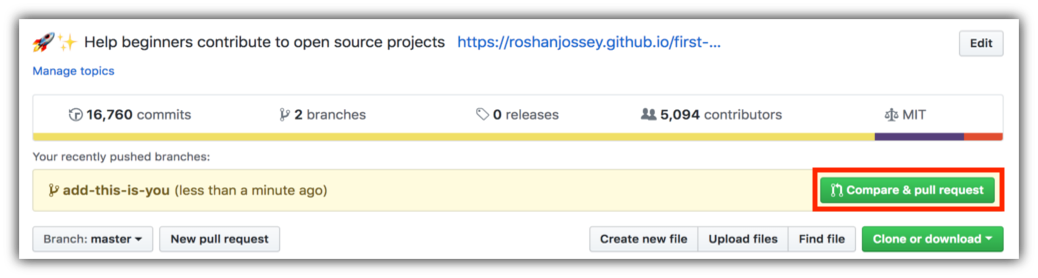
Now submit the pull request.
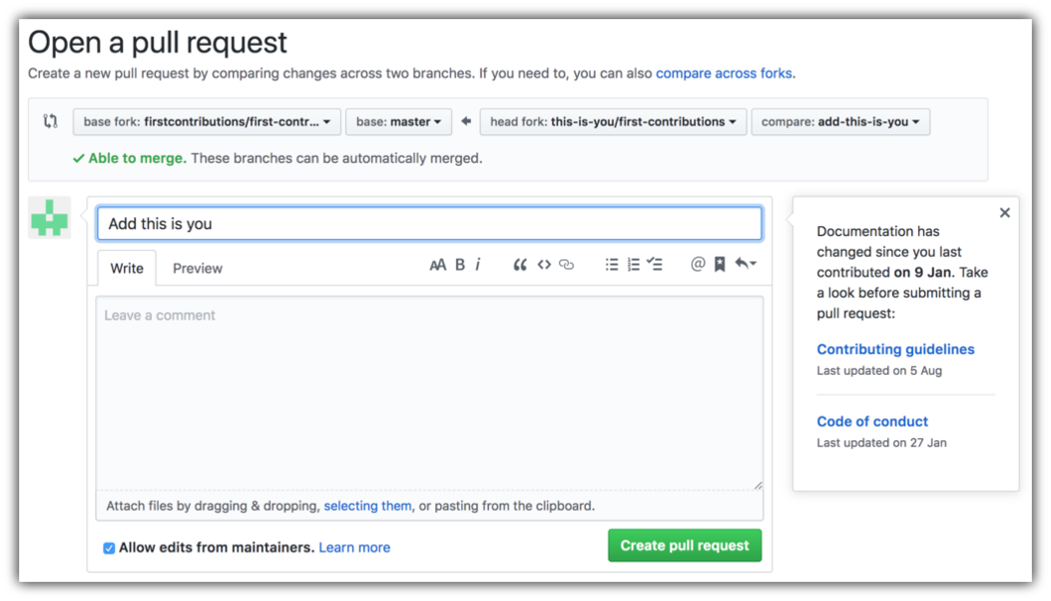
Soon I'll be merging all your changes into the main branch of this project. You will get a notification email once the changes have been merged.
Where to go from here?
Congrats! You just completed the standard fork -> clone -> edit -> pull request workflow that you'll often encounter as a contributor!
Celebrate your contribution and share it with your friends and followers by going to web app.
If you'd like more practice, checkout code contributions.
Now let's get you started with contributing to other projects. We've compiled a list of projects with easy issues you can get started on. Check out the list of projects in the web app.
Additional material
Tutorials Using Other Tools
 |
 |
 |
 |
 |
 |
|---|---|---|---|---|---|
| GitHub Desktop | Visual Studio 2017 | GitKraken | Visual Studio Code | Atlassian Sourcetree | IntelliJ IDEA |