A distributed platform where specialized AI agents collaborate through task graphs, persistent knowledge, and bounded review loops. Define agents in YAML with their own model, tools, and knowledge. agentfab decomposes requests into a DAG, schedules agents in parallel, runs review loops with hard caps, persists state through a durable control plane, and sandboxes shell commands at the OS level.
For a full breakdown and demos, see: https://razvanmaftei.me/article?slug=agentfab-stateful-multi-agent-orchestration
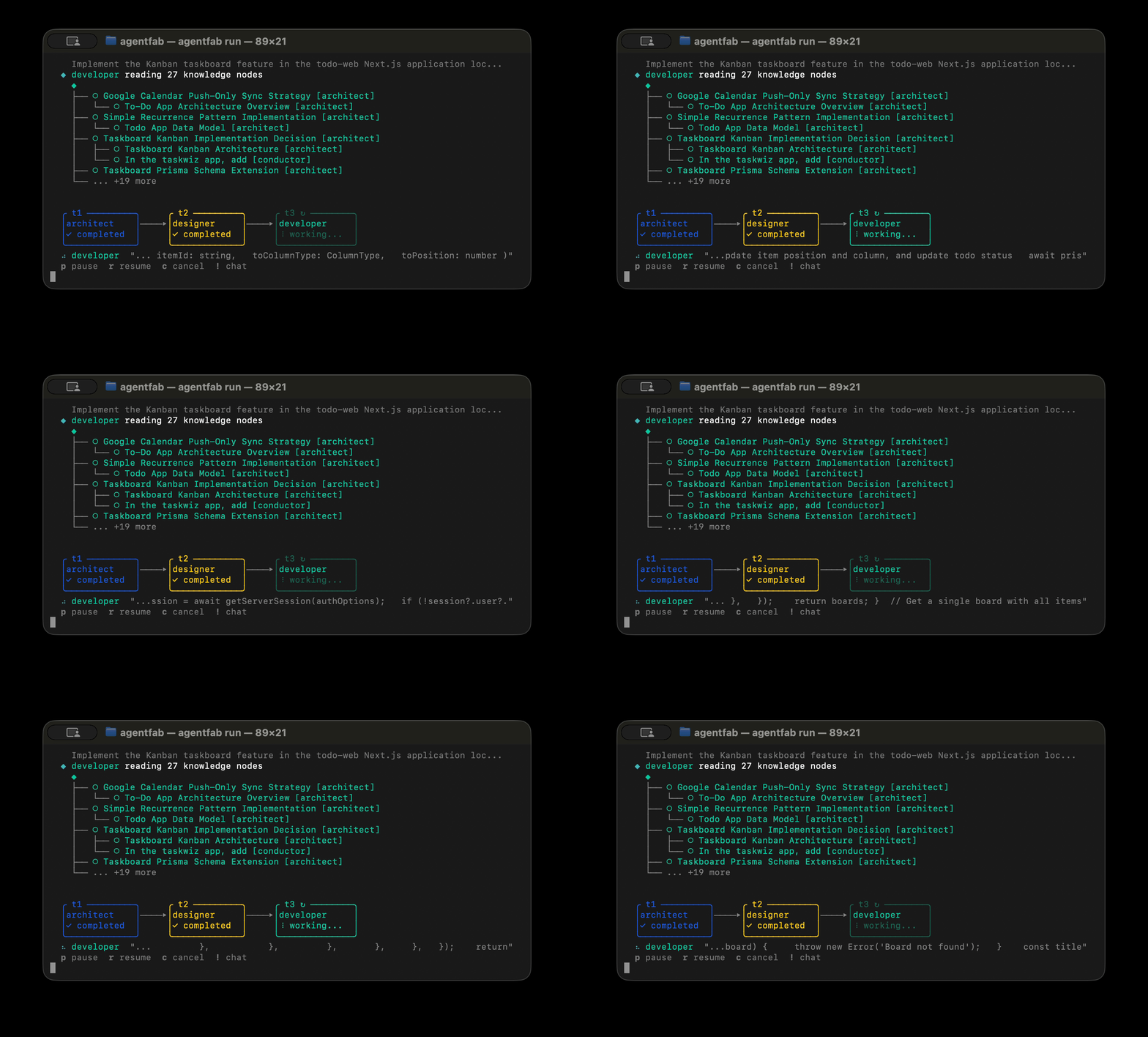
Quick Start
make build
agentfab init
agentfab run
Type your project idea at the prompt. agentfab decomposes it into a task graph, dispatches specialist agents, and writes artifacts under the data directory.
Fabrics
agentfab uses fabrics made up of a Conductor plus whatever specialist agents you configure. The Conductor is always present for decomposition and orchestration. Every other agent is defined in YAML, per project.
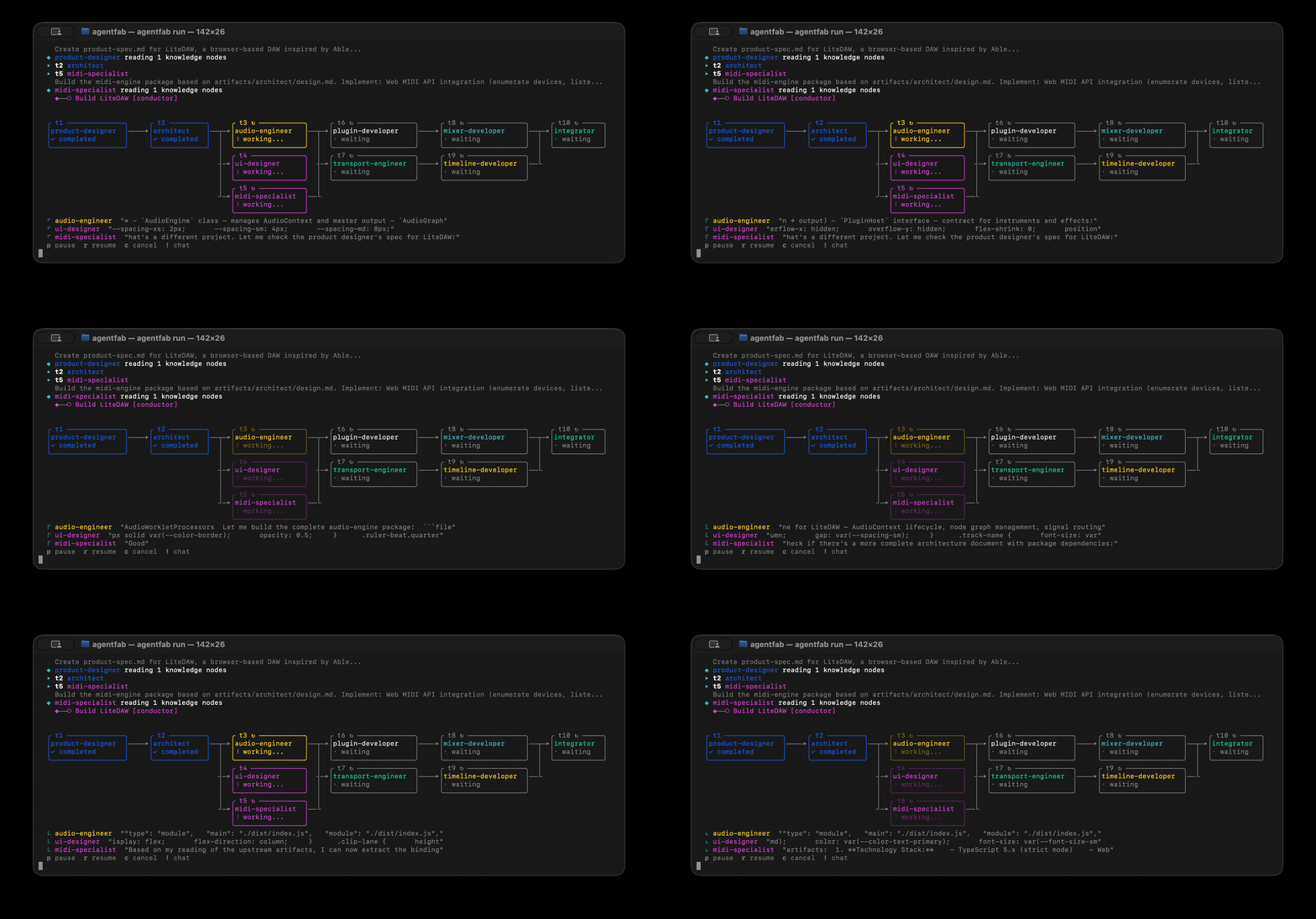
agentfab init creates a default fabric with conductor, architect, designer, and developer. Replace them or add your own.
Custom Agents
Compile Markdown descriptions into YAML:
mkdir agents
# write agents/security-auditor.md, agents/api-designer.md, etc.
agentfab agent compile --input ./agents --output ./agents
agentfab run
Or write YAML directly:
name: "security-auditor"
purpose: "Audit code for vulnerabilities and compliance"
capabilities: ["security_analysis", "compliance_check"]
model: "anthropic/claude-sonnet-4-6"
escalation_target: "architect"
tools:
  - name: semgrep
    command: "semgrep --config auto $ARGS"
    mode: live
verify:
  command: "cd $SCRATCH_DIR && semgrep --config auto --error . 2>&1"
  max_retries: 2
Task Templates
Recurring request shapes can be captured as task-graph templates in a project-level templates/ directory (they merge with the built-in defaults, overriding by name). By default templates are starting points the Conductor's decompose pass may adapt. Mark a template strict: true and it becomes authoritative: when its match_keywords strongly match the request, the template's literal task list is dispatched with no LLM decomposition — the reproducibility path for curated production runs.
Runtime Modes
Local mode
All agents run in one process with in-memory transport. This is the fastest dev loop and the default for editing YAML, prompts, and tools.
External-node mode
agentfab run --external-nodes
The Conductor, the control-plane service, and one or more node hosts run as separate processes. They can live on separate machines. This is the deployment shape agentfab targets for VMs, containers, and Kubernetes clusters.
What you get:
- mTLS everywhere. All gRPC traffic uses workload certificates issued by the configured identity provider. Local development uses a built-in provider; production uses a mounted external provider (SPIFFE, corporate CA, or similar).
- Authenticated node enrollment. Node hosts present an enrollment token plus measured claims (bundle digest, profile digests, binary digest) at registration. The control-plane API validates attestation; the node does not self-authorize.
- Durable control plane. A Conductor leader lease, per-task leases, and request and task records persist through a file backend or etcd. Restarting the Conductor does not lose in-flight state.
- Control-plane discovery. Instance endpoints resolve through the control plane's registry. Node hosts update it as they bring up hosted instances.
- Recovery without duplicate execution. When a node host dies, stale heartbeats mark its records unavailable and task leases release. The scheduler redispatches affected tasks to another healthy instance, and the task lease prevents two instances from running the same task.
- Signed, version-matched fabrics. Bundle and per-profile digests are enforced at admission. A node cannot join with a different agent set than the active fabric, and signed bundles can be required through trusted operator keys.
Fast local path (no extra config required):
# auto-bootstraps a local control-plane service and one local node host
agentfab run --external-nodes

# spin up more local node hosts under the same command
agentfab run --external-nodes --bootstrap-nodes 3
For the manual production-like setup (separate control-plane, Conductor, and node host processes, optional etcd backend, enrollment tokens, signed bundles), see Runtime Modes.
CLI
| Command | Description |
|---|---|
init |
Create a fabric with default or custom agents |
run |
Start the Conductor and enter interactive mode |
setup |
Configure API keys and install the binary |
agent compile |
Generate YAML definitions from Markdown descriptions |
node serve |
Run an external node host |
node token create |
Create a node enrollment token |
control-plane serve |
Run the control-plane service as a standalone process |
bench |
Run benchmark scenarios and produce comparison reports |
status |
Show agent status and token usage |
metrics |
Cost and usage report from debug logs |
verify |
Check bundle integrity and sign bundle metadata |
Key run flags: --debug, --external-nodes, --bootstrap-nodes N, --skip-verify, --data-dir <dir>, --listen <addr>, --control-plane-address <addr>.
Providers
agentfab uses Eino adapters:
| Provider | Env var | Example model |
|---|---|---|
| Anthropic | ANTHROPIC_API_KEY |
anthropic/claude-sonnet-4-6 |
| OpenAI | OPENAI_API_KEY |
openai/gpt-5.4 |
GOOGLE_API_KEY |
google/gemini-3.1-pro-preview |
|
| OpenAI-compatible | OPENAI_COMPAT_API_KEY |
openai-compat/local-model |
Each agent can use a different provider.
Requirements
Go 1.24+.
| Platform | Sandbox |
|---|---|
| macOS 10.15+ | sandbox-exec |
| Linux kernel 5.13+ | Landlock |
| Older Linux kernels | Runs unsandboxed with a warning |
Docs
- Architecture
- Runtime Modes
- Orchestration Internals
- Storage Architecture
- Identity Architecture
- Production Identity Deployment
- Glossary