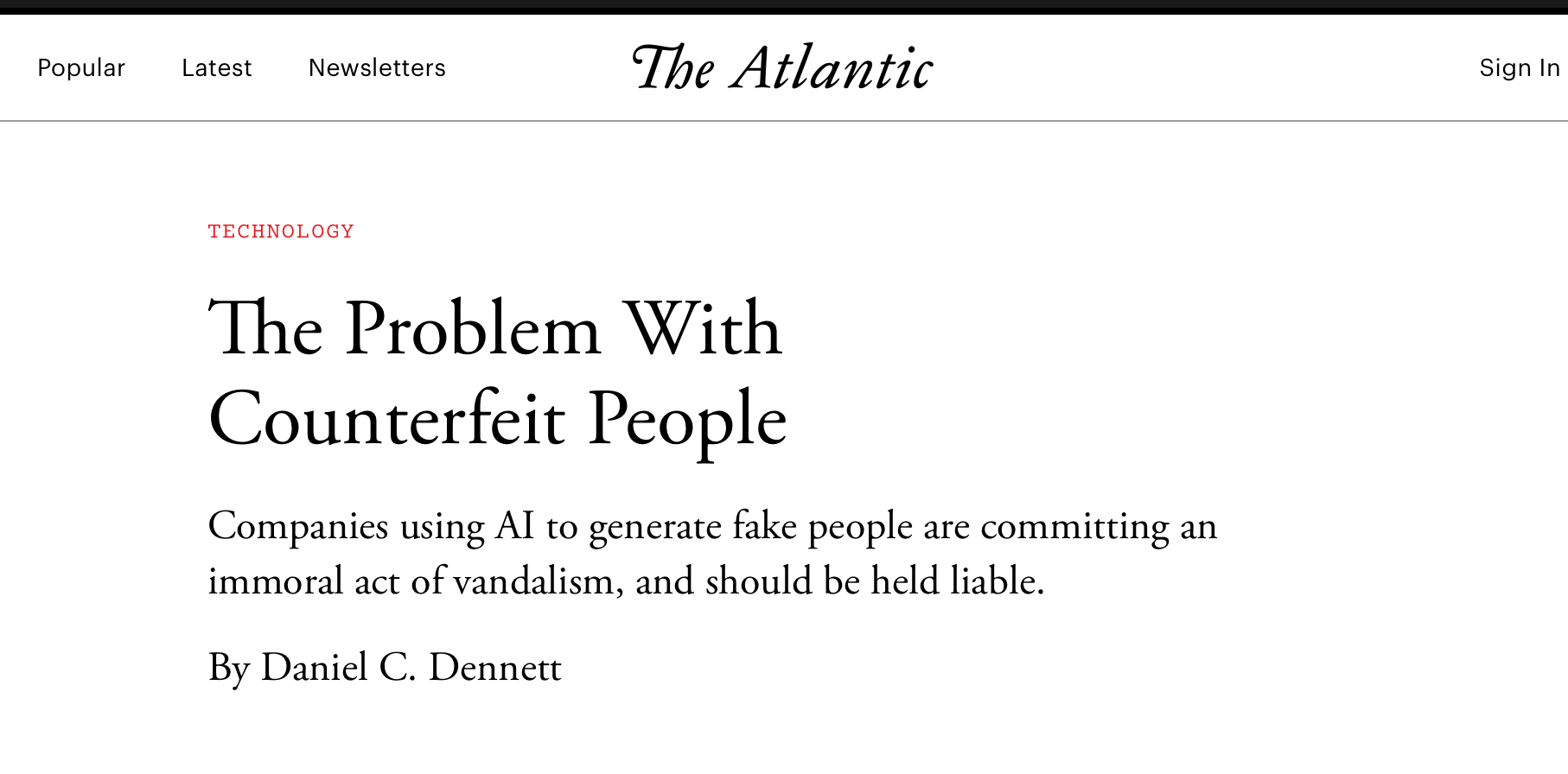
The night before I testified in the US Senate in May, 2023, the late philosopher Daniel Dennett sent me a manuscript that he called “counterfeit people”. It was published a few days later in The Atlantic.
Here the first paragraph.
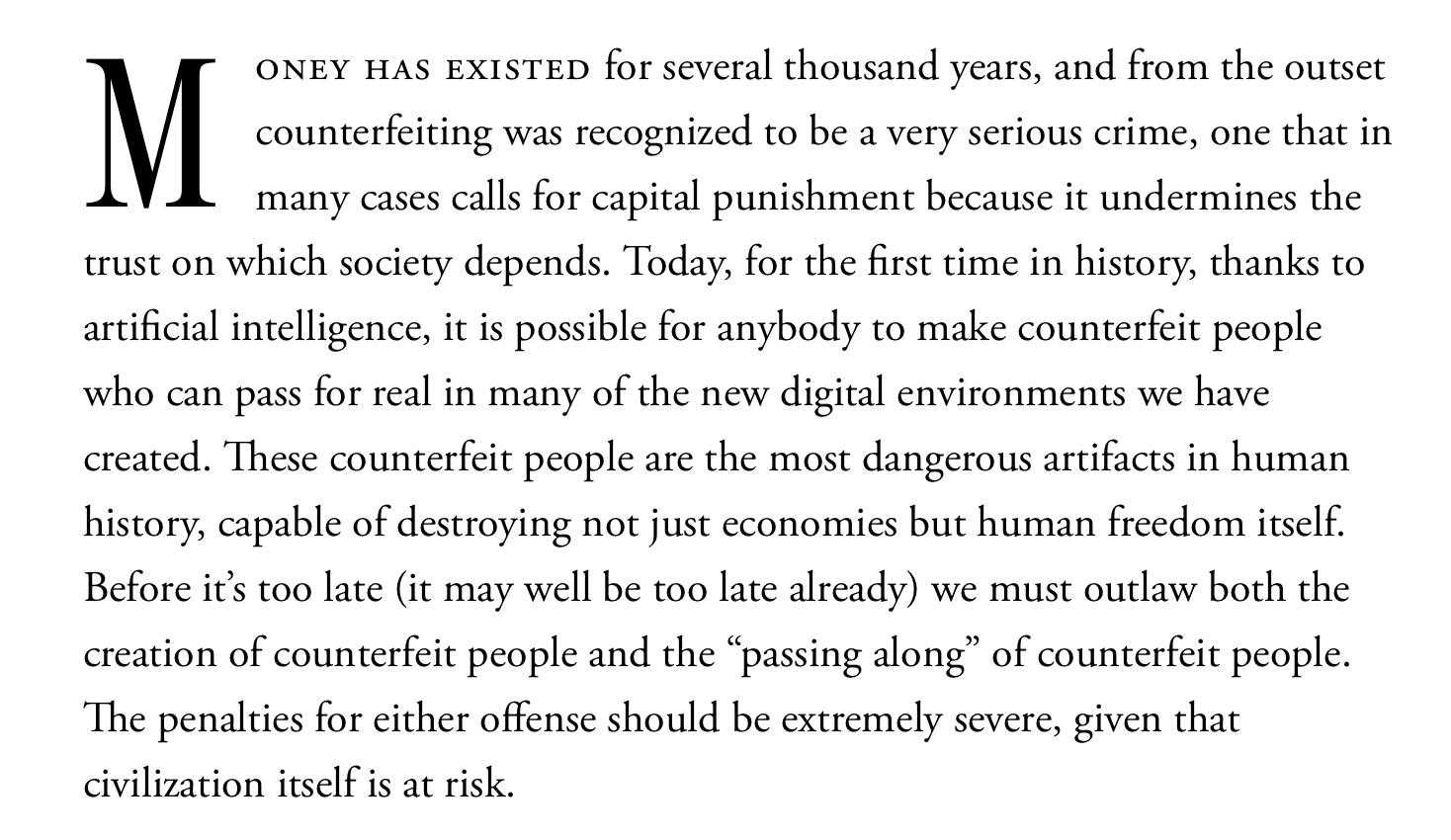
He was right then. Three years later even more so. The need for the kind of law he was calling for – one forbidding “the creation of and ‘passing along’ of counterfeit people” is now urgent.
Two items sent to me this morning make that absolutely clear. The first (original sources apparently in this thread here) shows how far deep fake videos have come:
Anybody’s appearance can (given sufficient data) be faked now, at any time, for almost nothing.
Meanwhile, remember OpenClaw, and how I warned that it would cause all kinds of security risks? Well here’s a new one, you can have OpenClaw call people, and pretend to be human.

Scammers will be among the first to adopt these tools. And indeed they already have; a friend who was filming me for a documentary yesterday told me of a Canadian friend of his who was scammed out of hundreds of thousands of dollars by a deepfaked video of Mark Carney. Because the tools for counterfeiting have gotten so good 2026 will almost certainly see more deepfaked scams like this than the rest of history combined.
Tell your representatives today, not tomorrow, that we must pass federal1 laws forbidding machine output from being presented as humans, and that we must develop the means to enforce those laws. No use of the first person by chatbots, and no more deepfakes of living people’s voices and images without their express consent, aside from carveouts for obvious parody and so on. All of this has gone too far, too fast. And we must not let corporate lobbyists thwart efforts to address all this.
Generative AI systems may still struggle to reason, as discussed here recently, but they were built for mimicry, and their mimicry has gotten to the point where we must do something now.
I will end by quoting from Dennett’s deeply prescient Atlantic essay (and I am sorry that it is paywalled):