We have received reports that Windows Defender may detect the file lwjgl-3.3.4-natives-windows-x86.jar included with Gaia Sky as a threat. …

Open source 3D Universe visualization platform with support for a billion objects
Latest news
In a little over a month, on December 2, Gaia Data Release 4 (DR4) will be made public. This data release will bring a new generation of …
We are proud to announce the release of Gaia Sky 3.8.0. This release brings a mainor overhaul of the procedural planet generation system, …
What is Gaia Sky?
Gaia Sky is a real-time, 3D, astronomy visualisation platform for desktop and VR that runs on Windows, Linux, and macOS. Open source and libre.
Gaia Sky enables the exploration of our Universe by means of scientific datasets. The software includes an integrated dataset manager that grants access to several cutting-edge astronomical catalogs such as the Gaia DR1/2/3 star catalogs, SDSS galaxies, or the nearby galaxies catalog. It is developed in the framework of ESA’s Gaia mission to chart about 1 billion stars of our Galaxy in the Gaia group of the Astronomisches Rechen-Institut (ZAH, Universität Heidelberg). Explore the cosmos without leaving the comfort of your home!
Worlds of data
We have curated a long list of scientific datasets for you to explore in Gaia Sky. Planets, moons, asteroids, stars, nebulae, galaxies, quasars, black holes, star clusters, iso-density maps, virtual textures, and much, much more!
Use the in-app dataset manager to pick and choose the datasets you want to explore.
Features
Gaia Sky is packed with features that will make your head spin
Open source
Open source and free, and will stay this way. Contribute to the development and translations.
High object count
The MS-LOD technique enables real-time exploration of billions of objects in real time.
From Gaia to the cosmos
Explore from high-z galaxies to small asteroids in a seamless manner, all based on real scientific data.
Virtual Reality
Experience the whole universe in VR (compatible with headsets powered by OpenXR).
6D exploration
Observe star positions but also proper motions and radial velocities, if available.
Advanced graphics
Virtual textures, screen space reflections, shadows, HDR, volumes, dynamic resolution, etc.
Planetary surfaces
Explore surfaces with height and elevation maps (using tessellation, if available), and advanced shading.
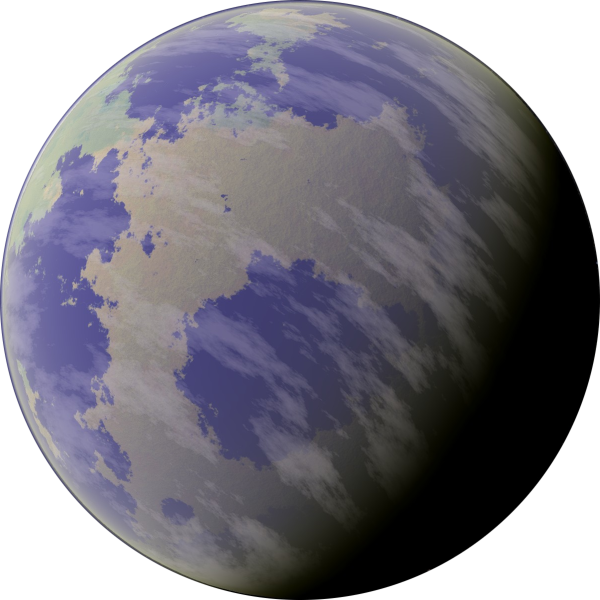
Procedural planets
Procedurally generate planetary surfaces on the fly, and explore your creations seamlessly.
Eclipses
Real-time representation of eclipses in all bodies, with a visualization of the umbra and the penumbra.
3D-ready
6 stereoscopic modes: Anaglyphic (red-cyan), VR headset, 3DTV (H and V), cross-eye and parallel view.
360 mode
Spherical (equirectangular), cylindrical and Hammer projections available, plus many reprojection modes.
Planetarium projection
Domemaster projection for single-projector setups. MPCDI for real-time usage in multi-projector systems.
Gaia and other spacecraft
Observe Gaia and other spacecraft in their orbits and discover their movement in the sky and their attitudes.
Use your data
Download pre-packed datasets (Gaia, NGC, SDSS, Open Clusters, etc.) or use your own, in VOTable, FITS, CSV and other formats.
Real-time filters
Download pre-packed datasets (Gaia DR3+, NEARGALCAT, SDSS, Open Clusters, etc.) or use your own, in VOTable, FITS, CSV, and others.
SAMP aware
Use SAMP (Simple Application Messaging Protocol) to interoperate with SAMP-ready software such as Topcat and Aladin.
Scriptable and extensible
Use the provided API to manipulate the scene from scripts. Use Python to script and extend the capabilities of the Gaia Sky.
Internationalized
Translated to Bulgarian, Catalan, English, French, German, Italian, Japanese, Simplified Chinese, Slovenian, Spanish, and Turkish.
Gamepad support
Use your favorite game controllers and gamepads to navigate the Galaxy. Plug and play, works out of the box.
Camera paths
Record and playback camera path files to persist your trips around the galaxy. Includes a fully-fetaured keyframe system with optional OptFlowCam export.
Links
Learn about the Gaia mission and play around with the Gaia dataset
ESA Gaia site
Official site of Gaia at ESA. Learn about the mission and the satellite in this official ESA page.
Gaia archive (GACS)
The official Gaia archive where you can get all the data produced by the Gaia mission.
ARI's Gaia Services
Self-hosted mirror of the Gaia archive, offering online services to access the Gaia catalogue.